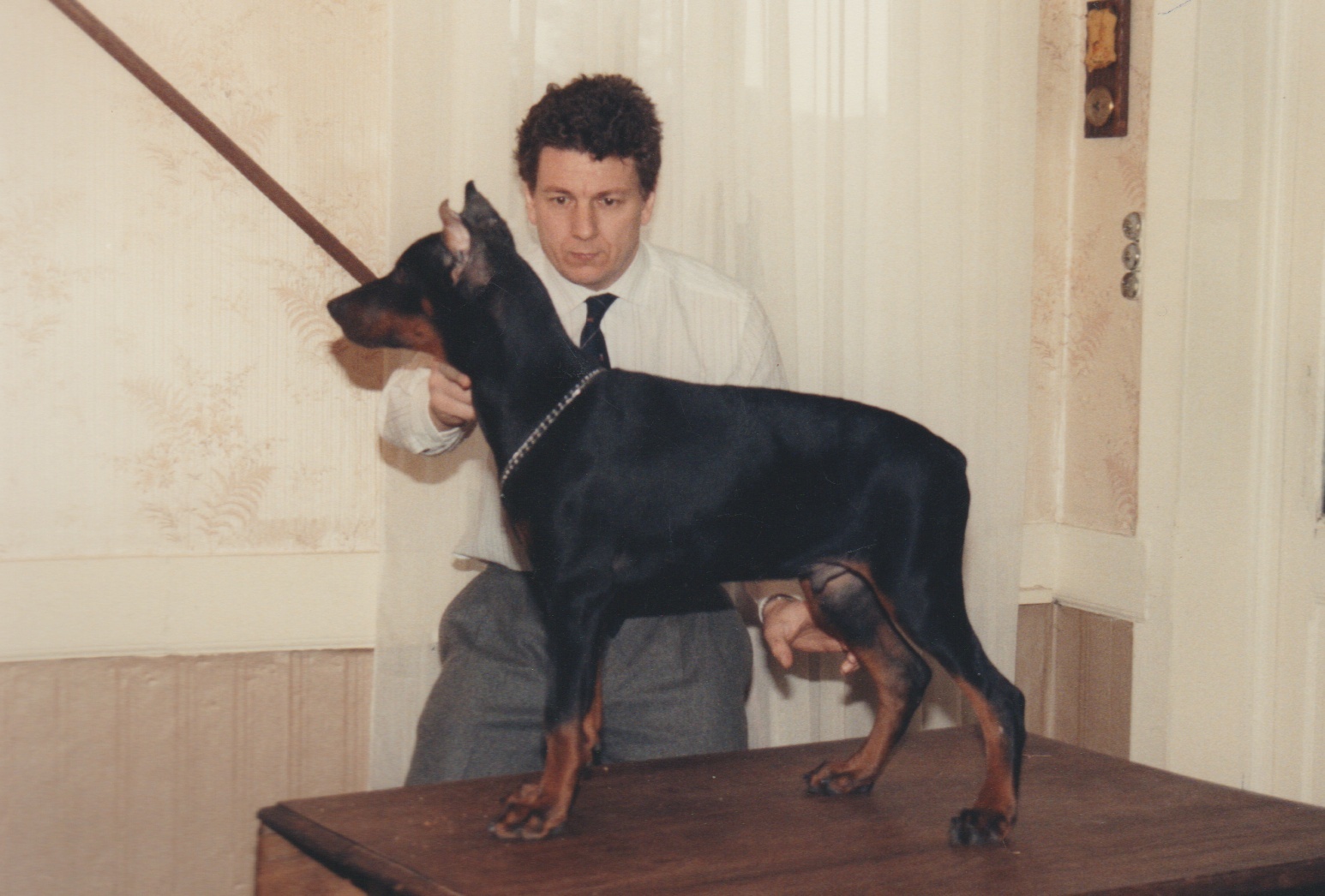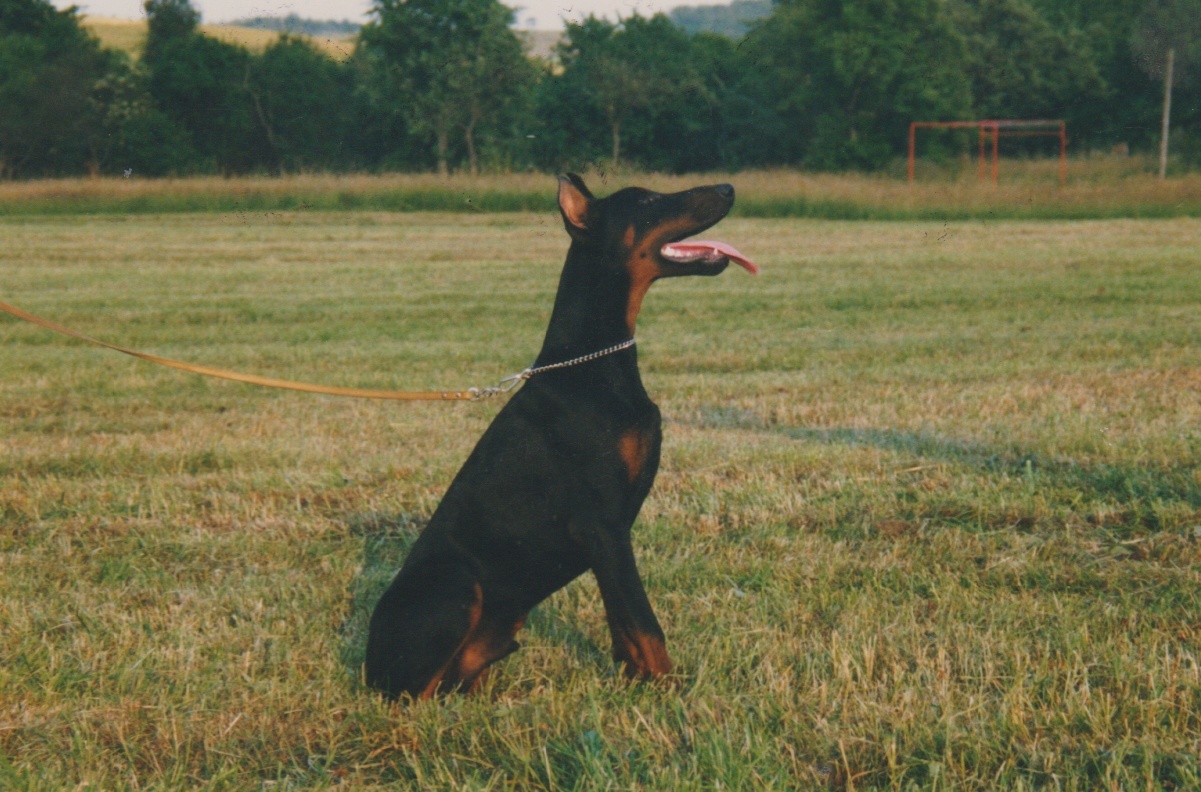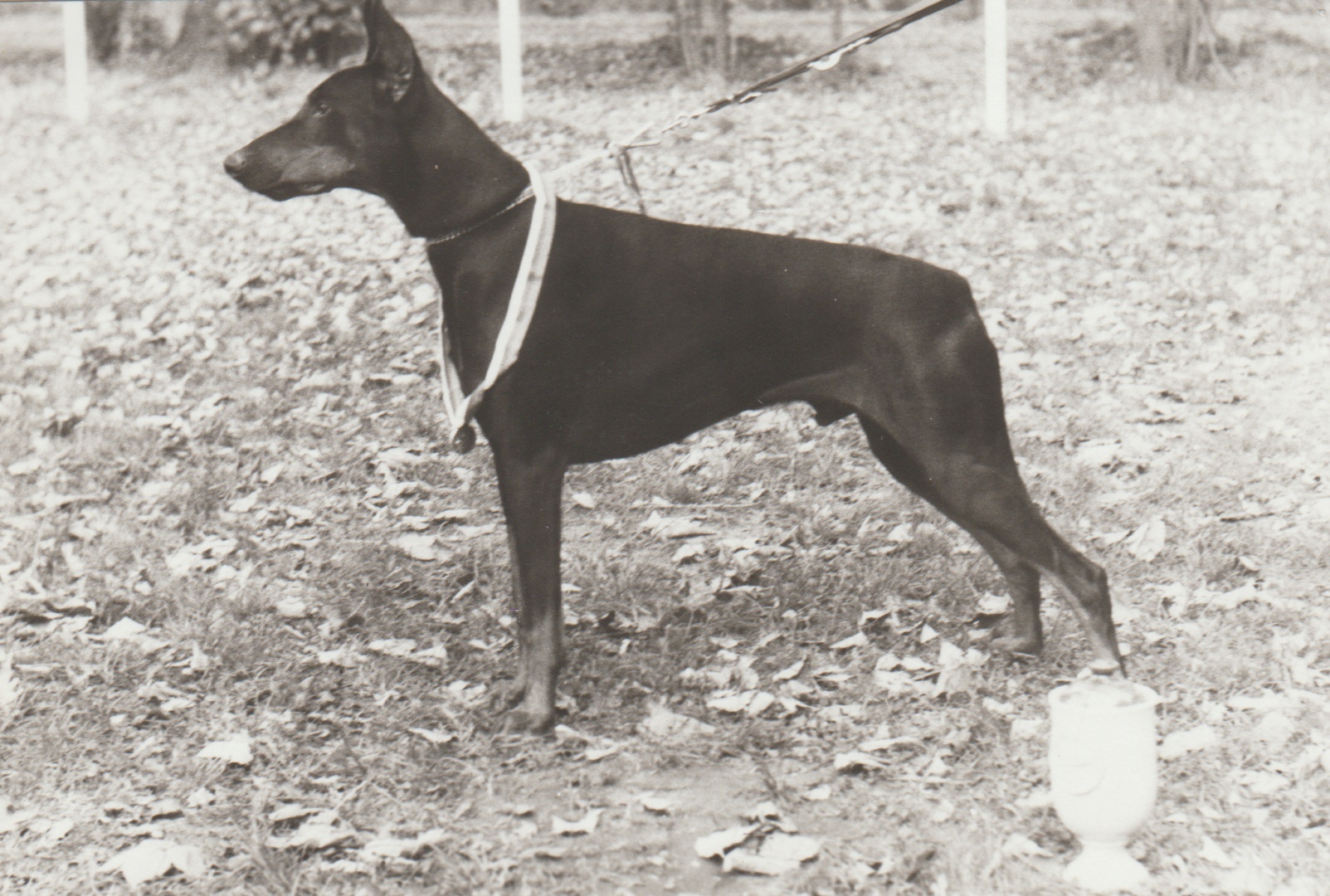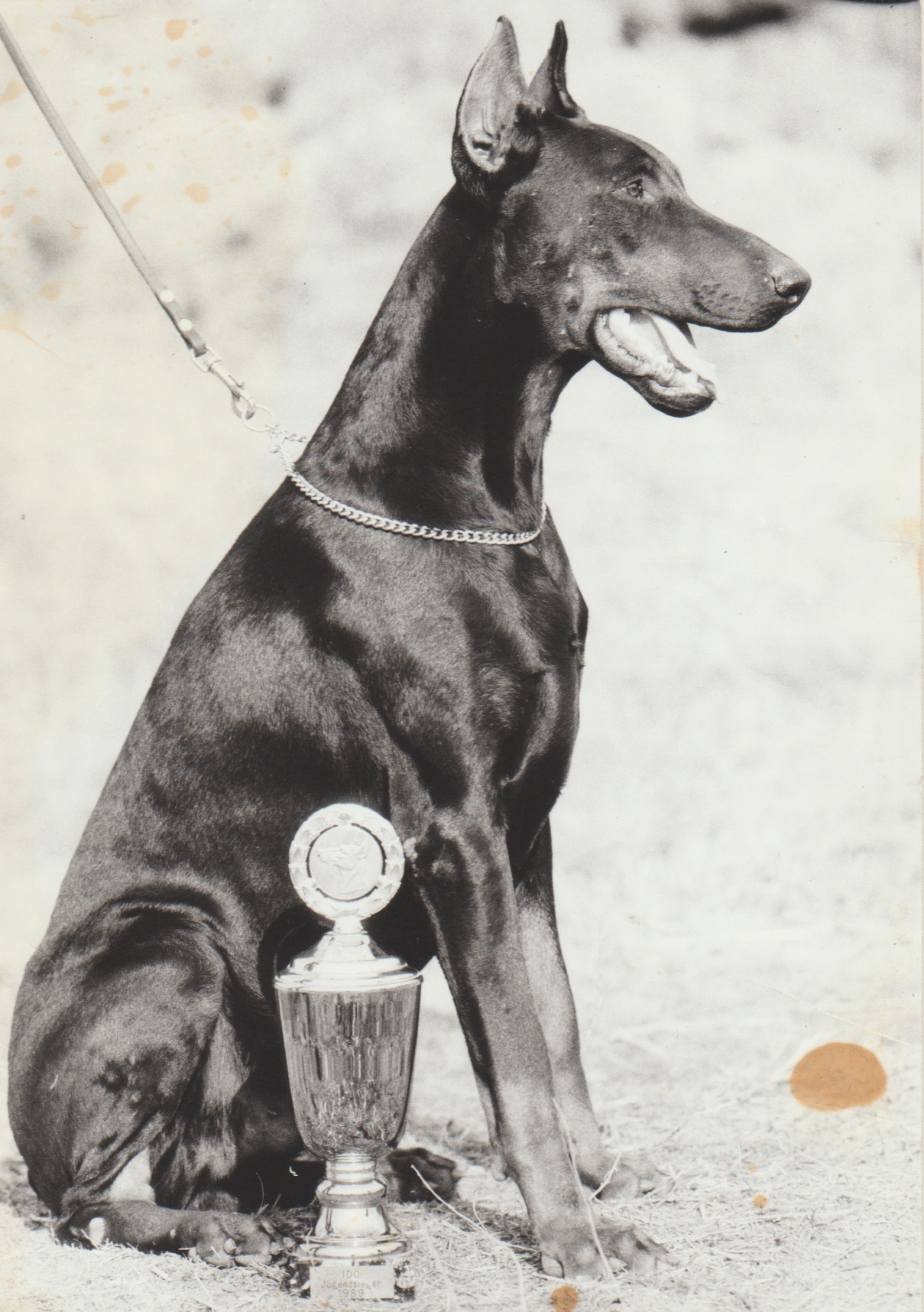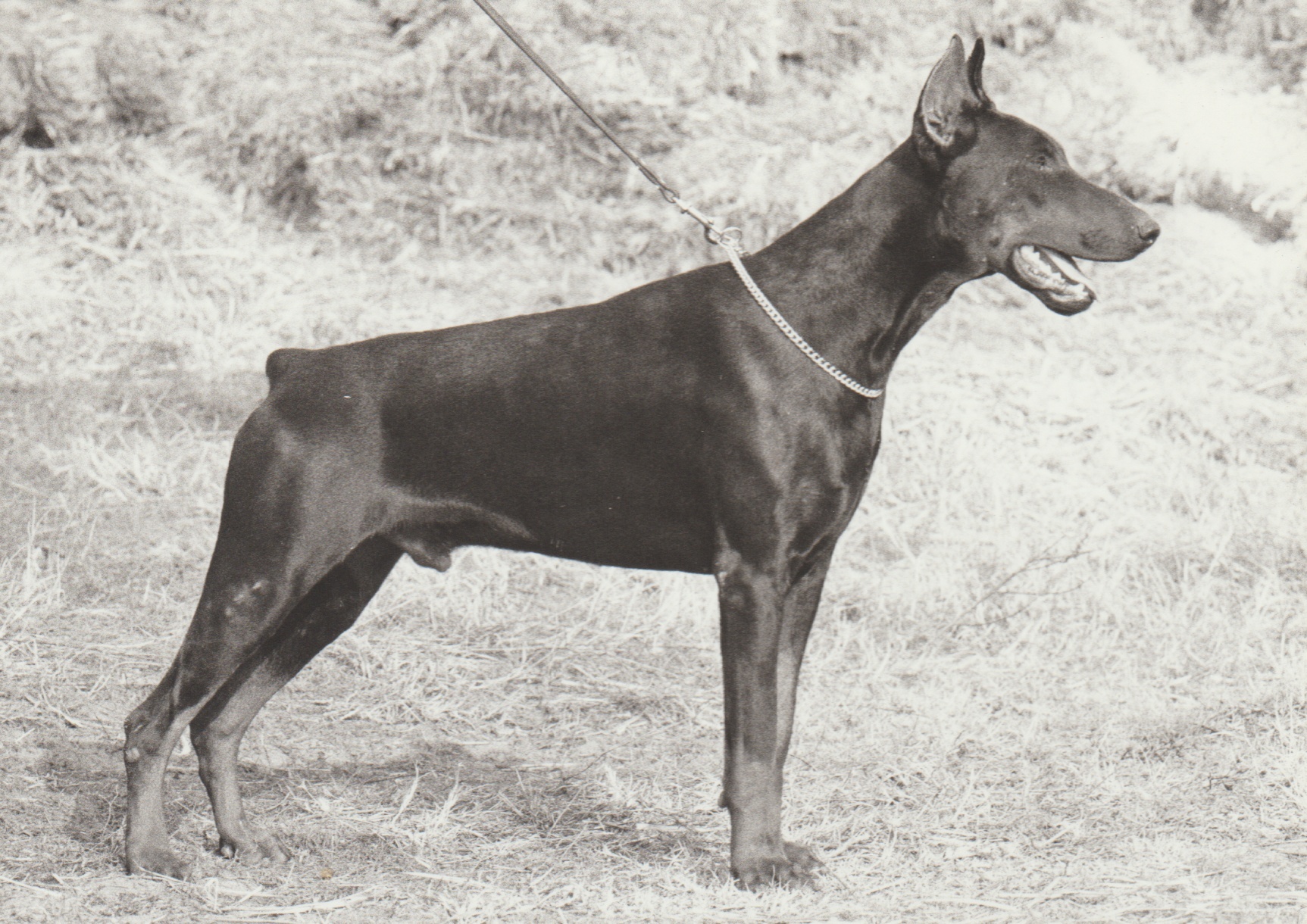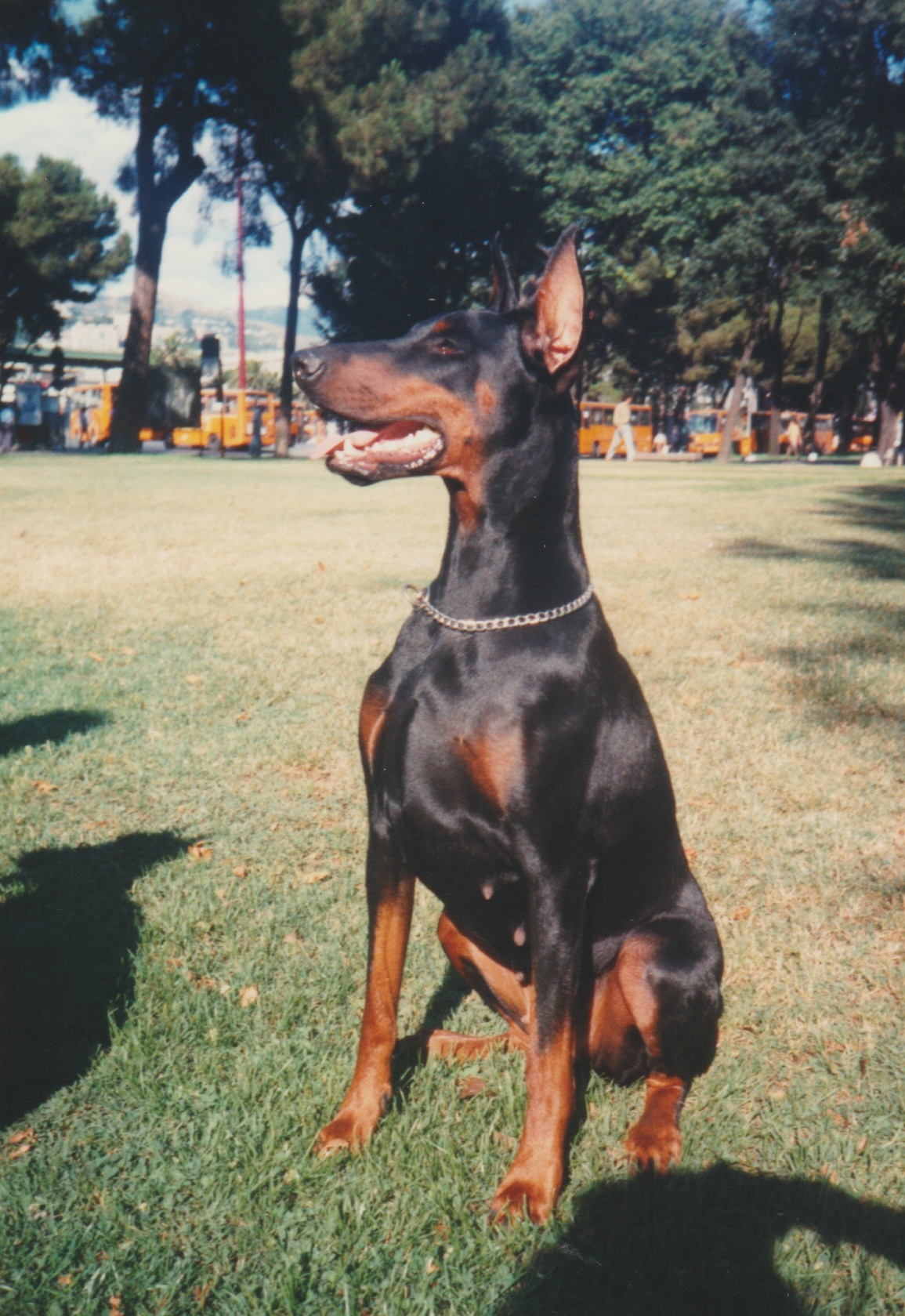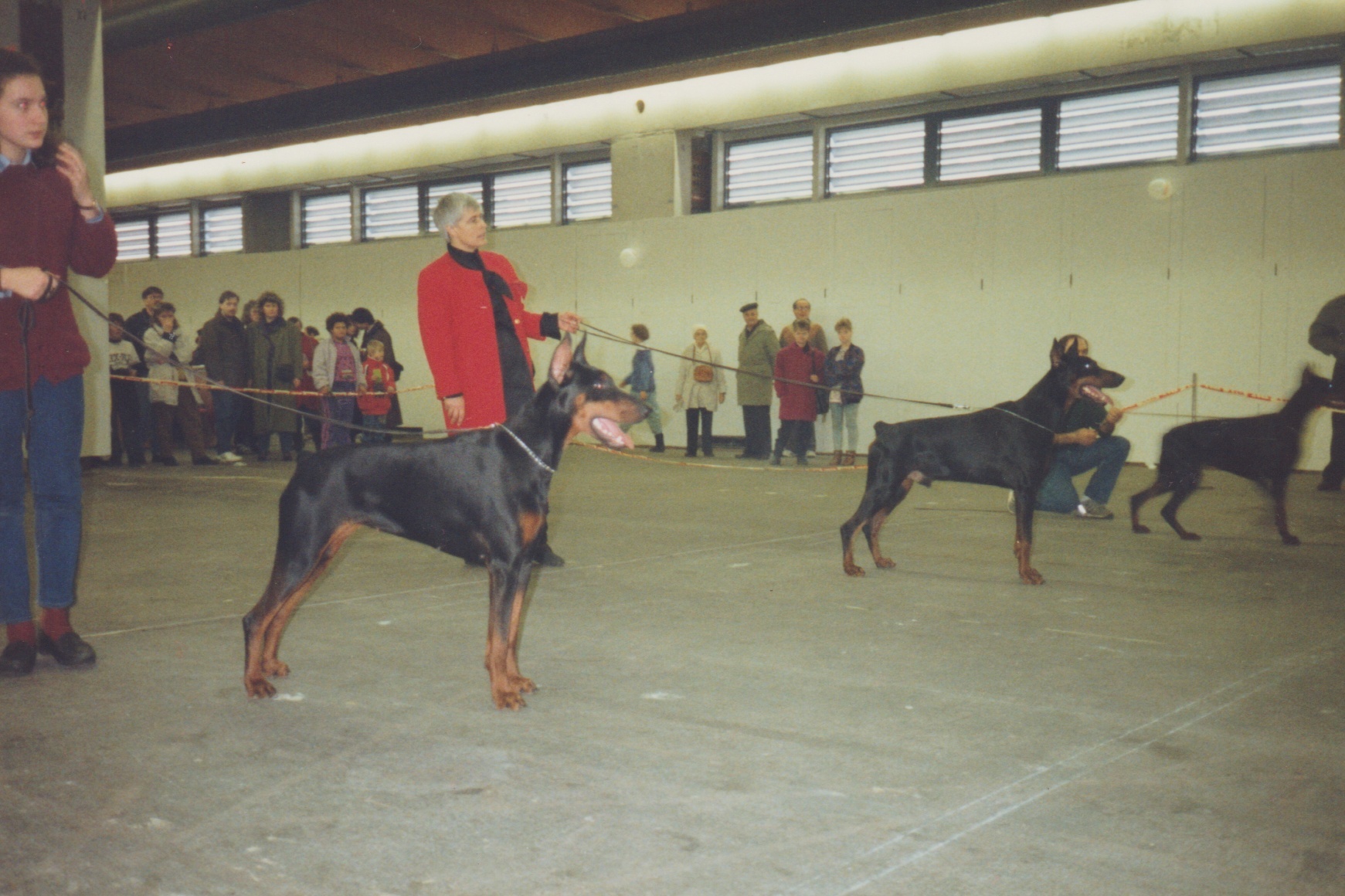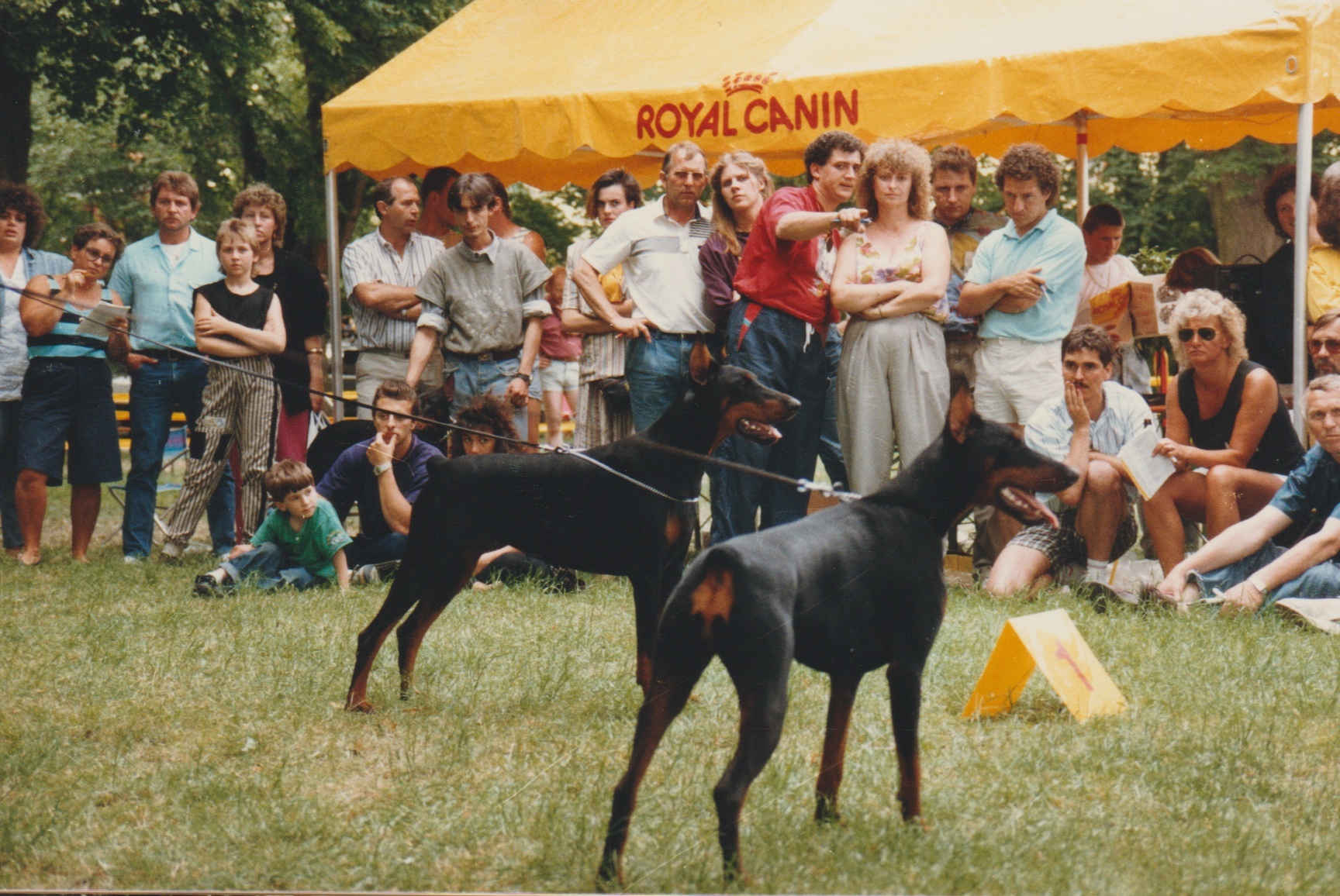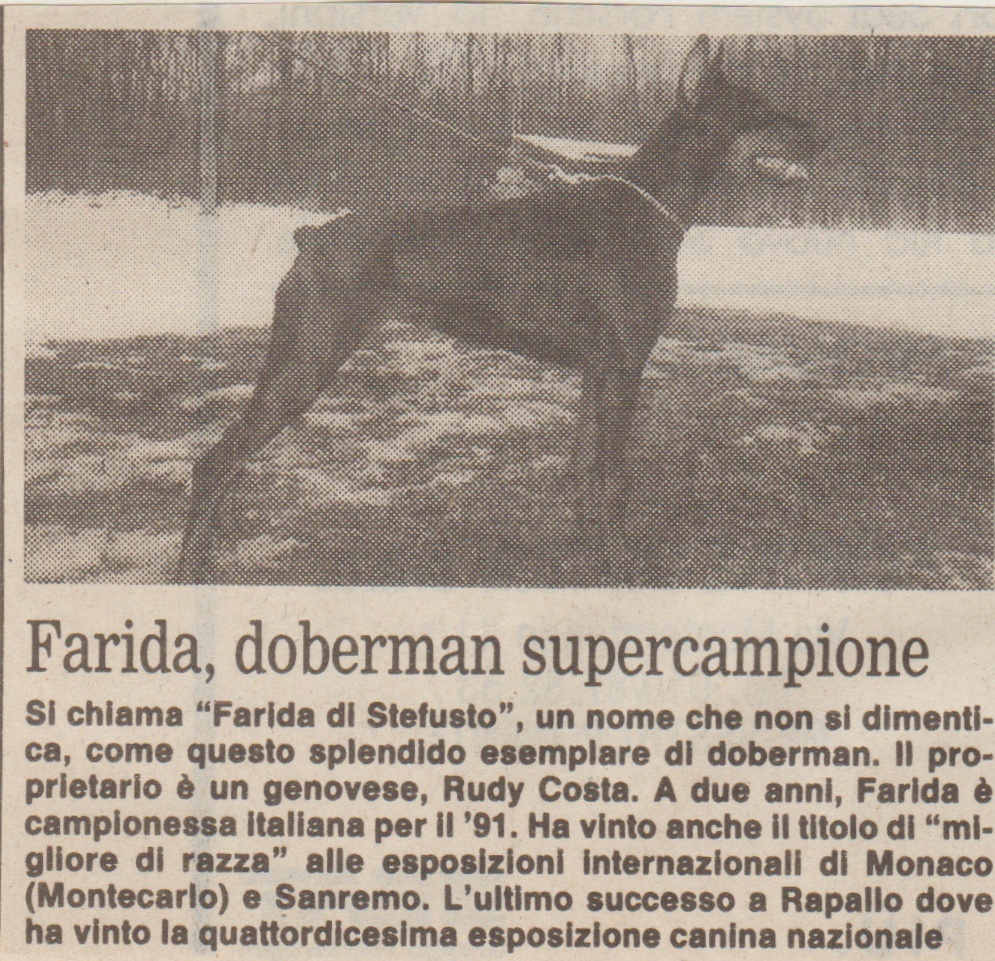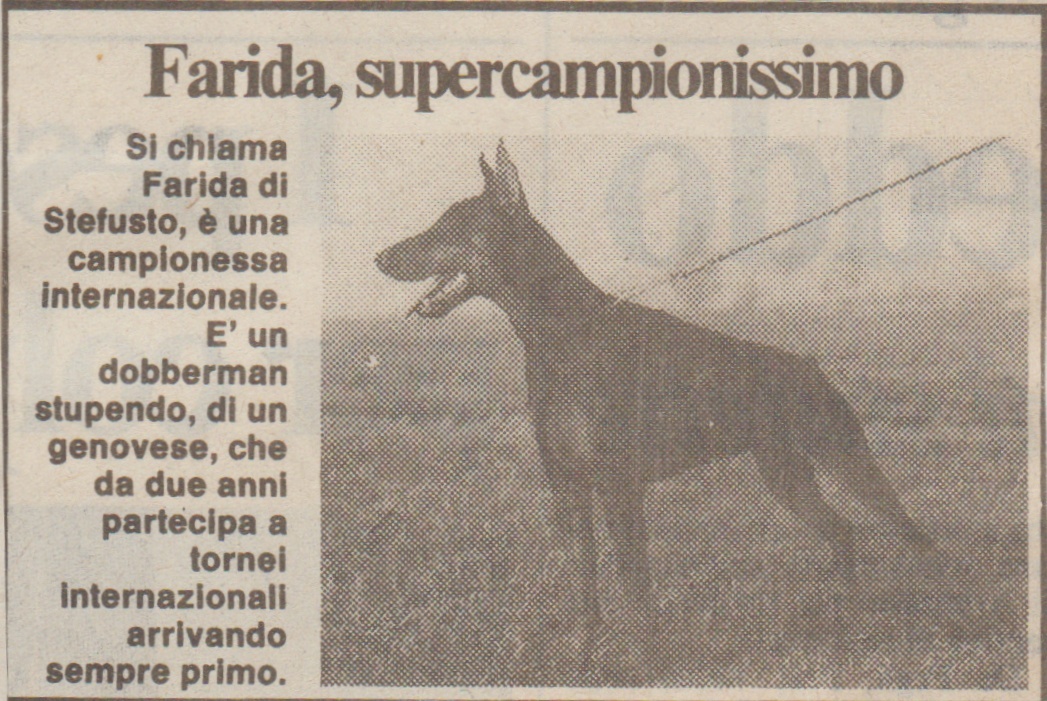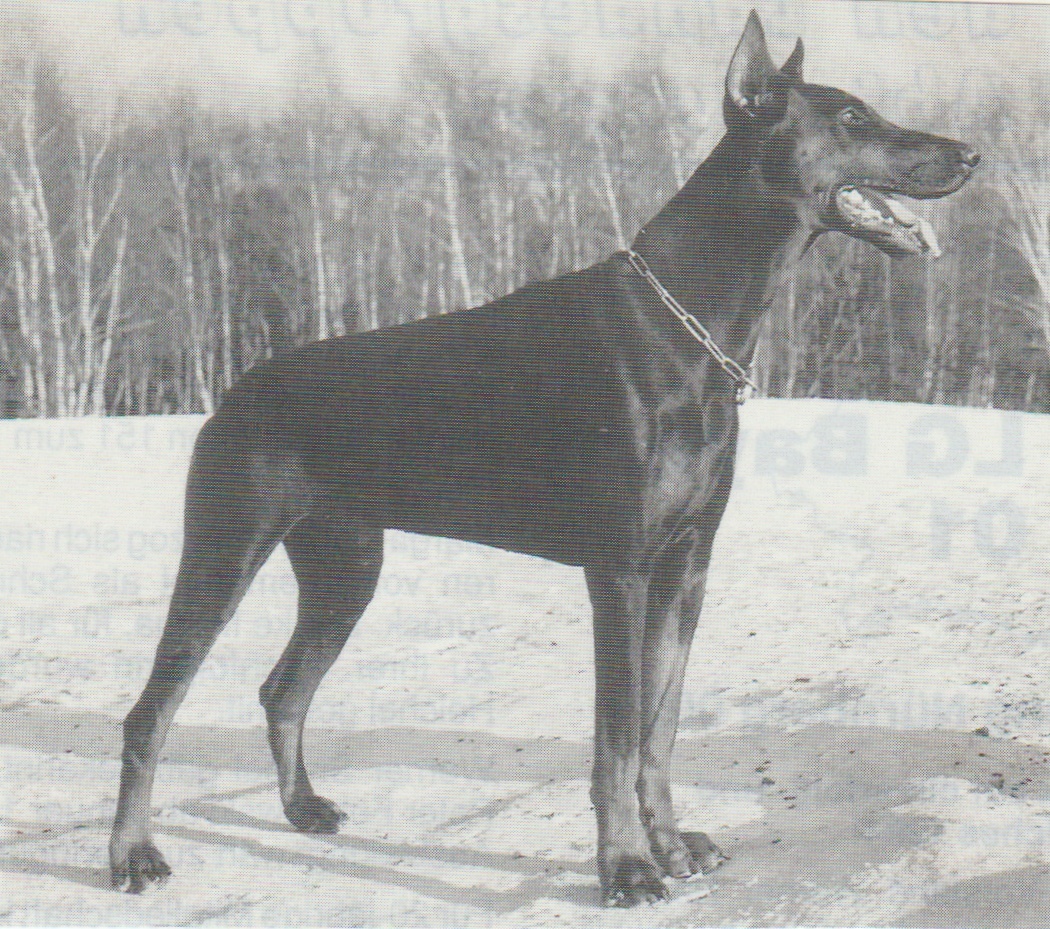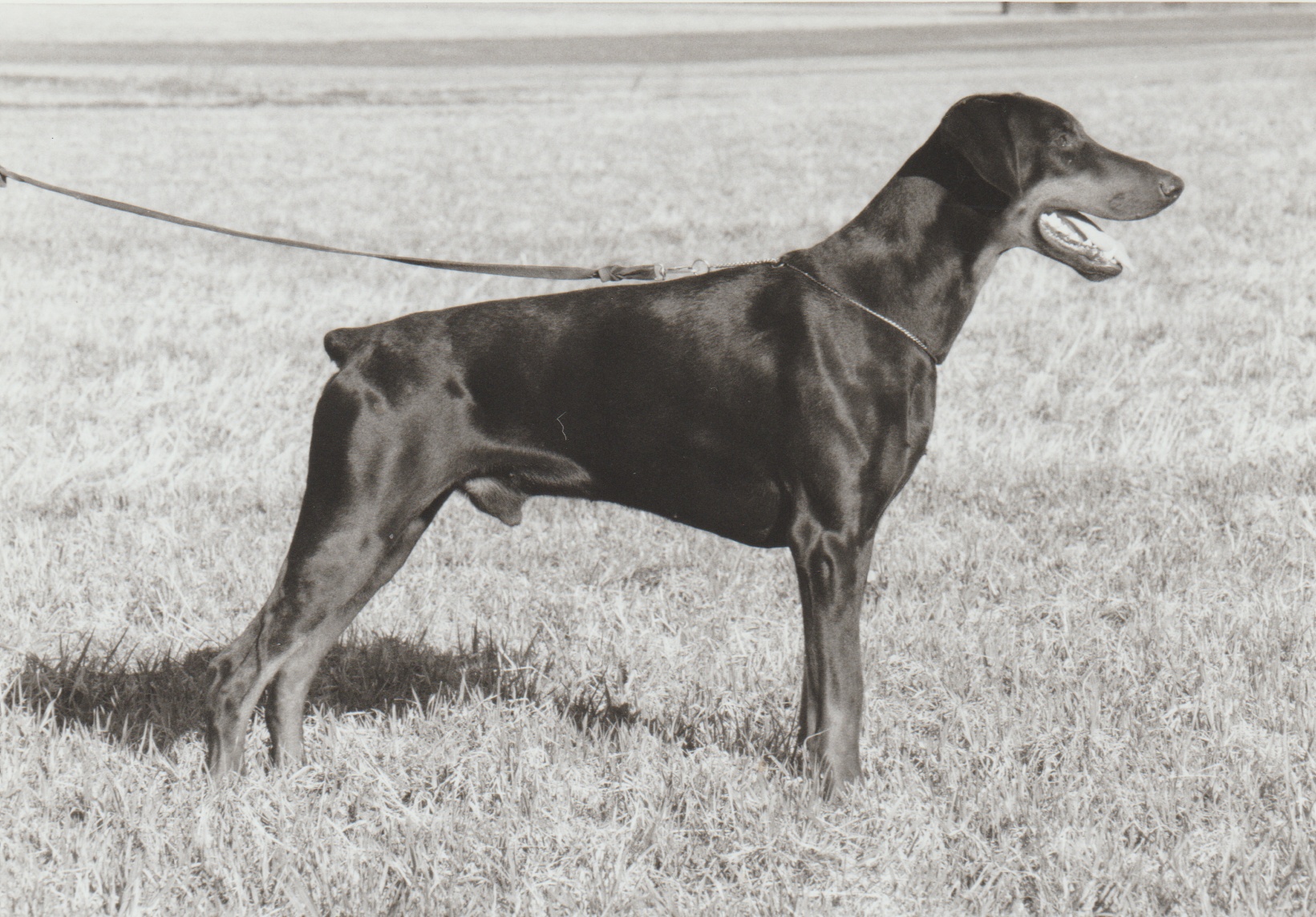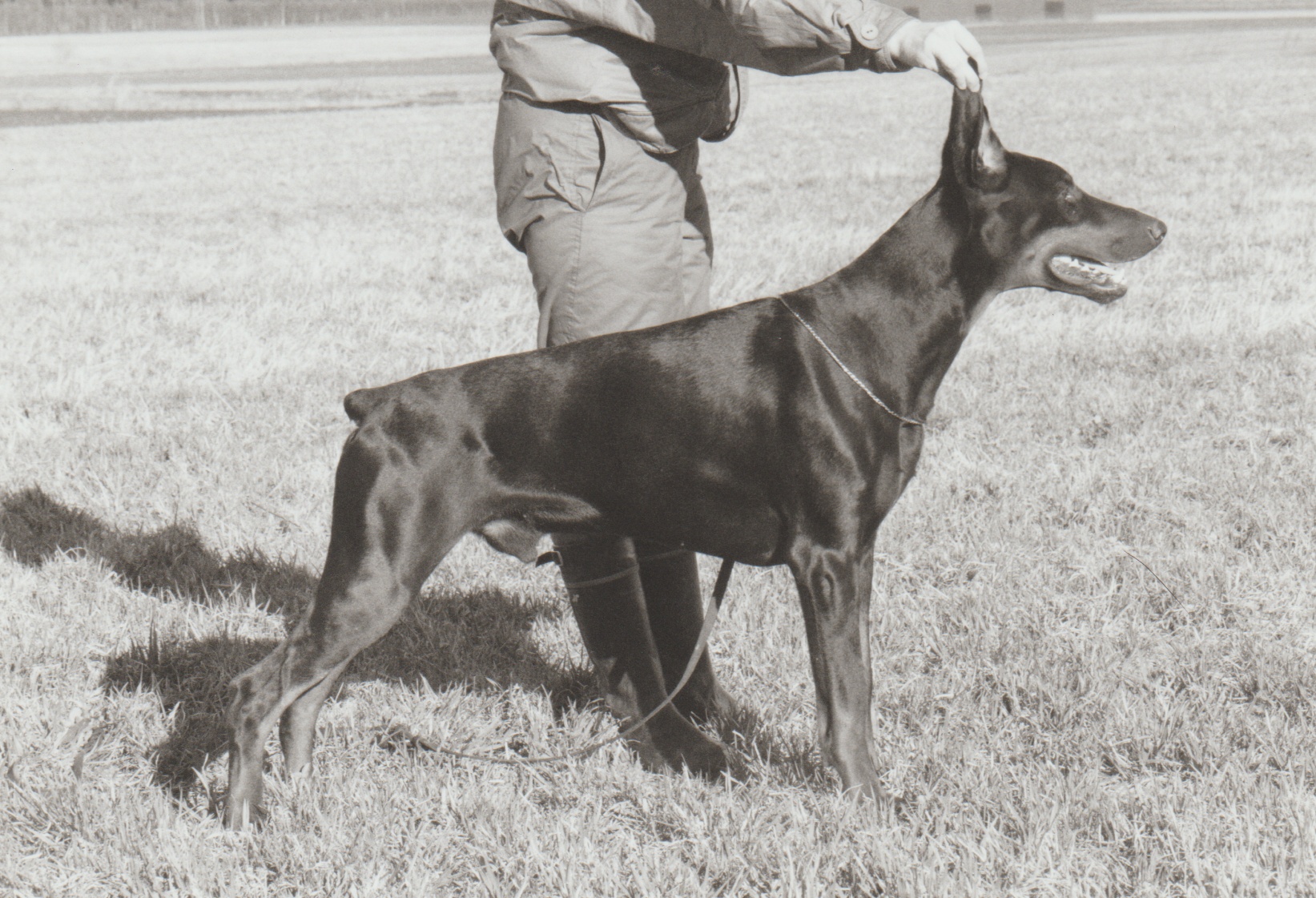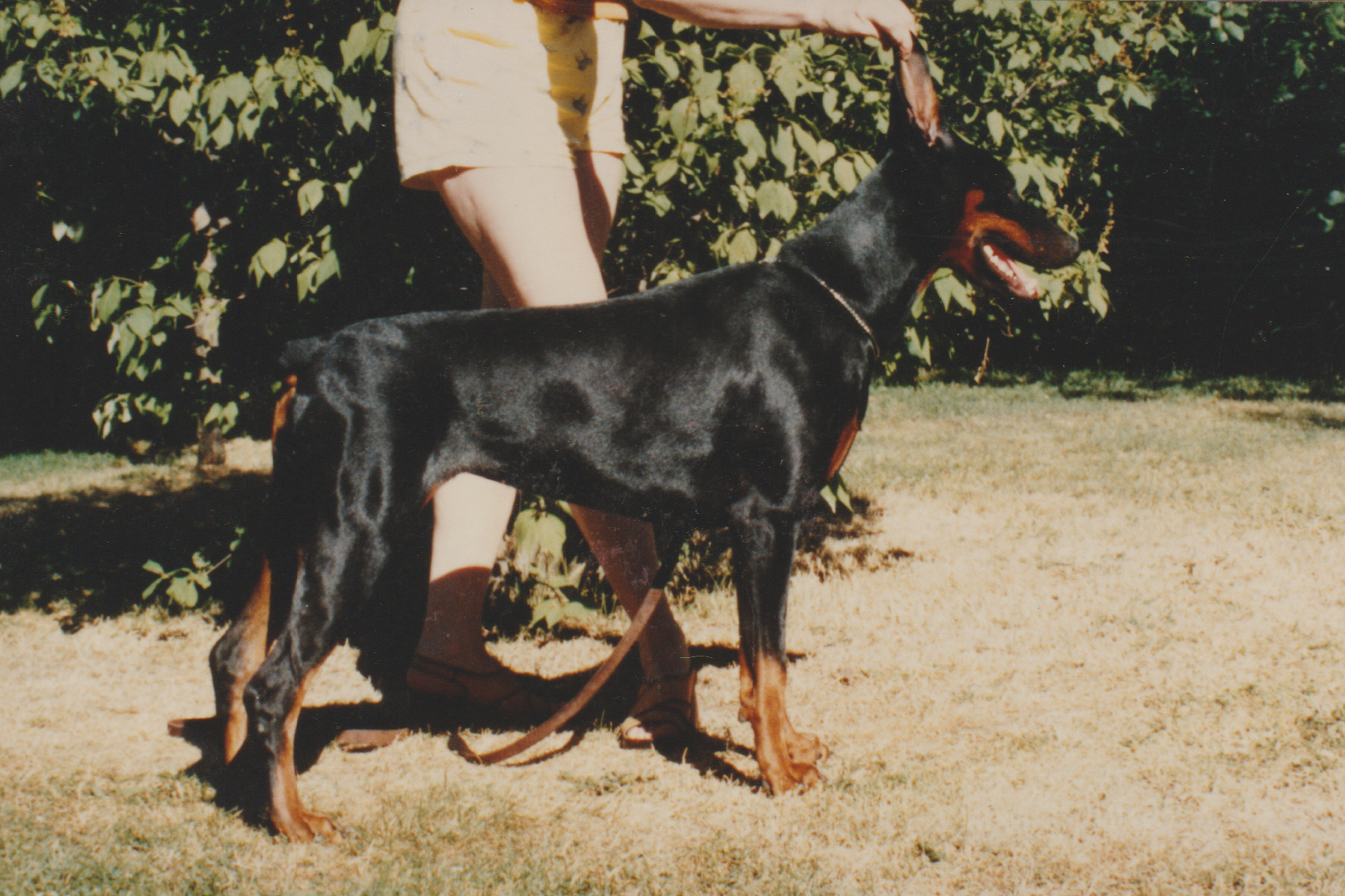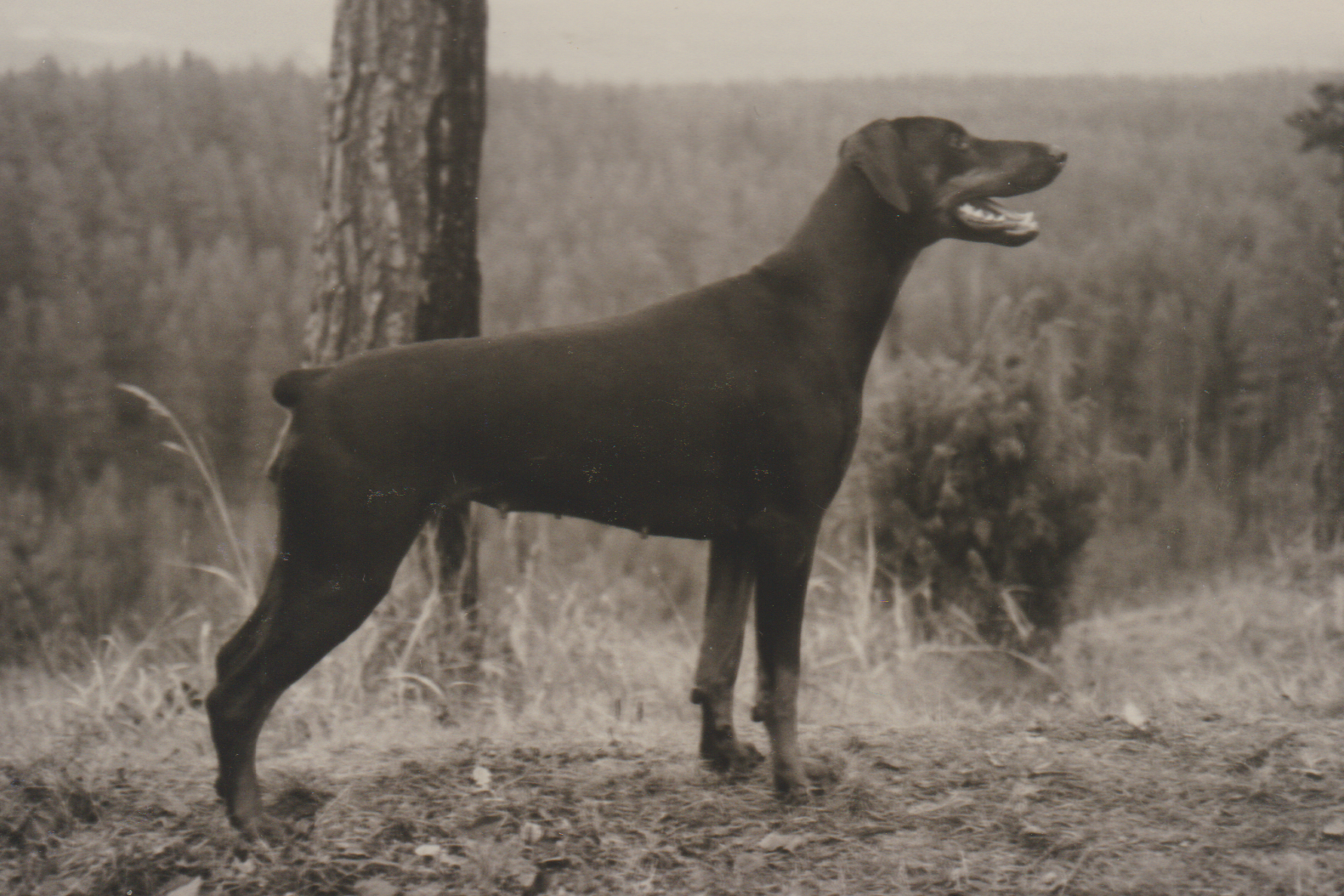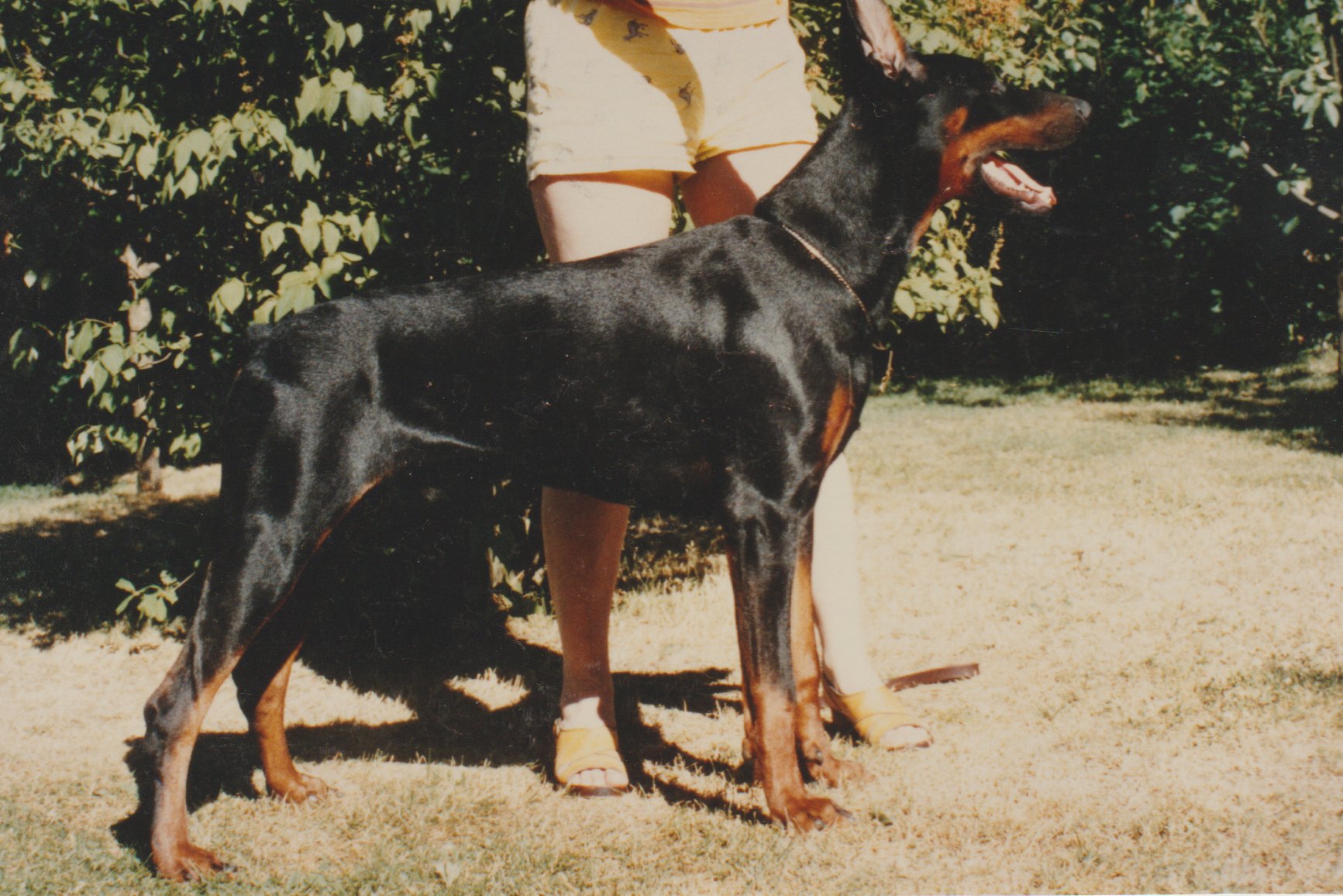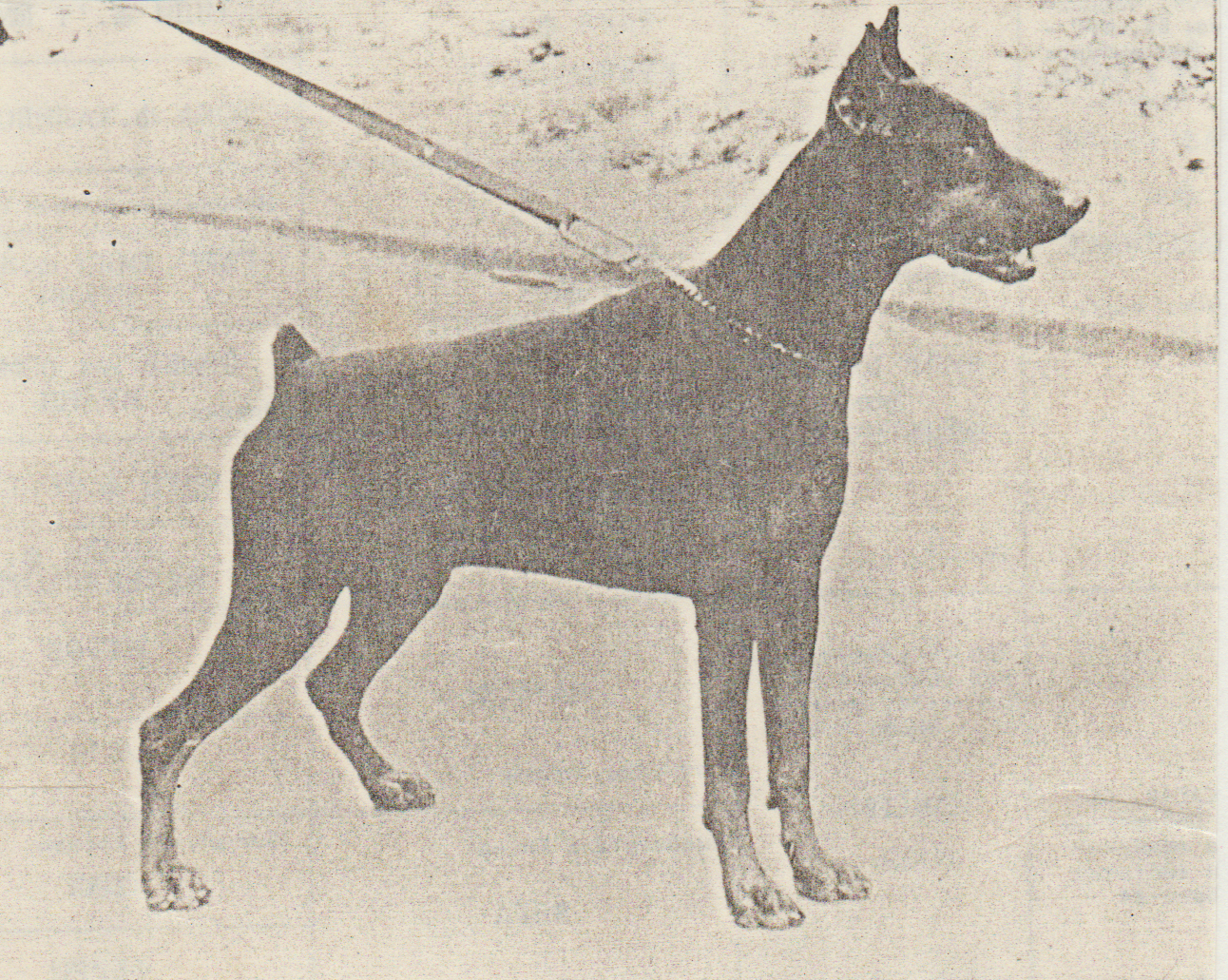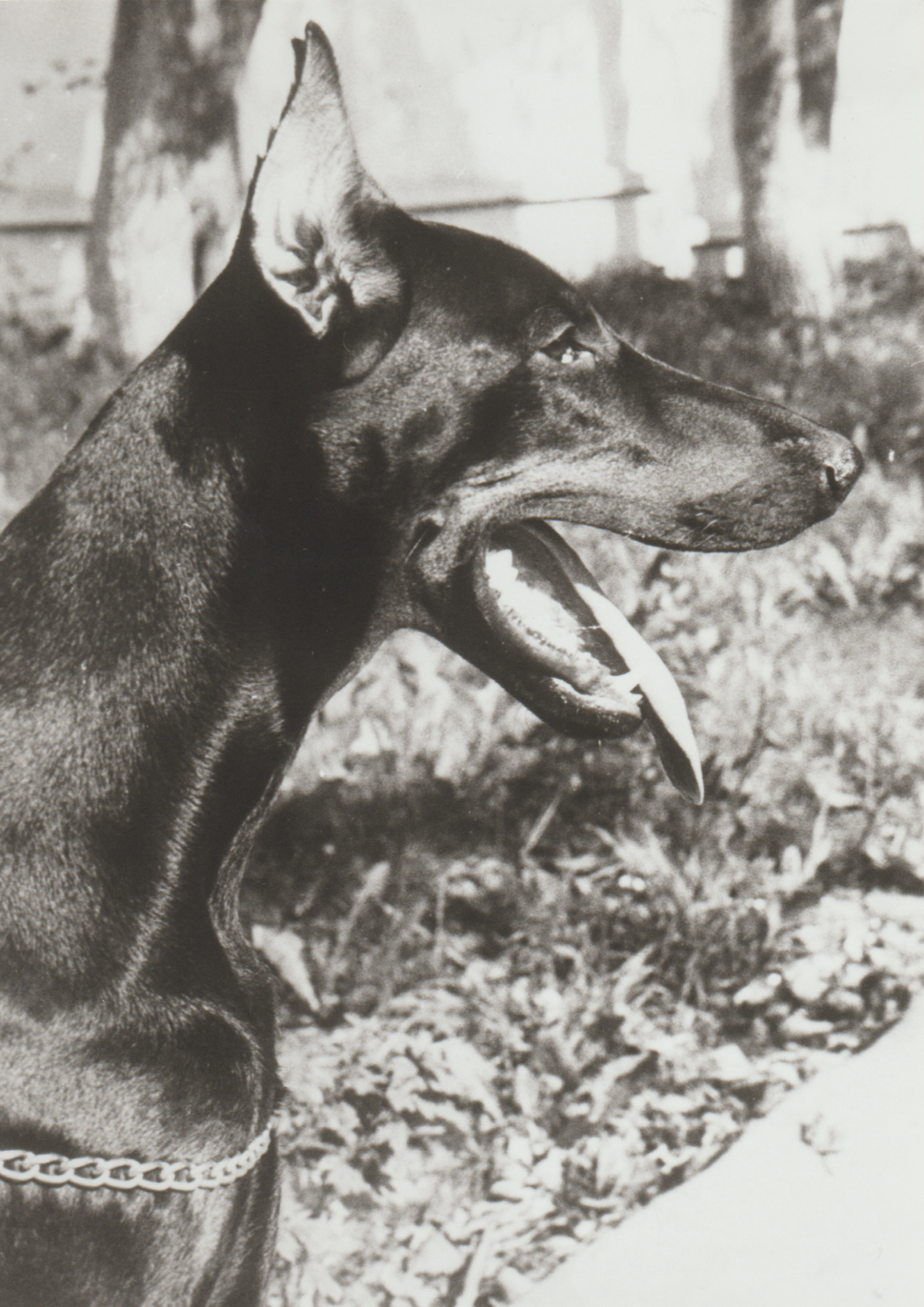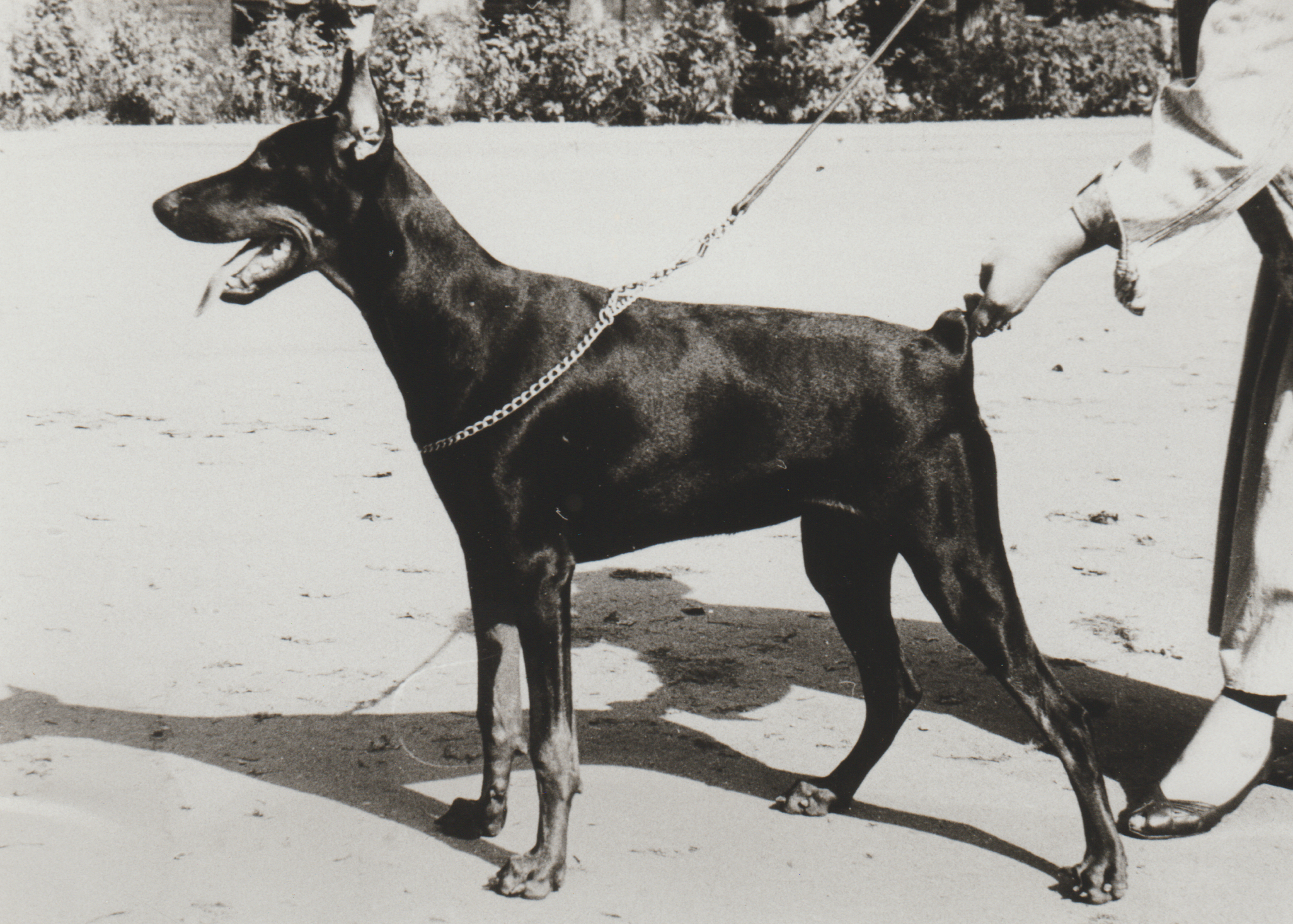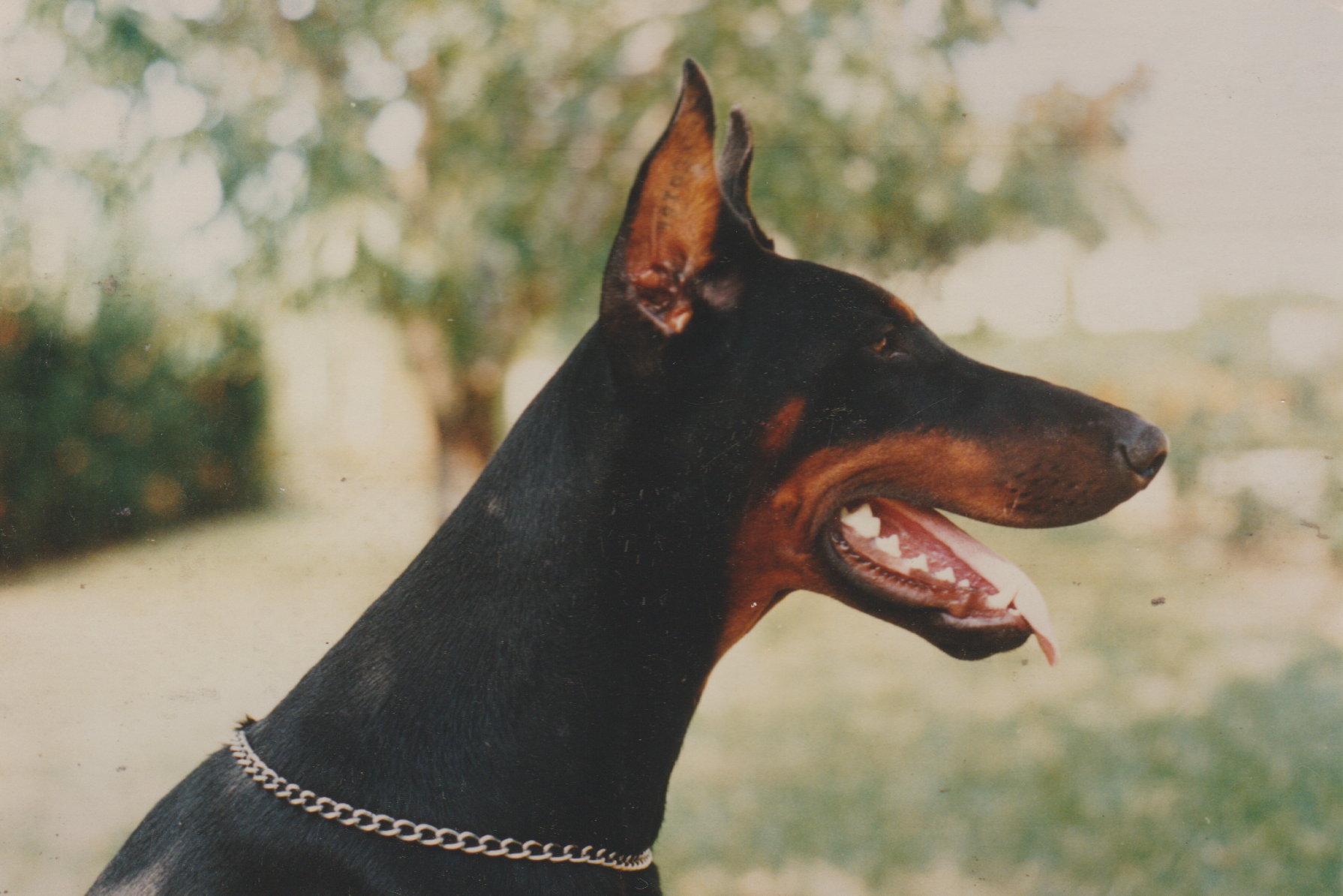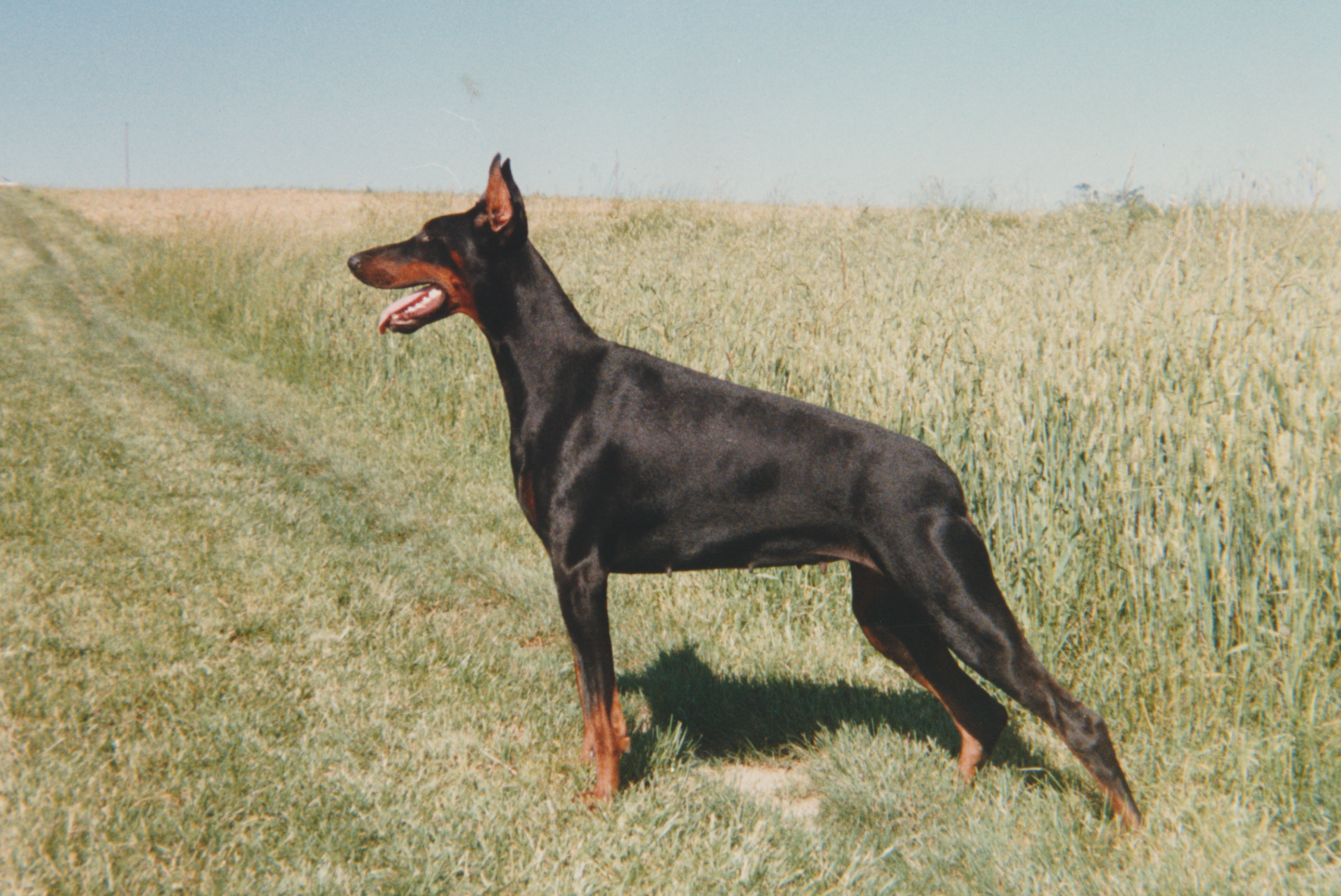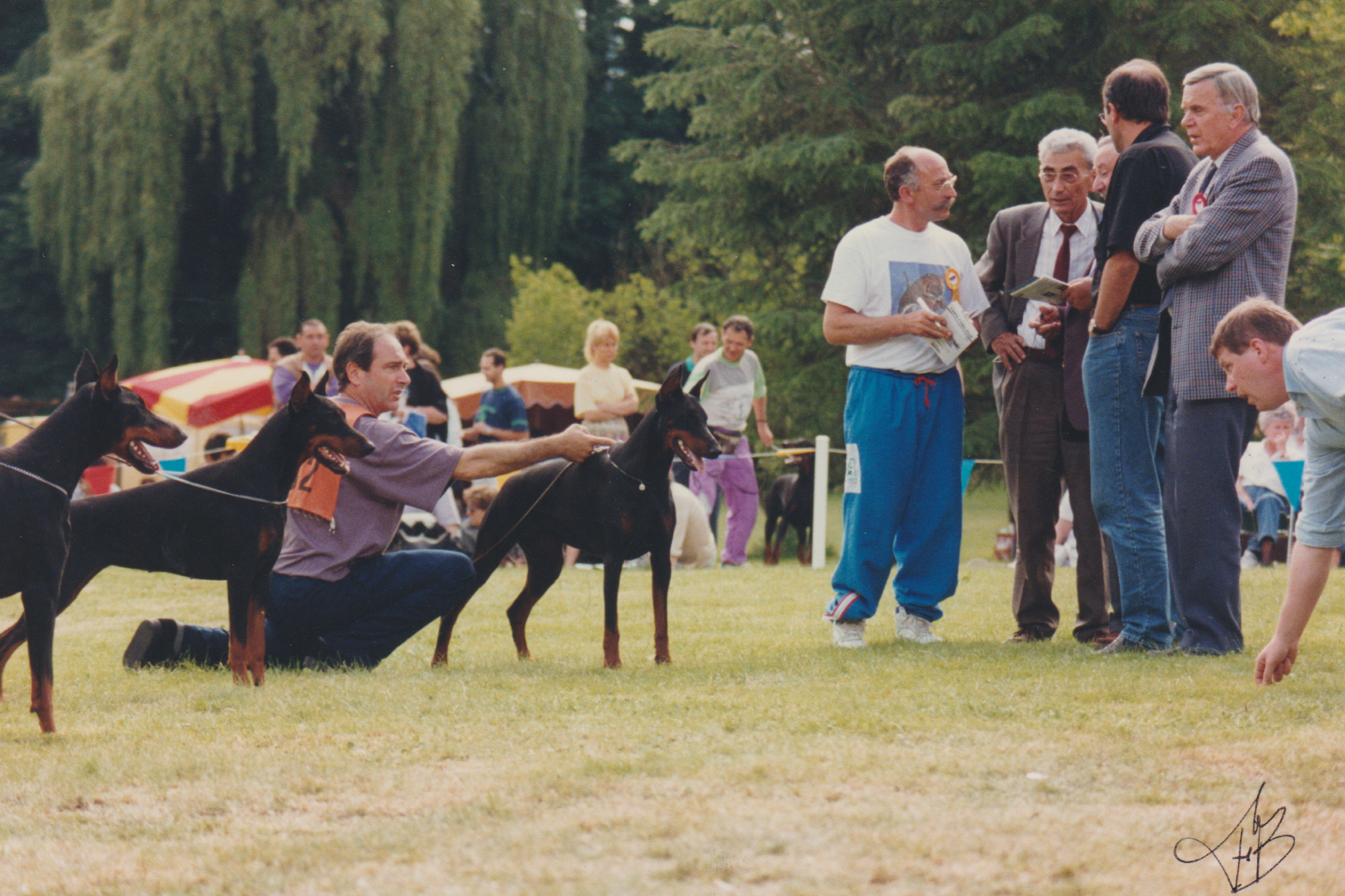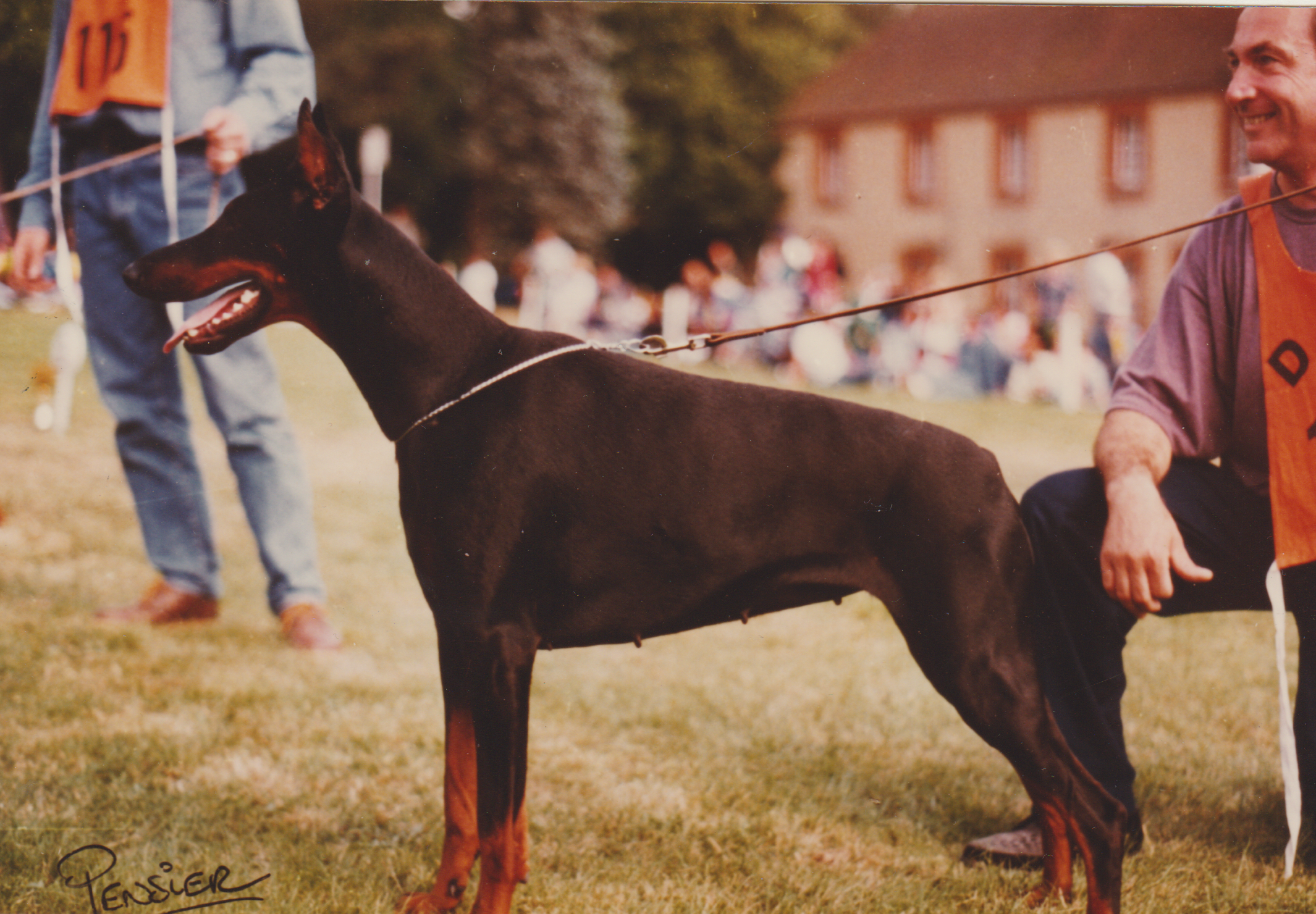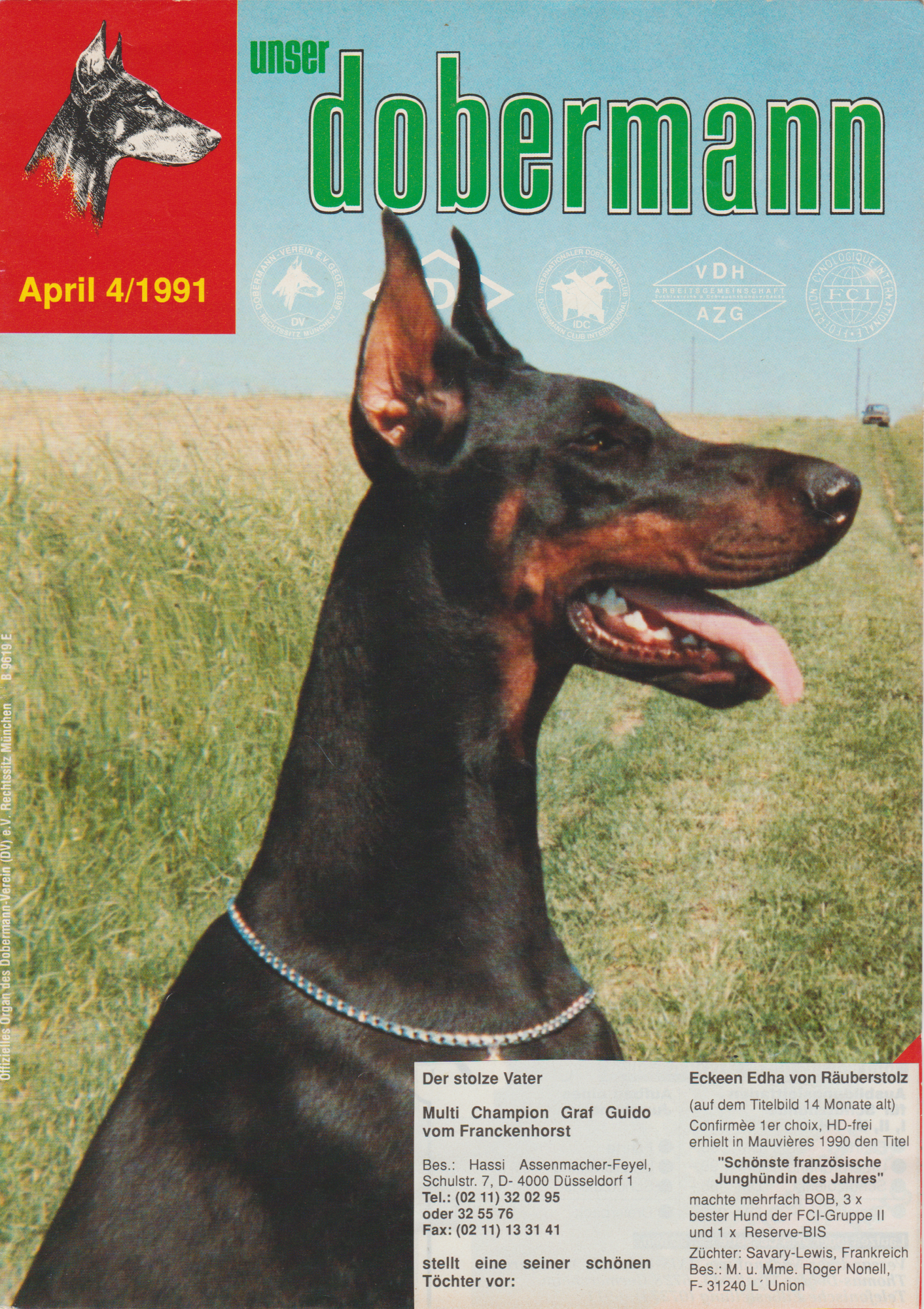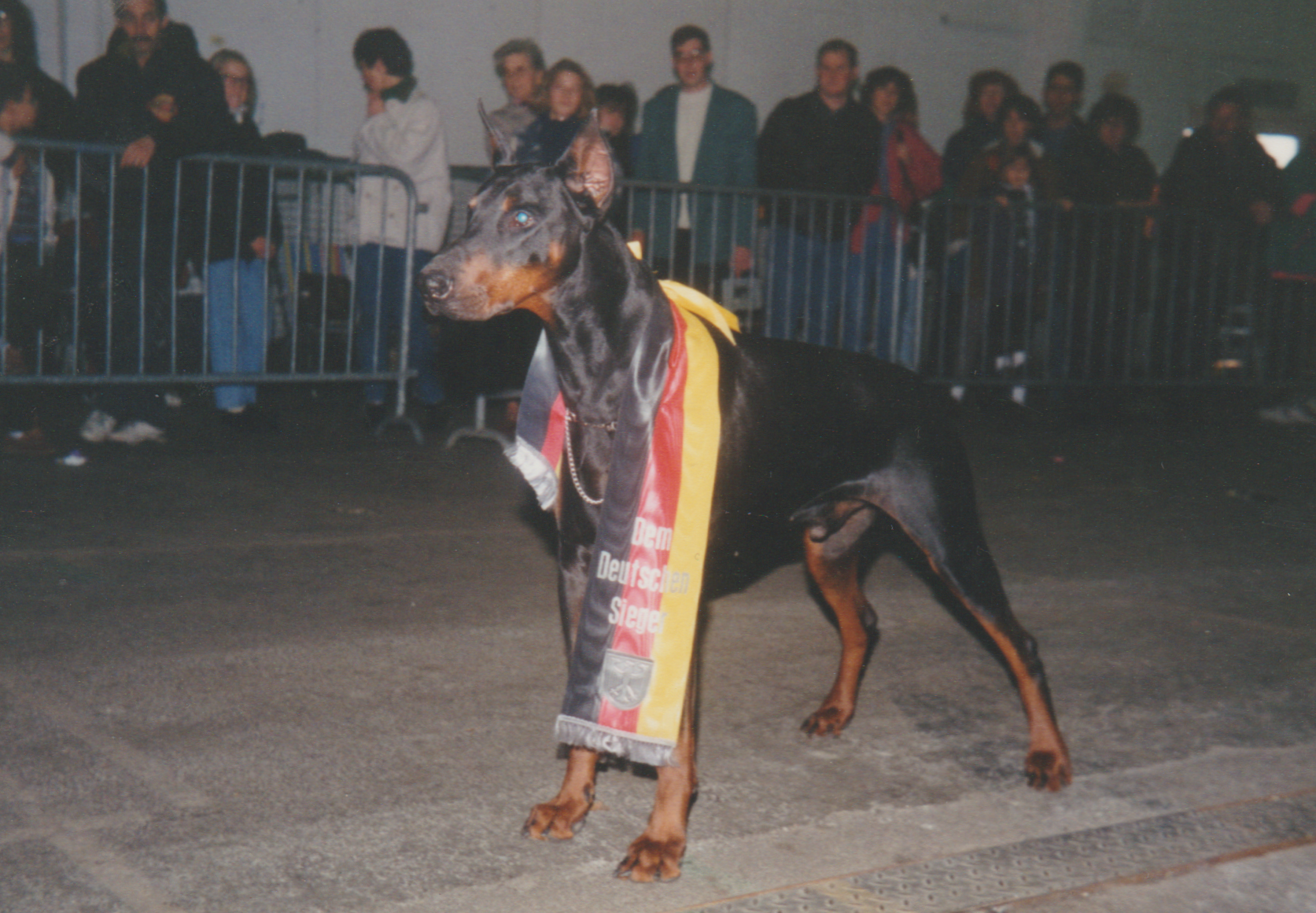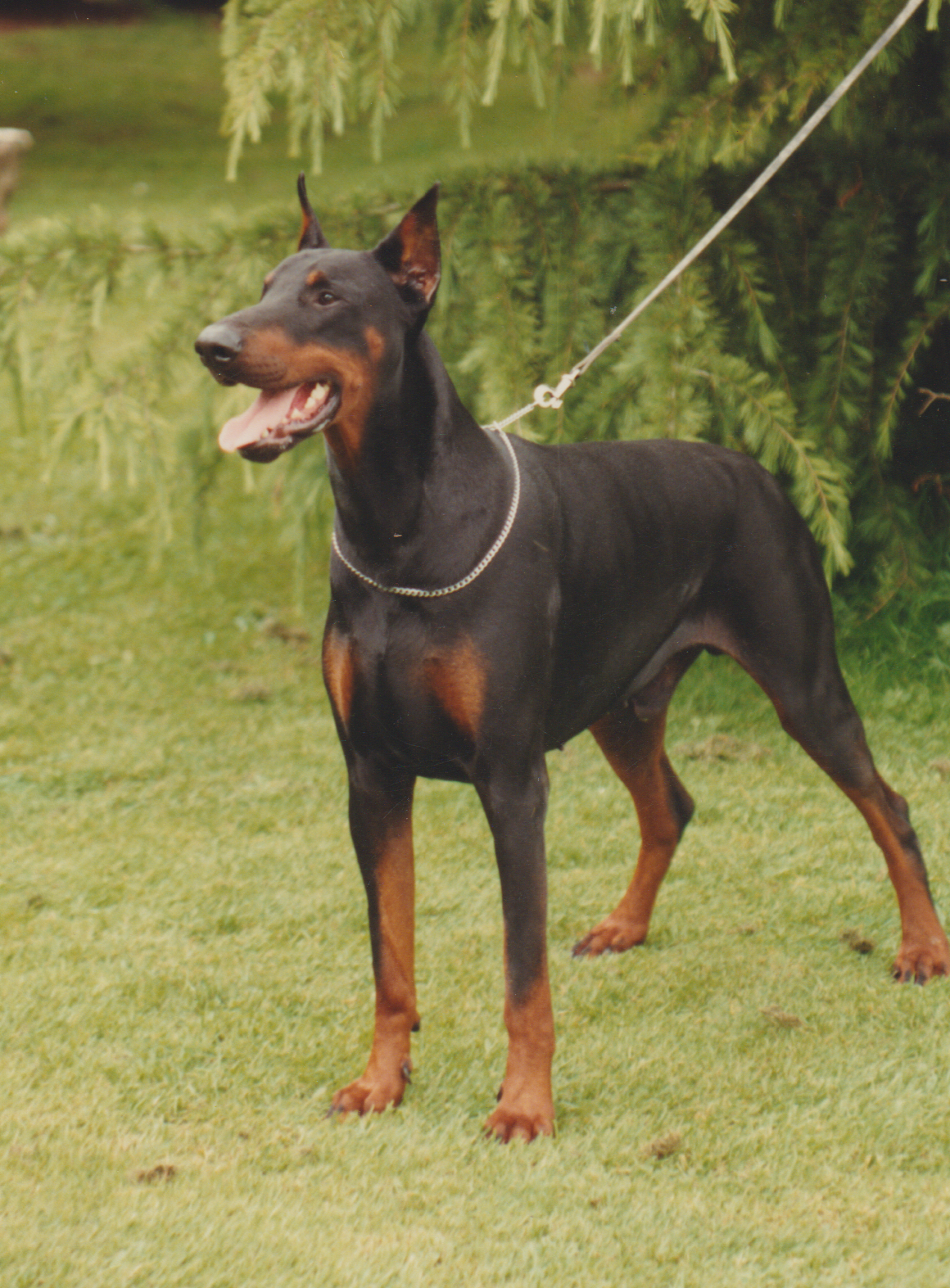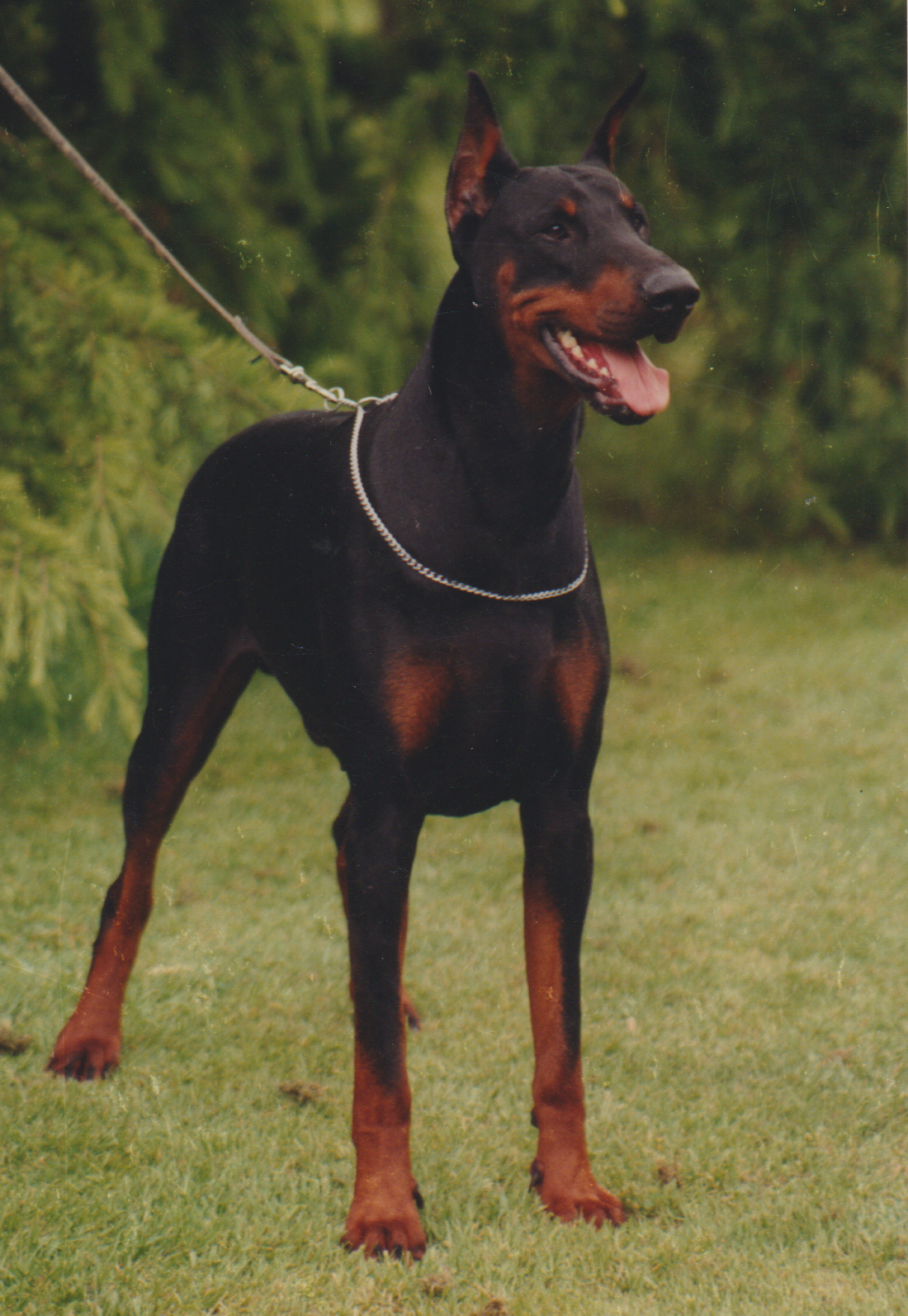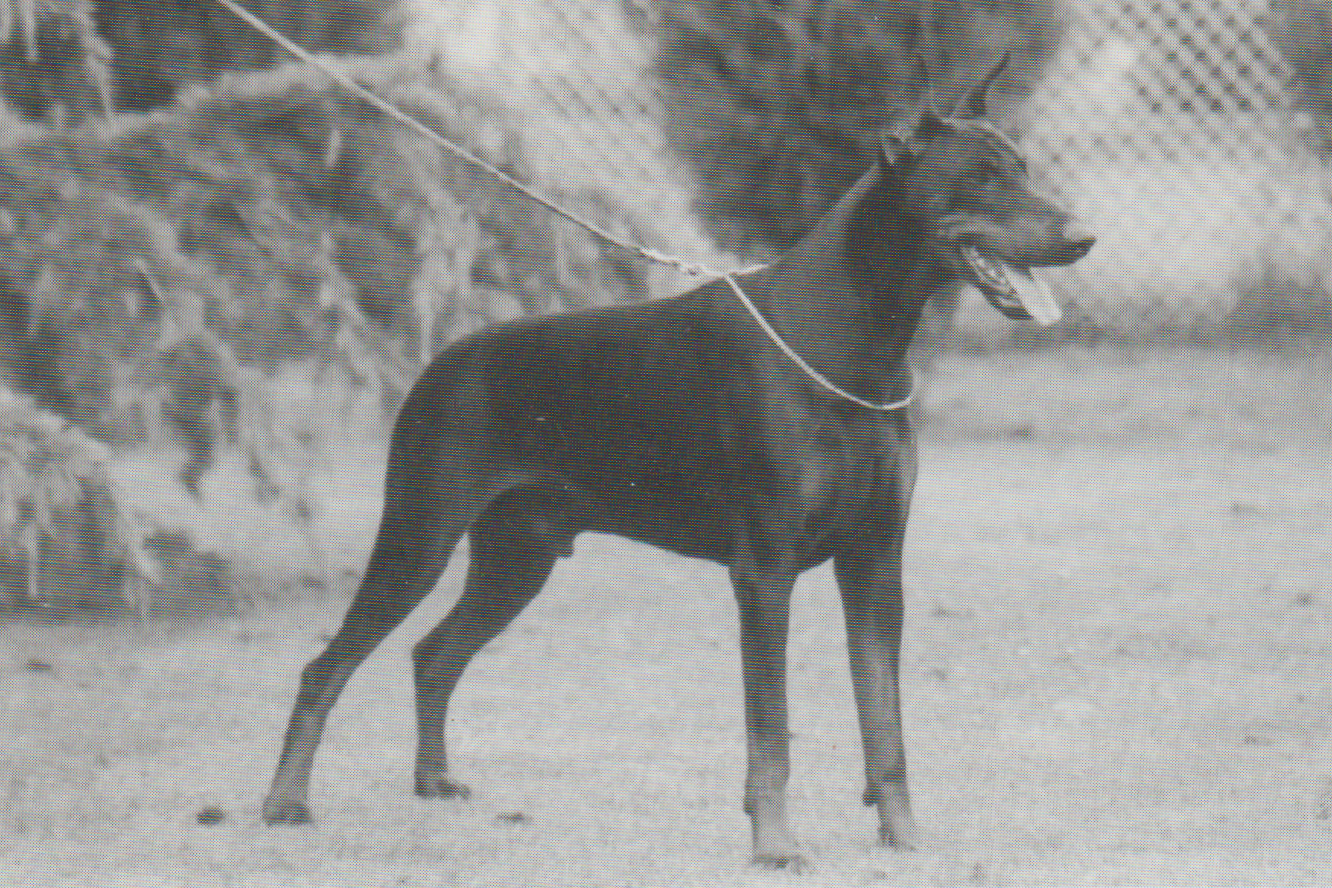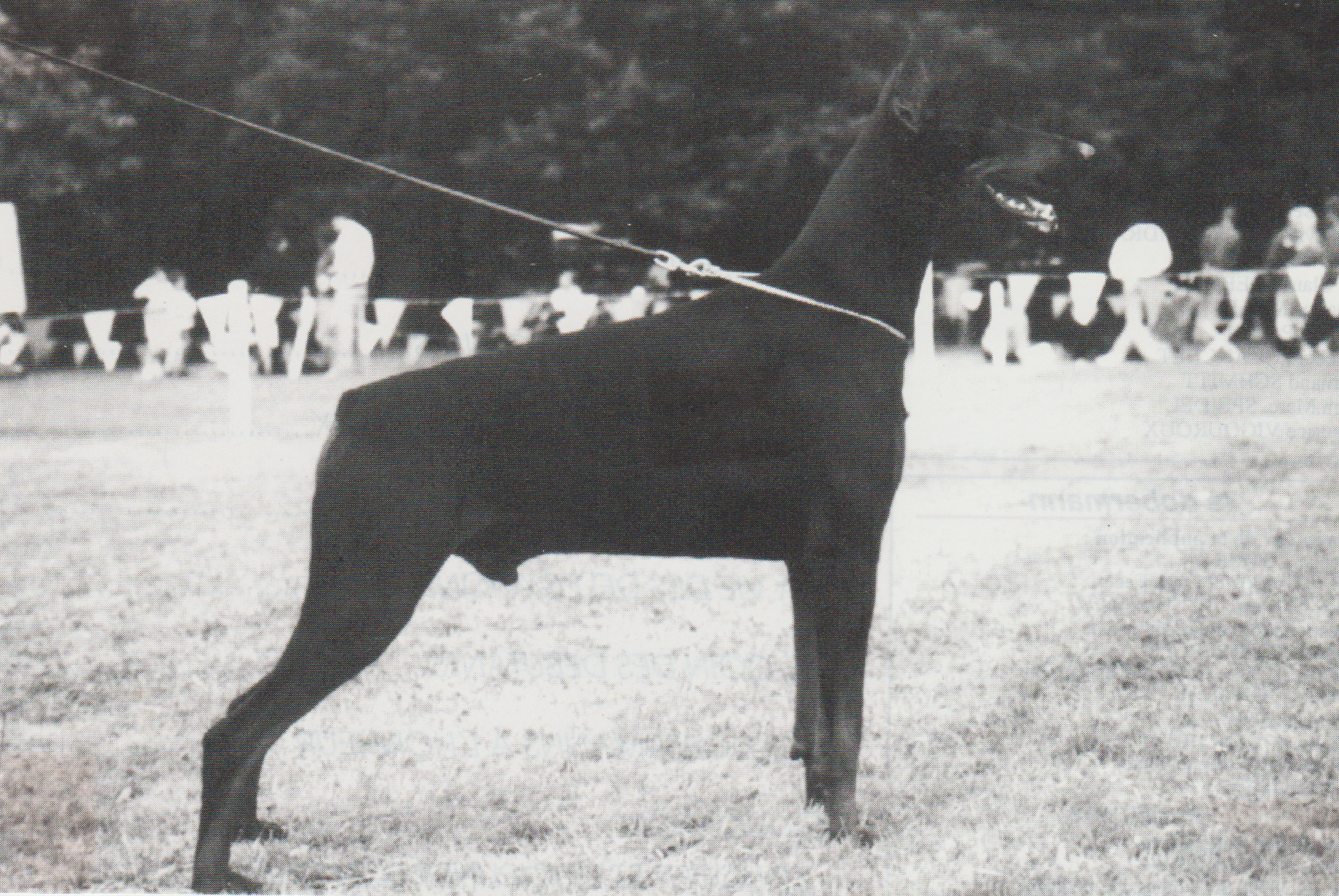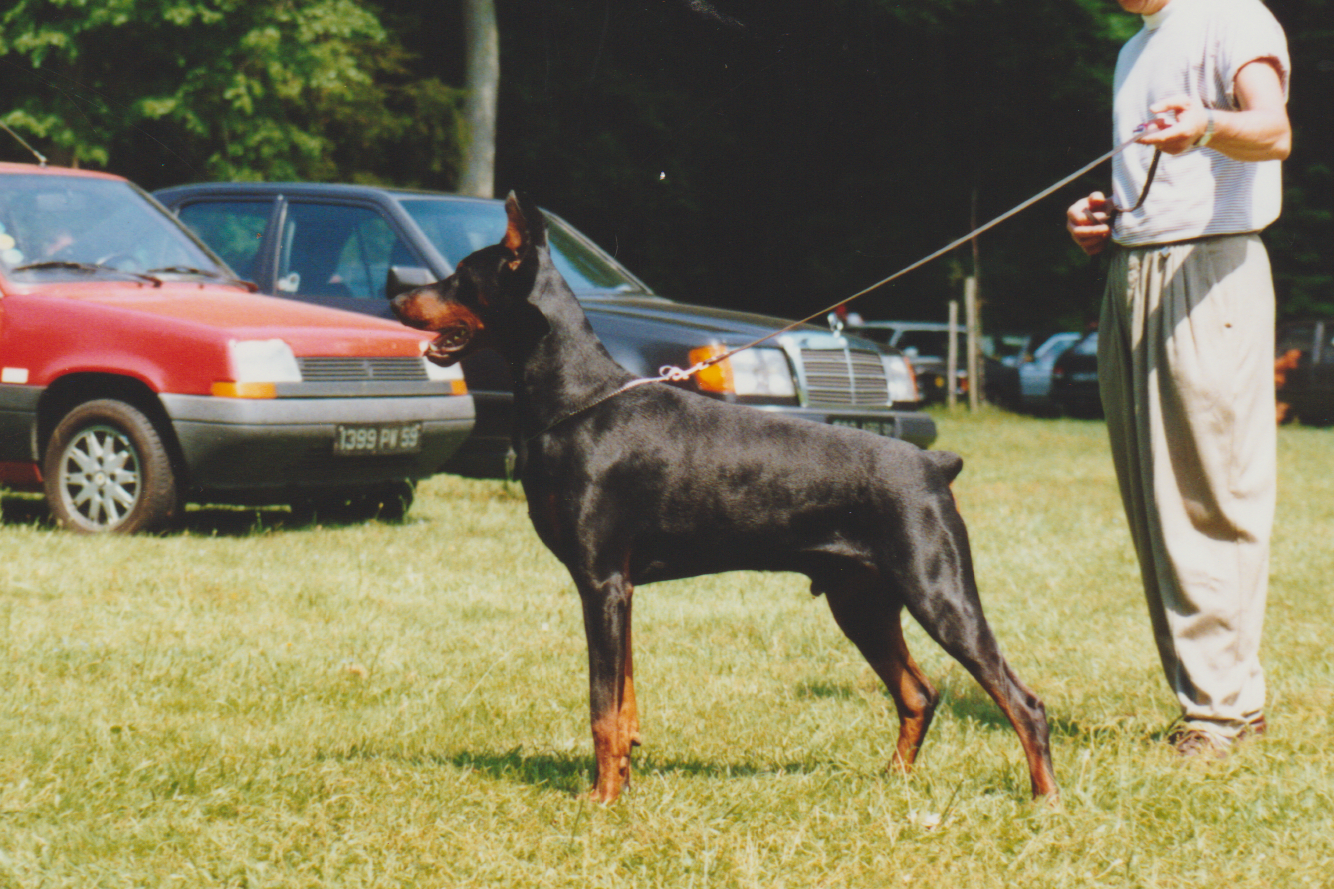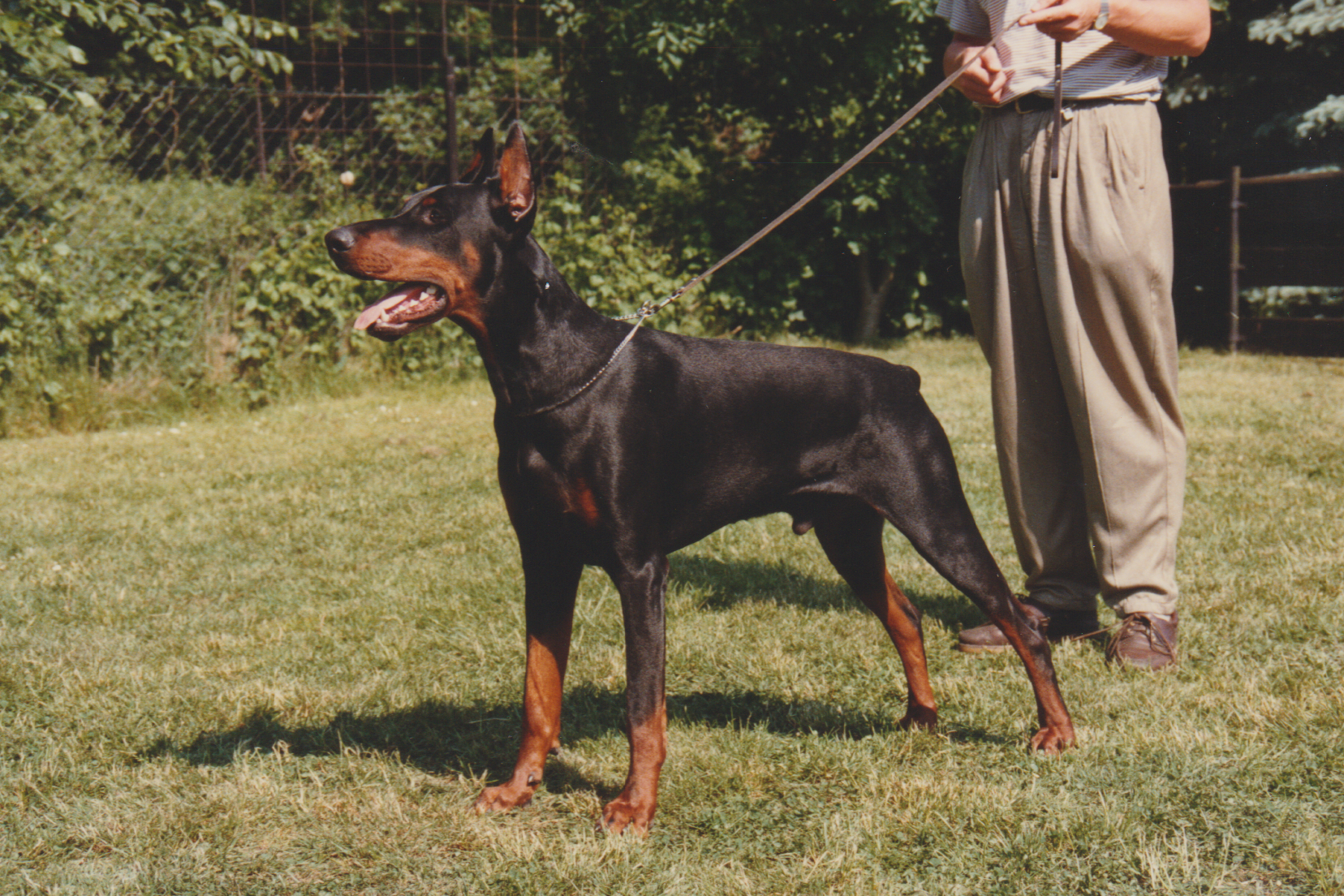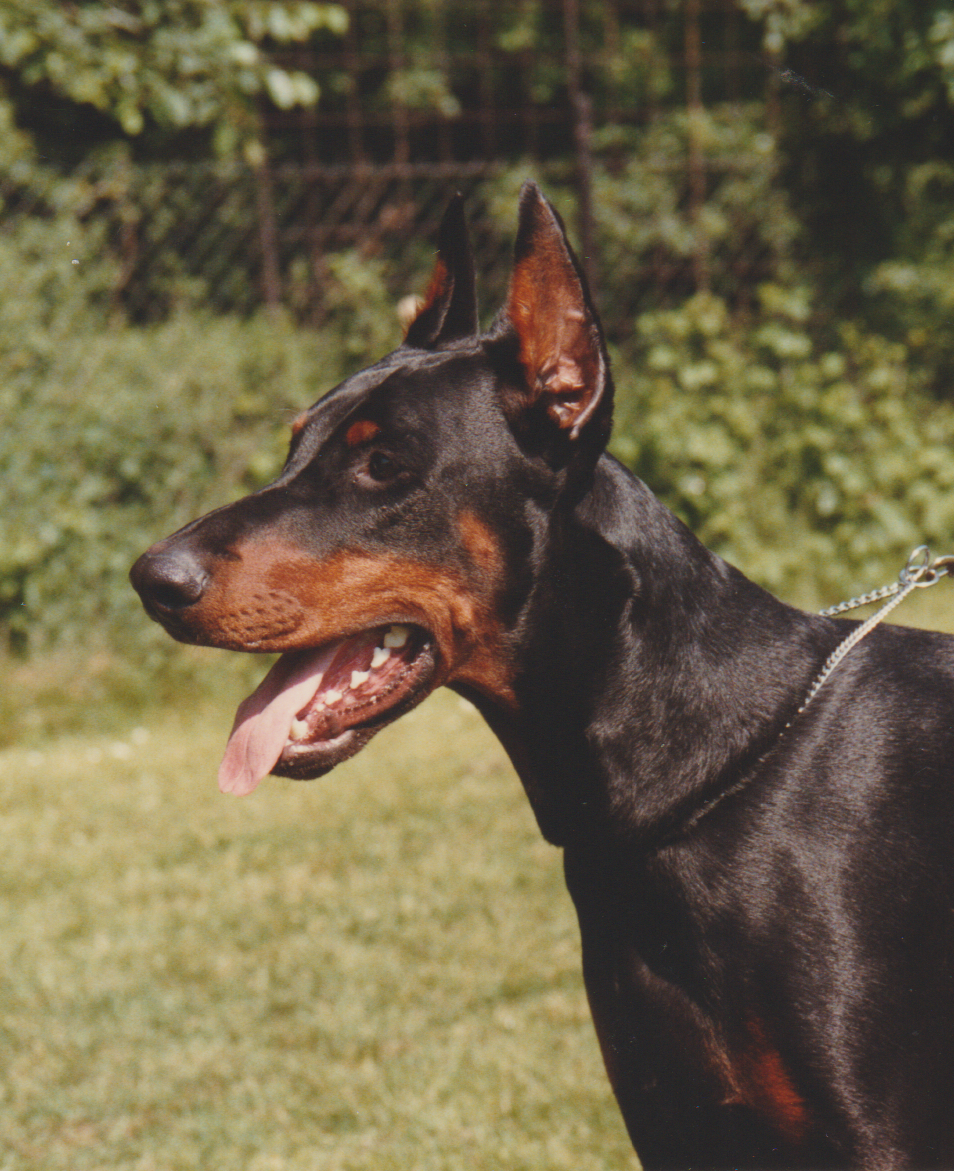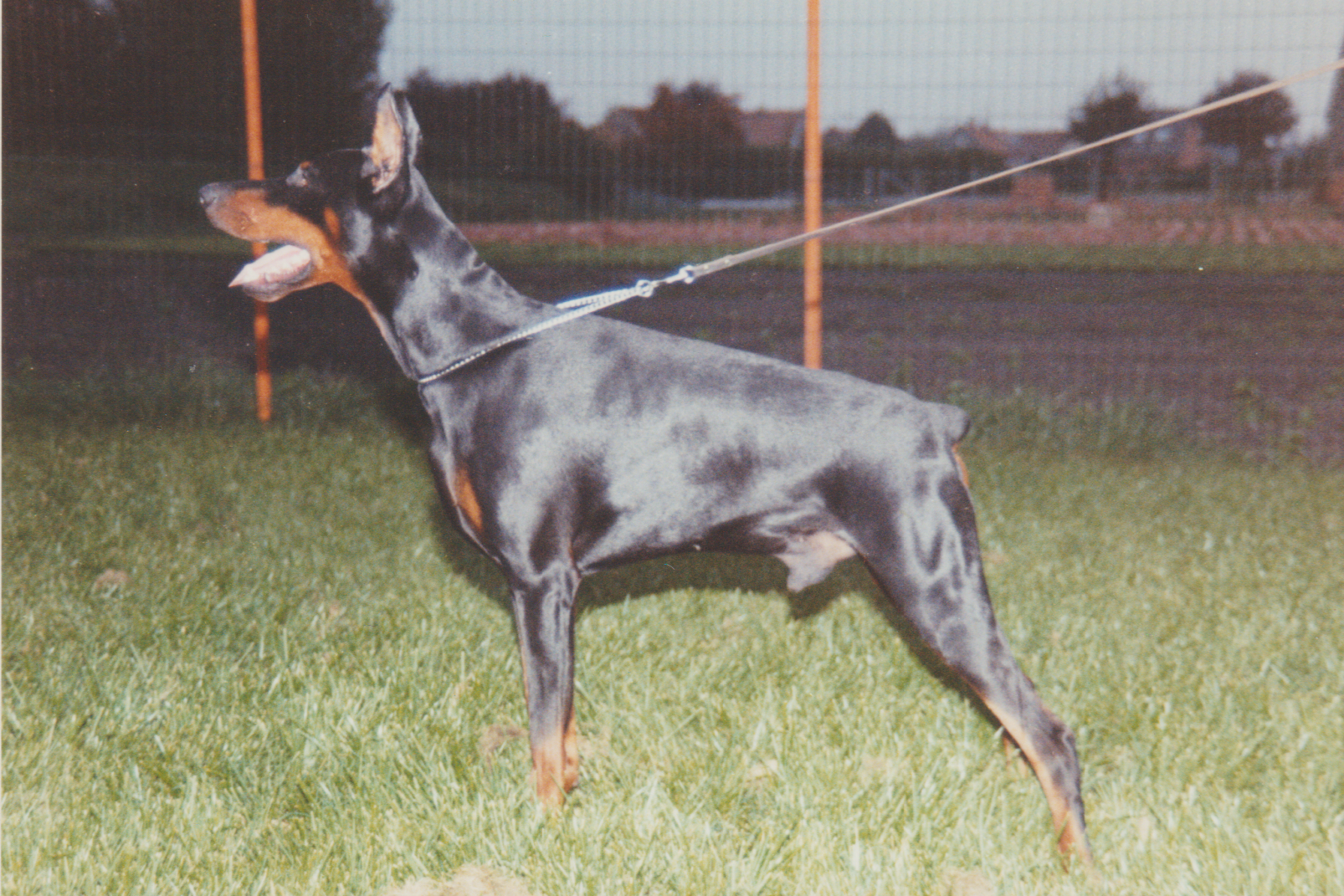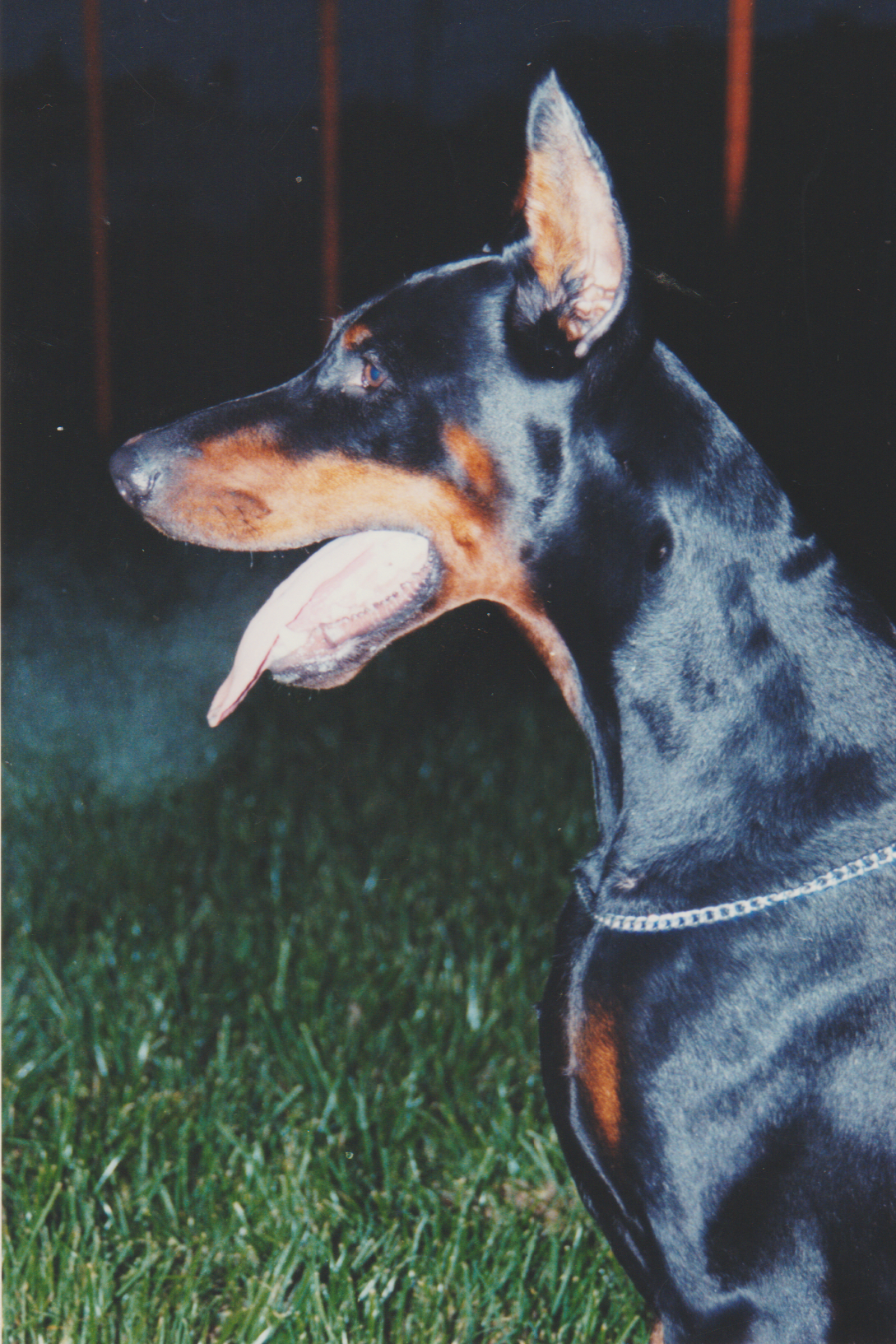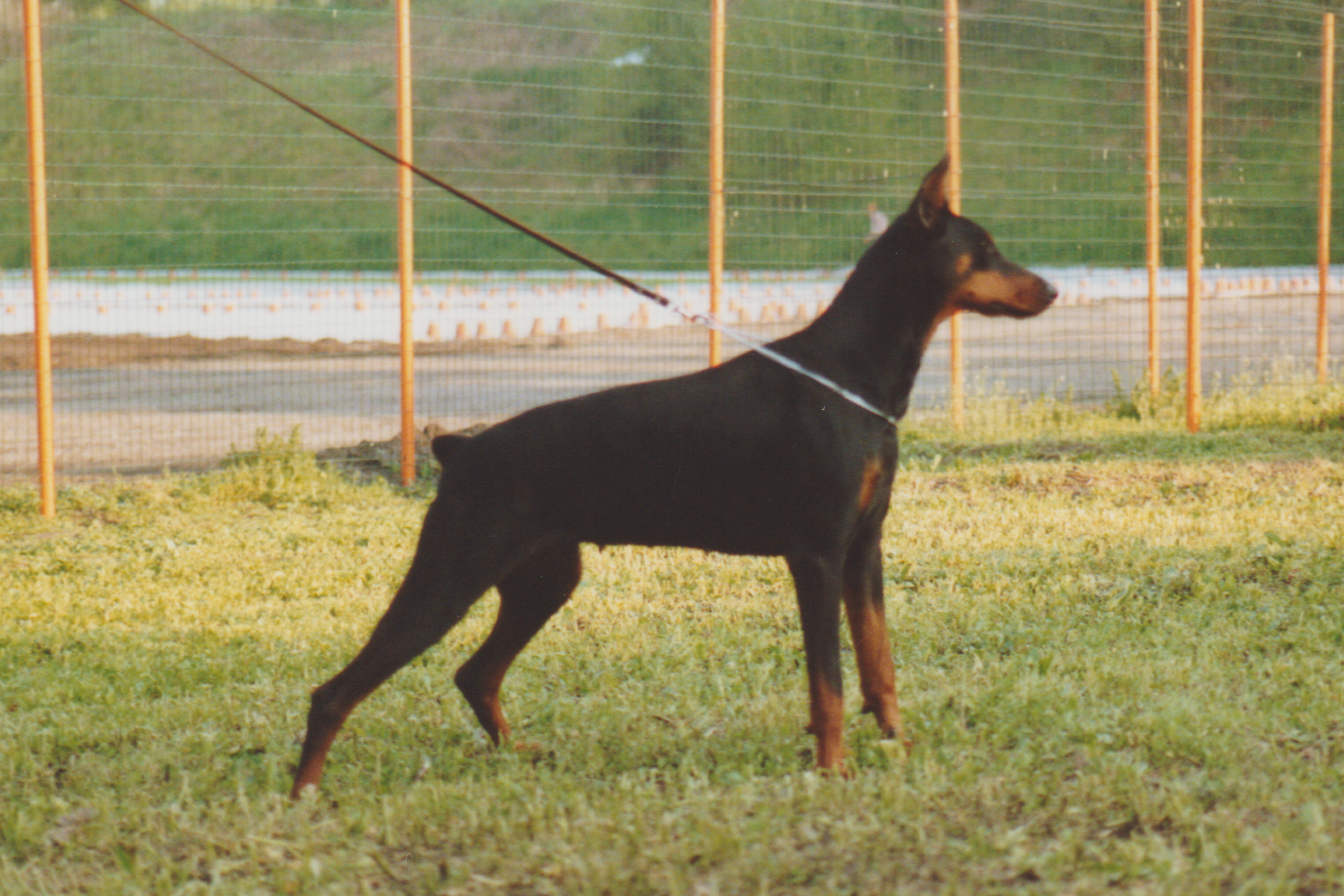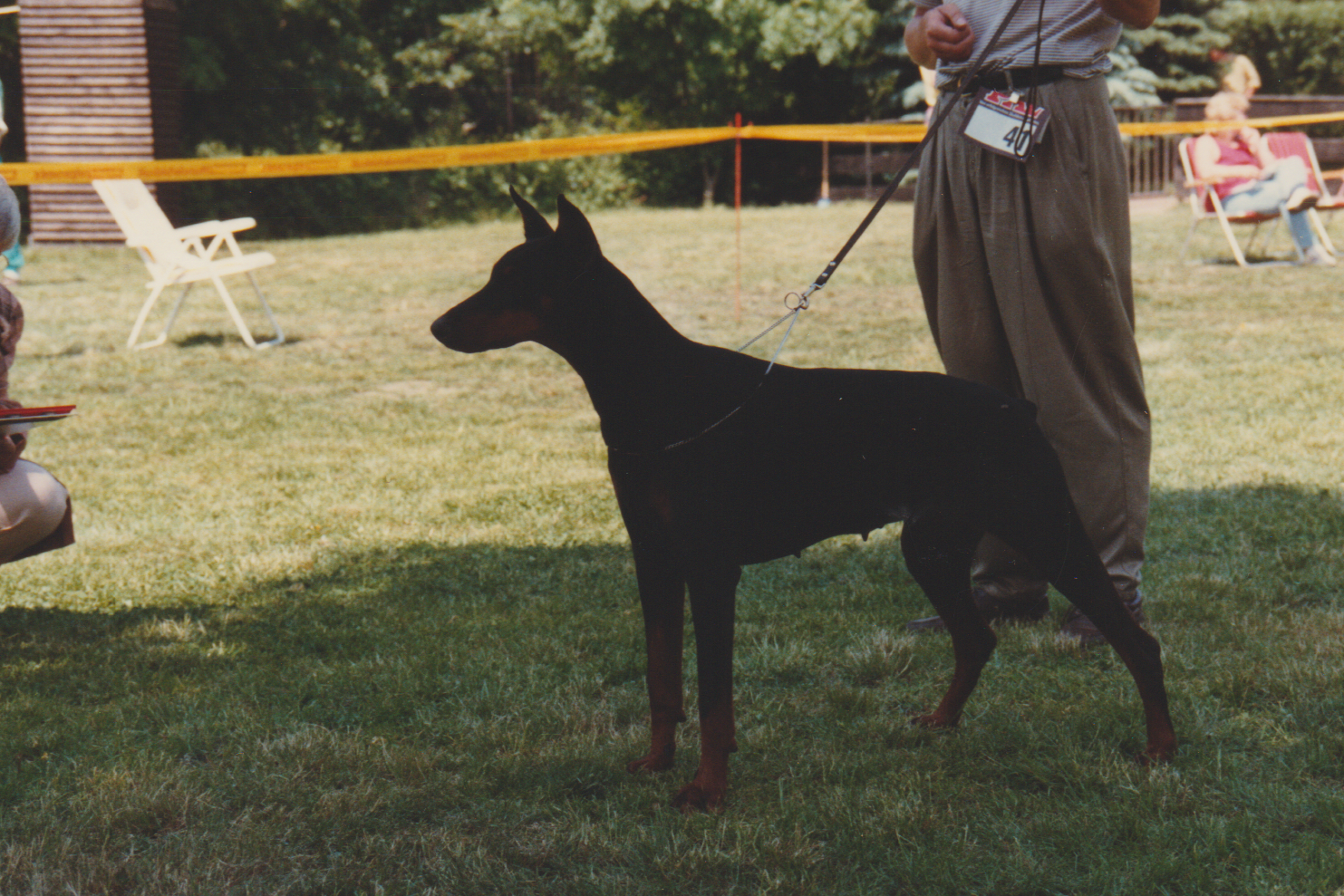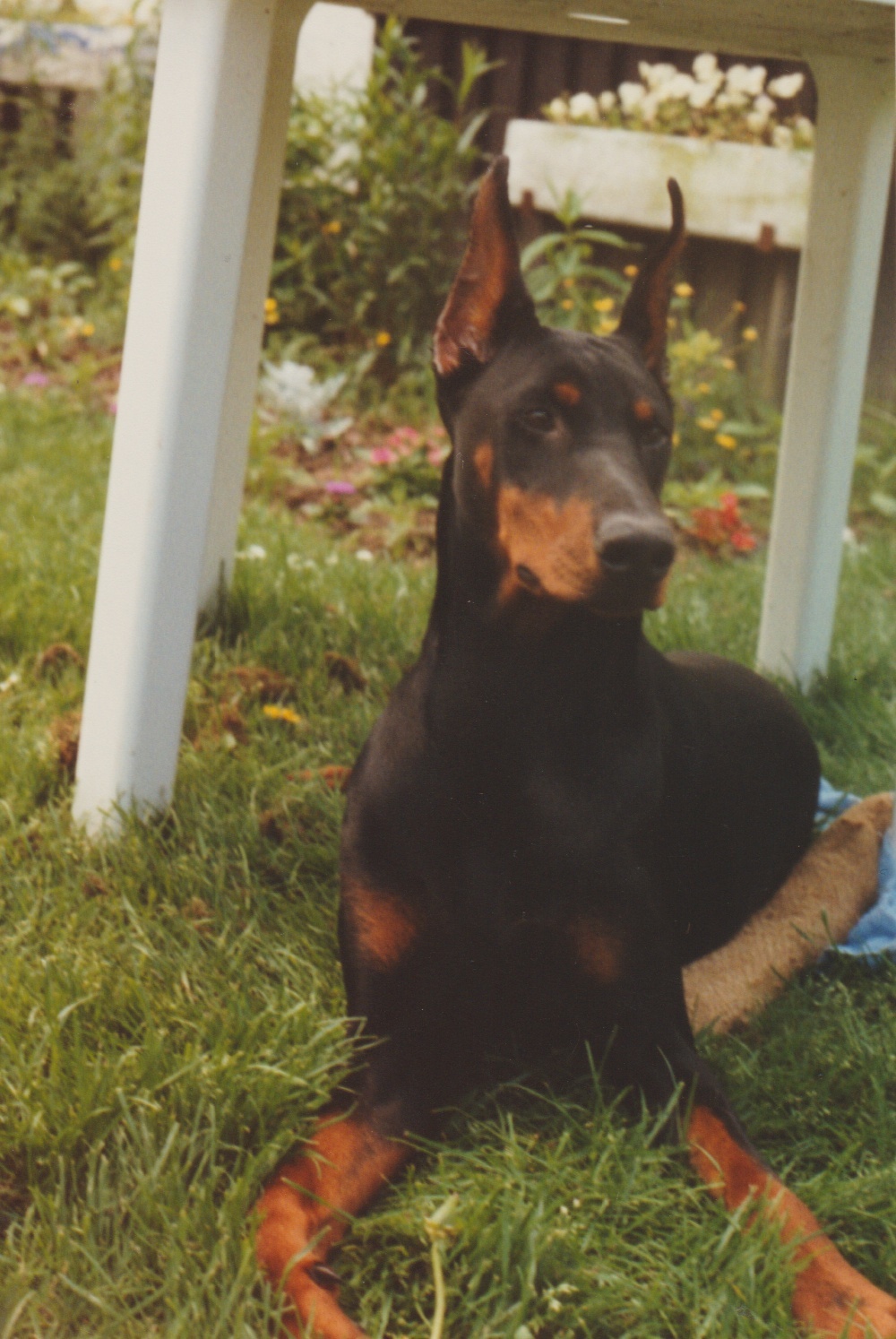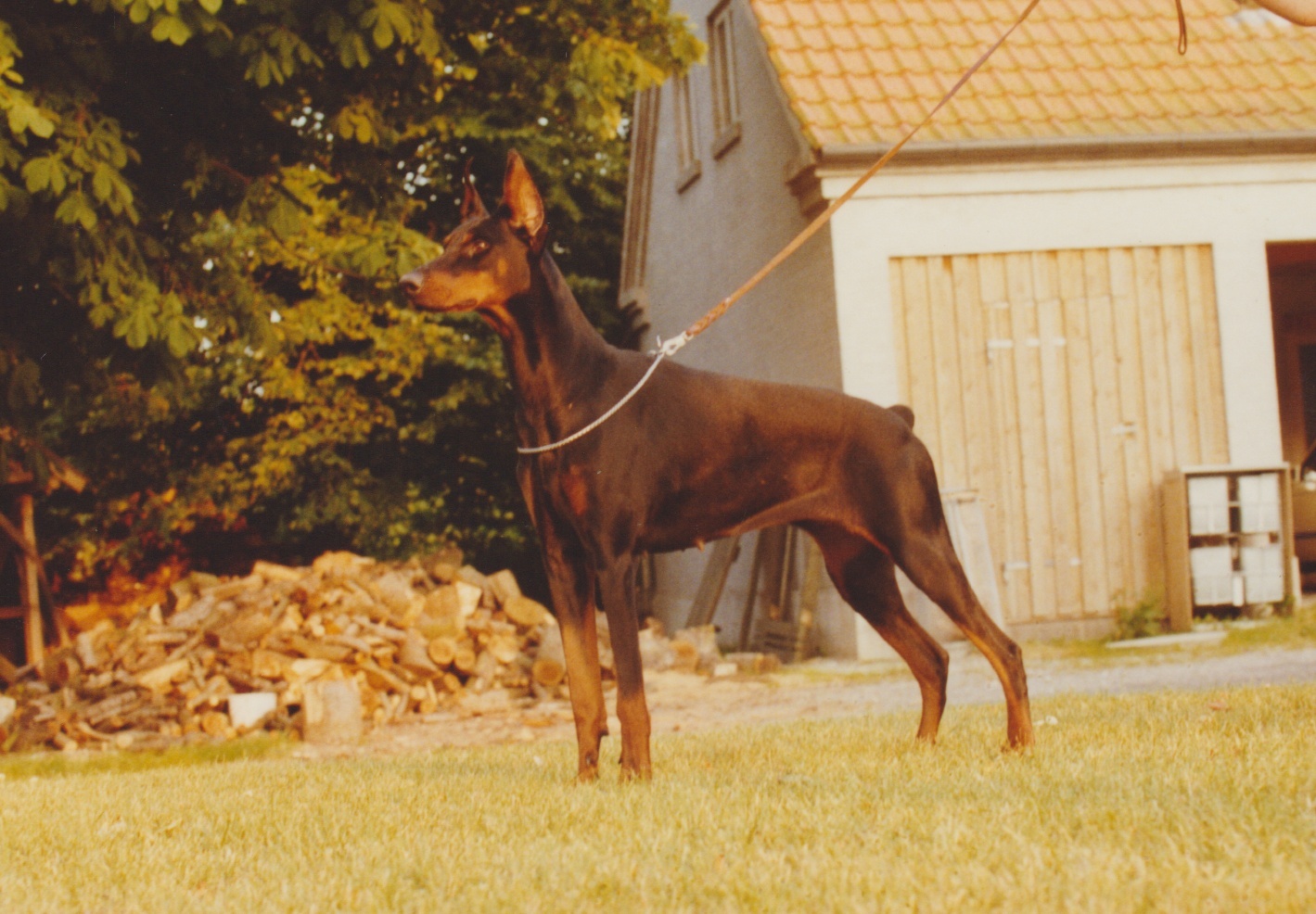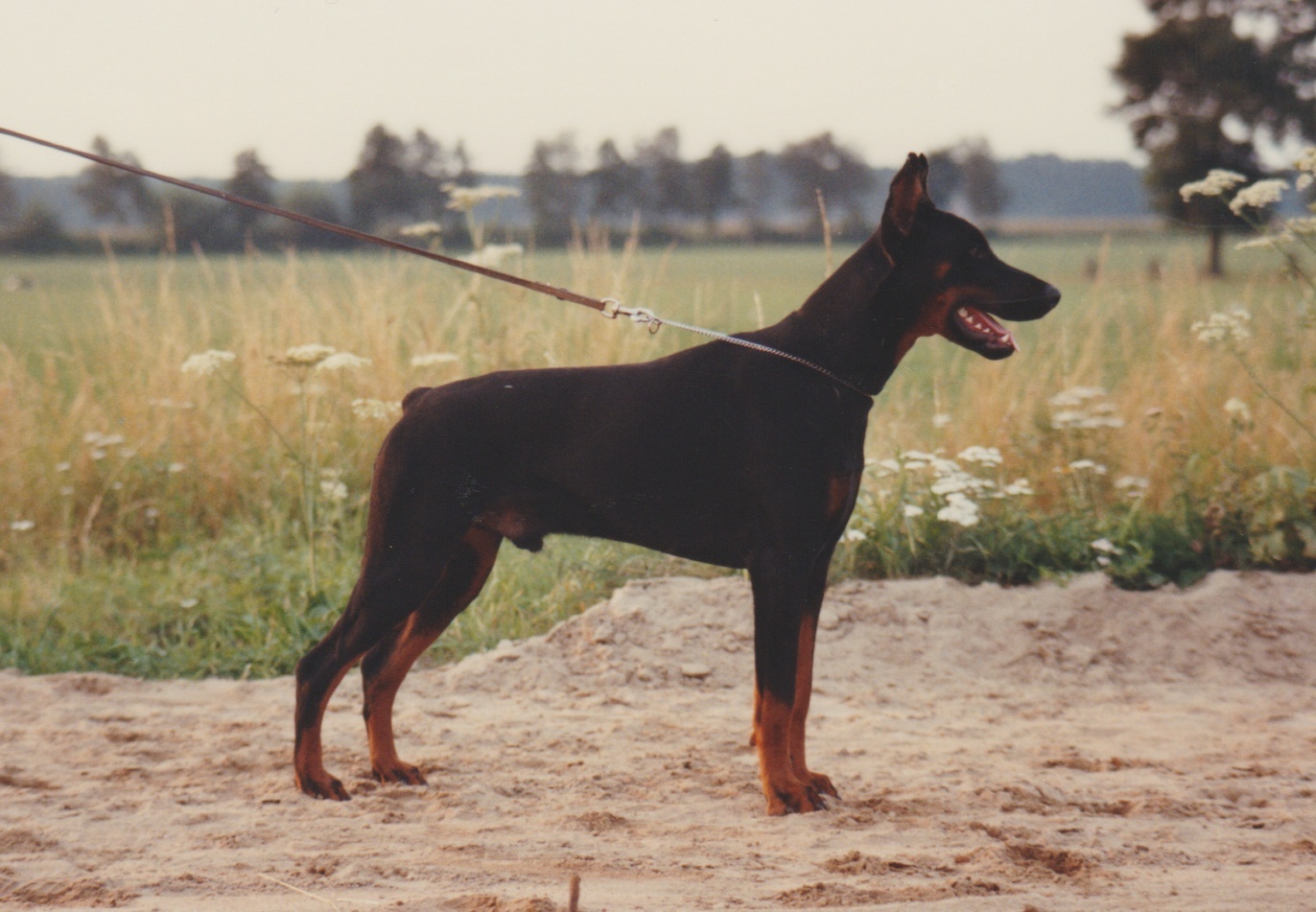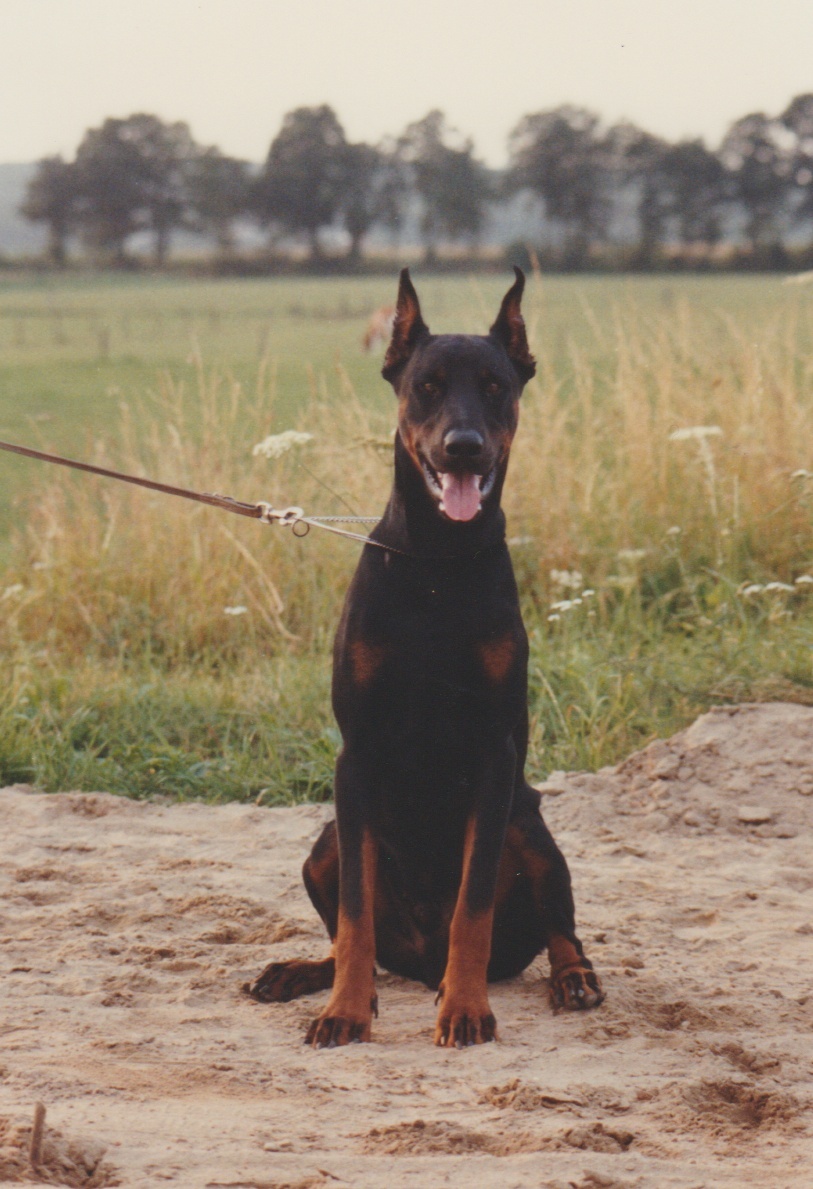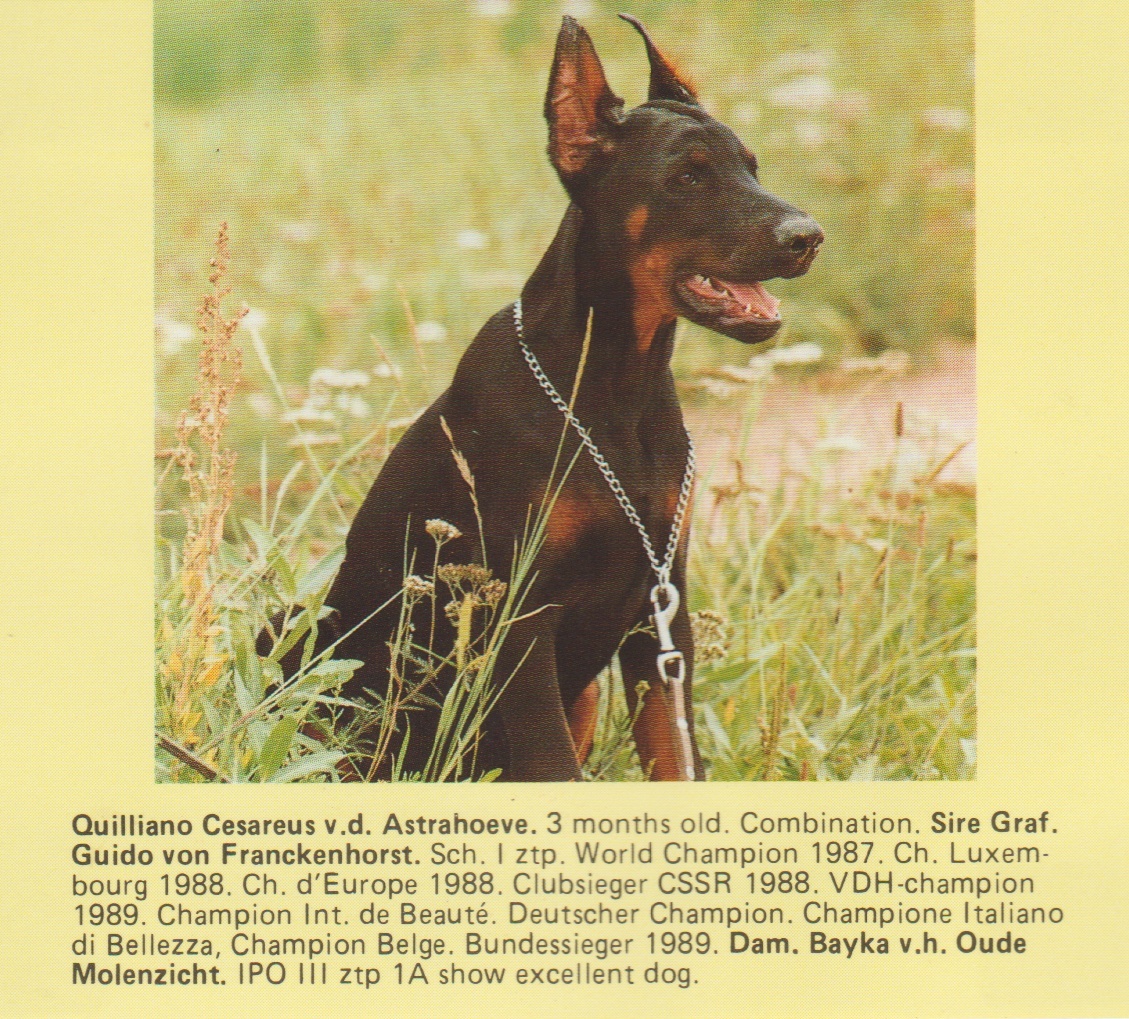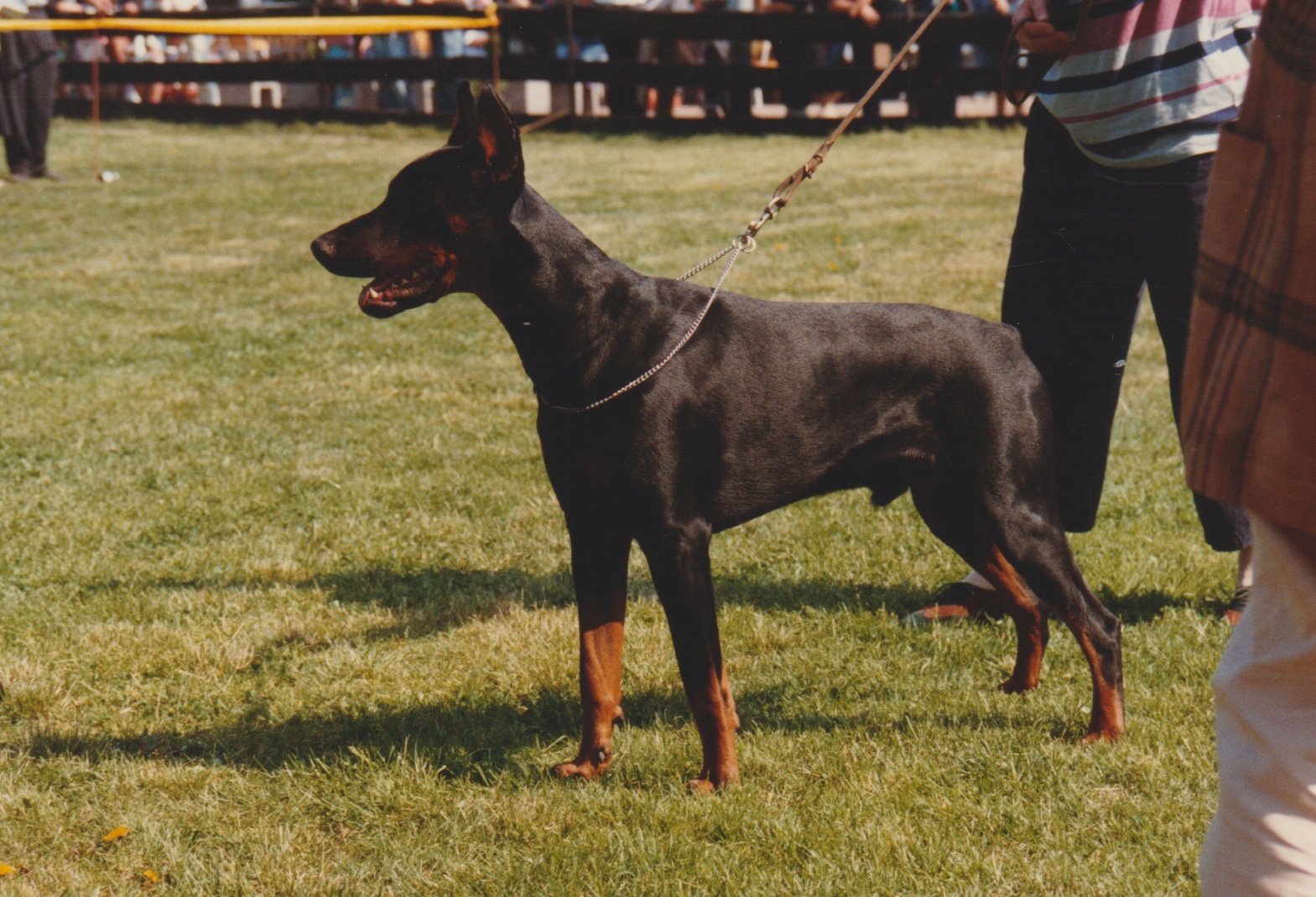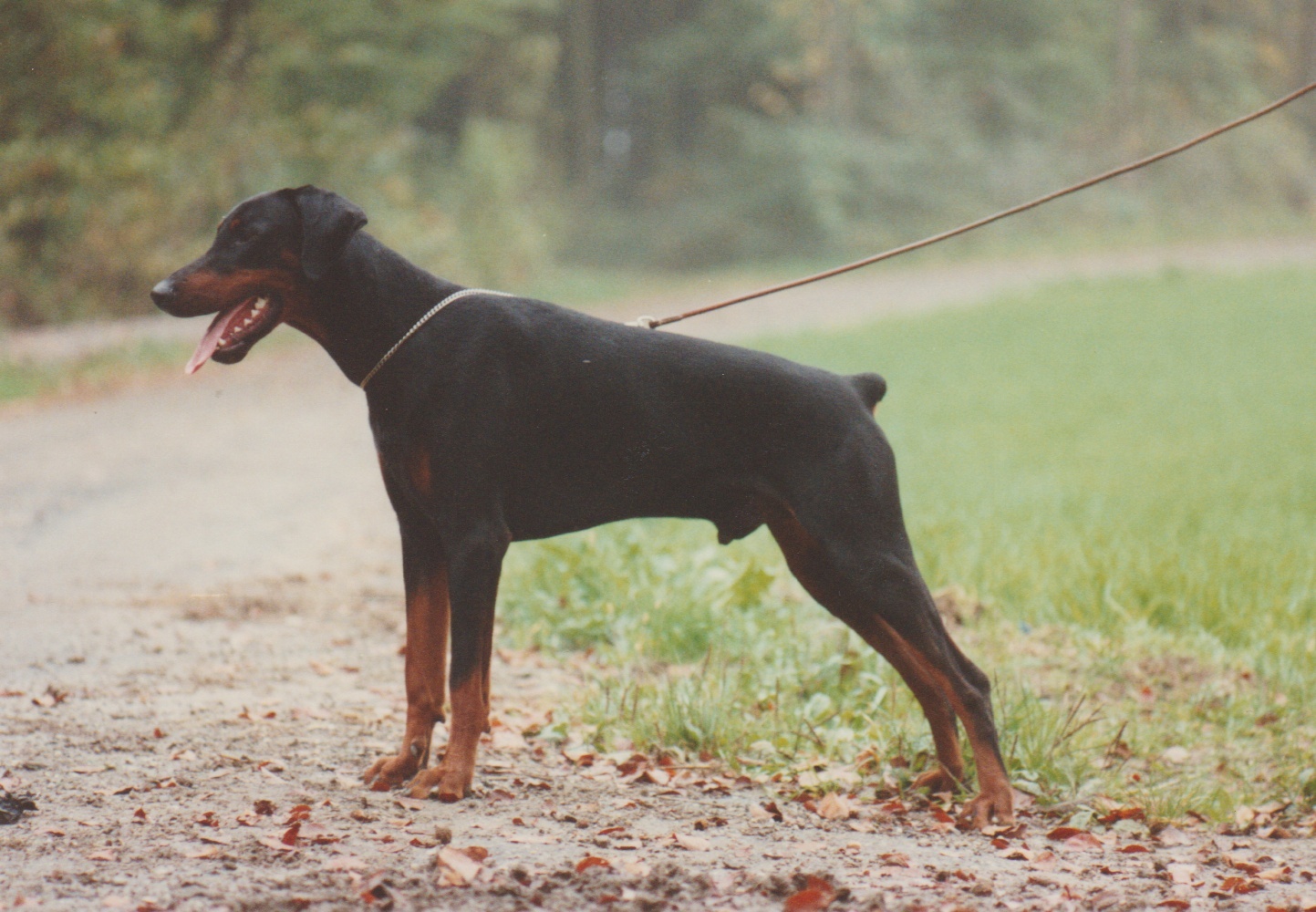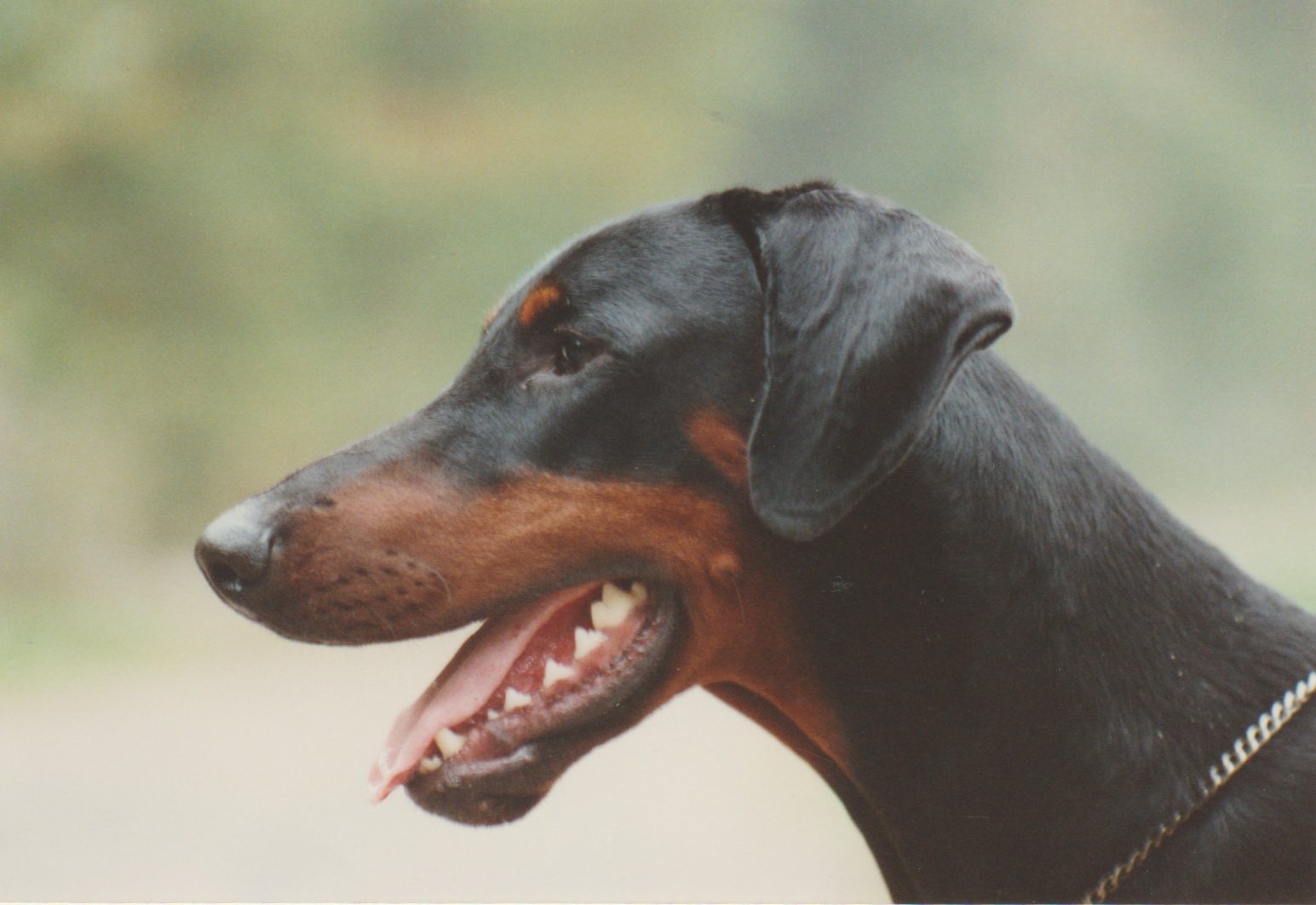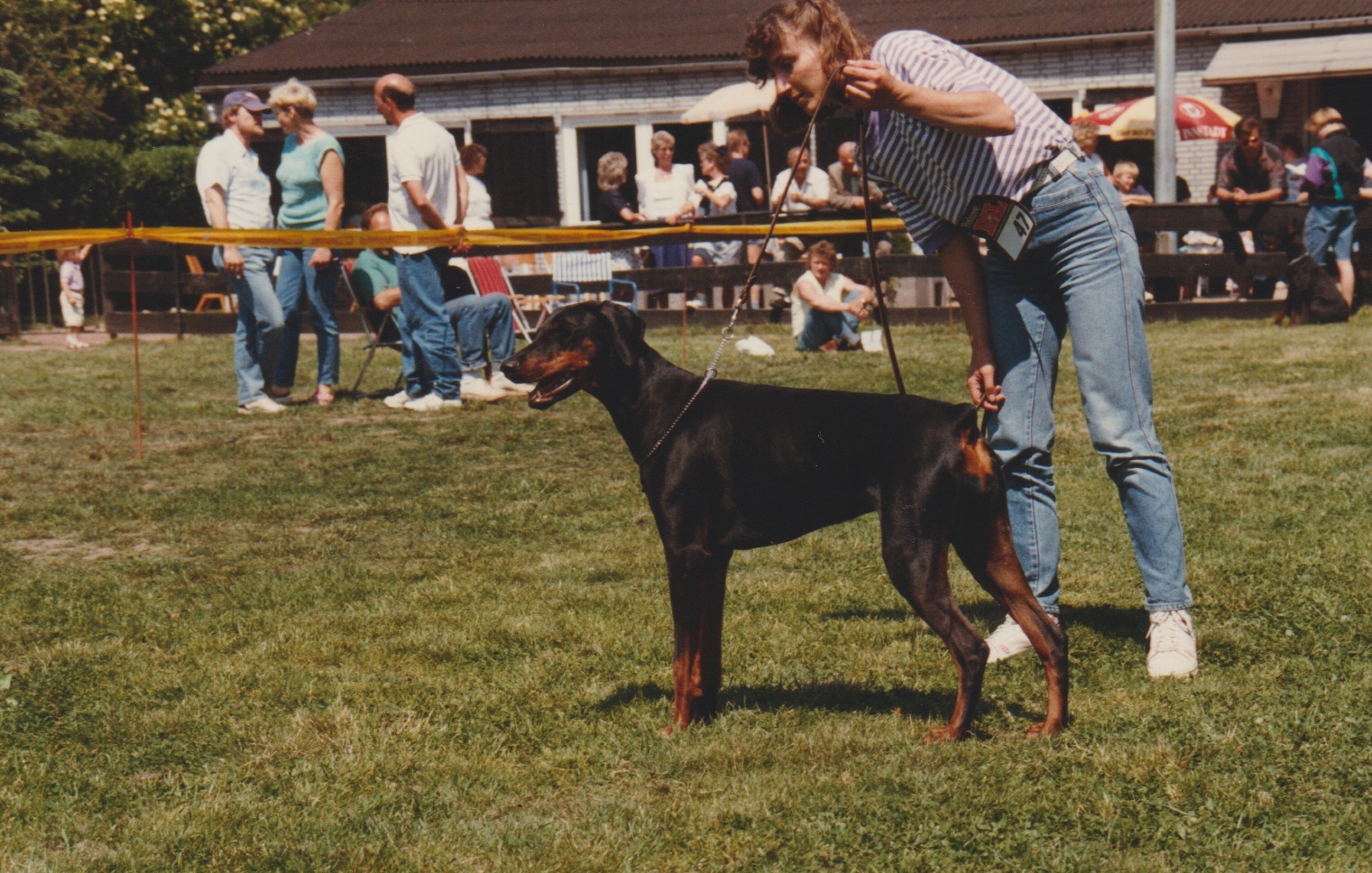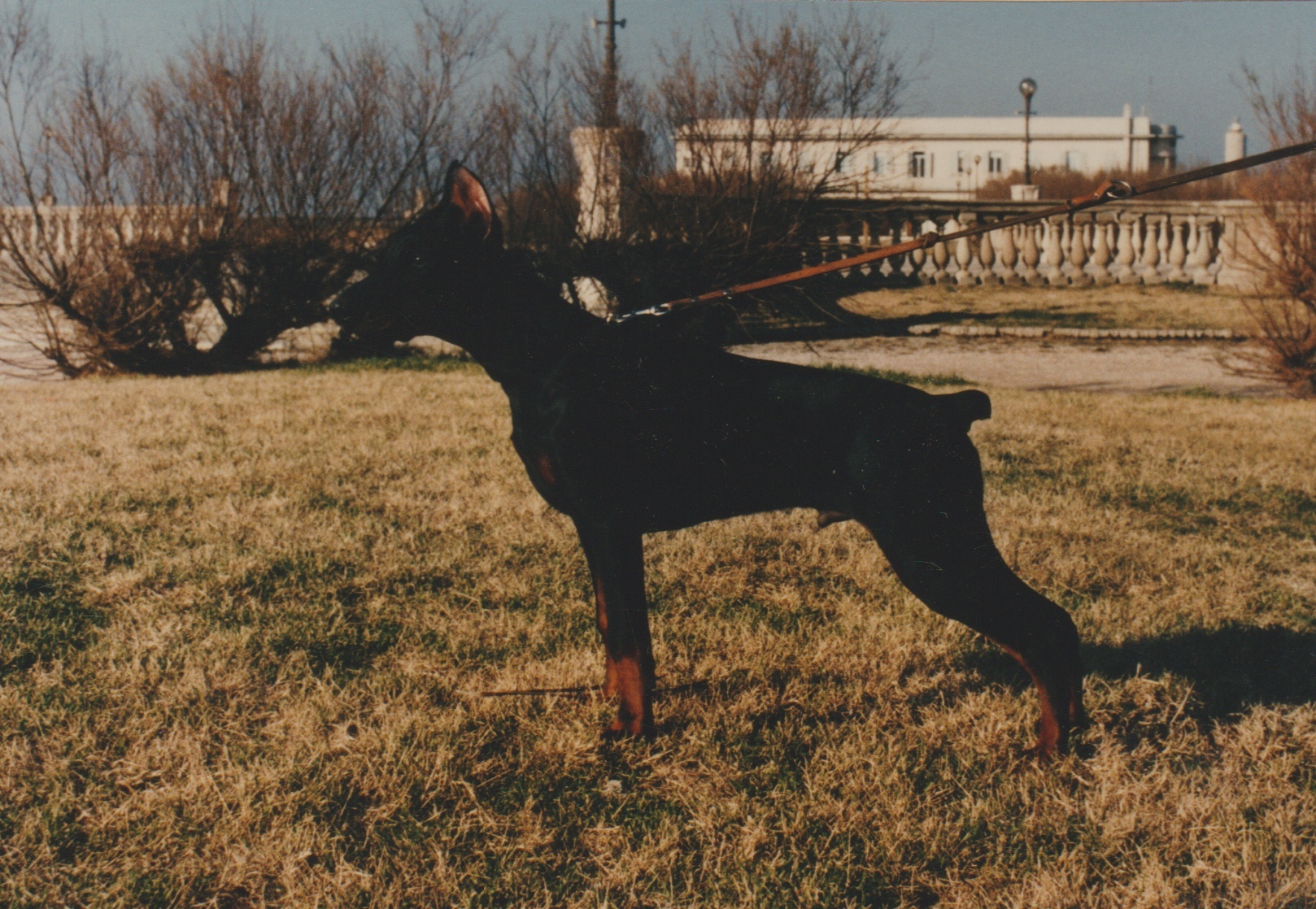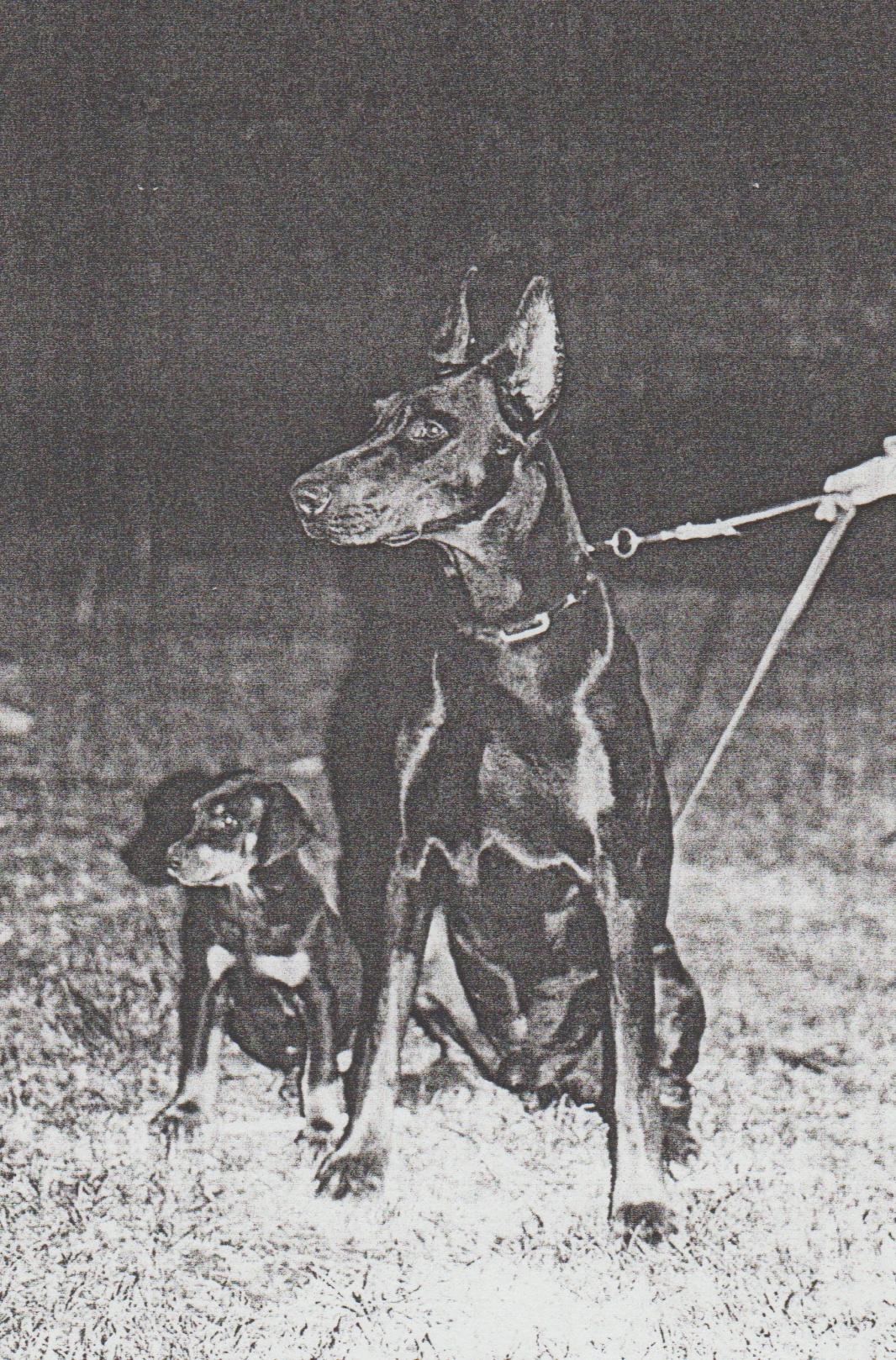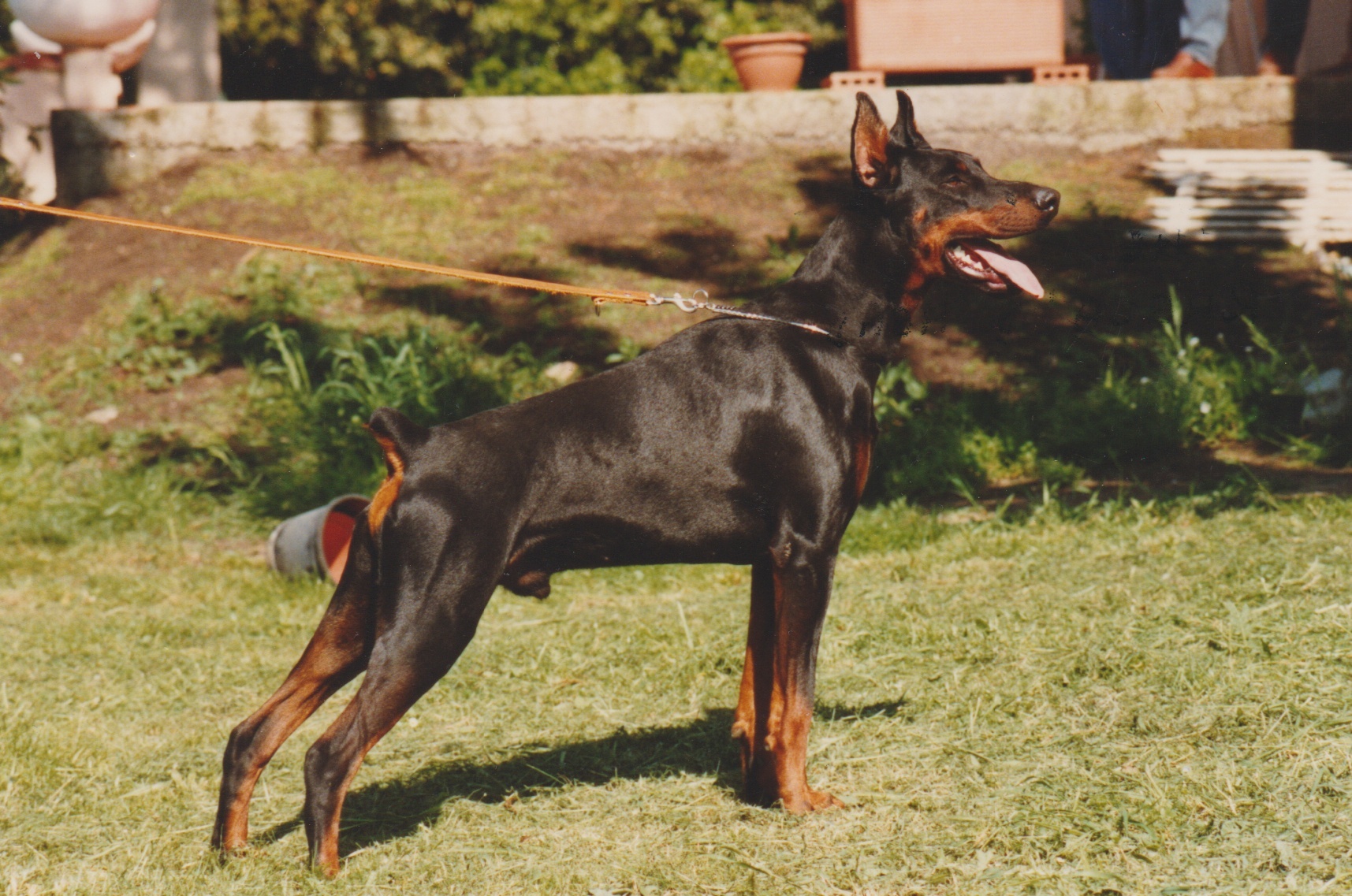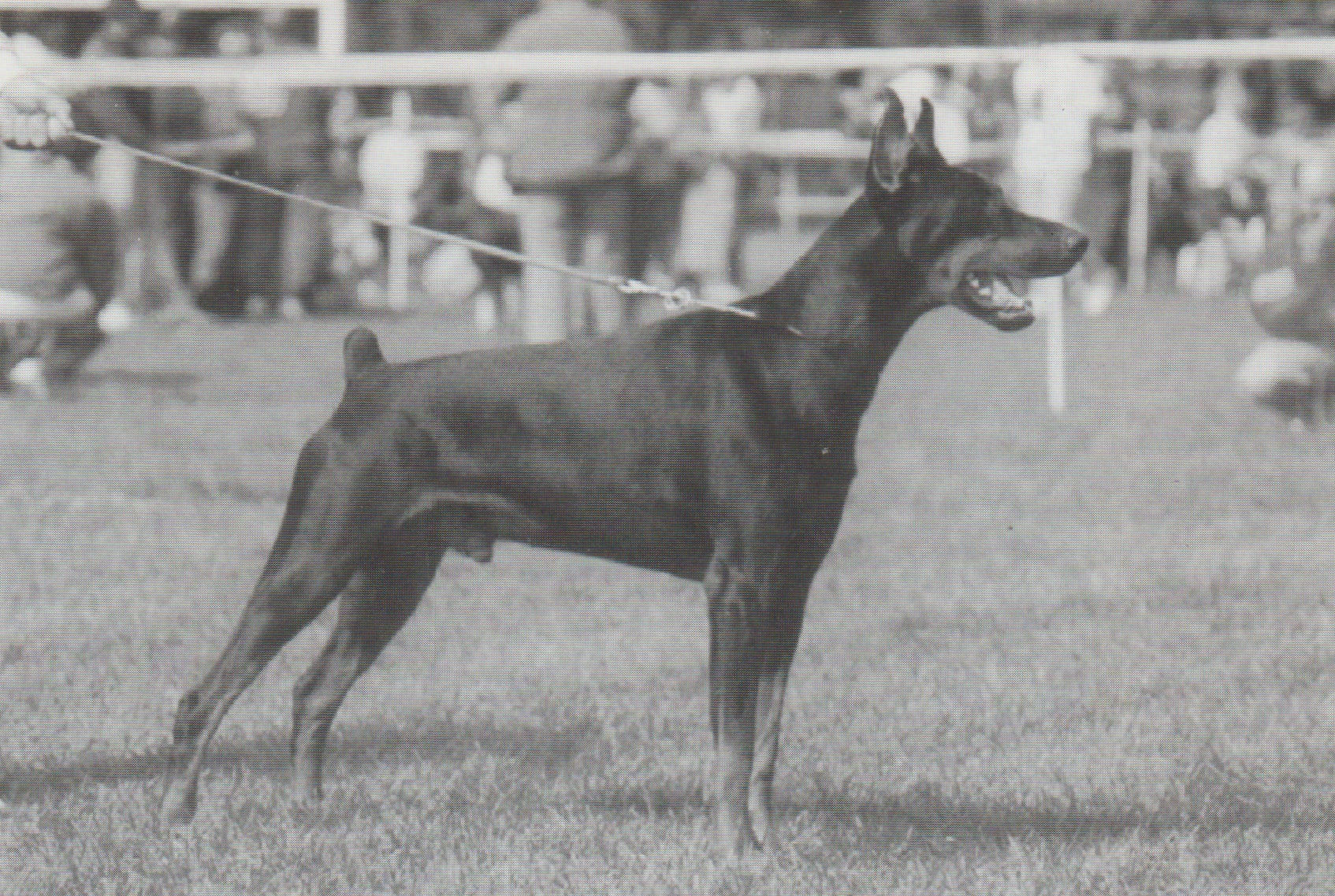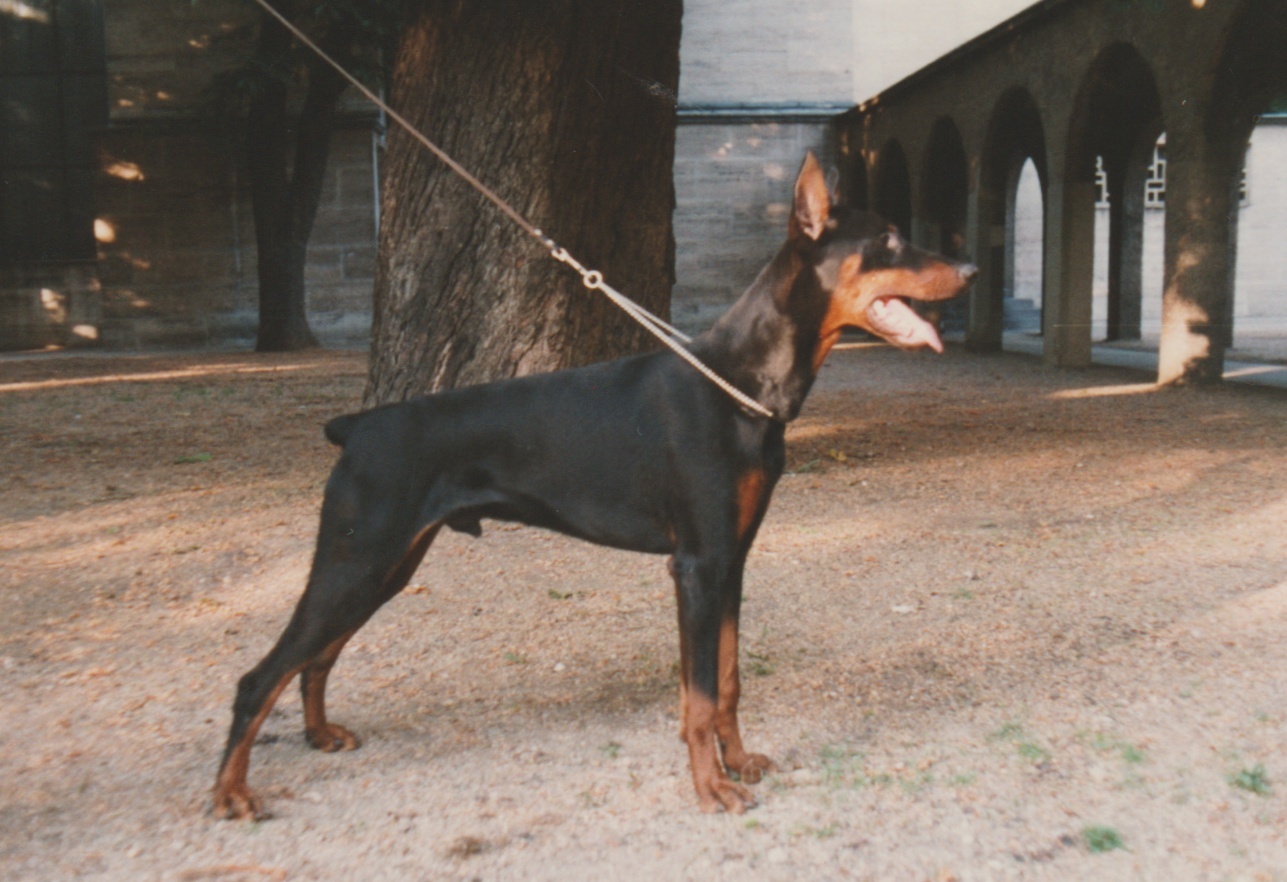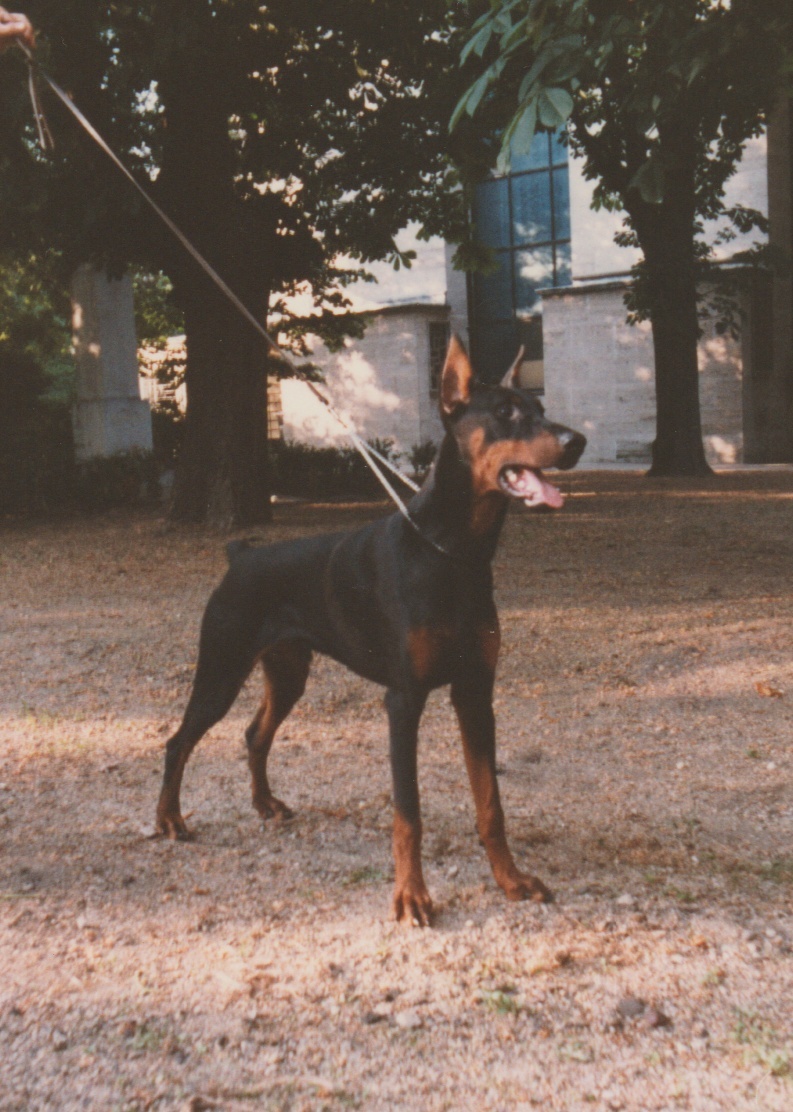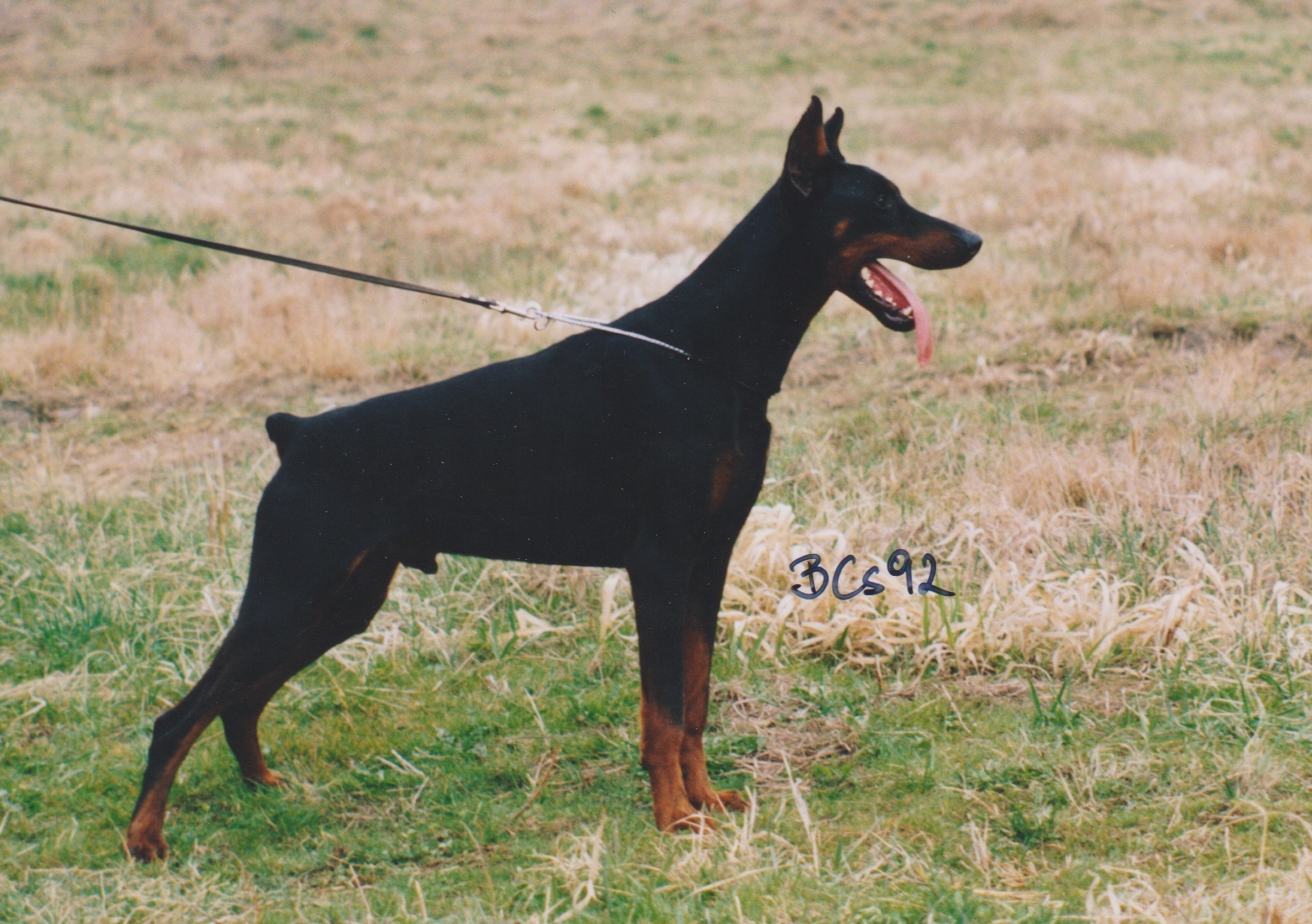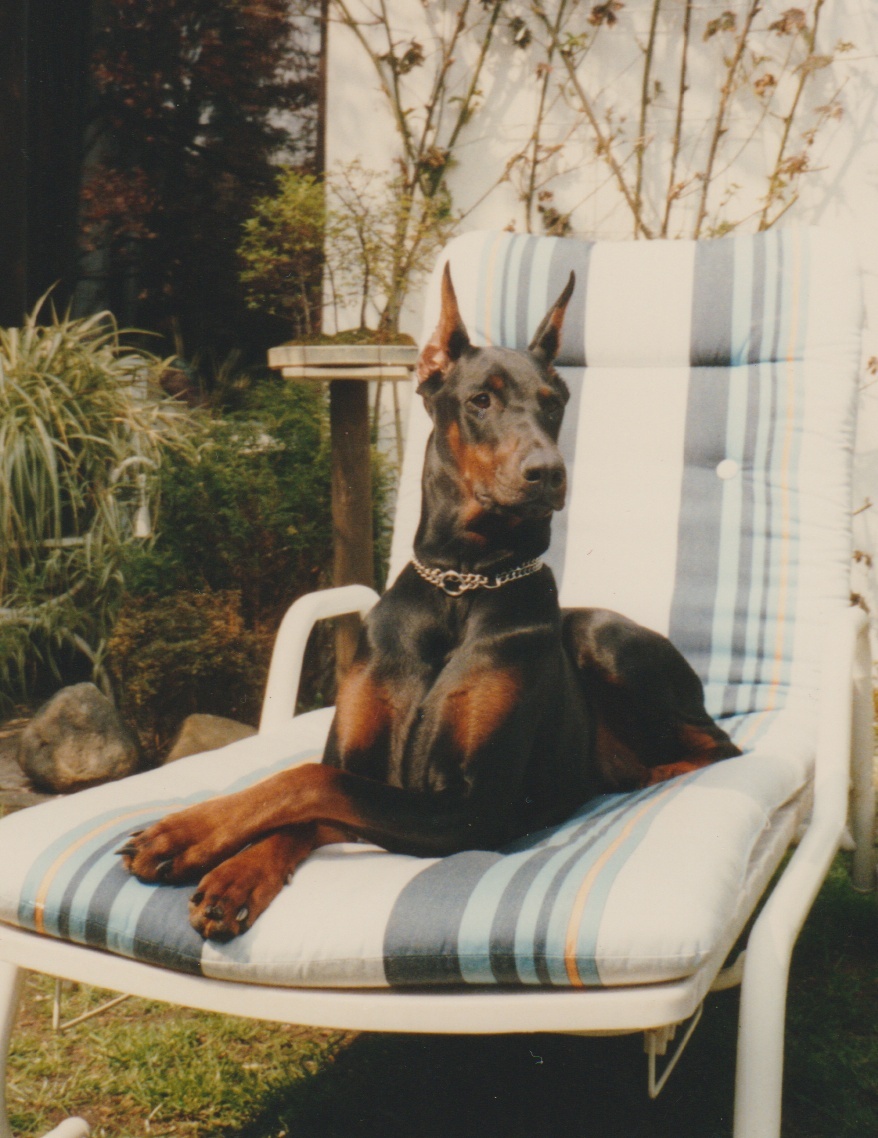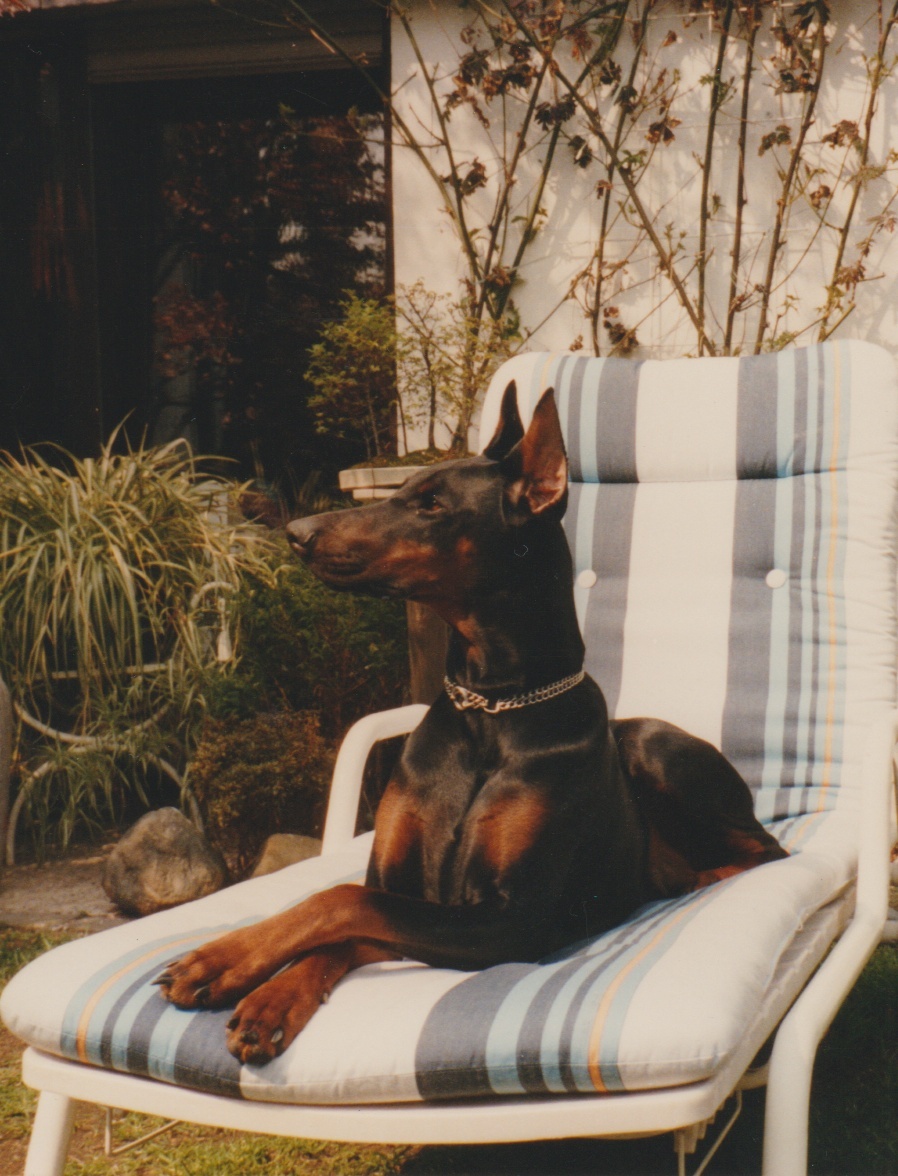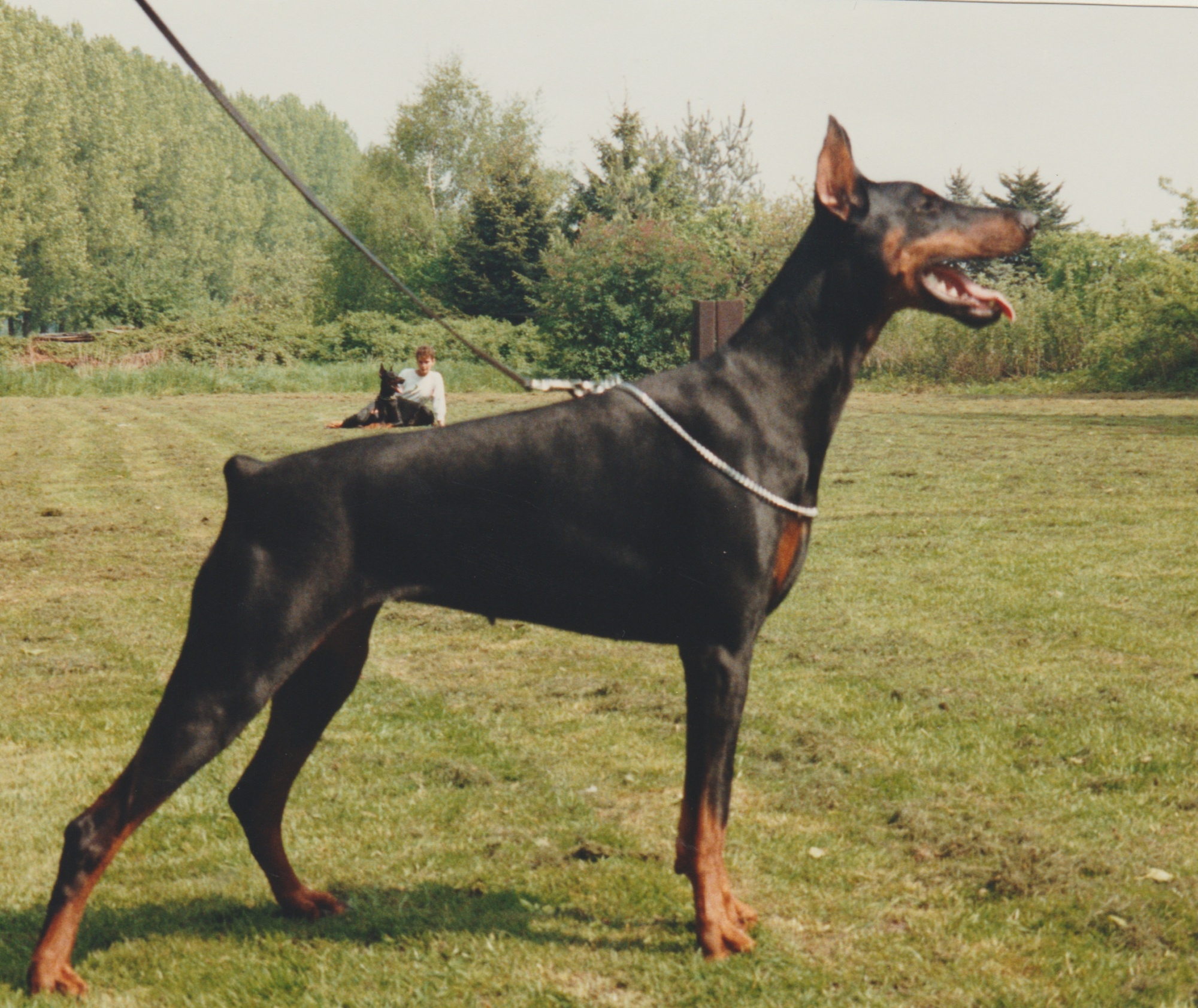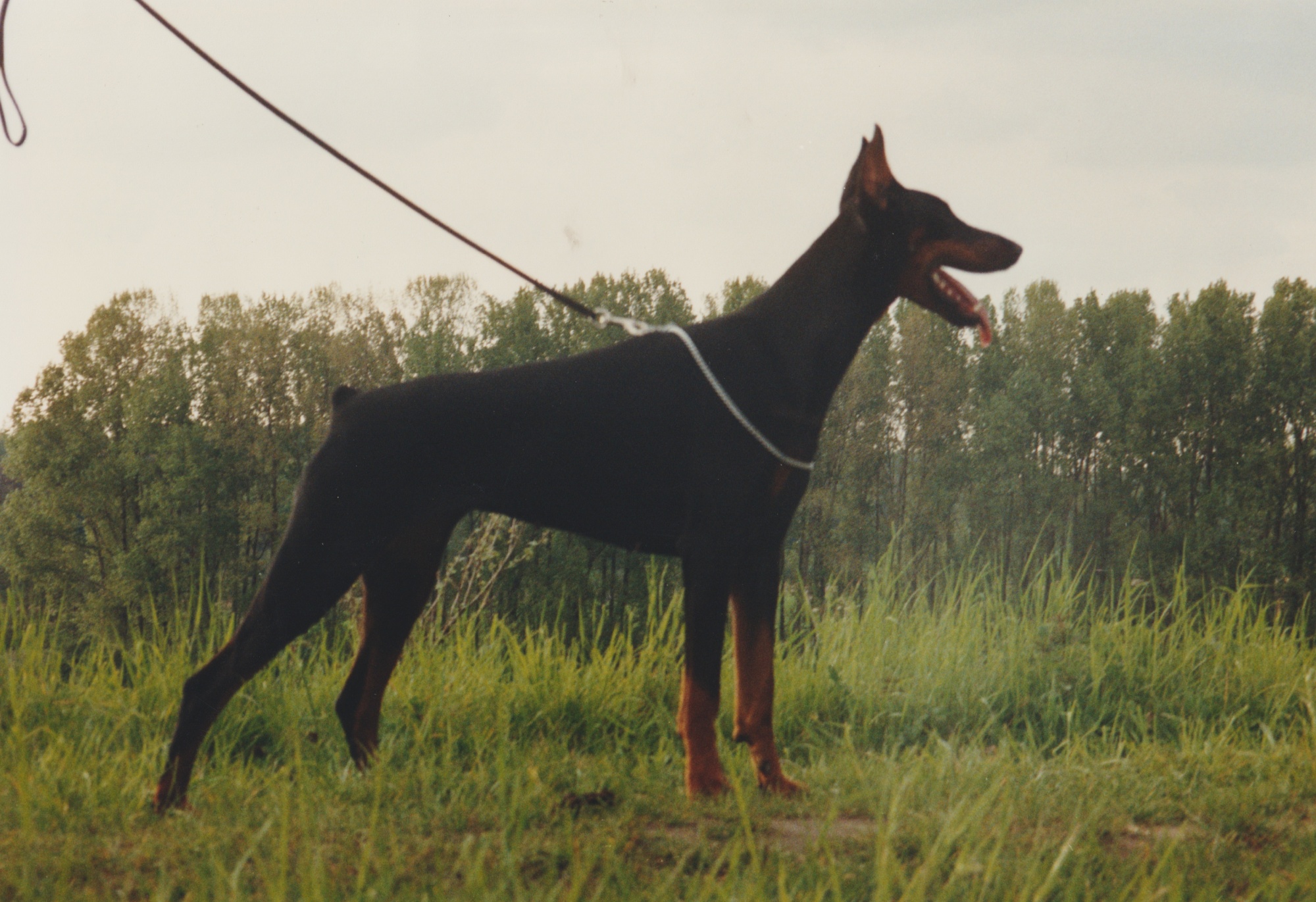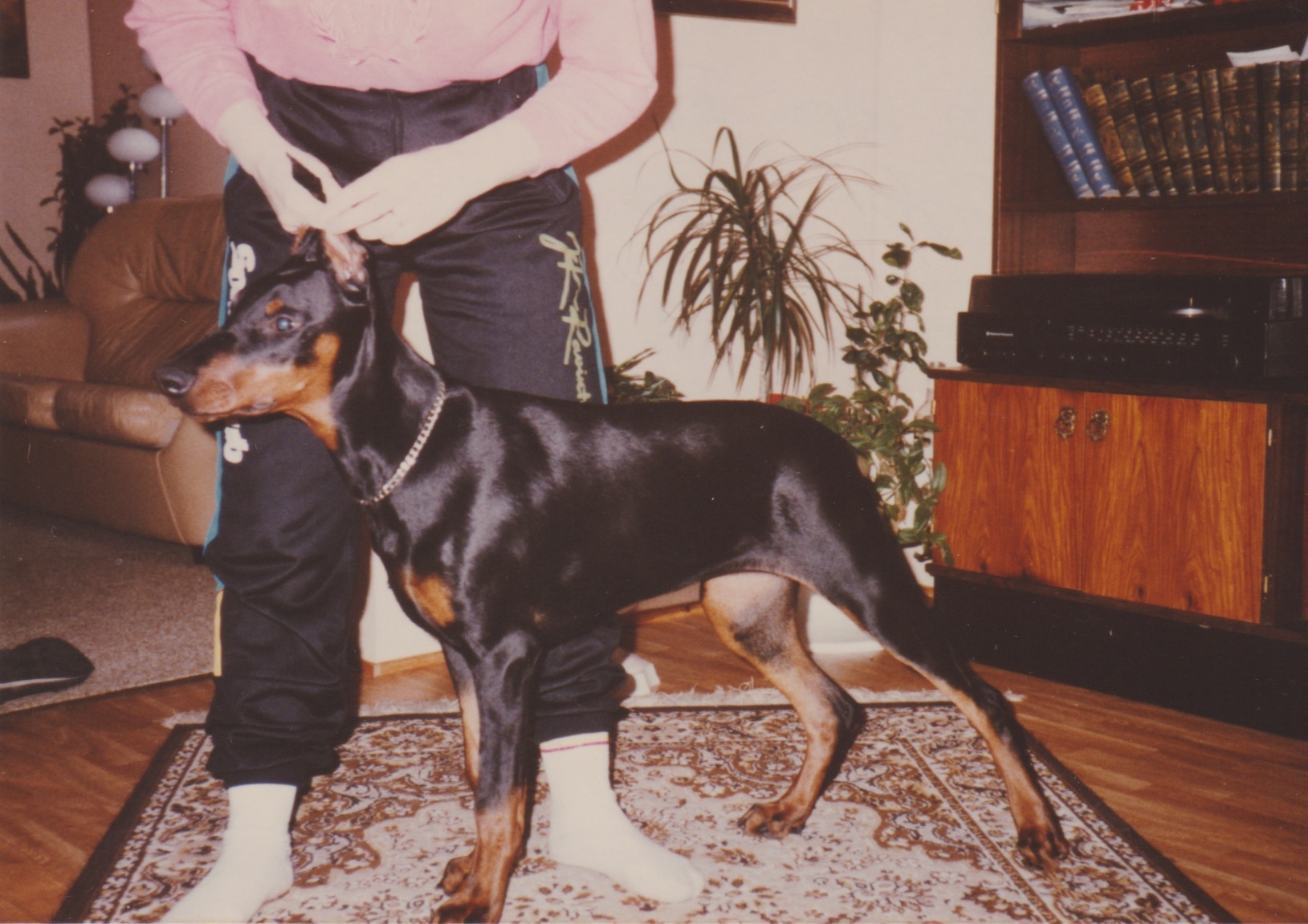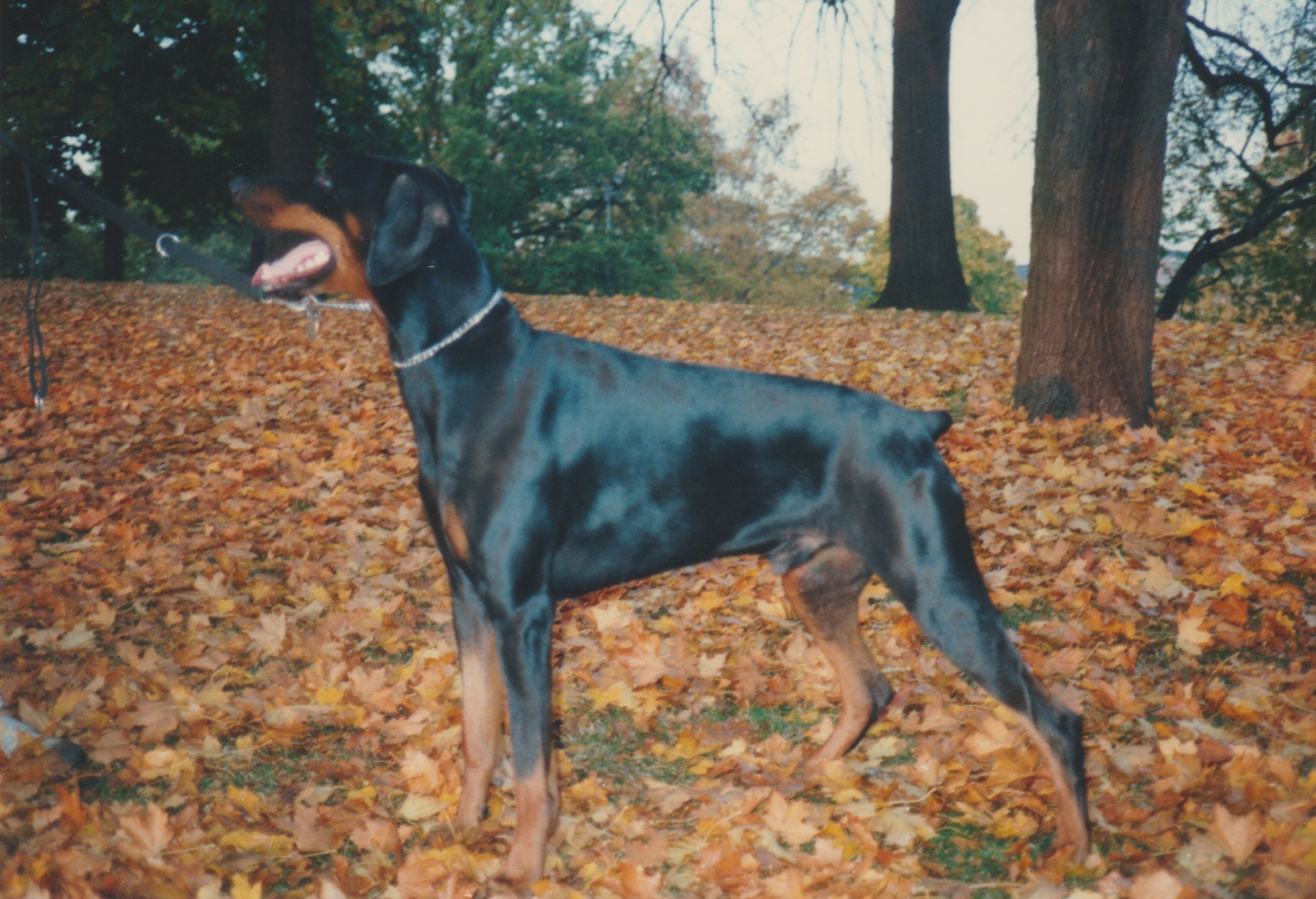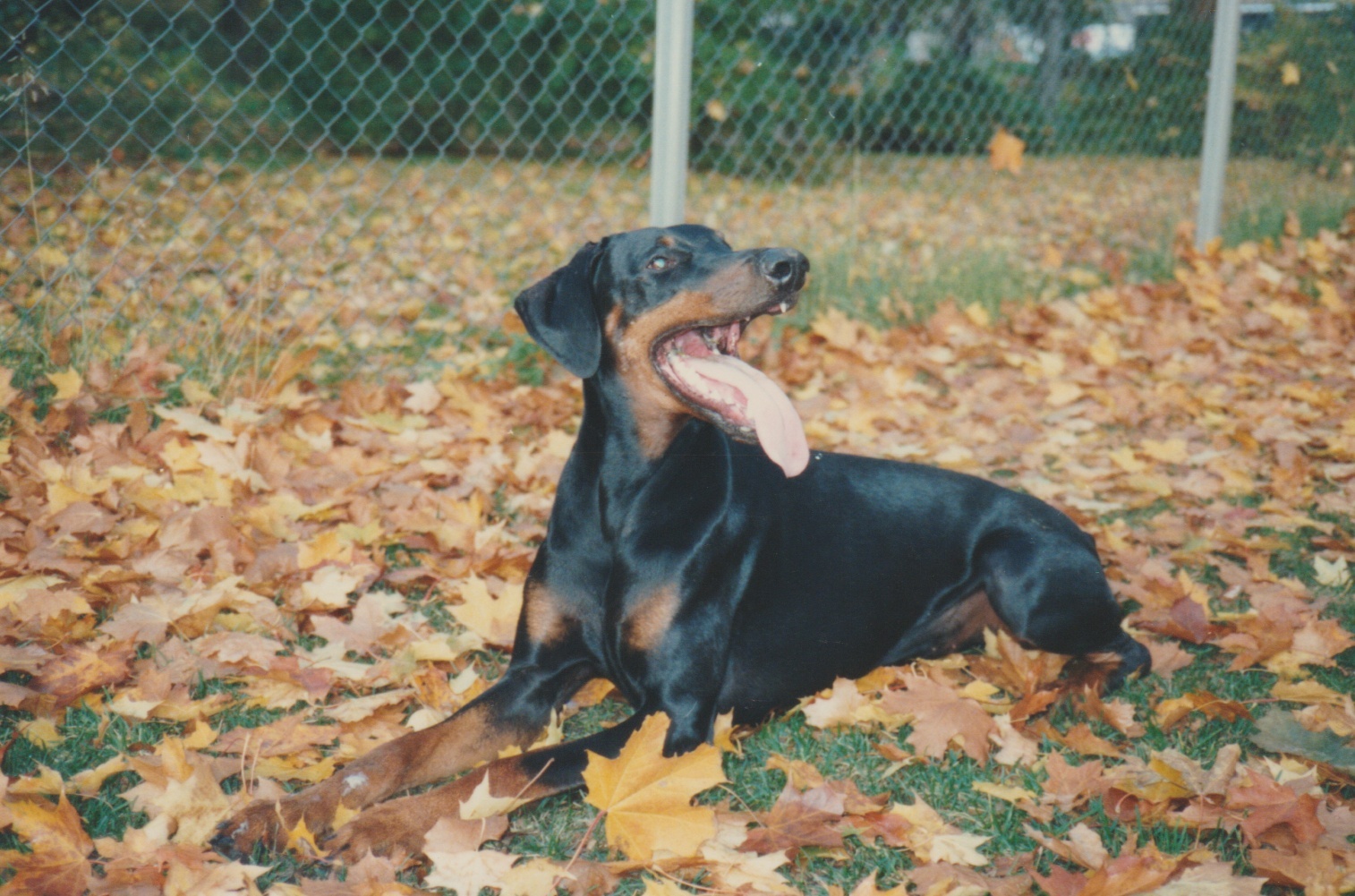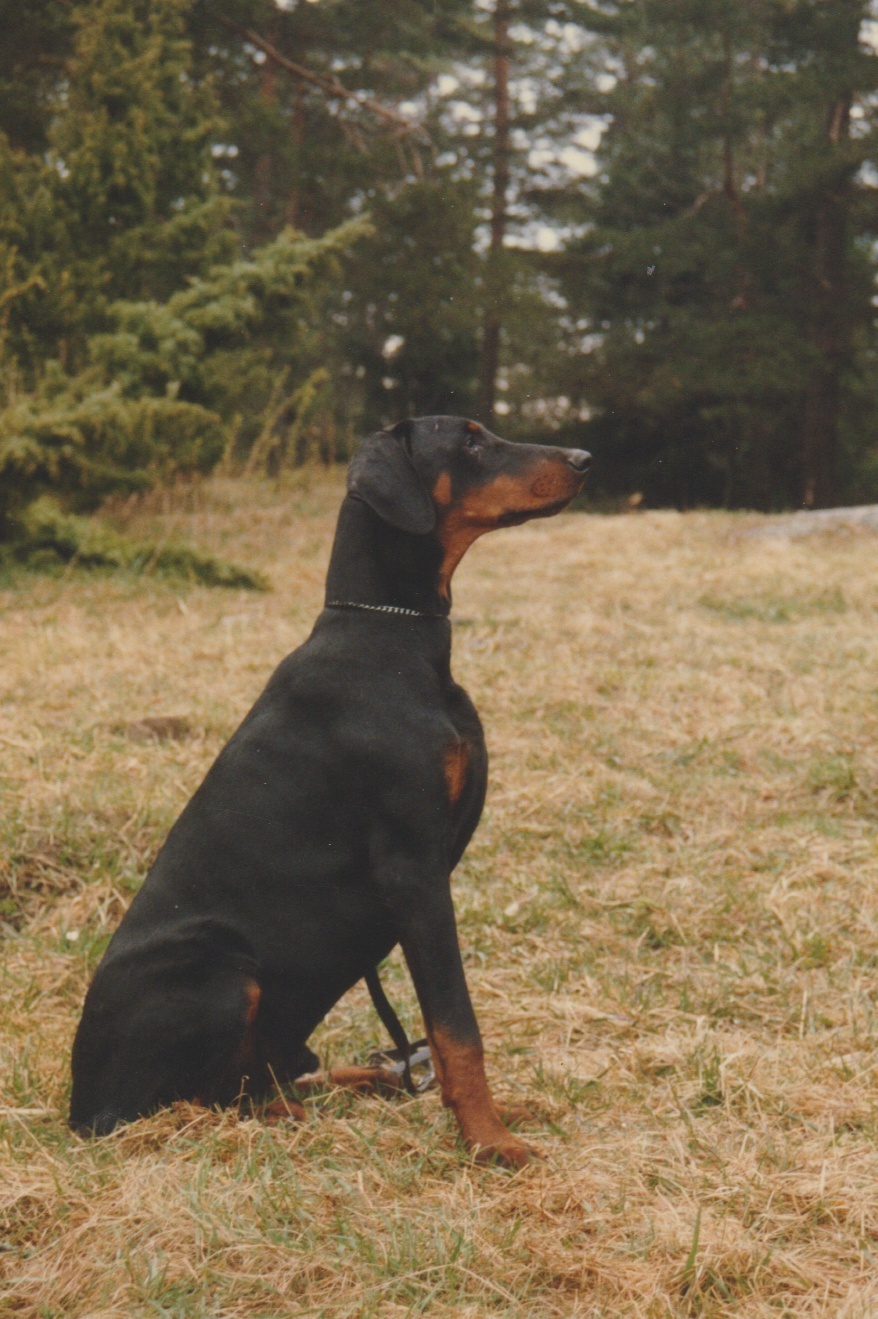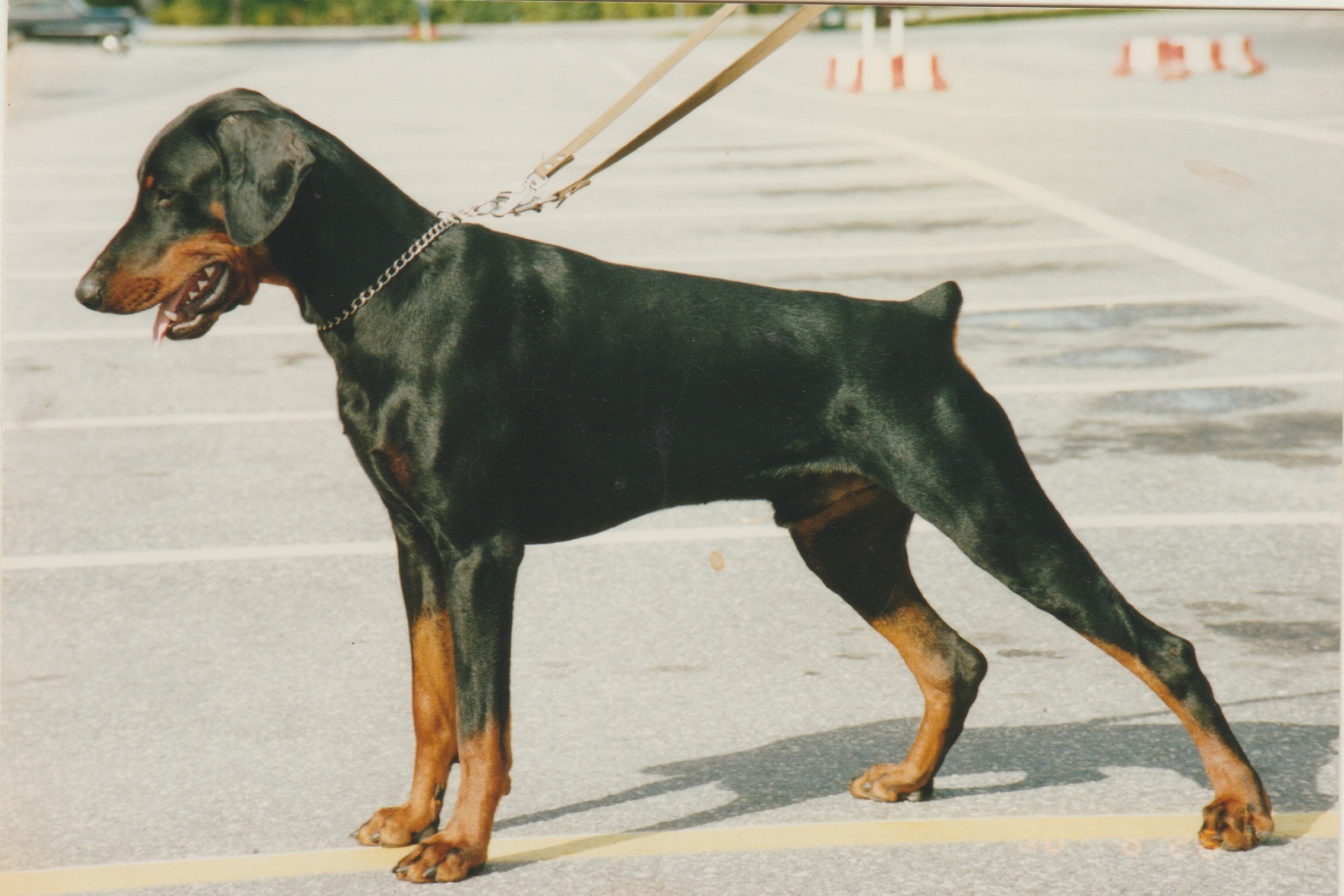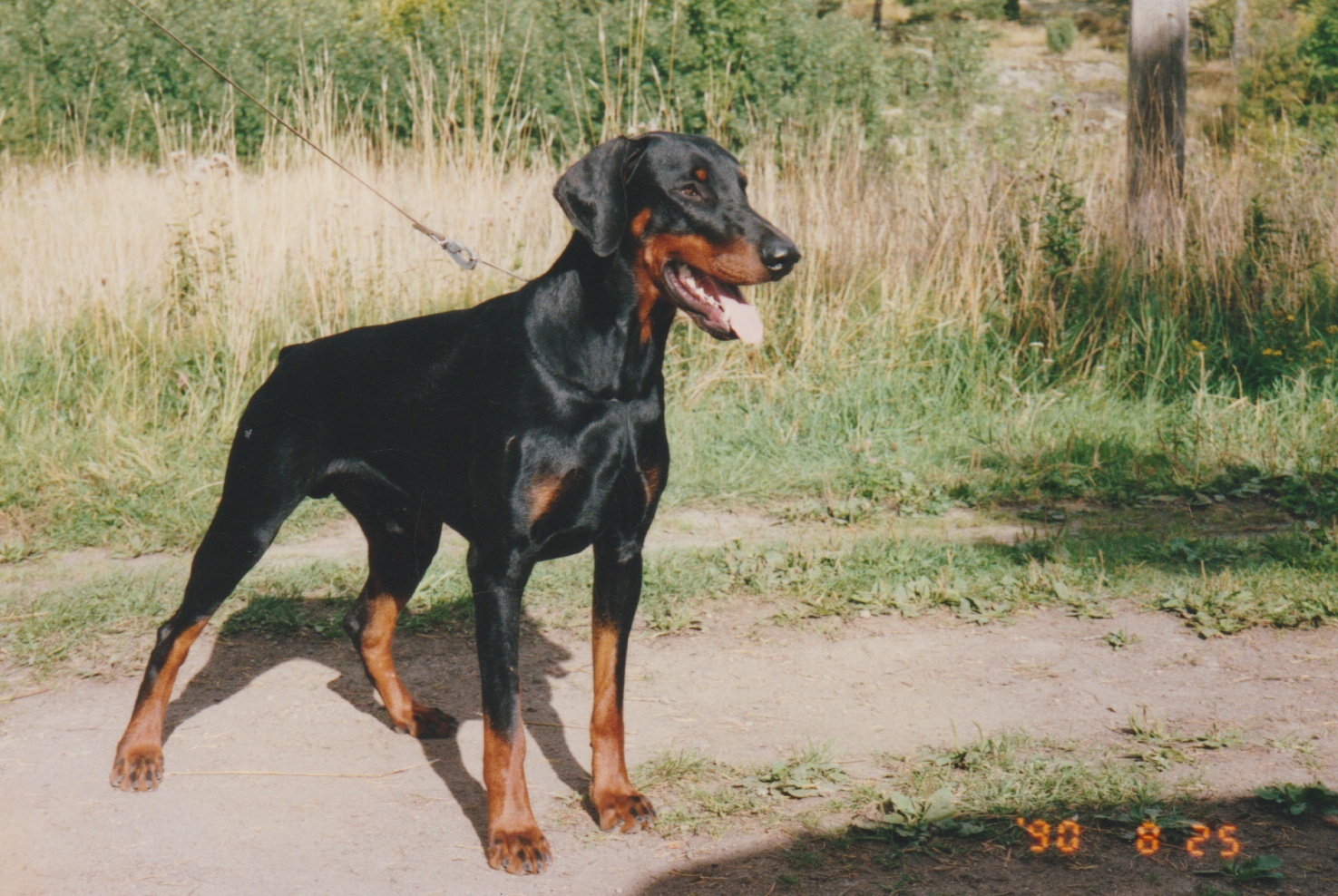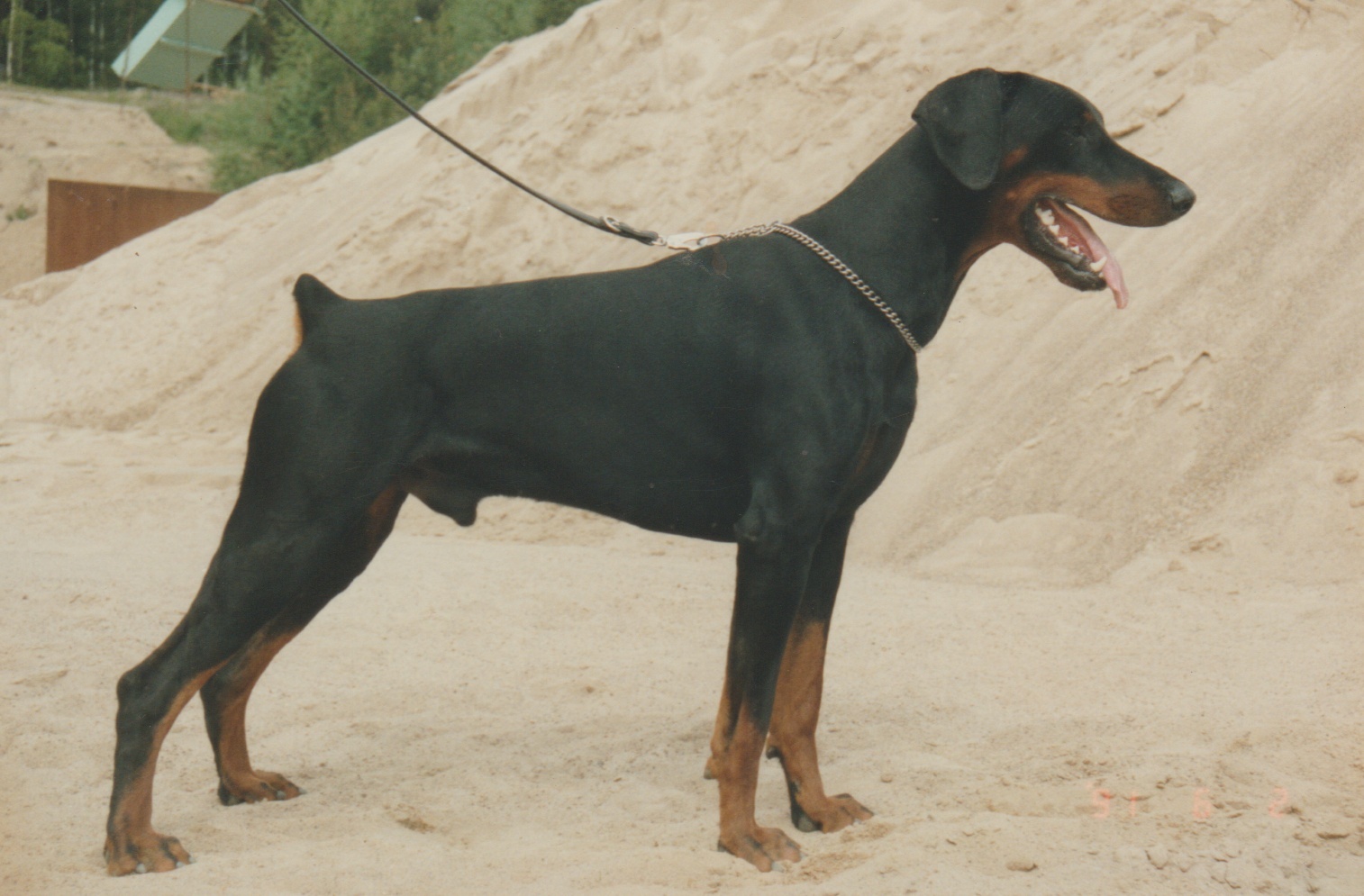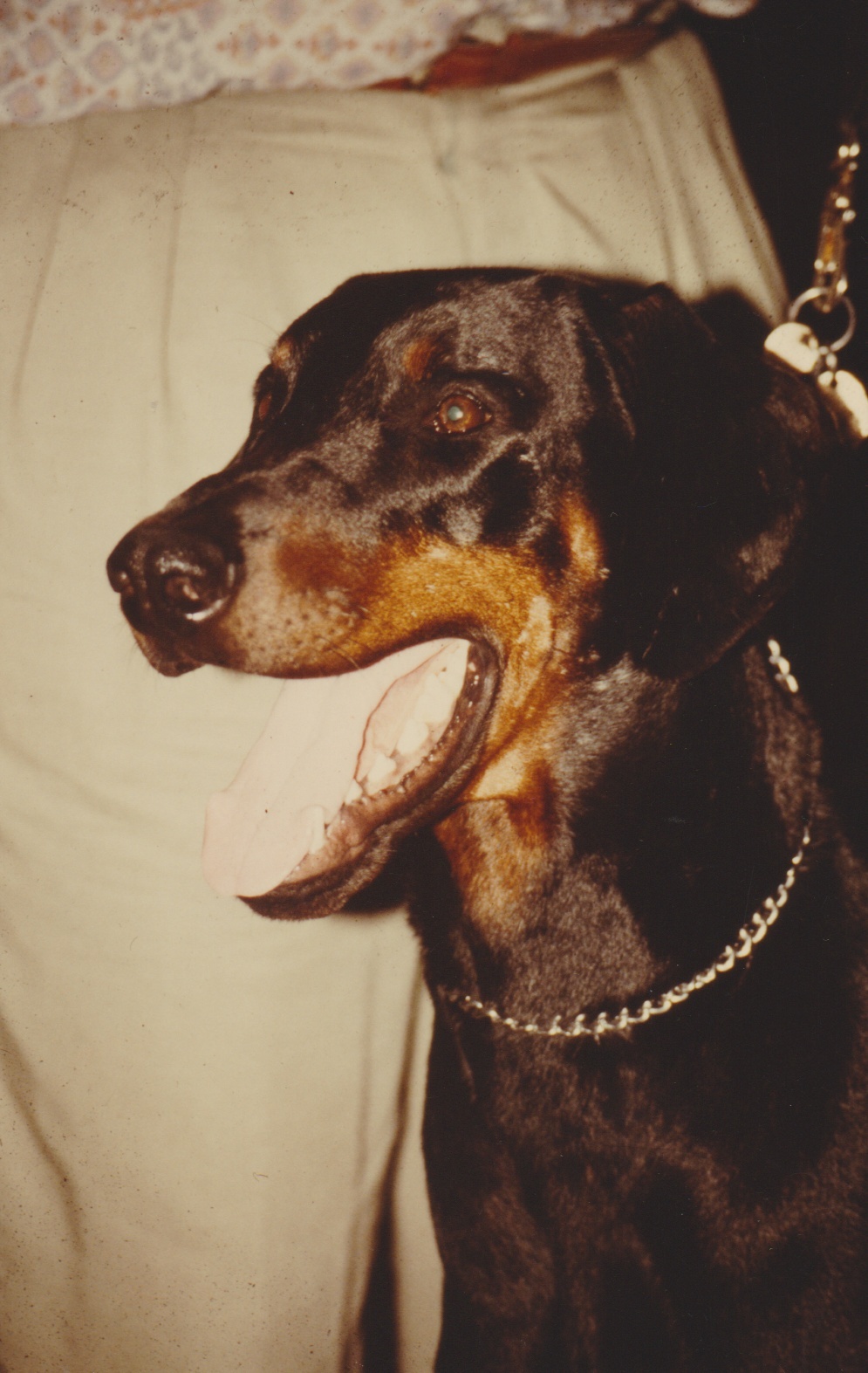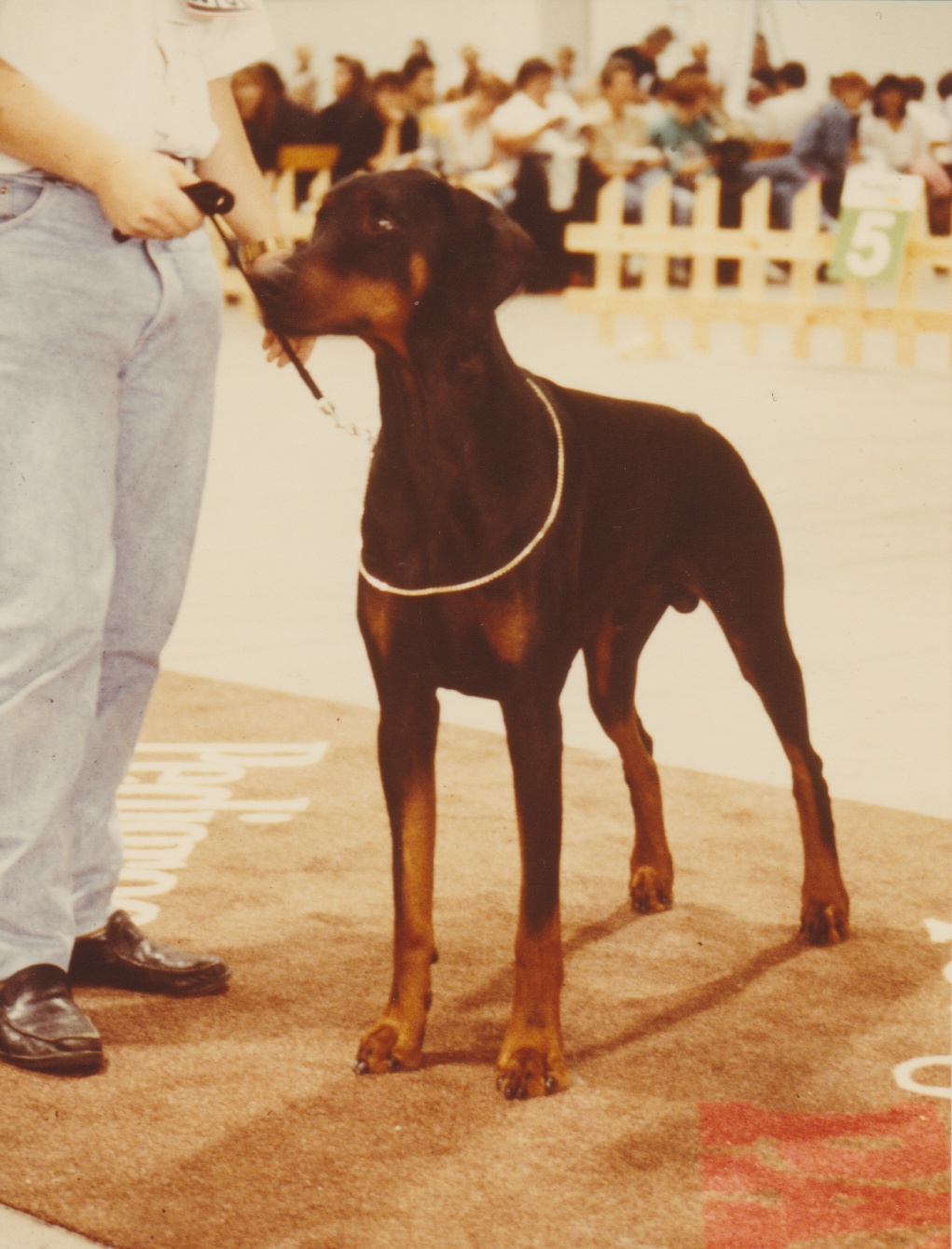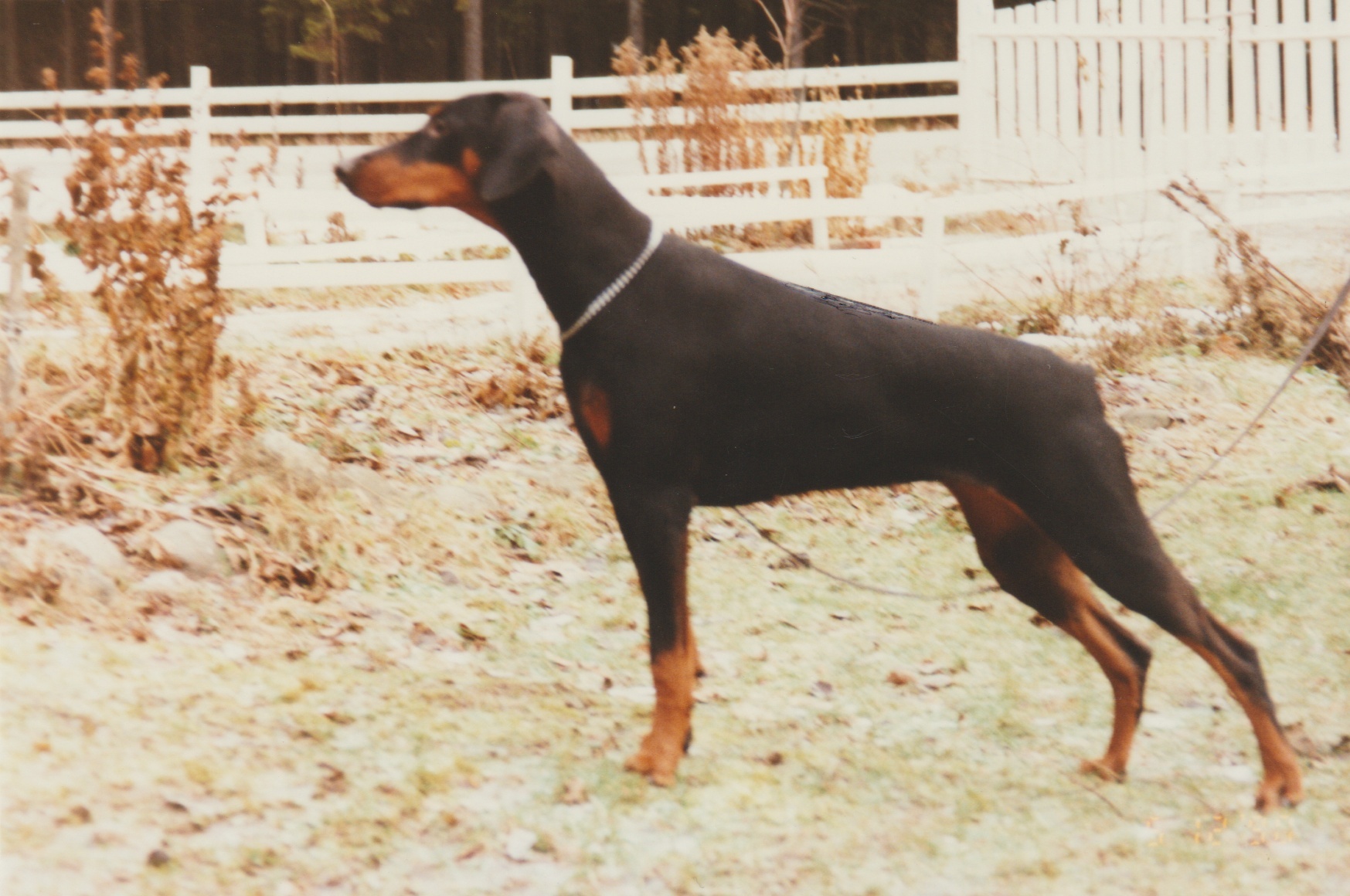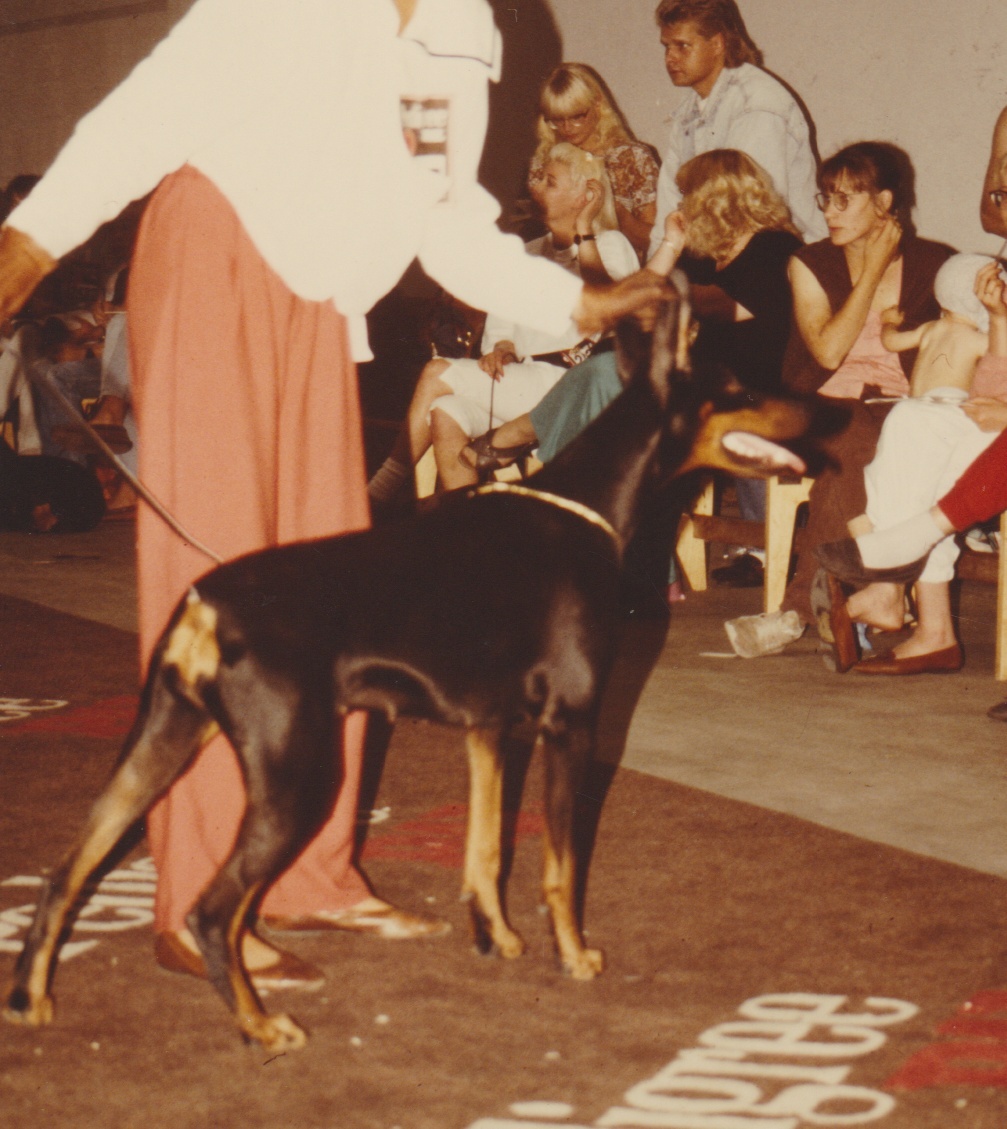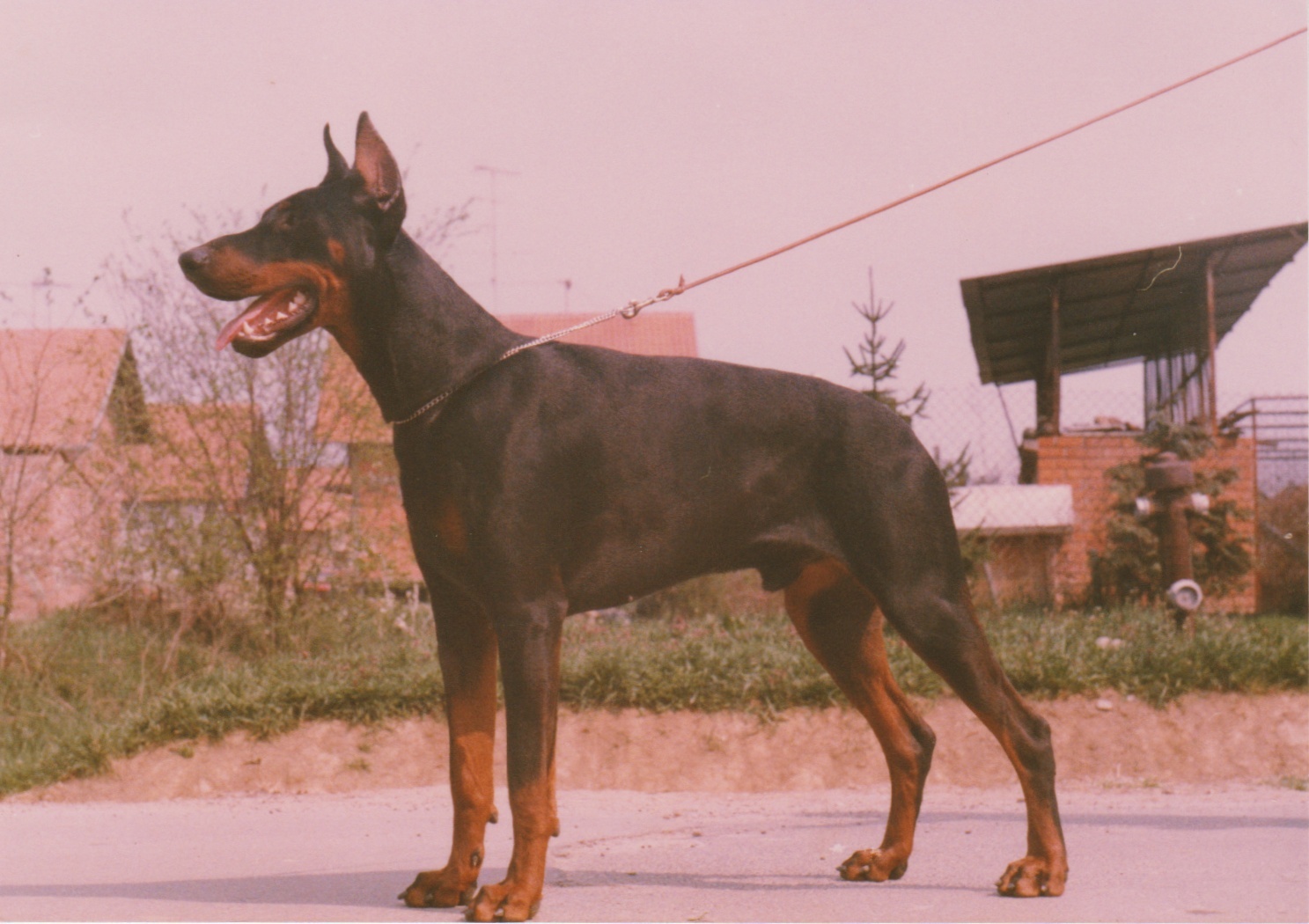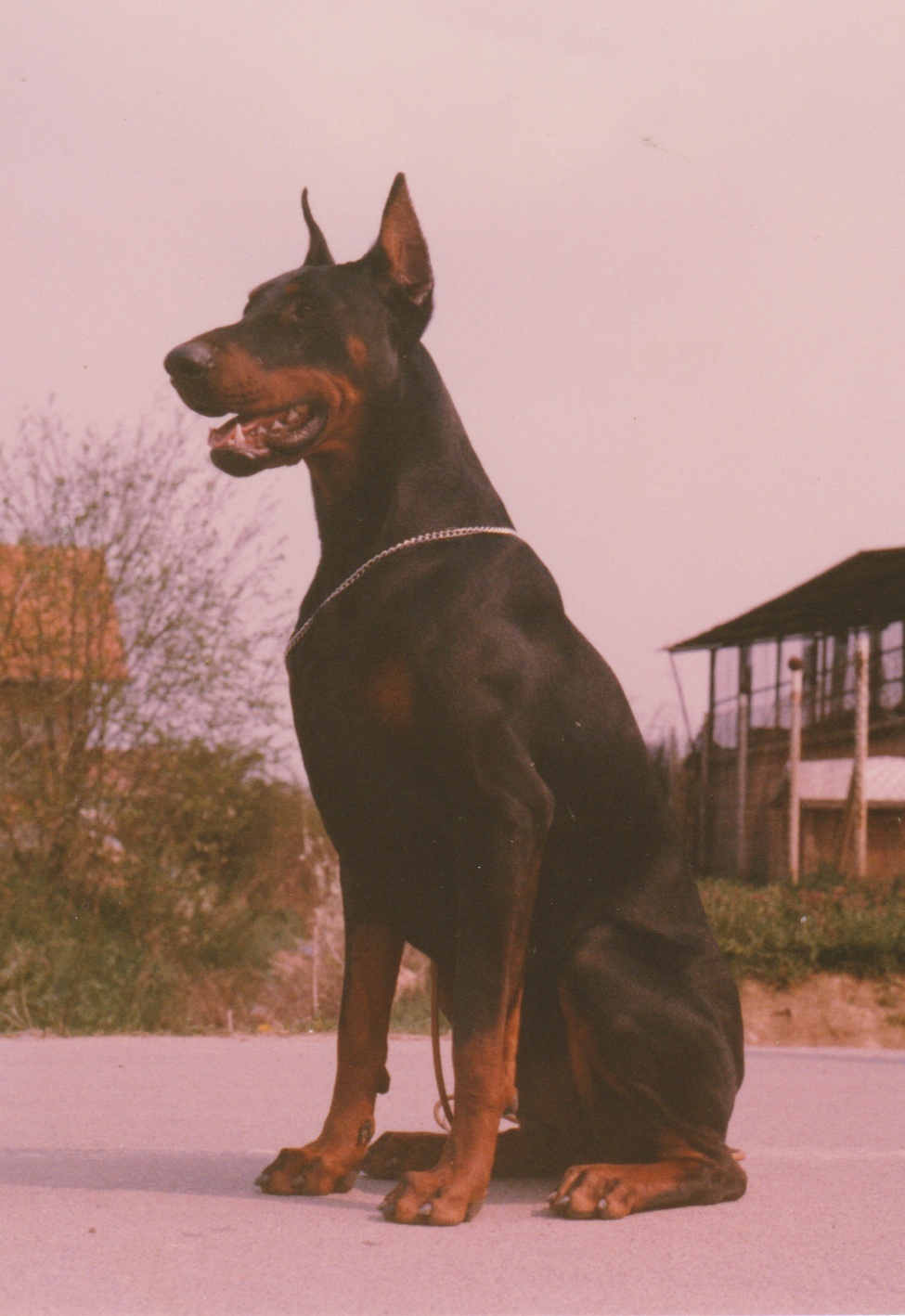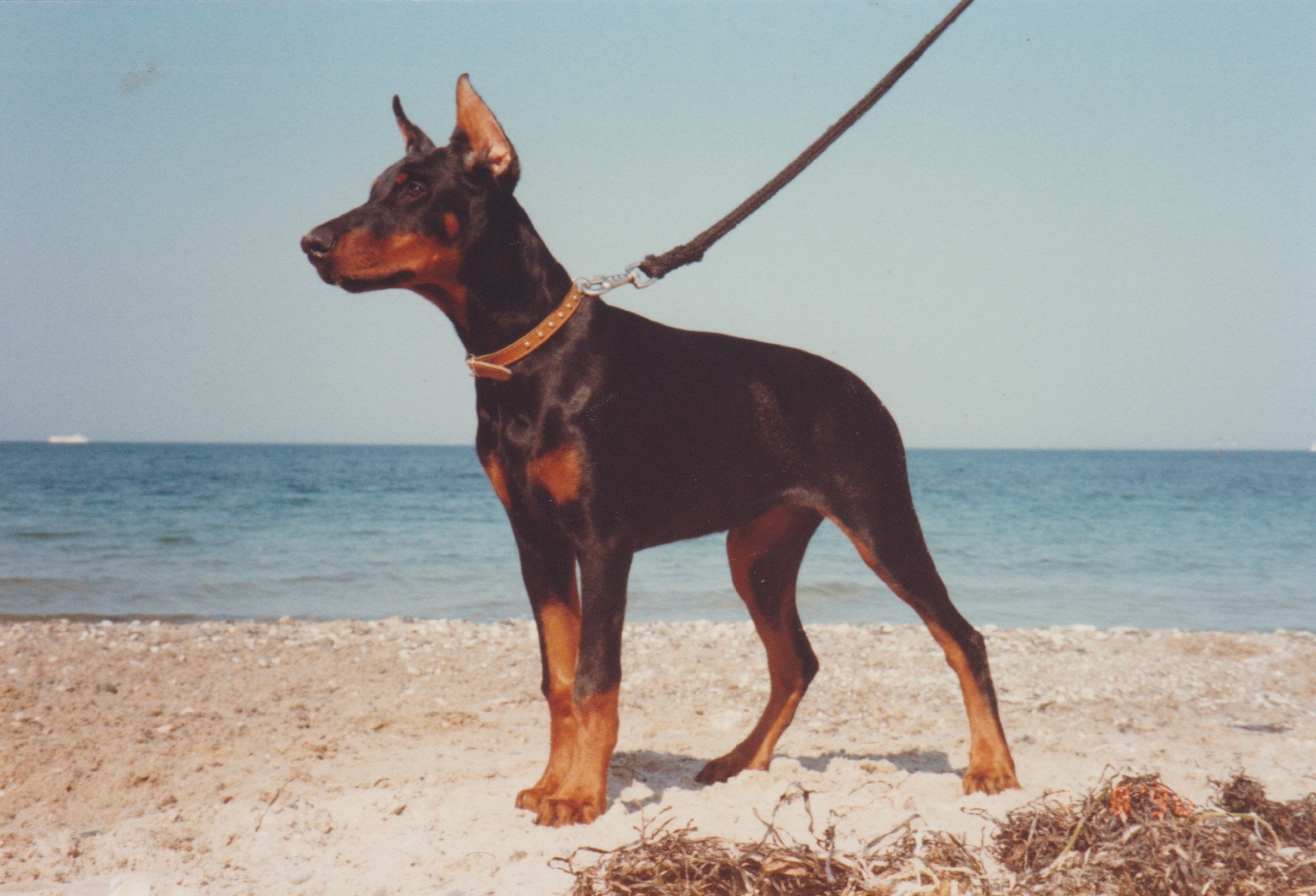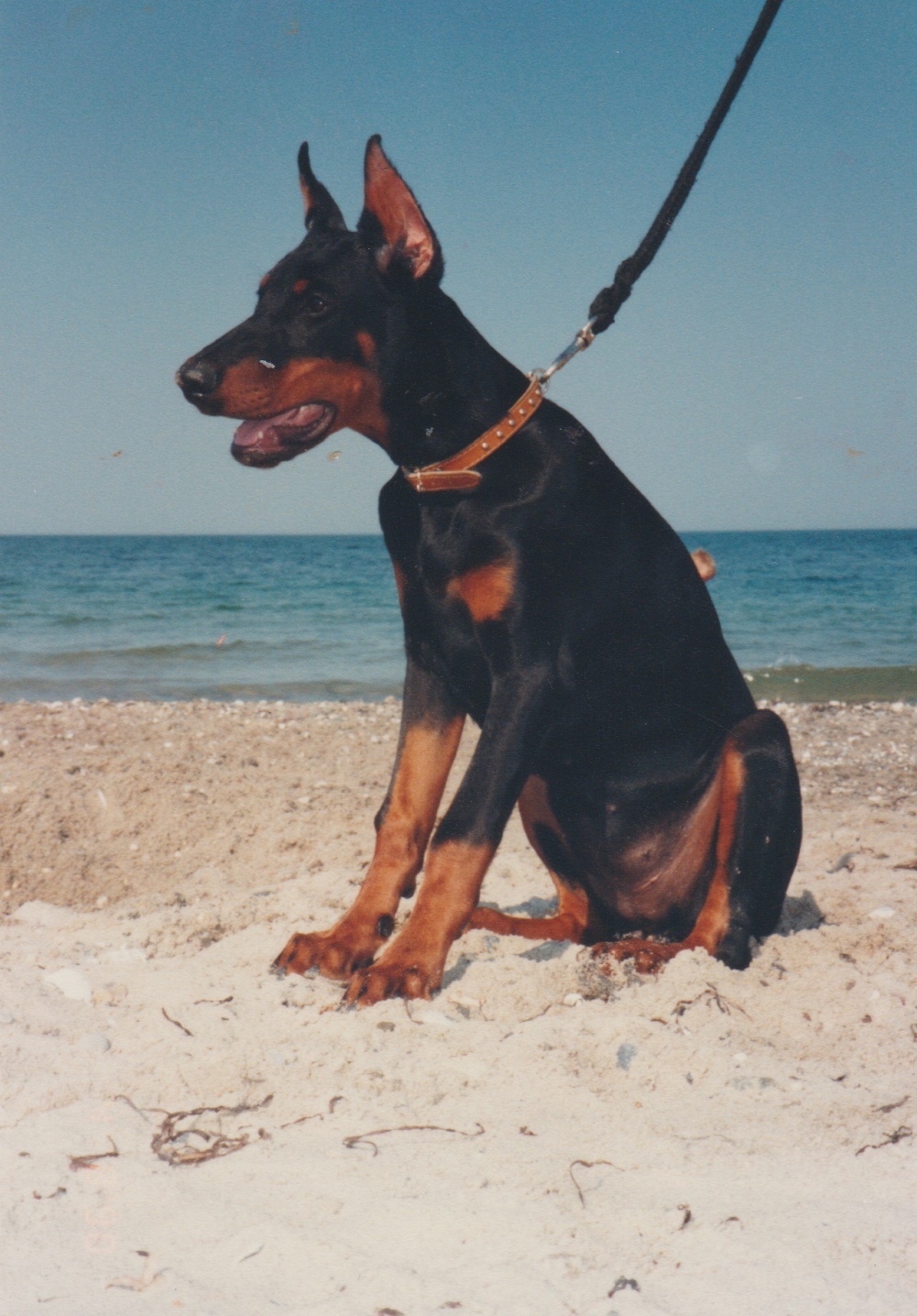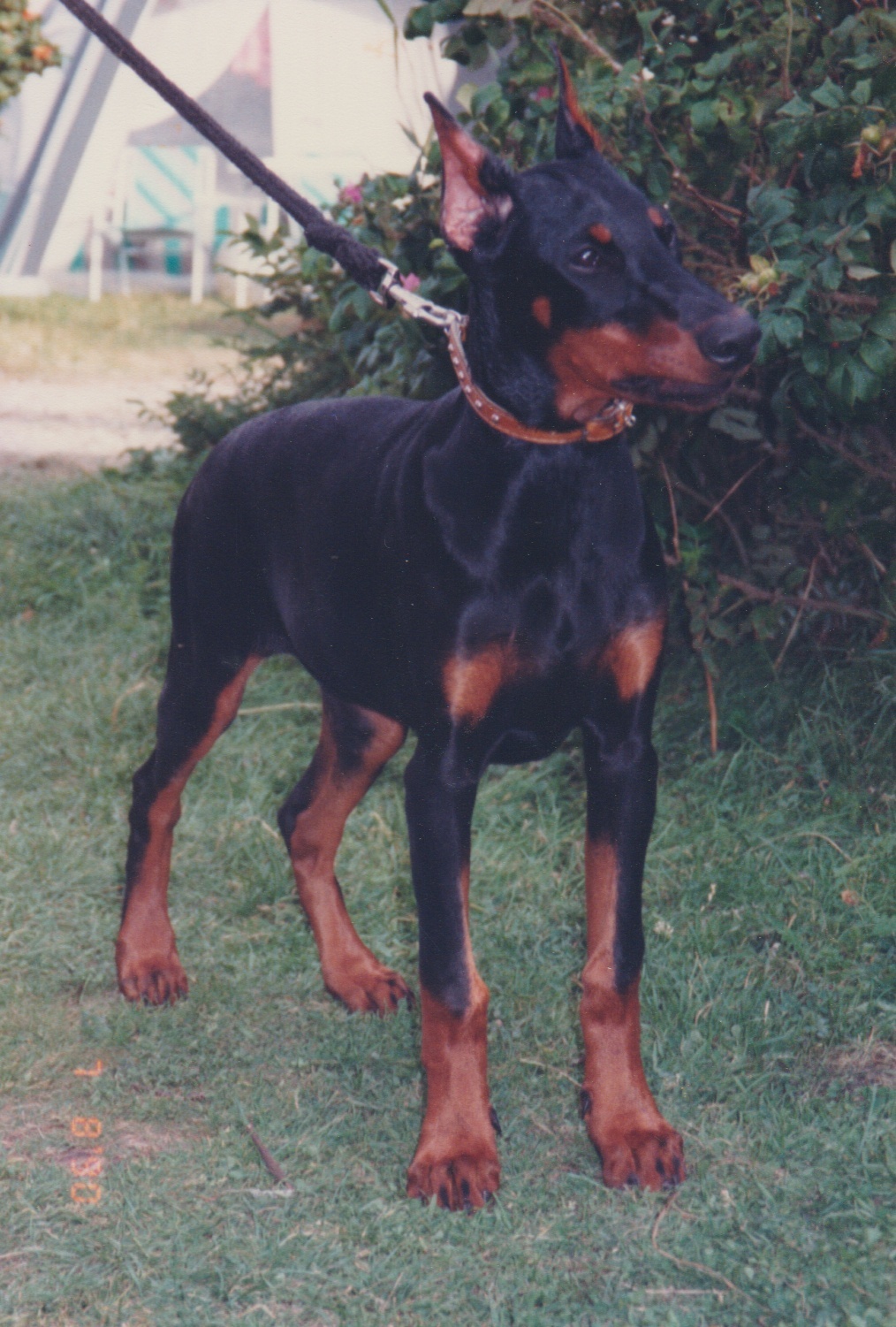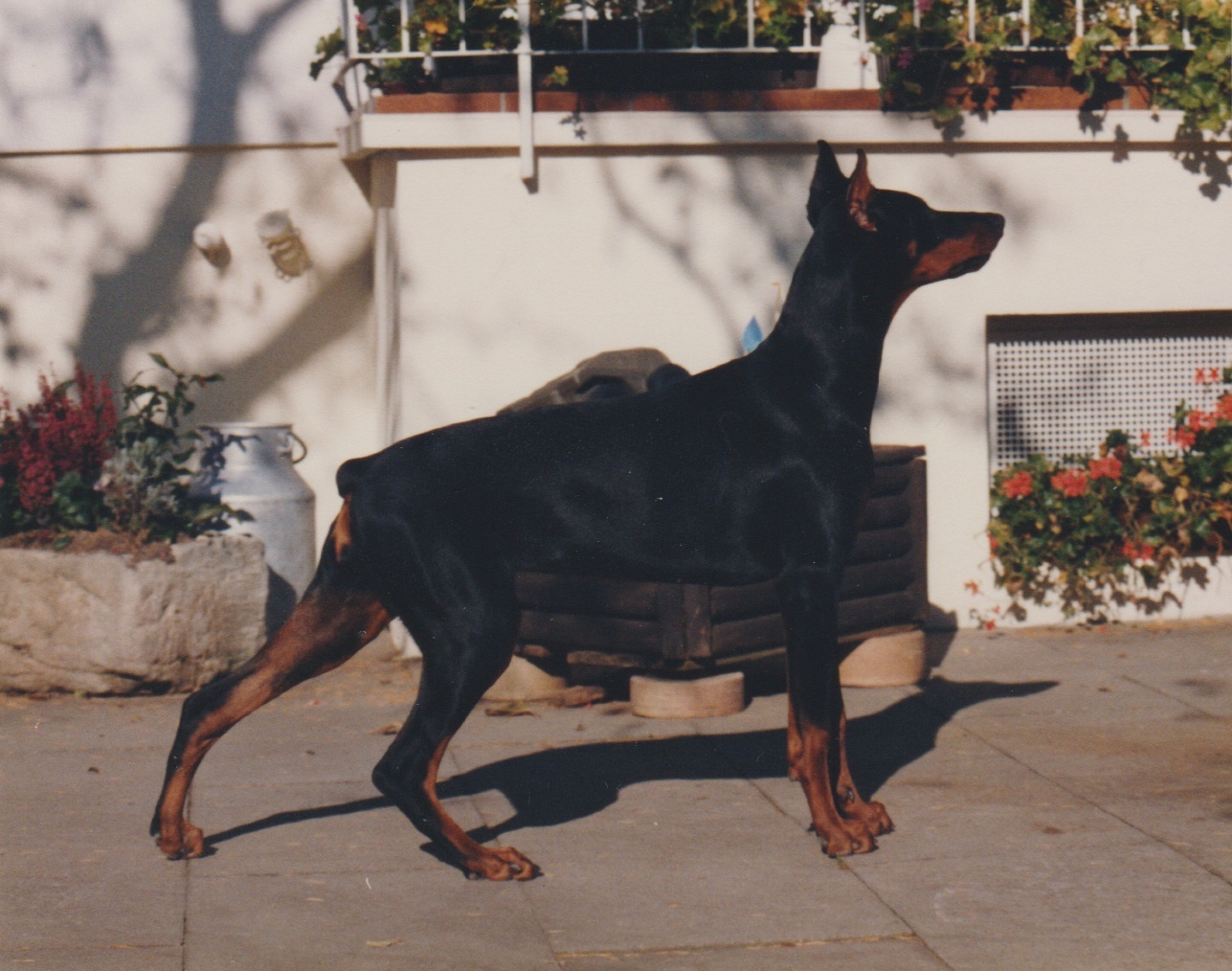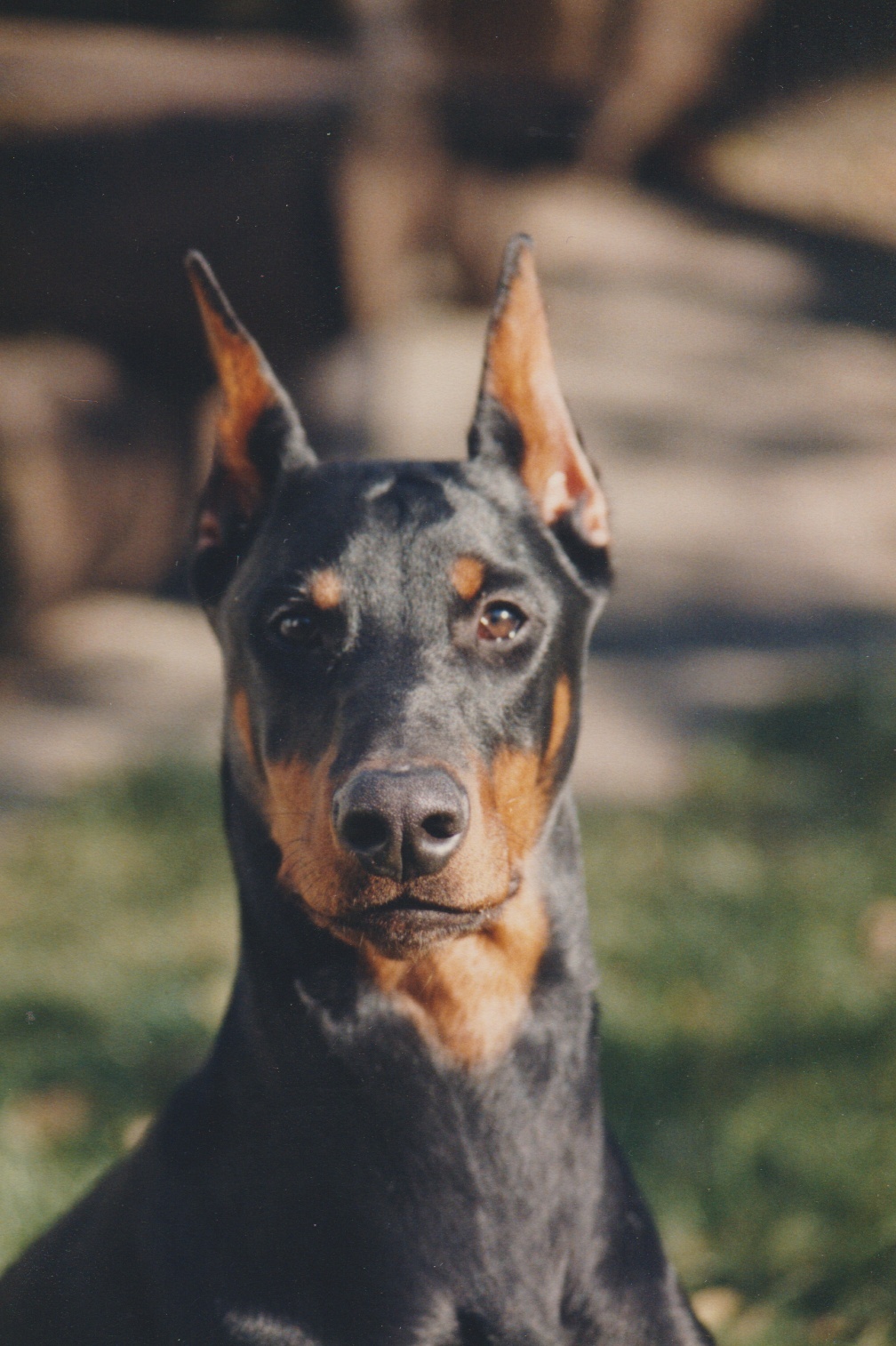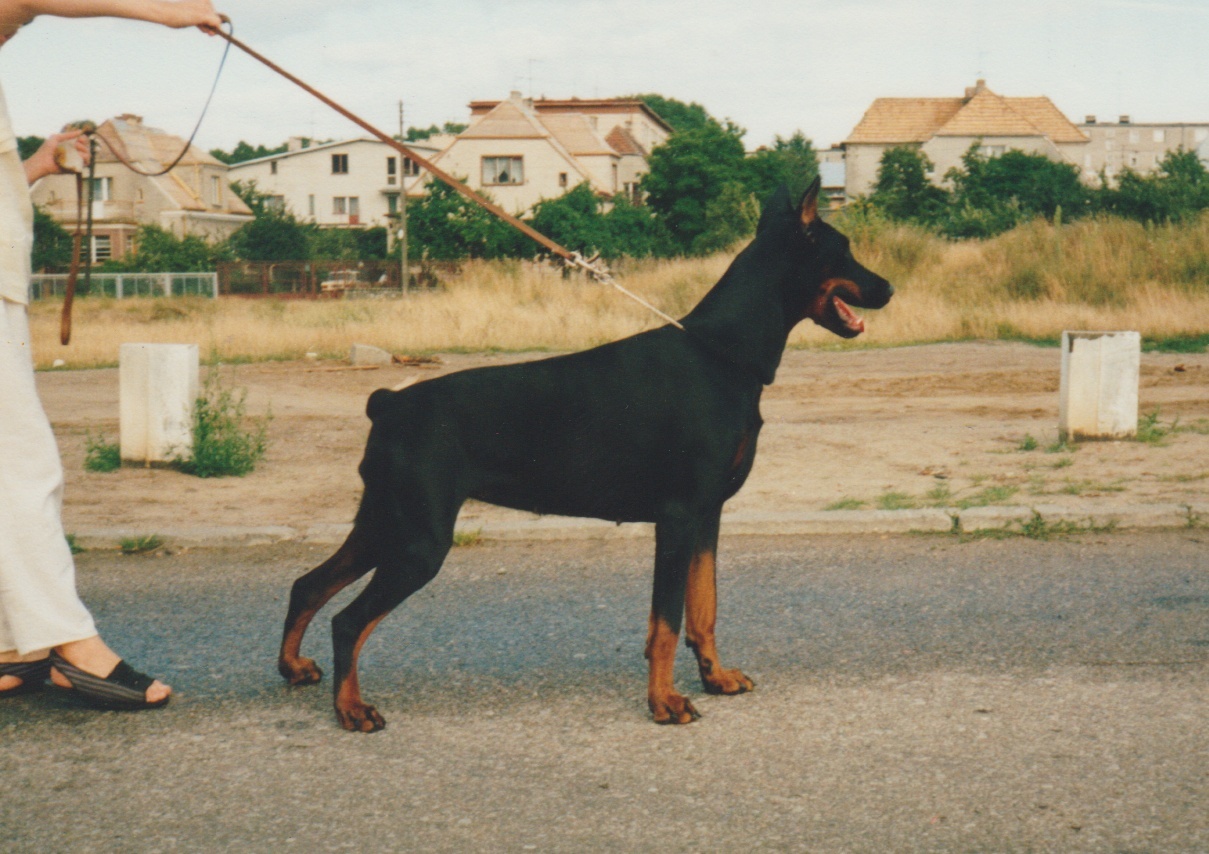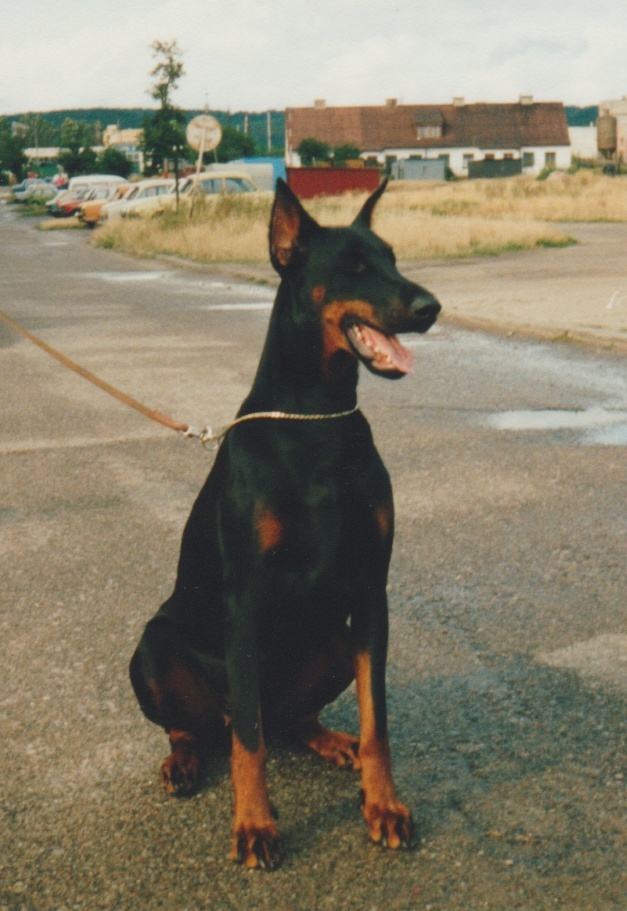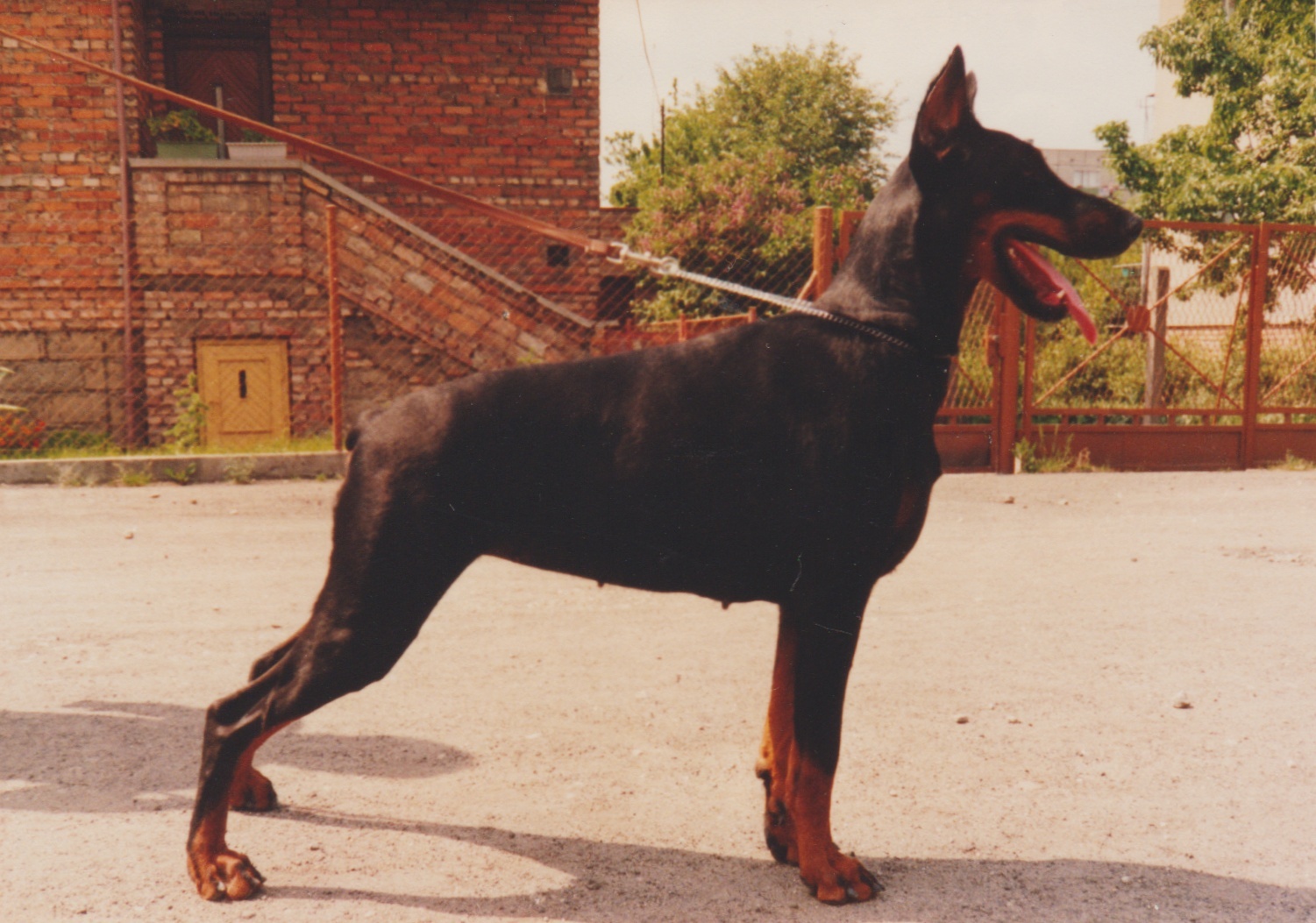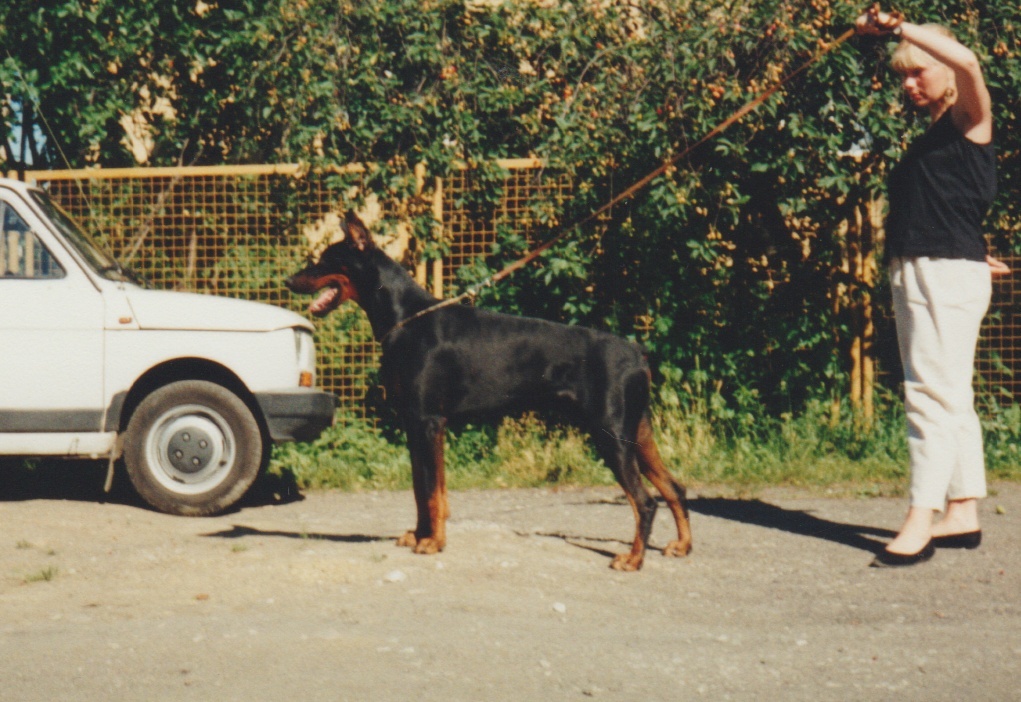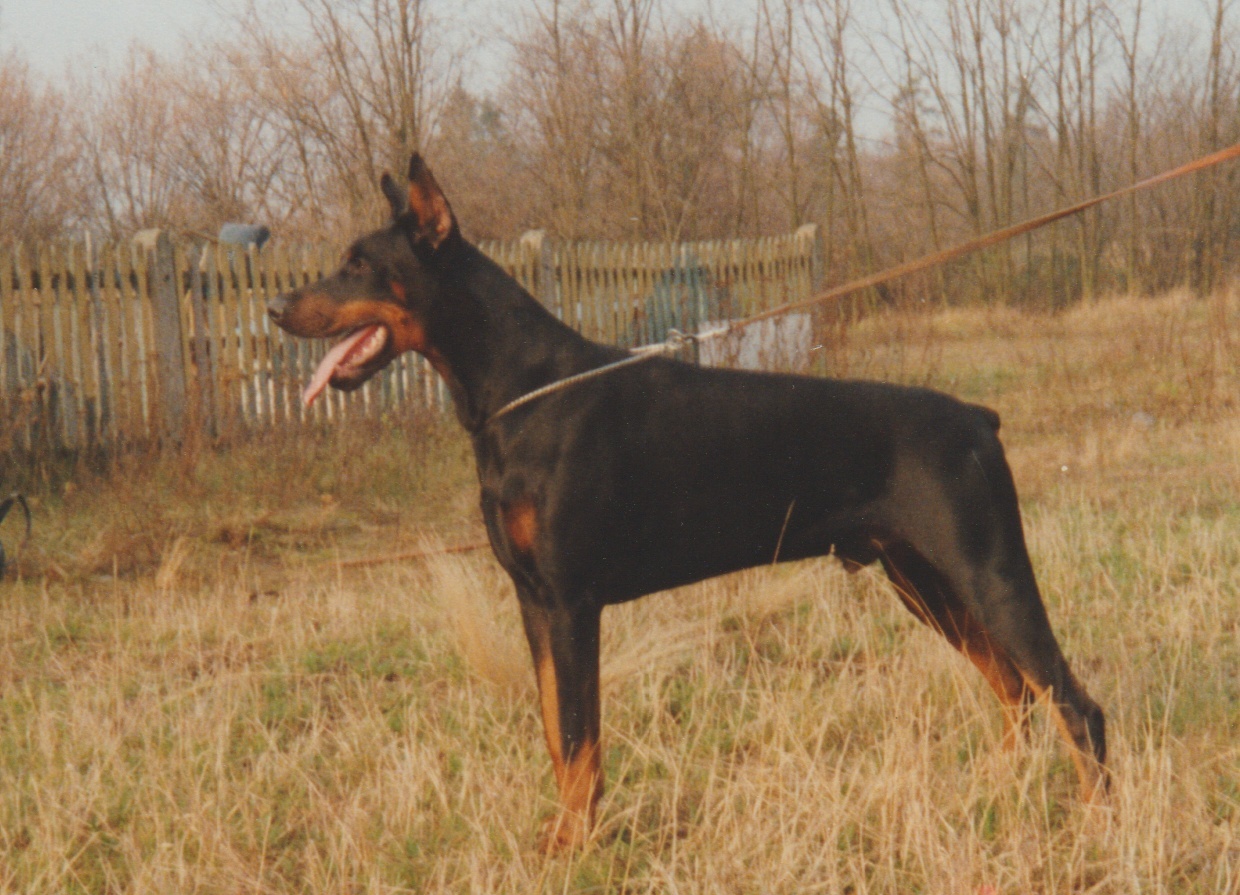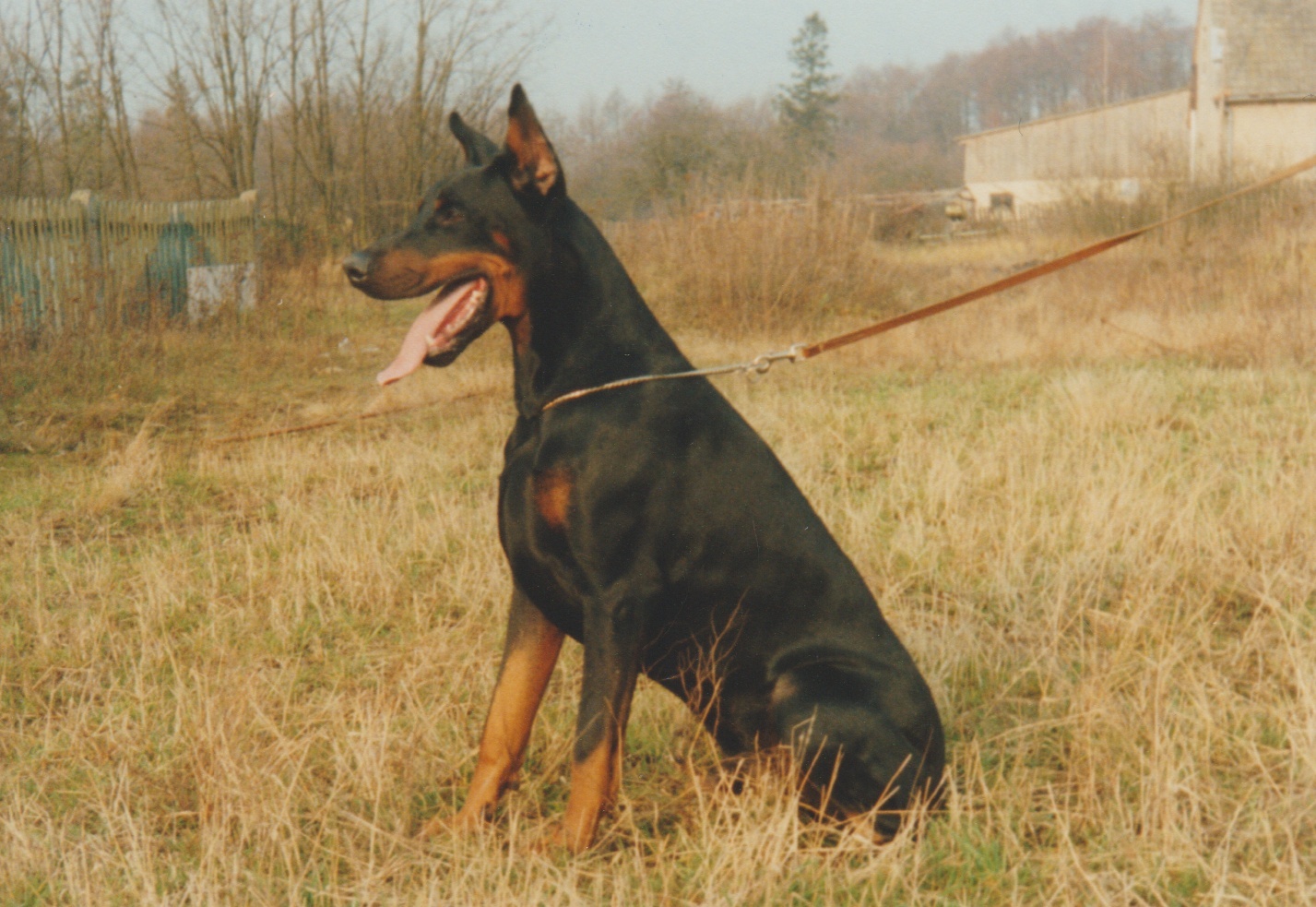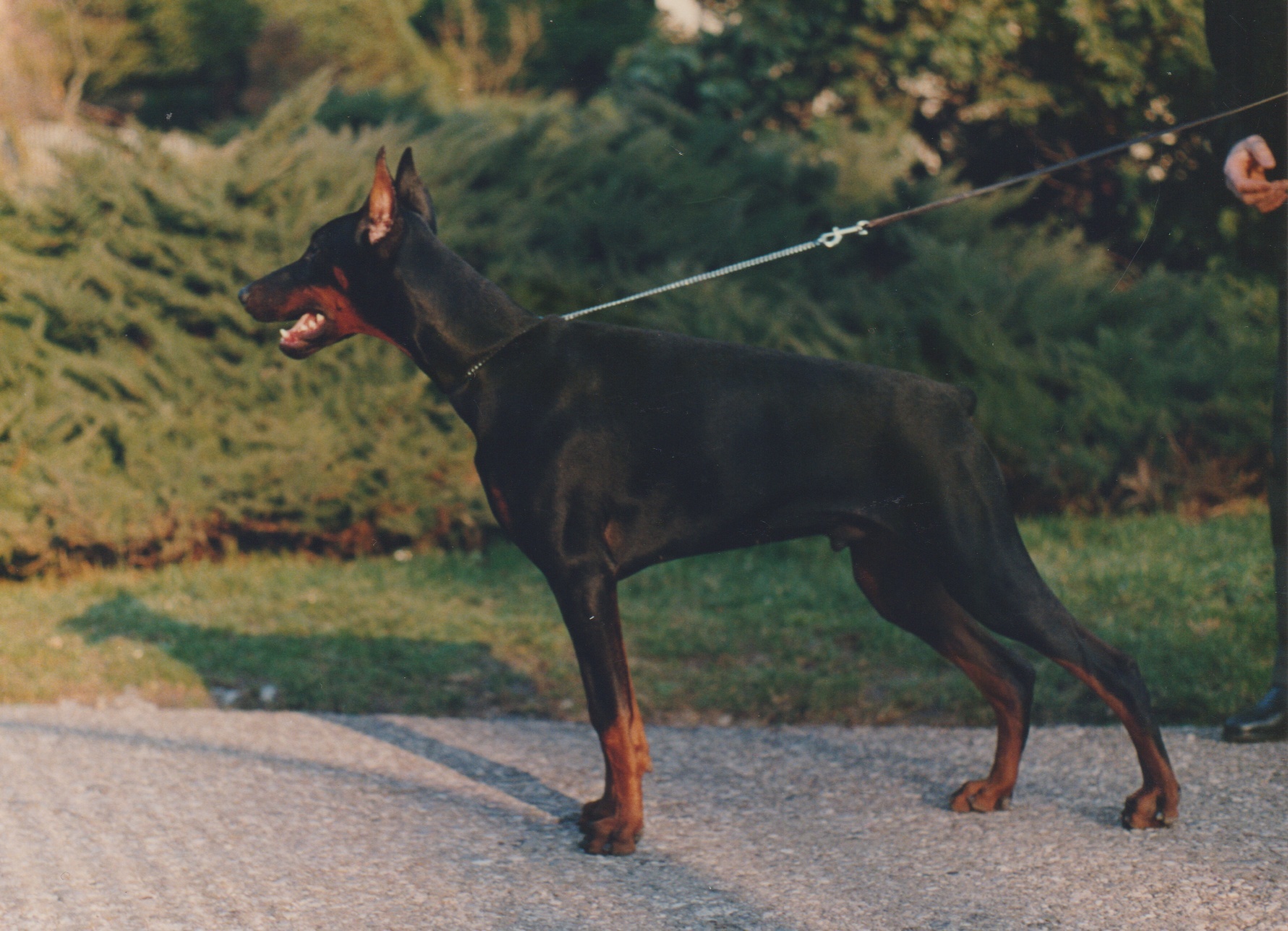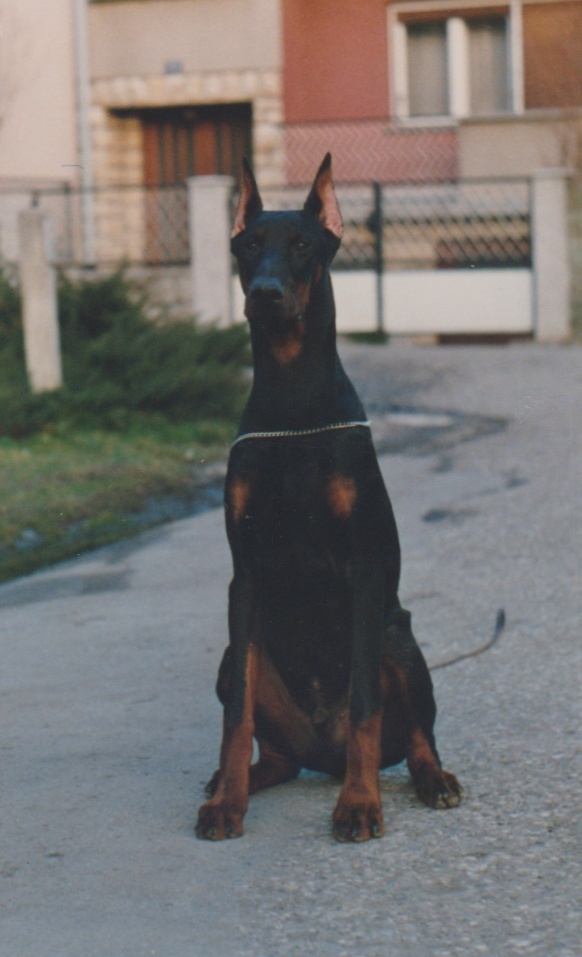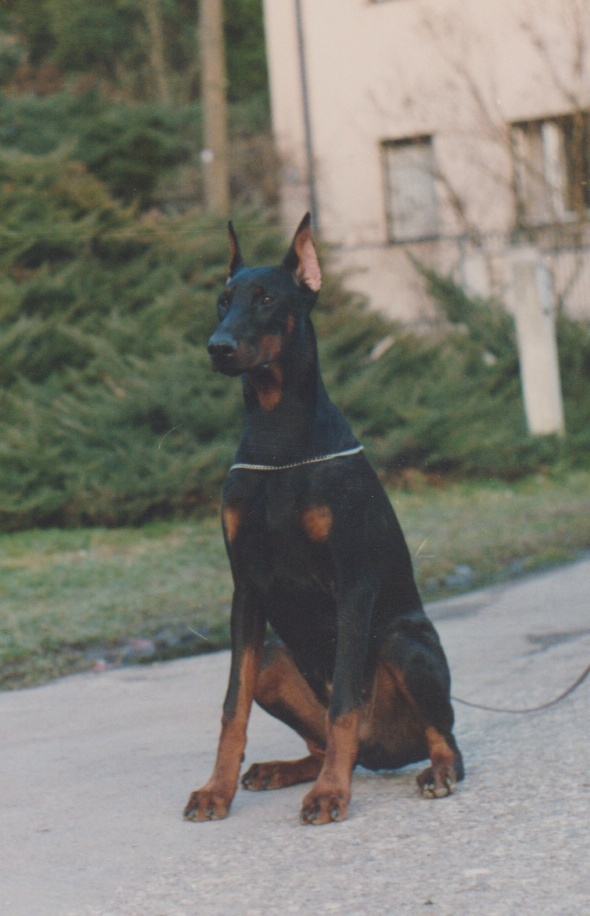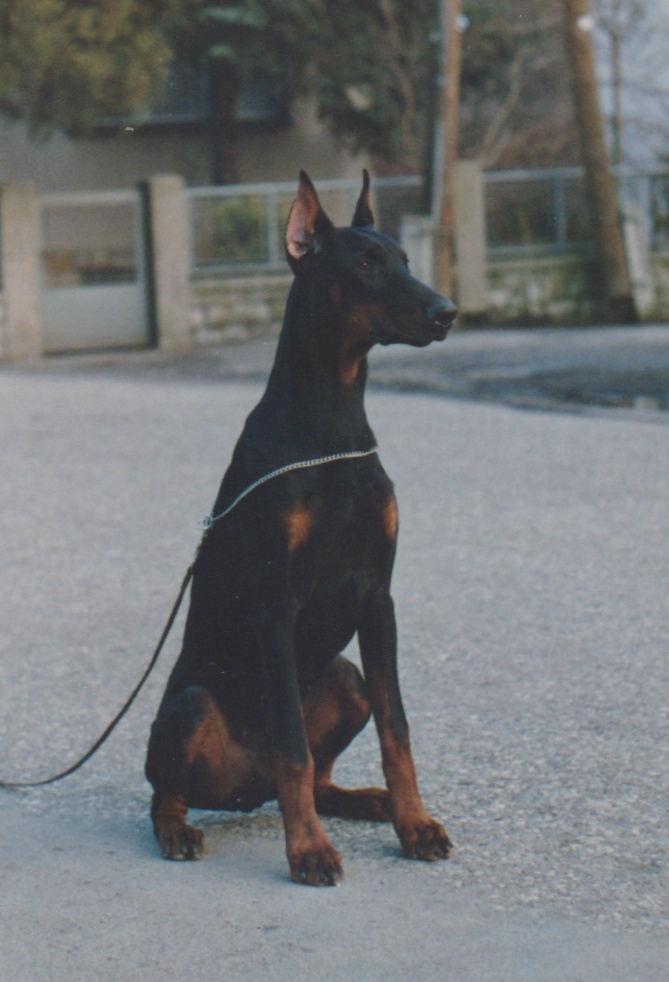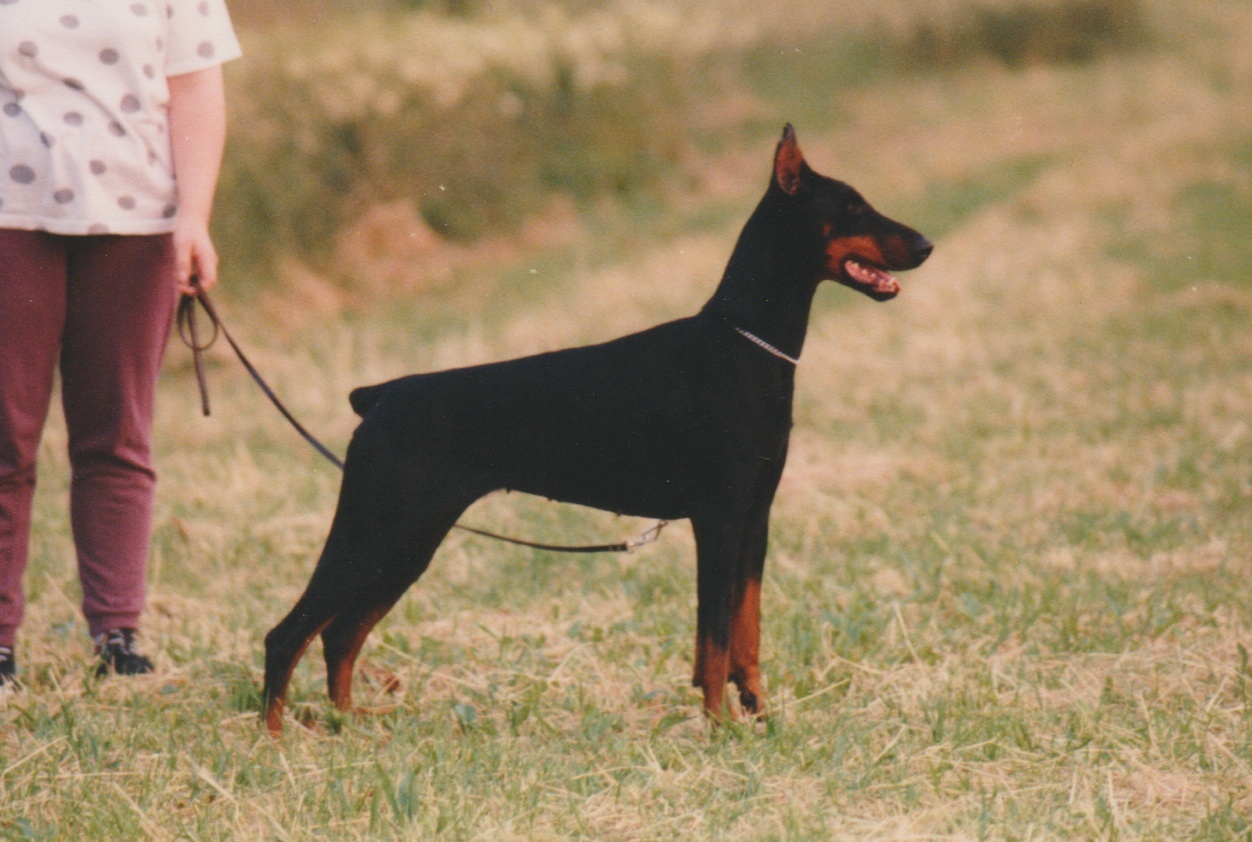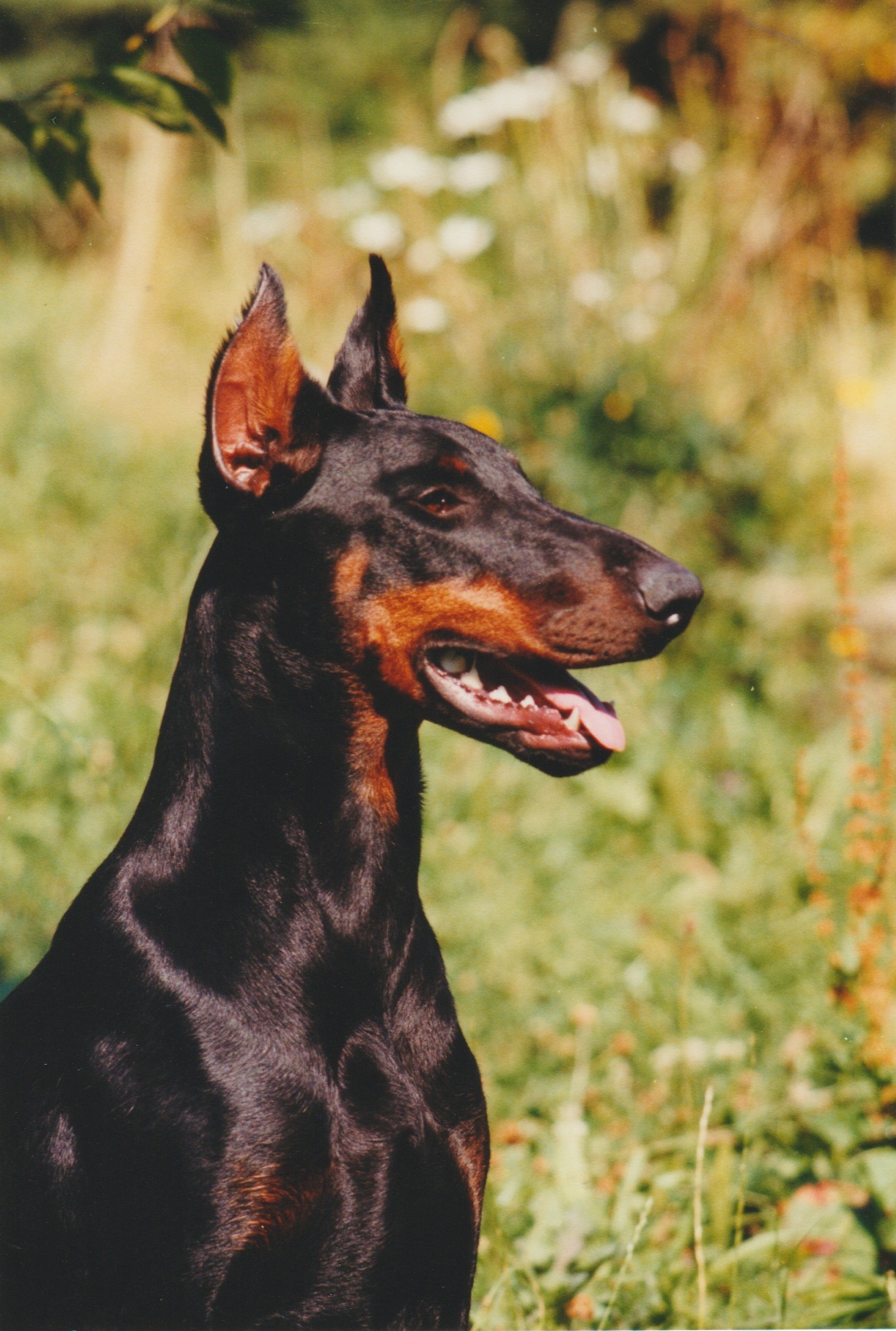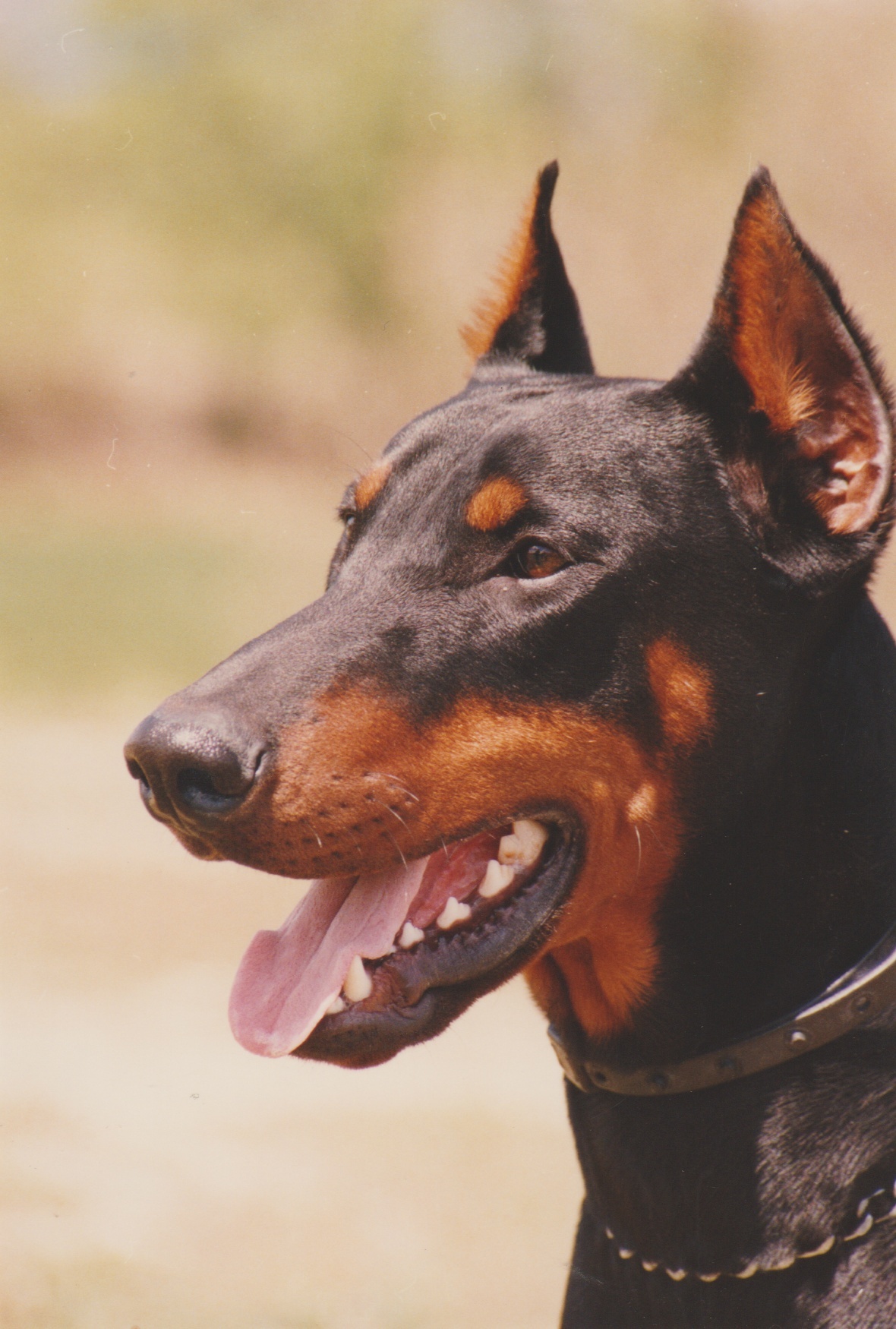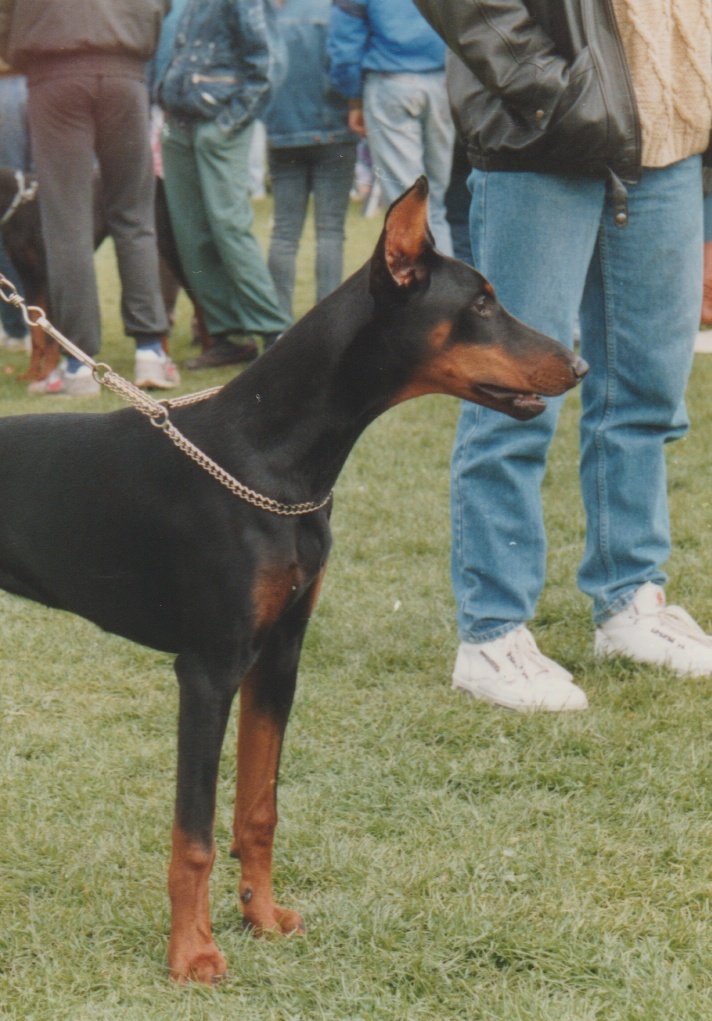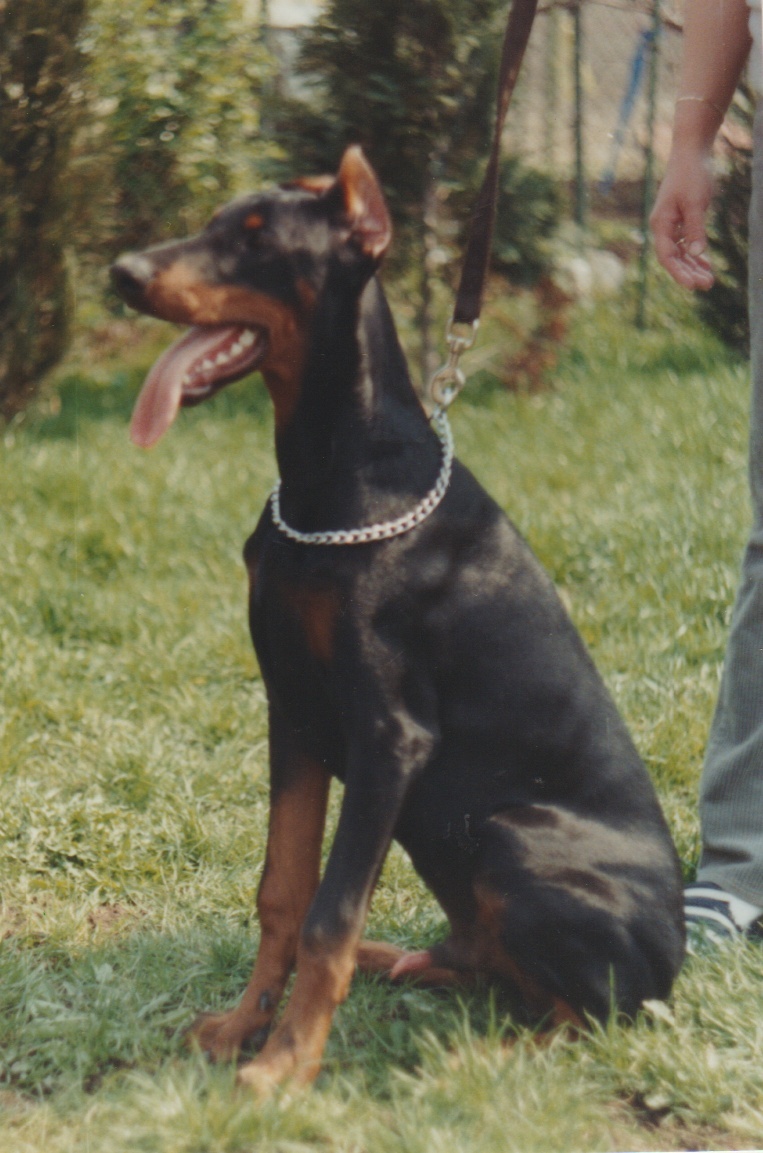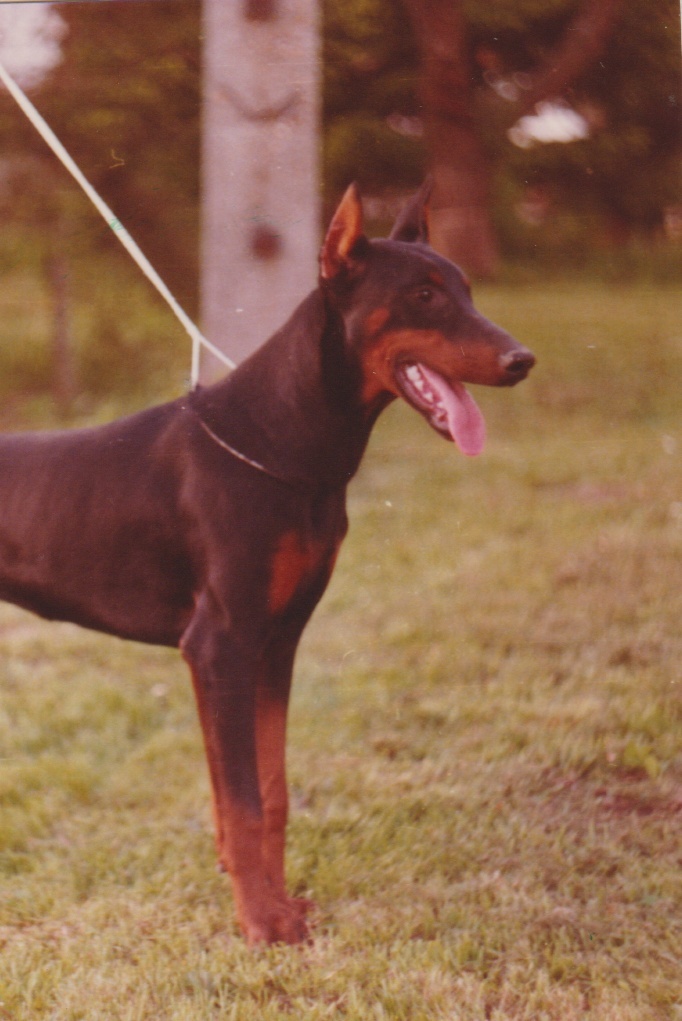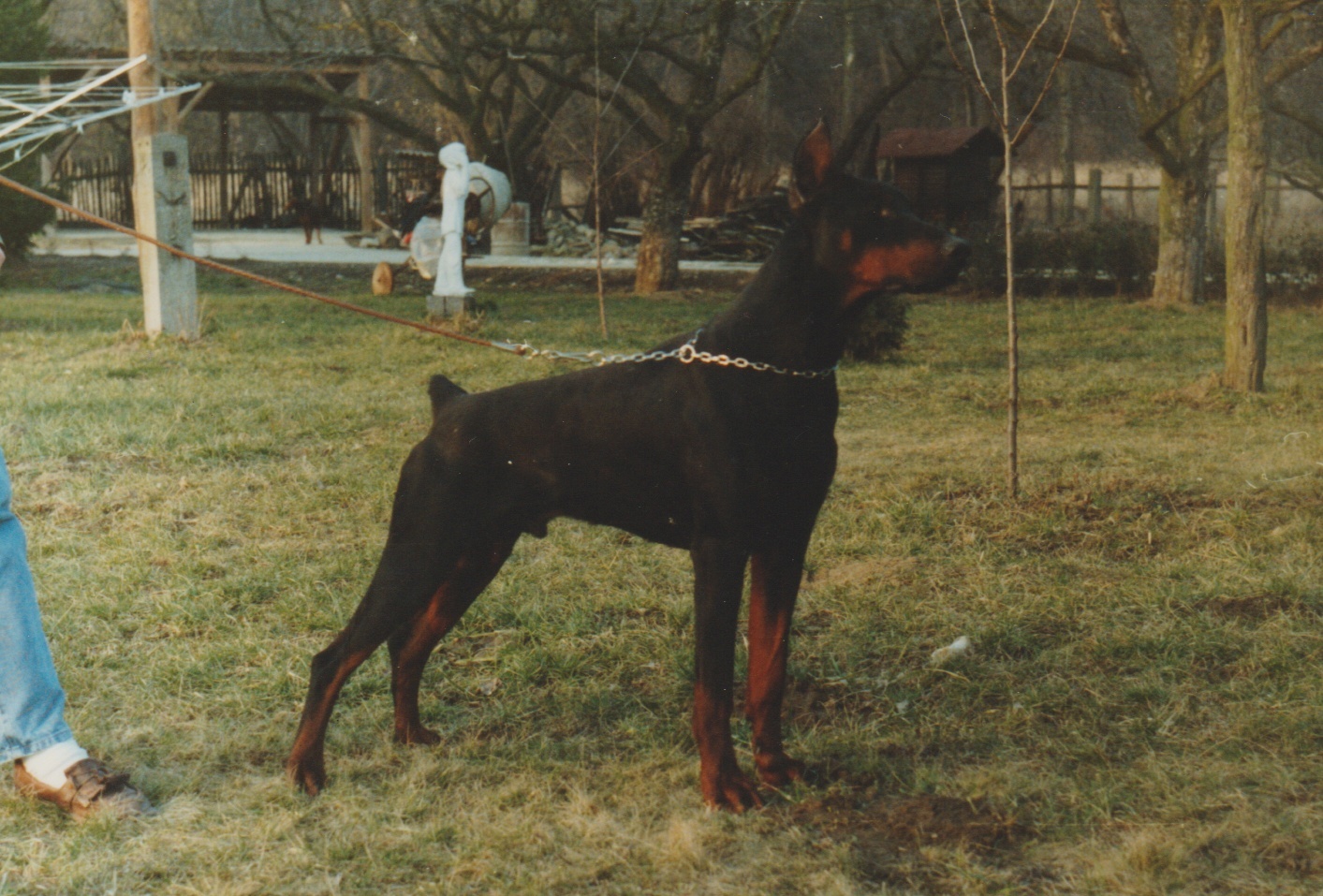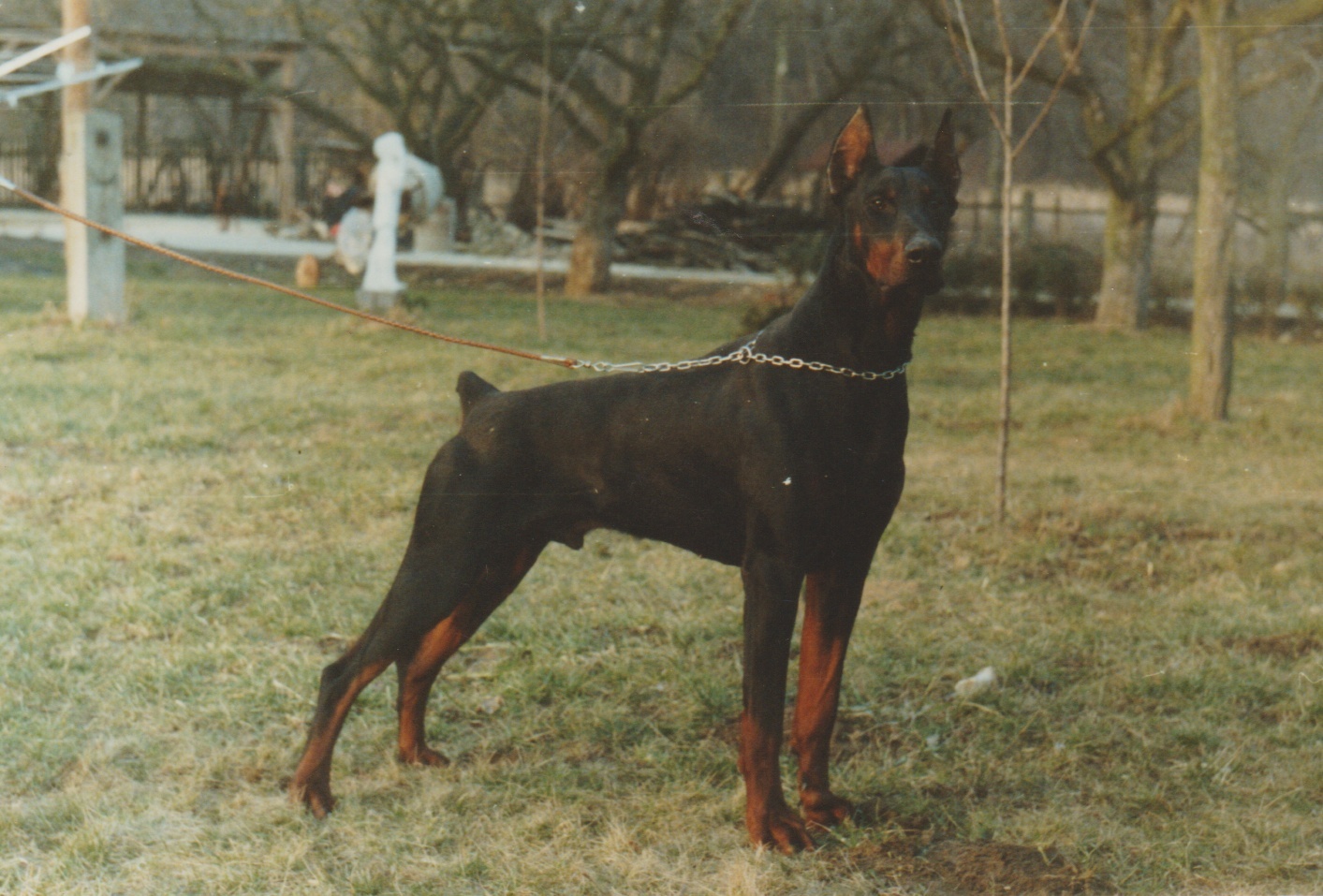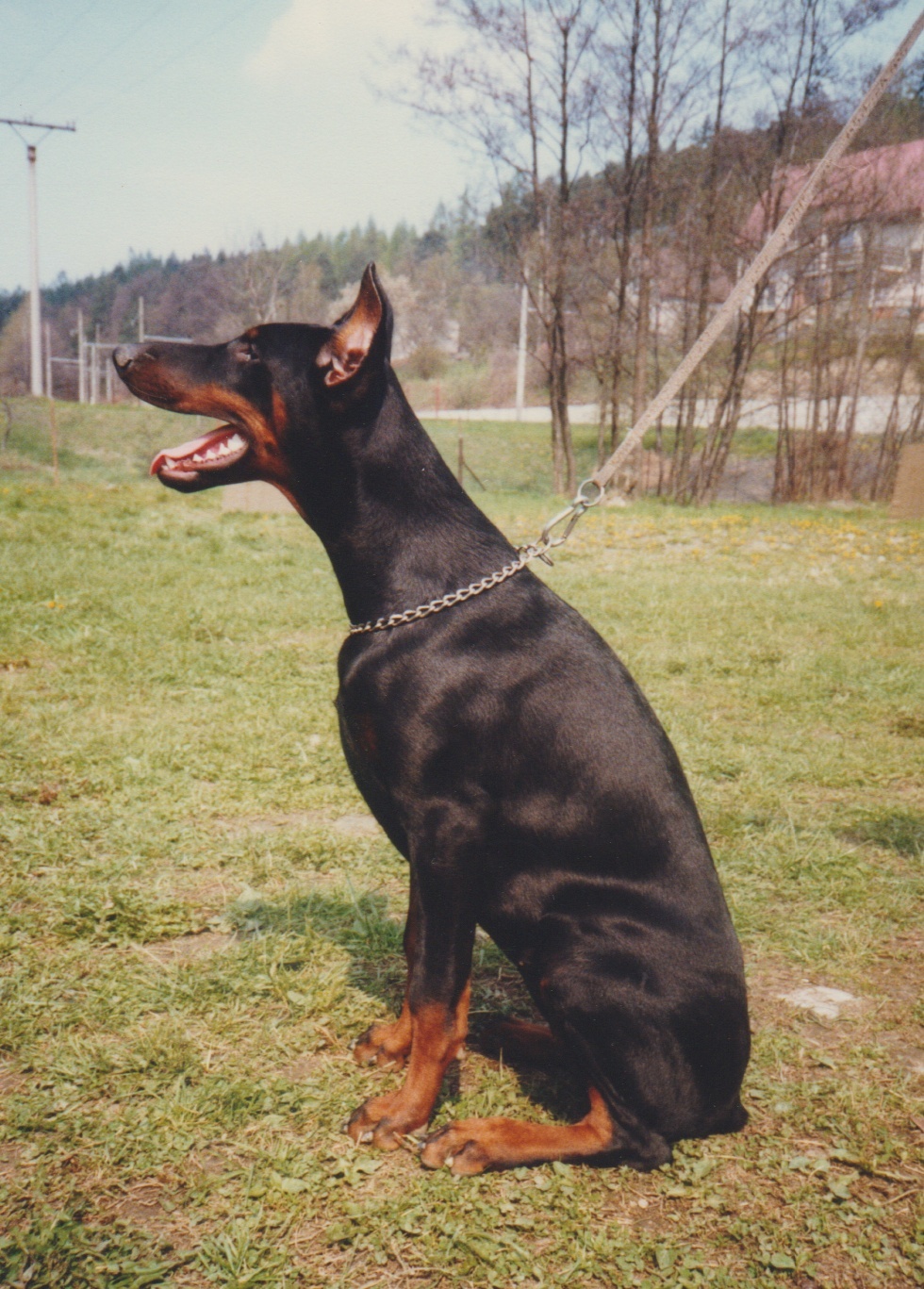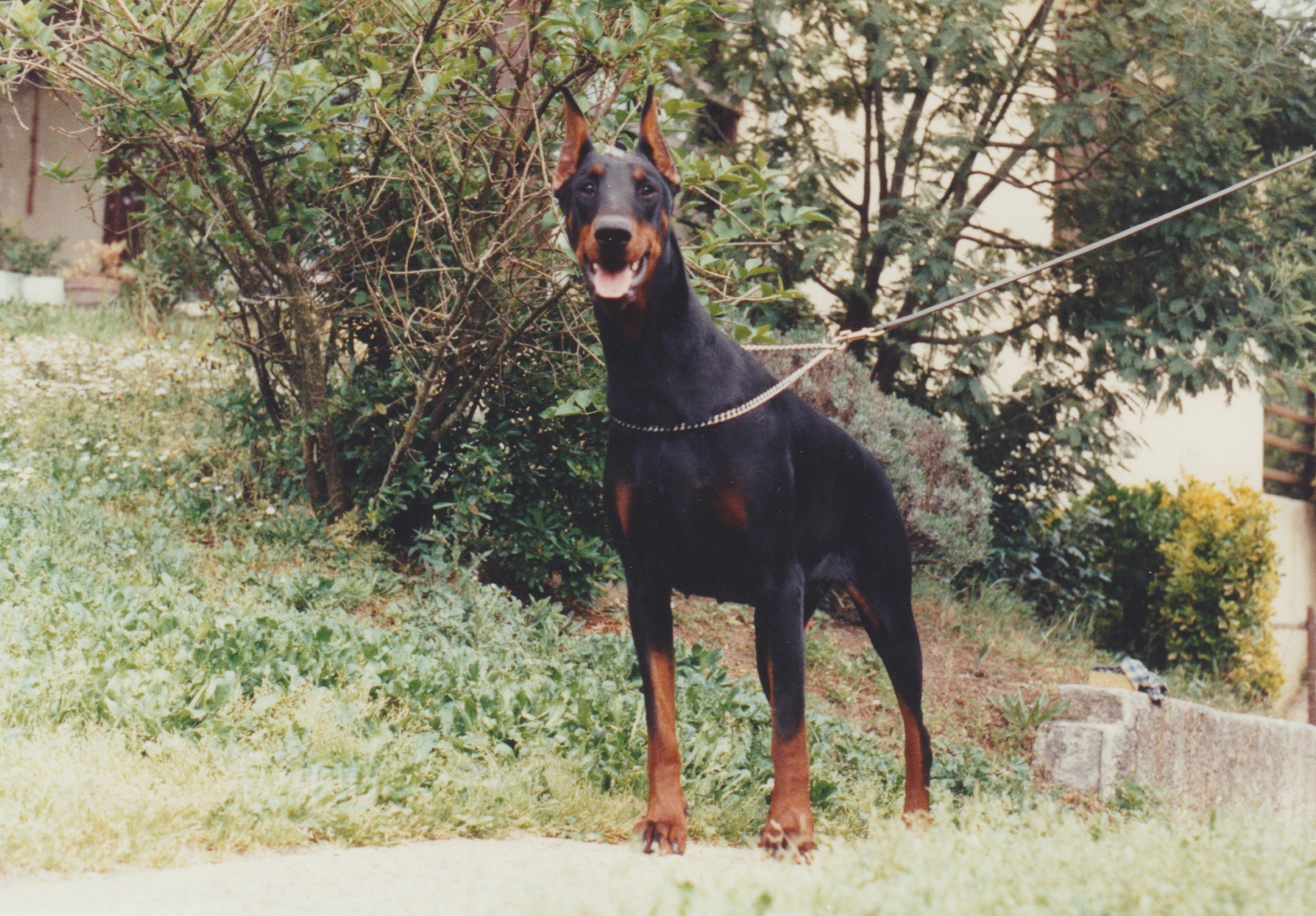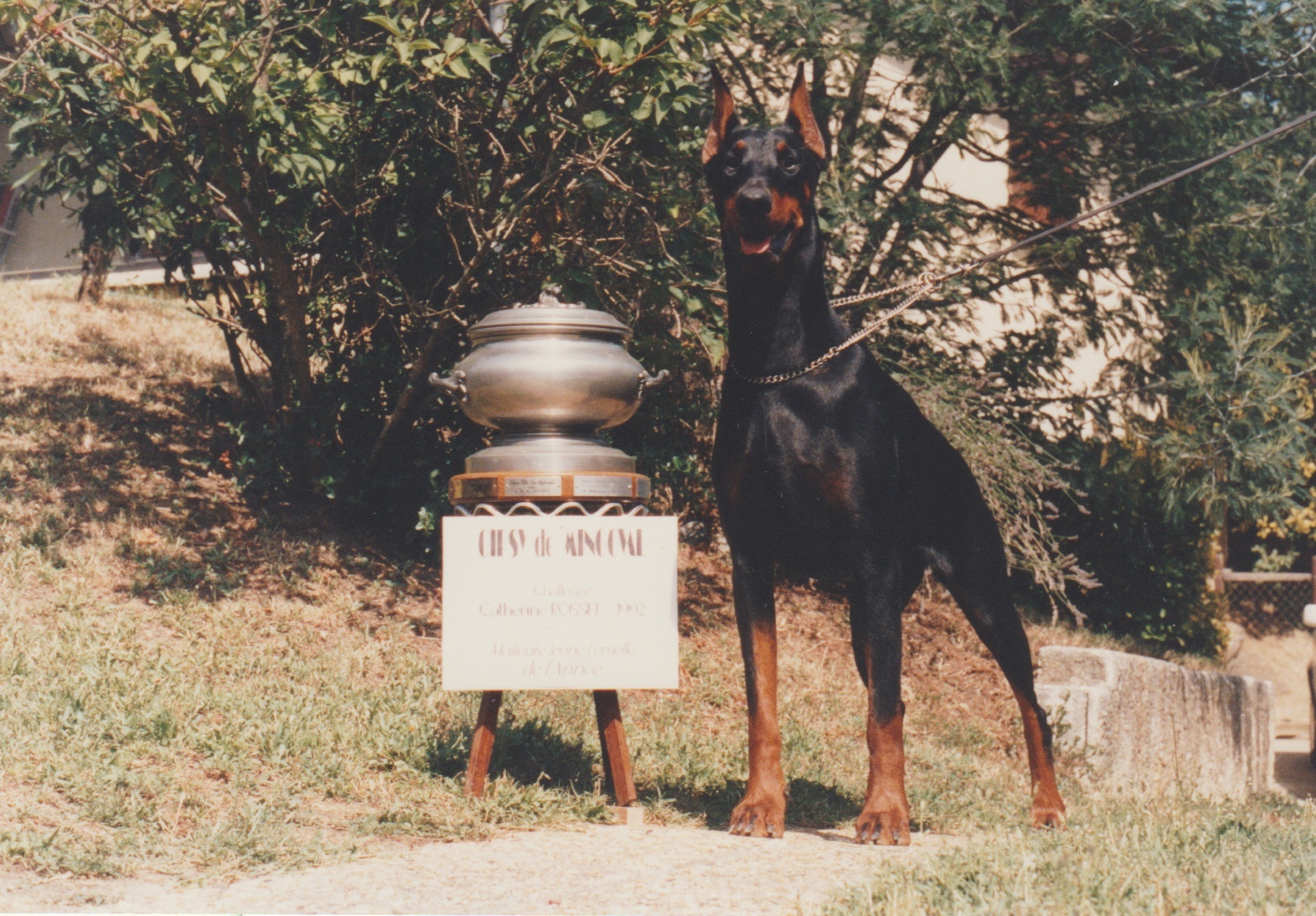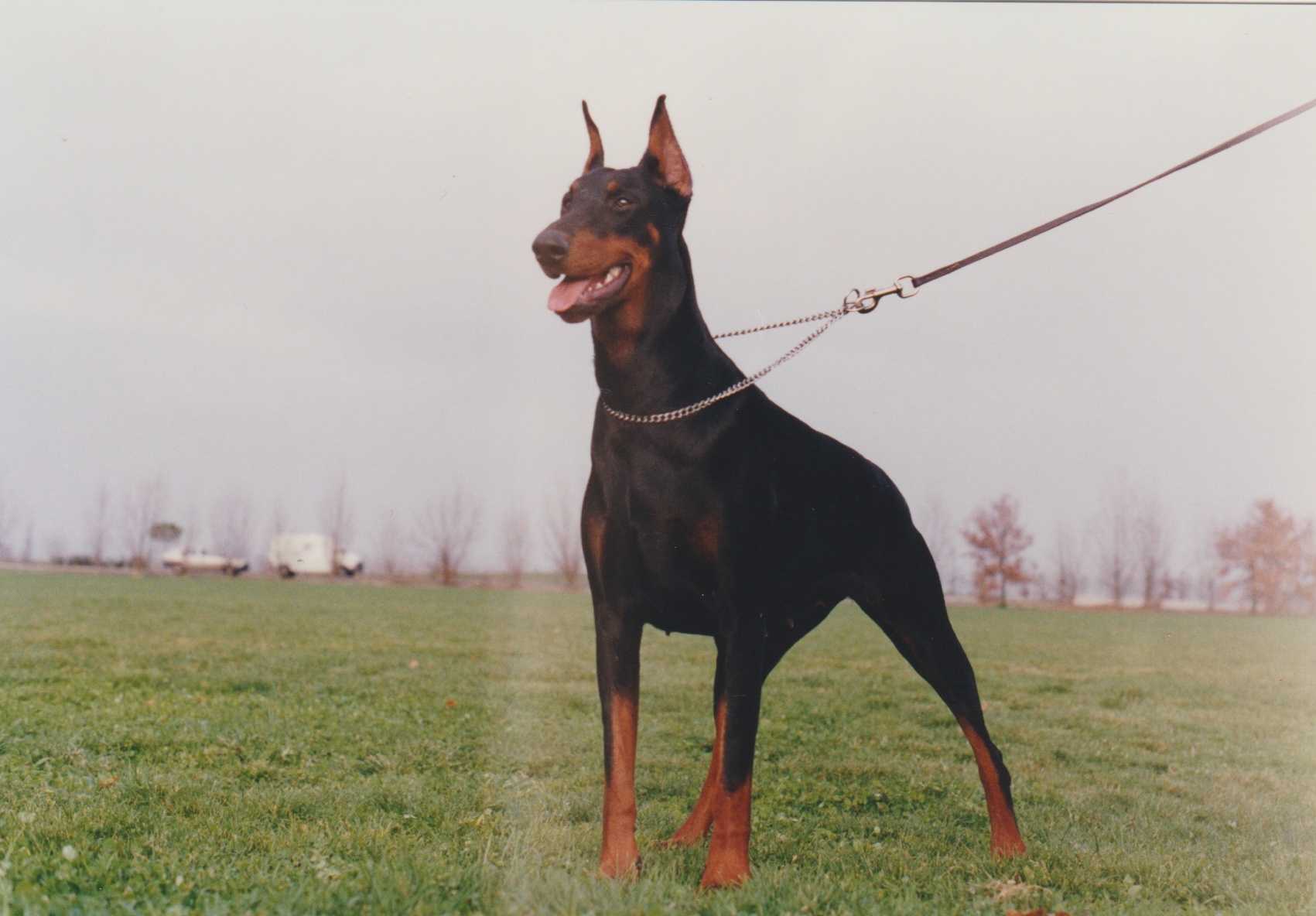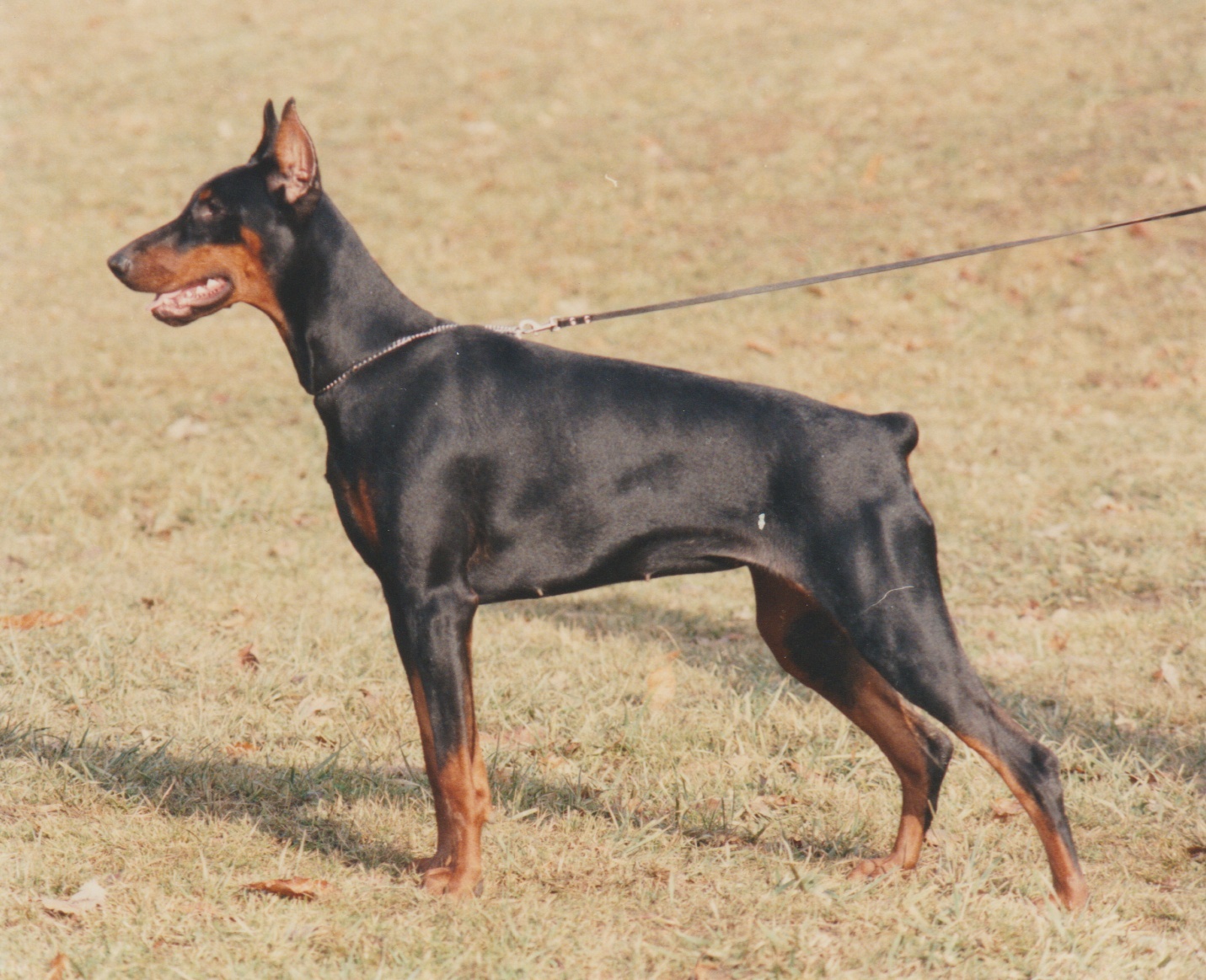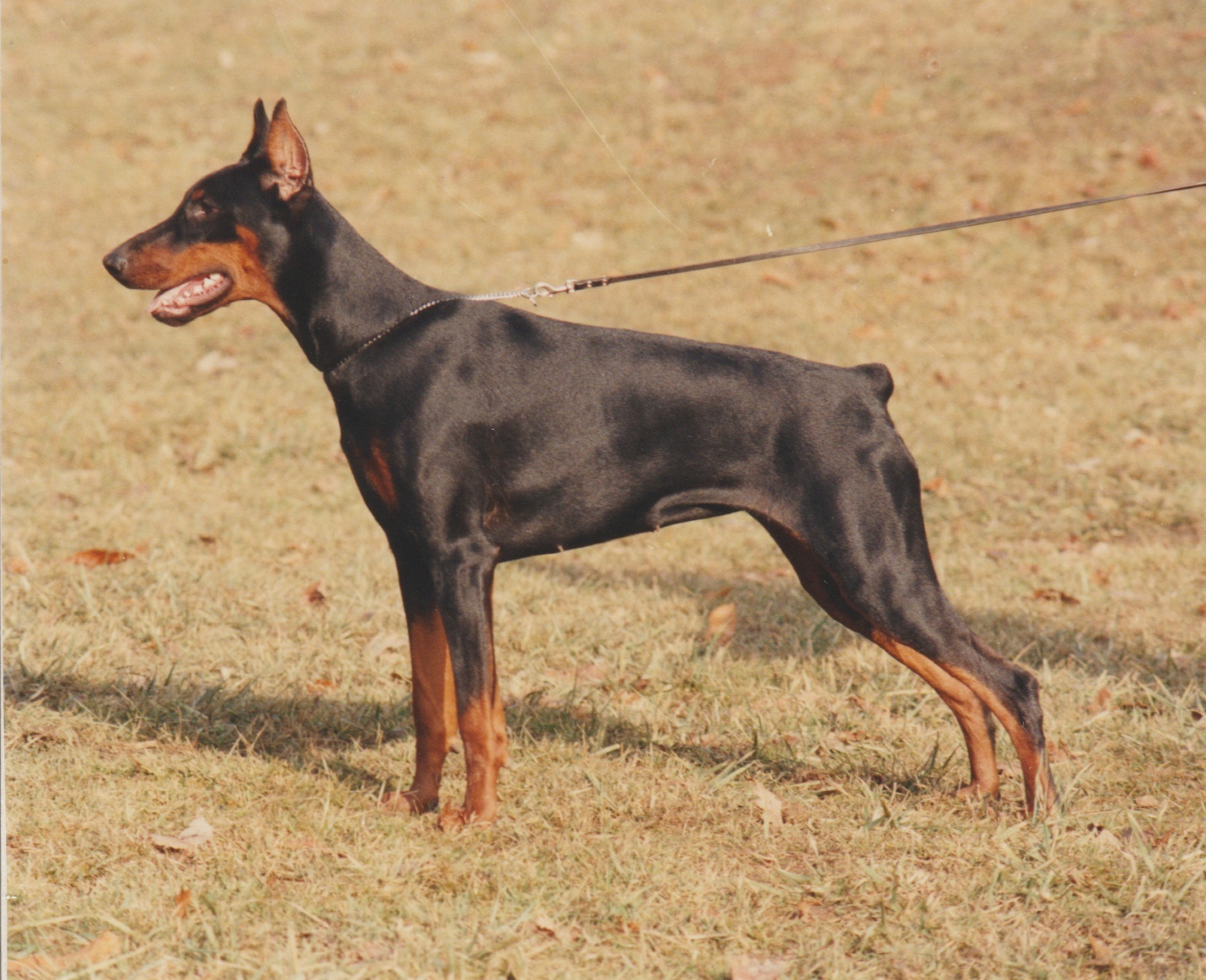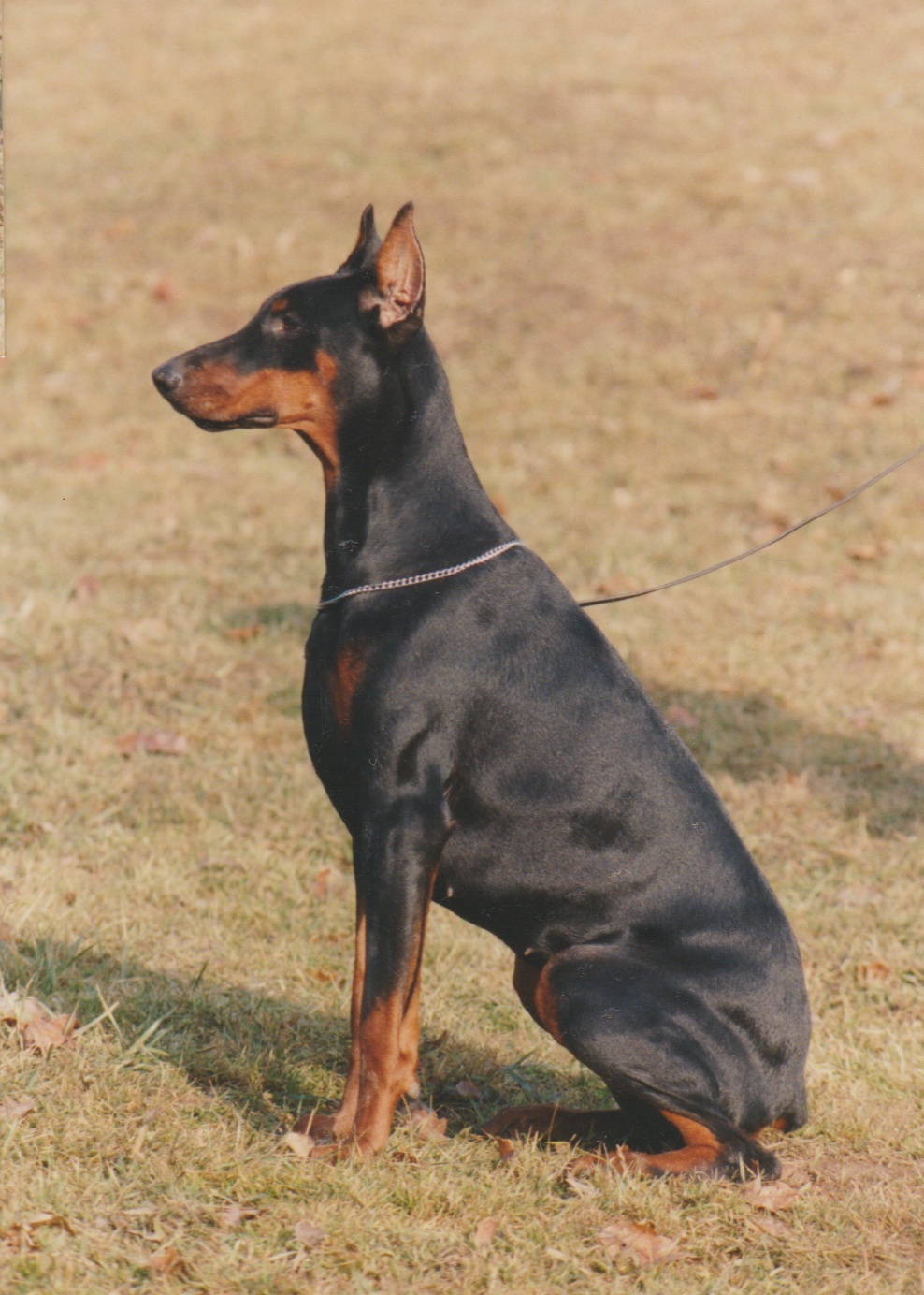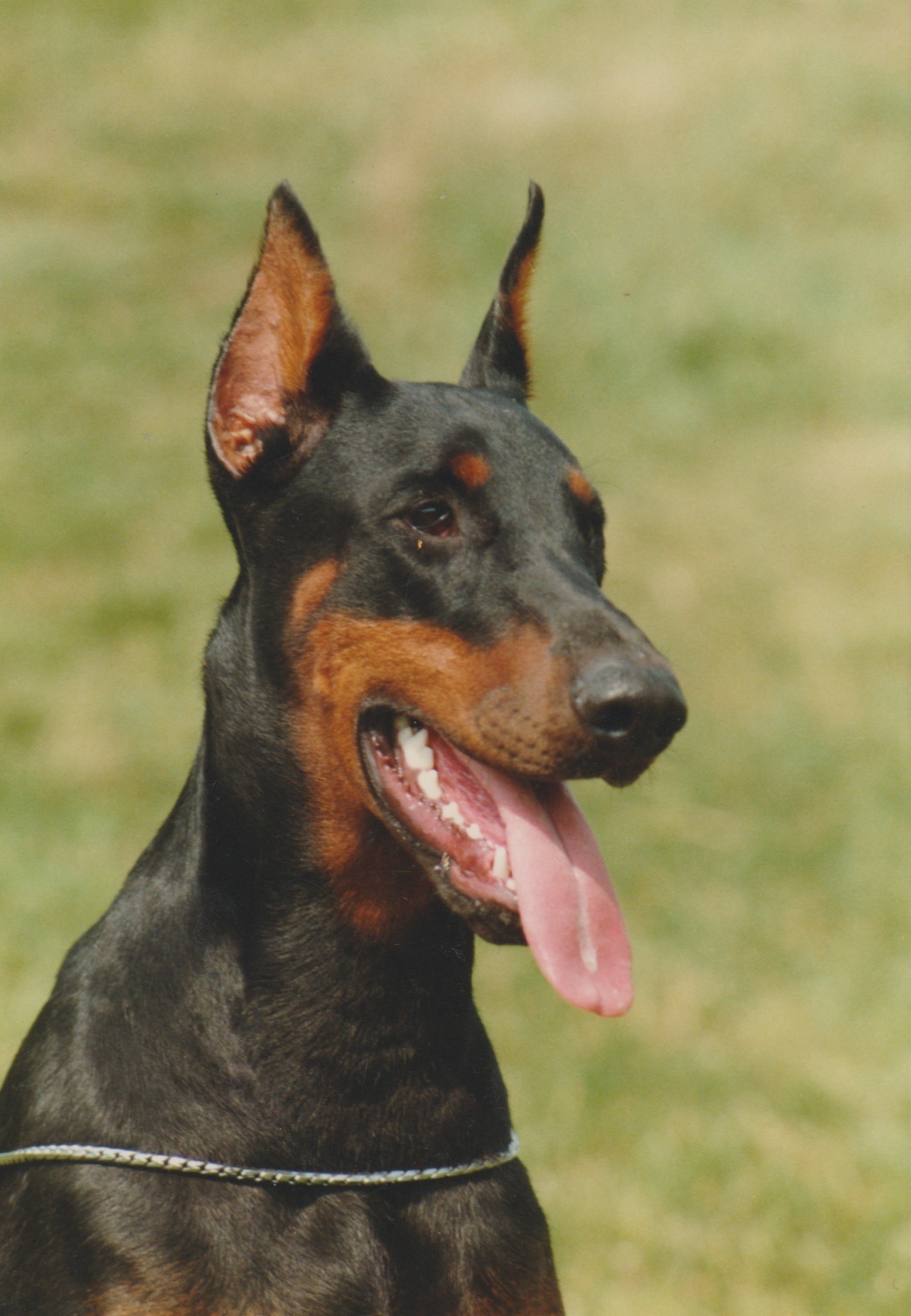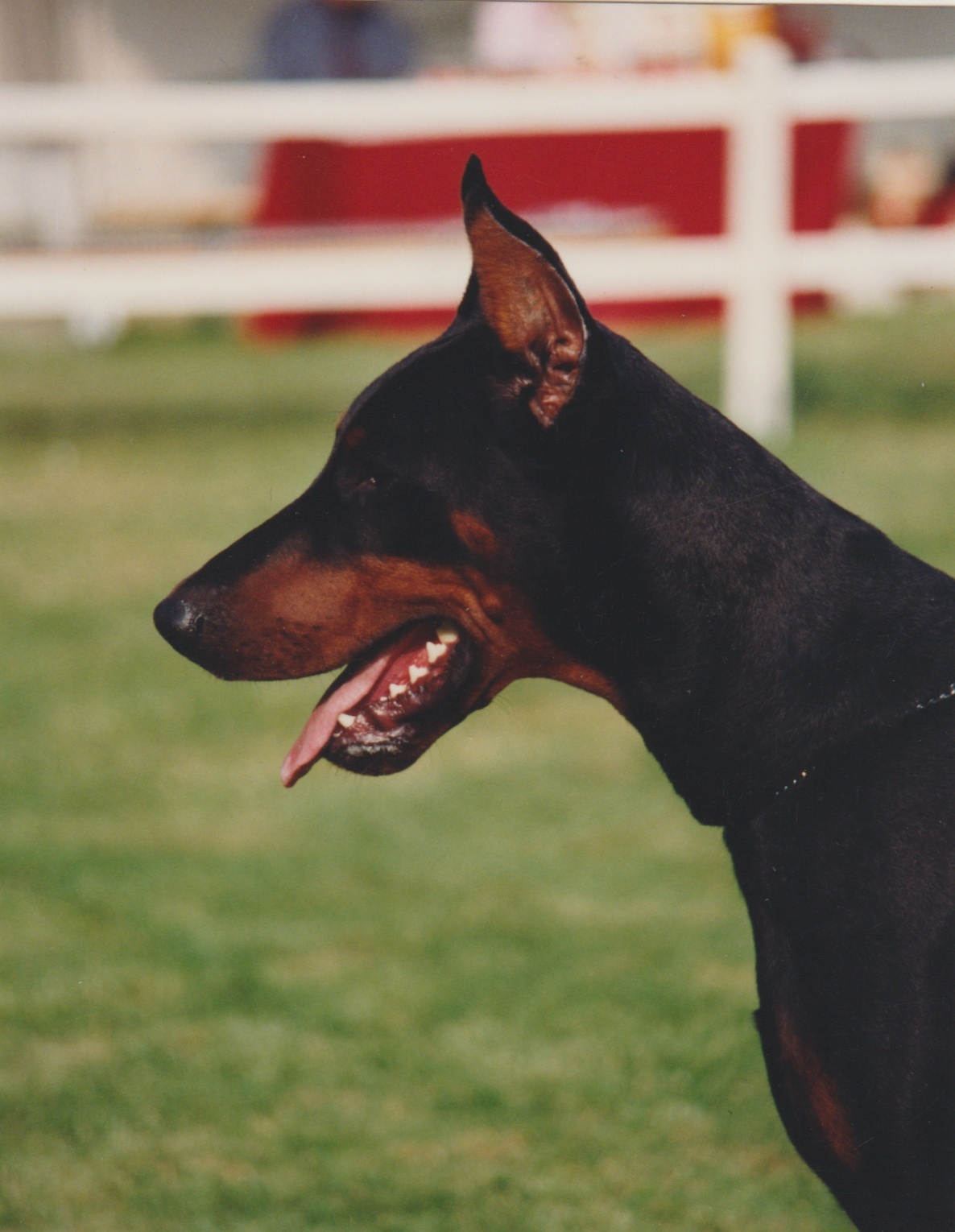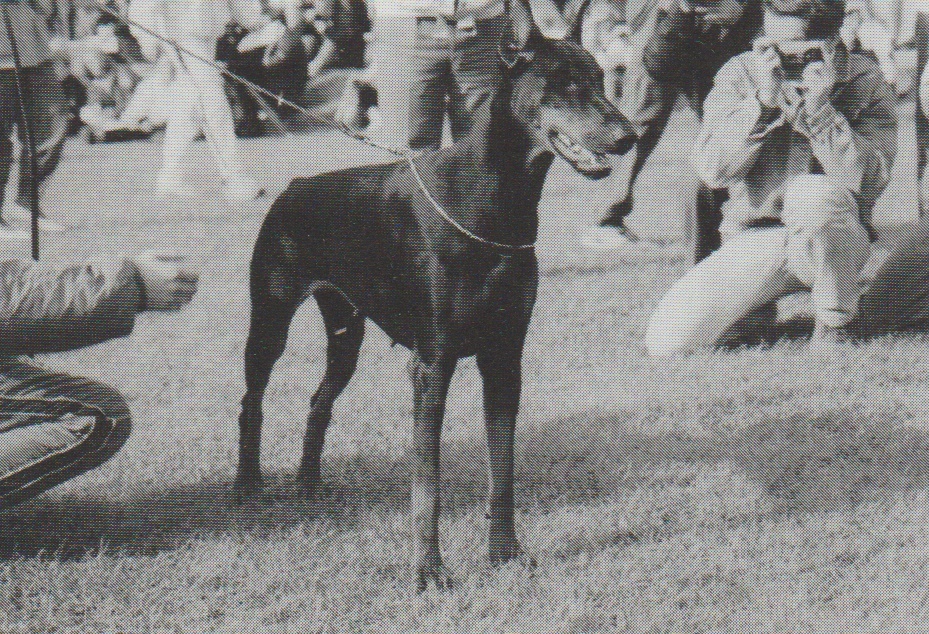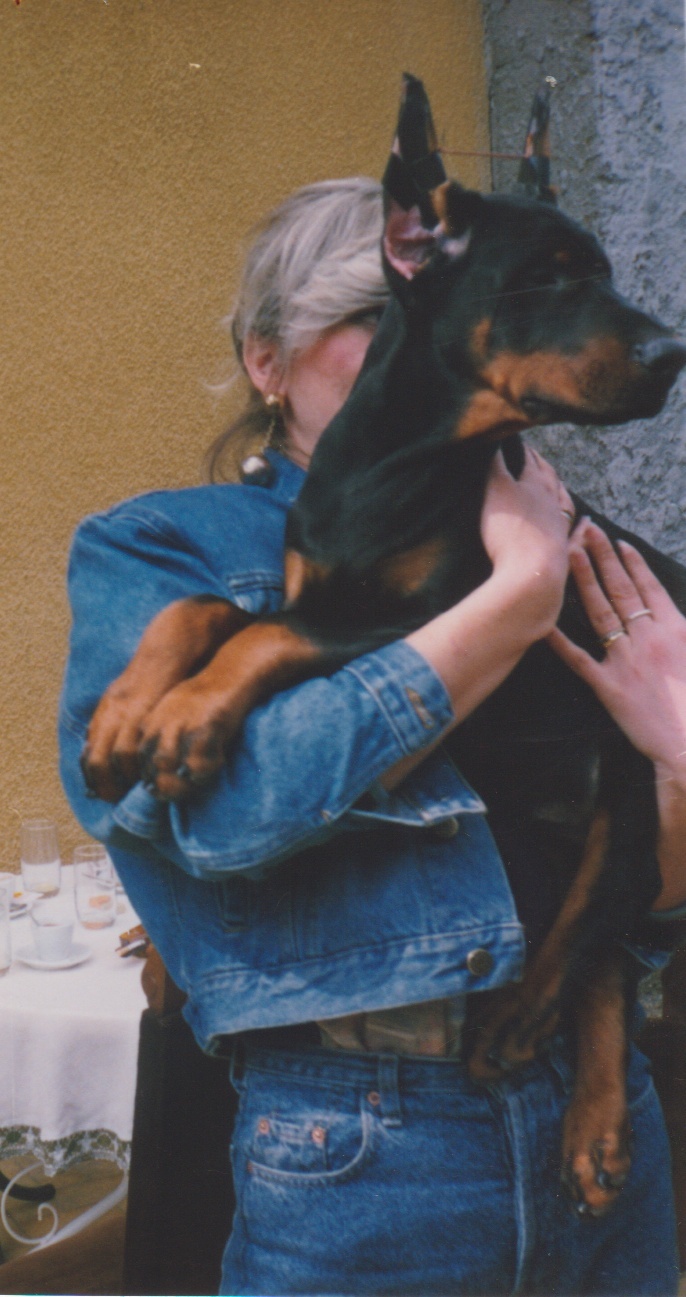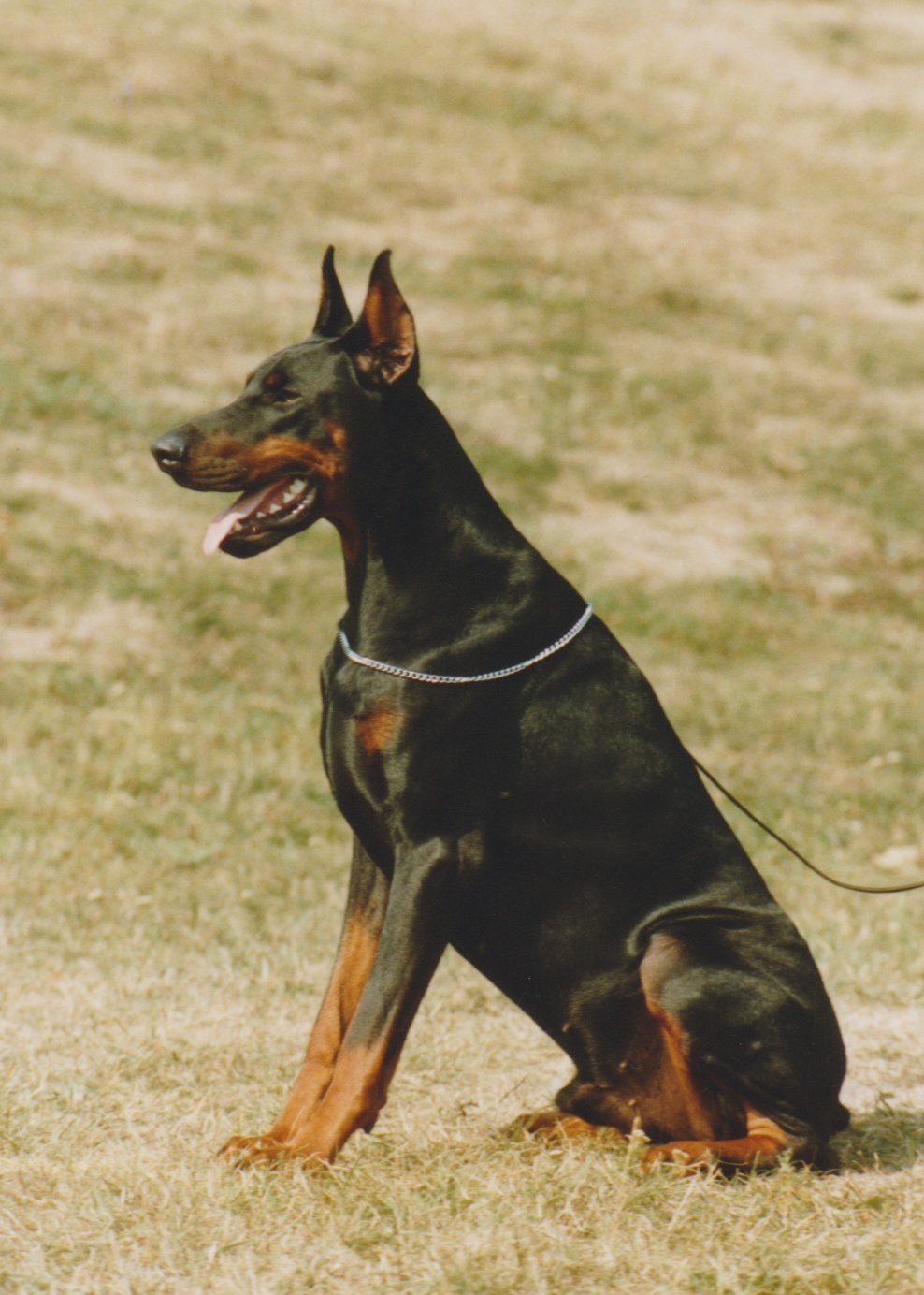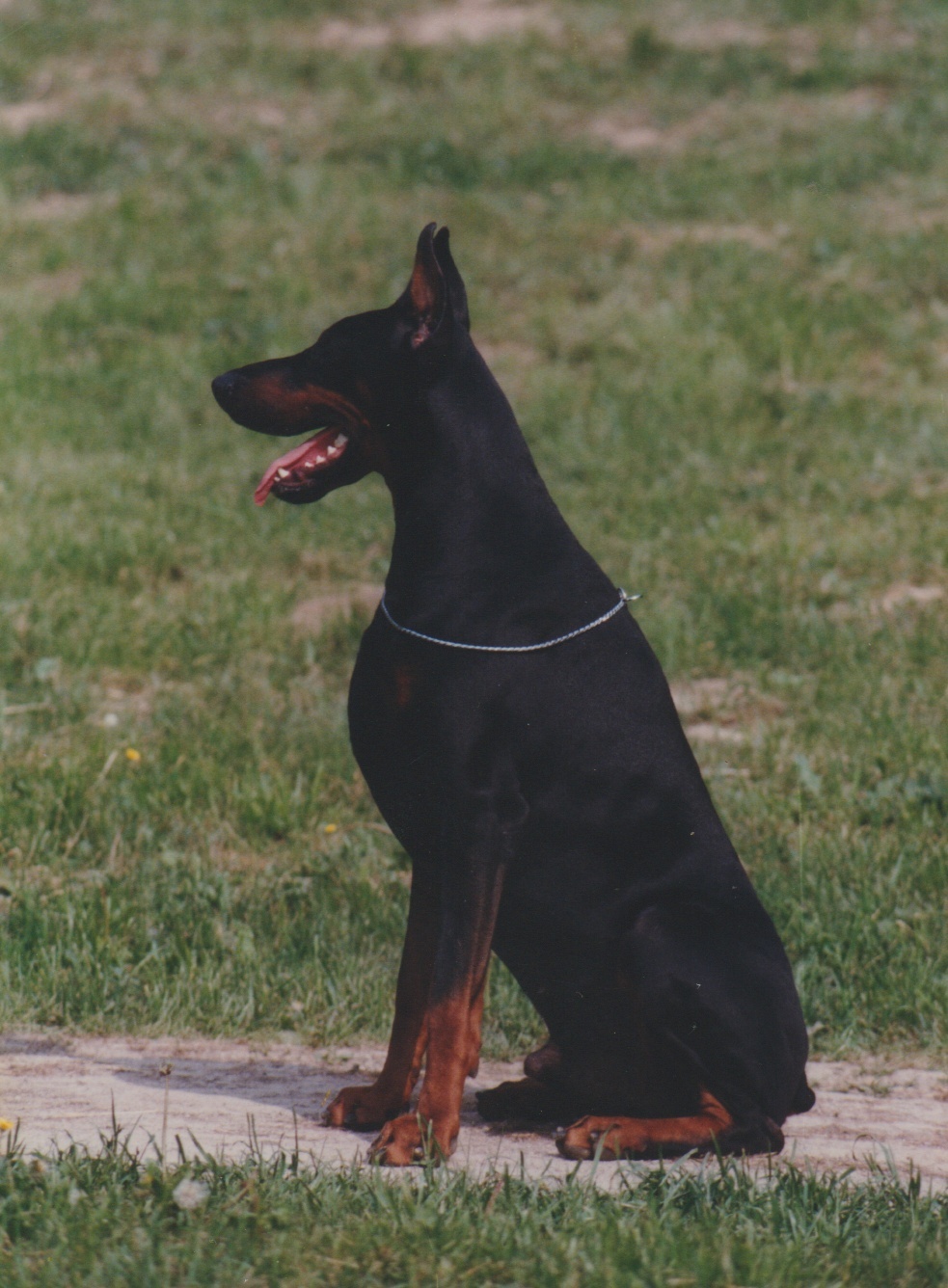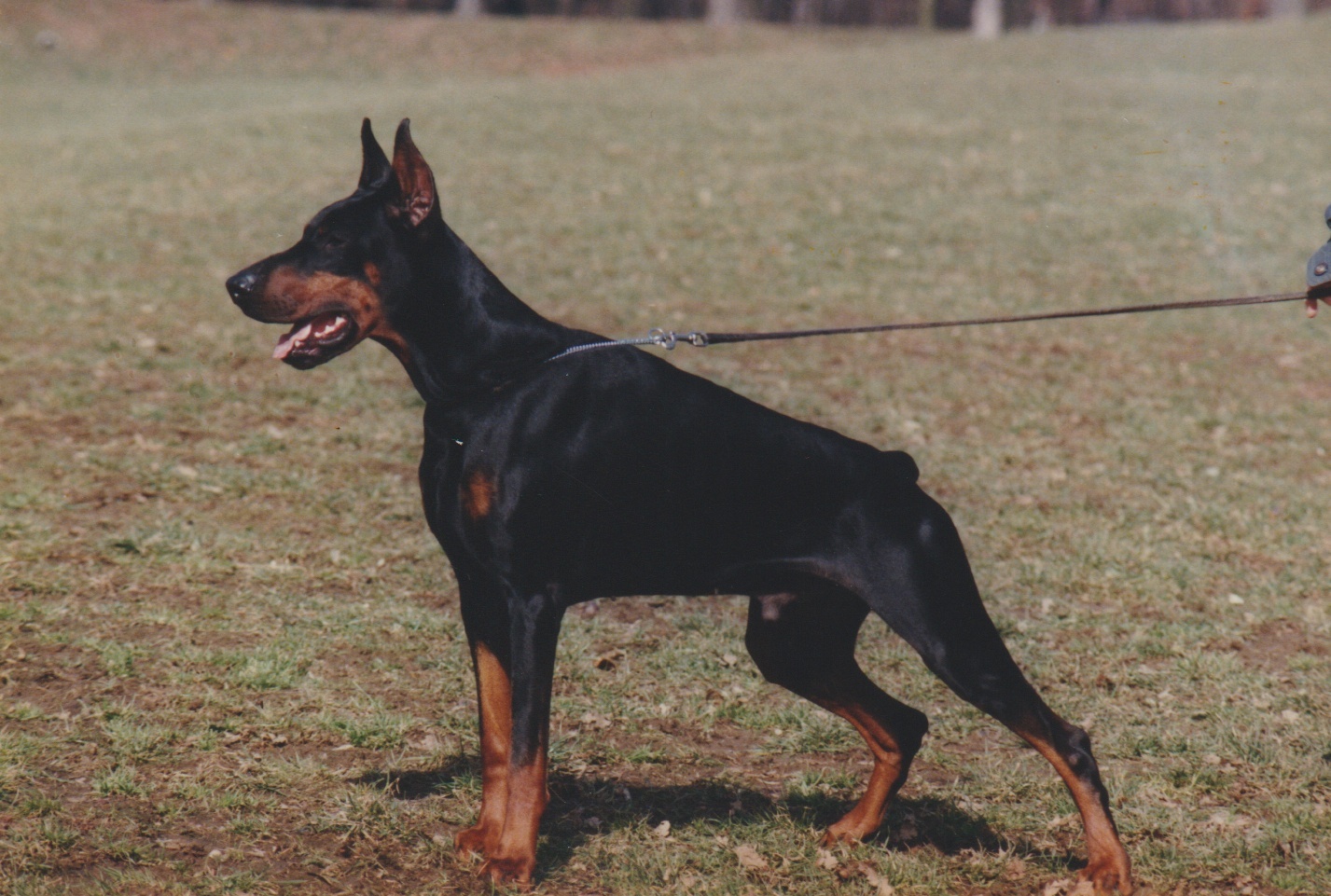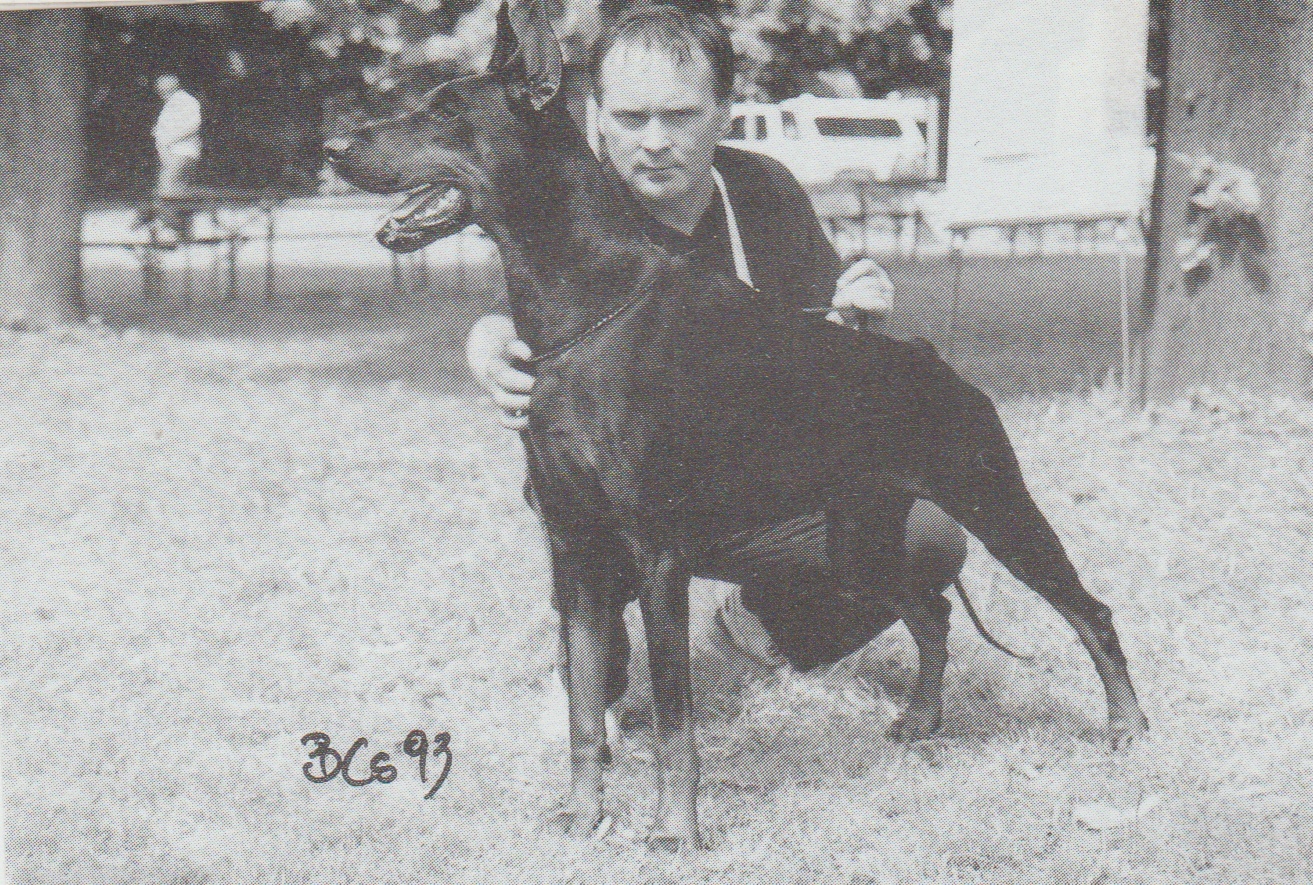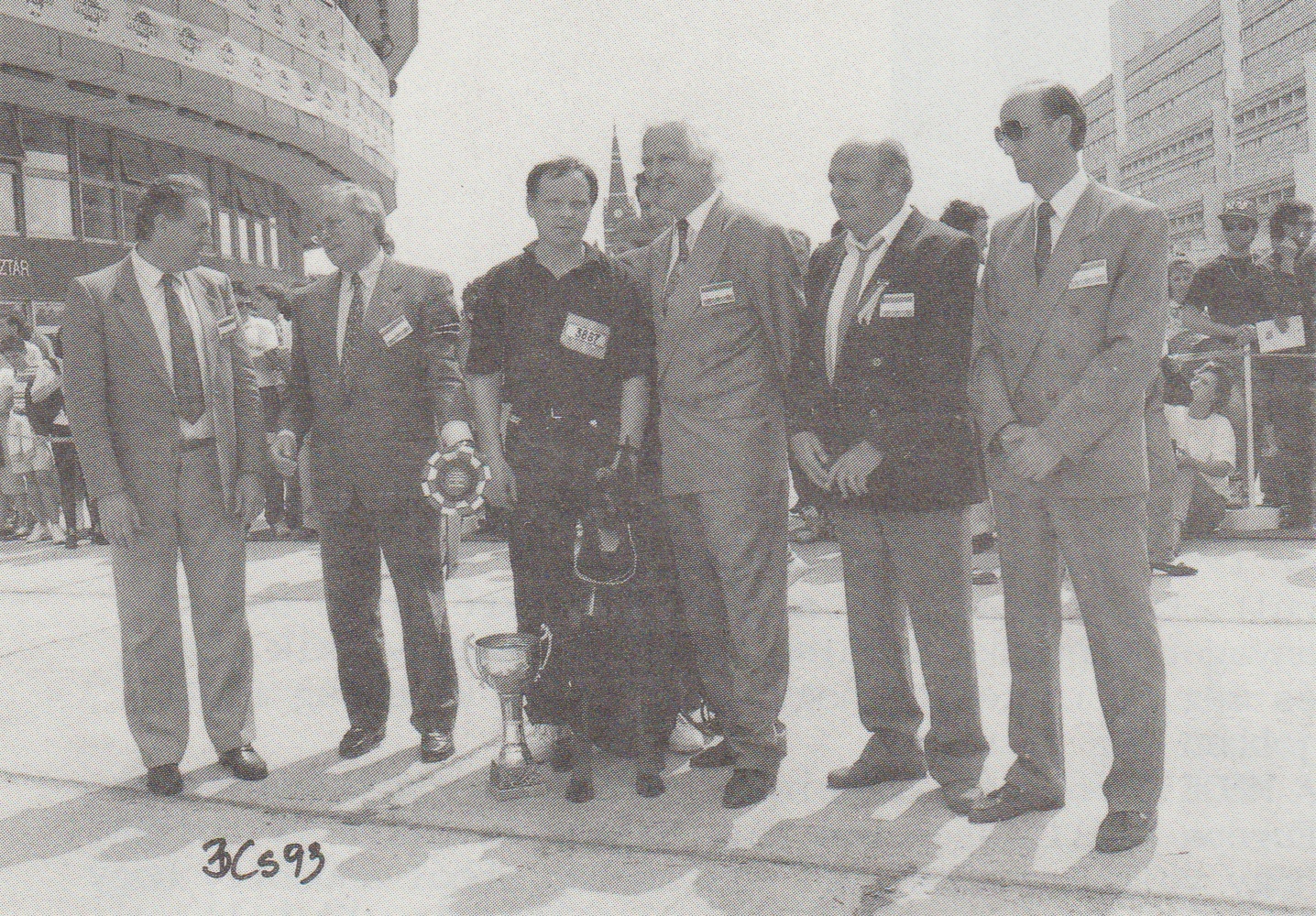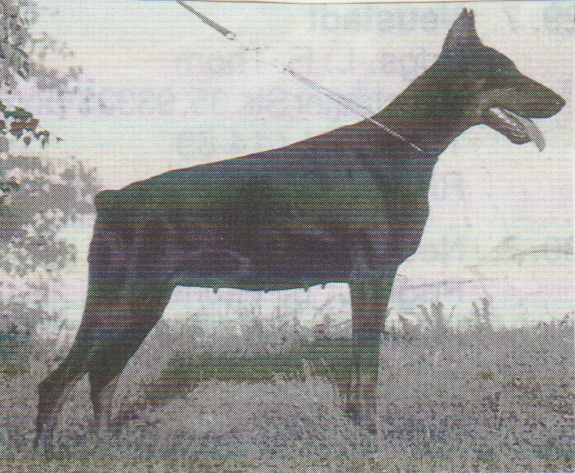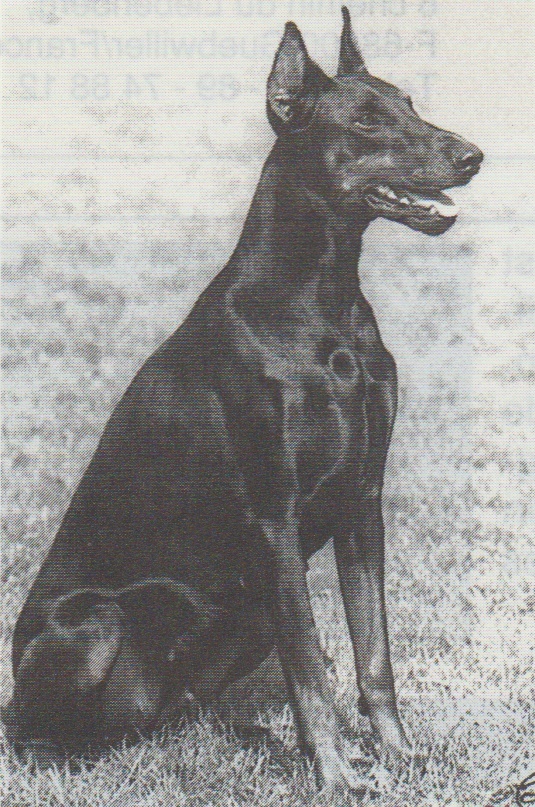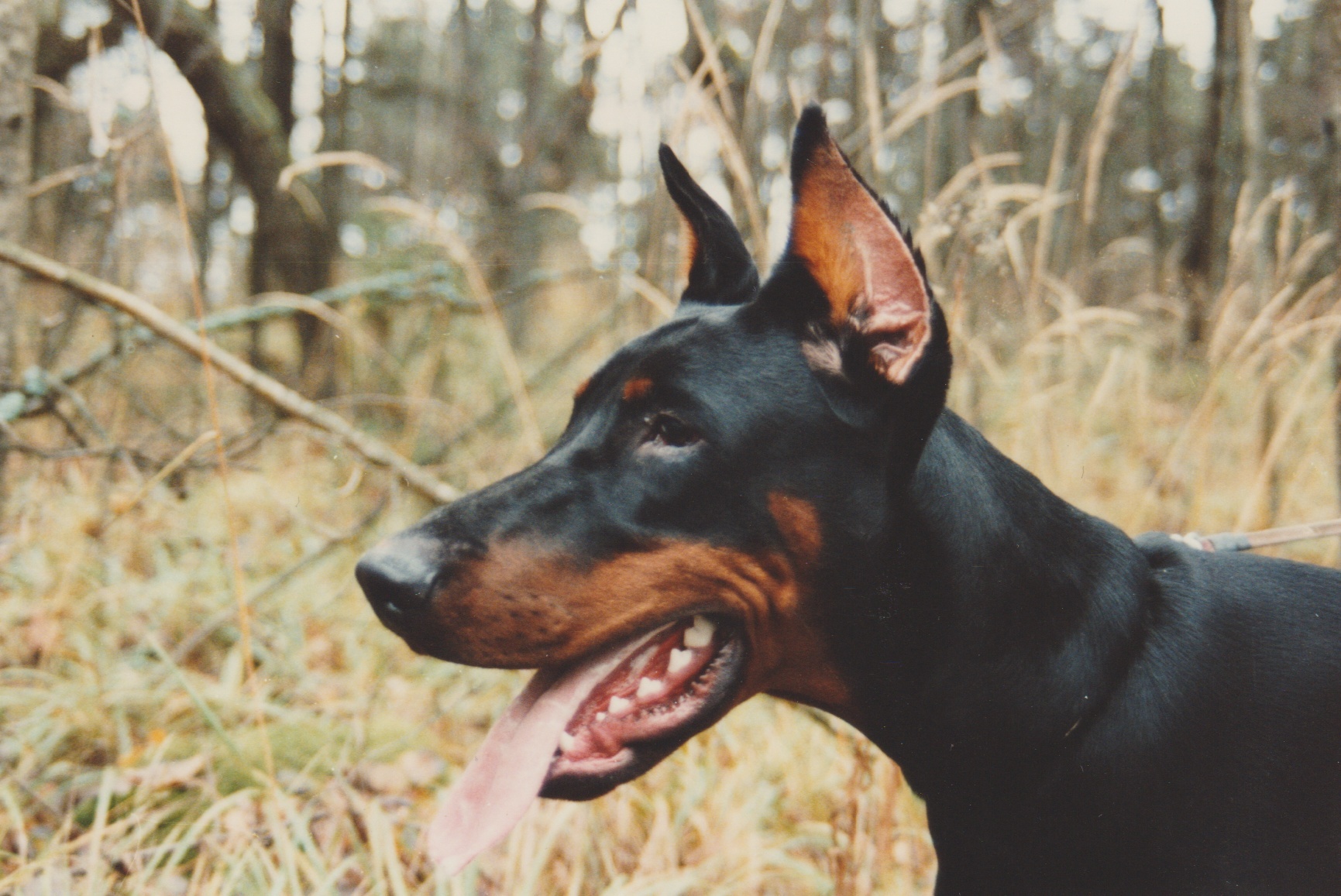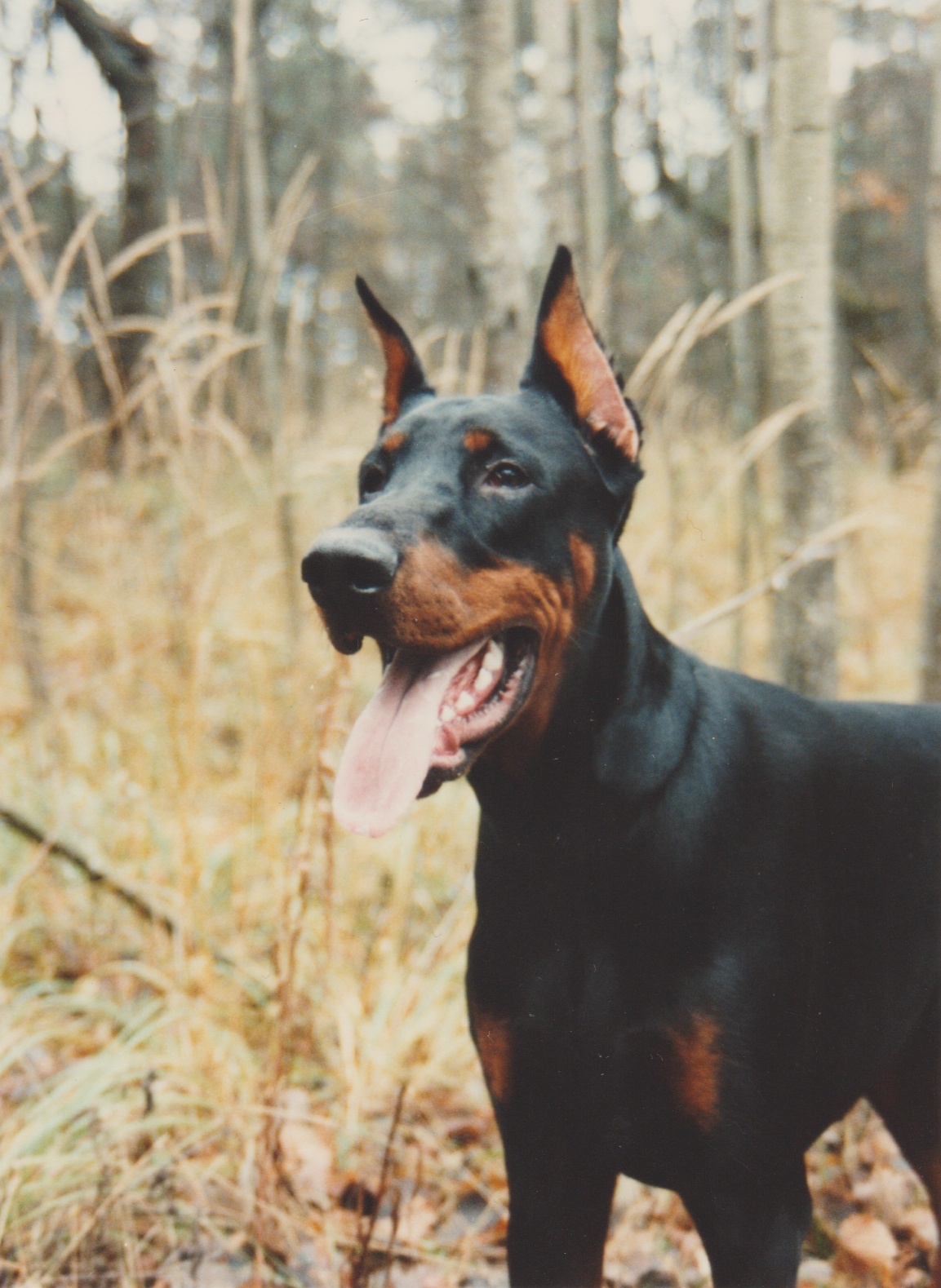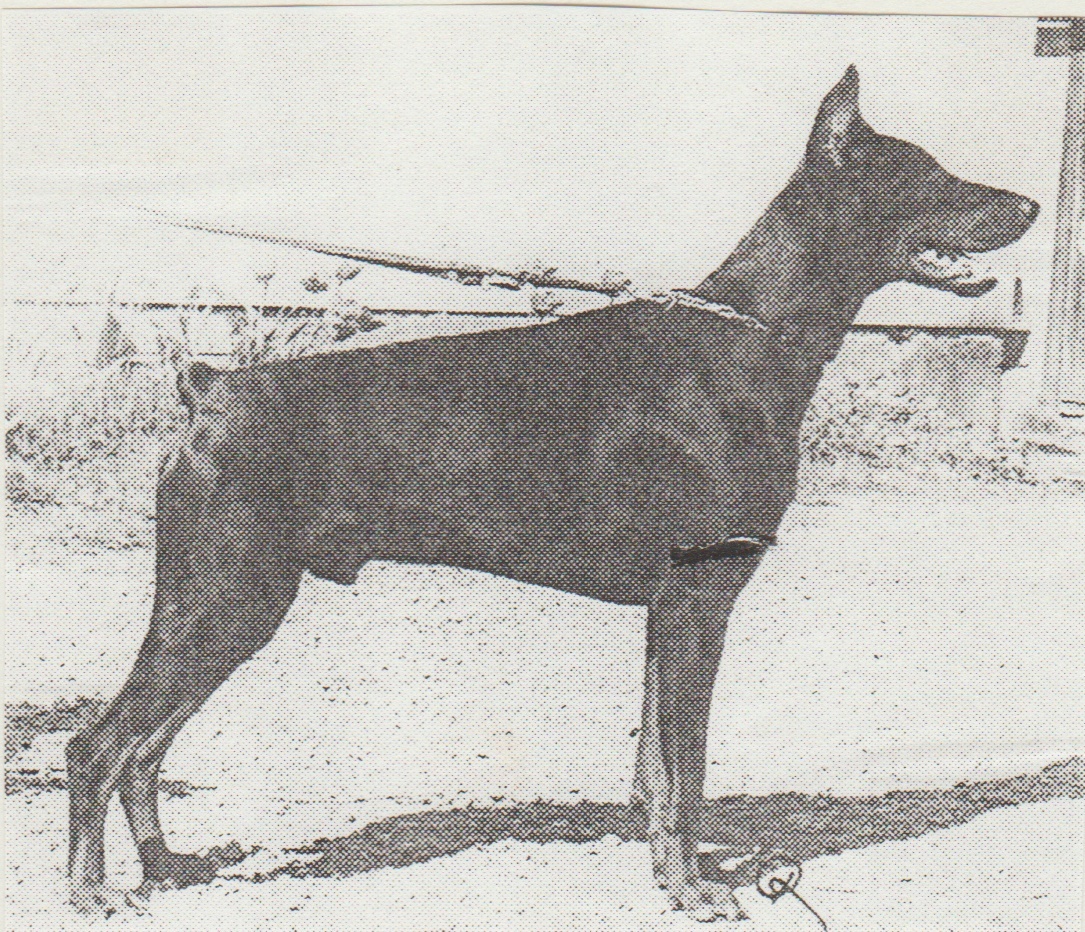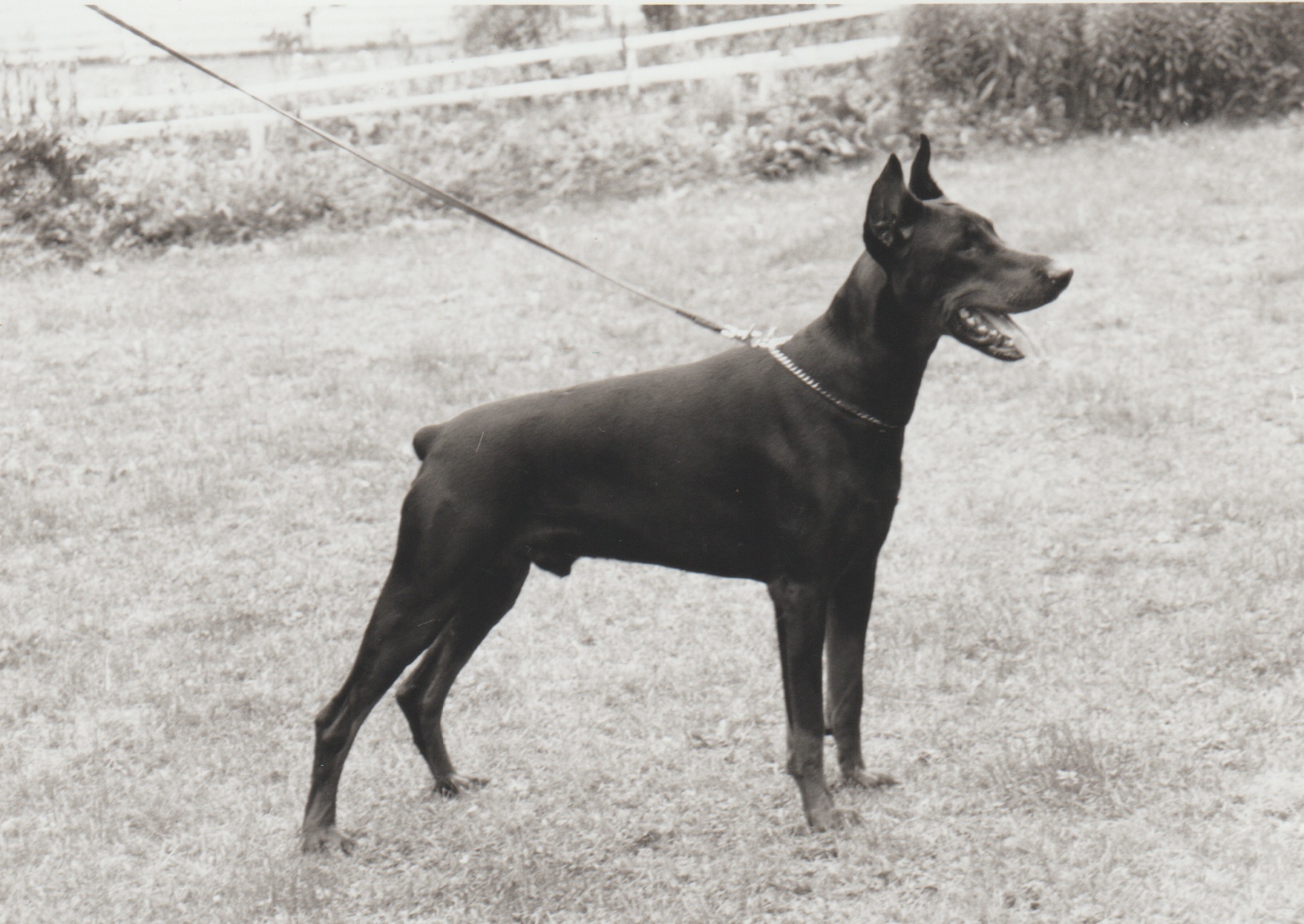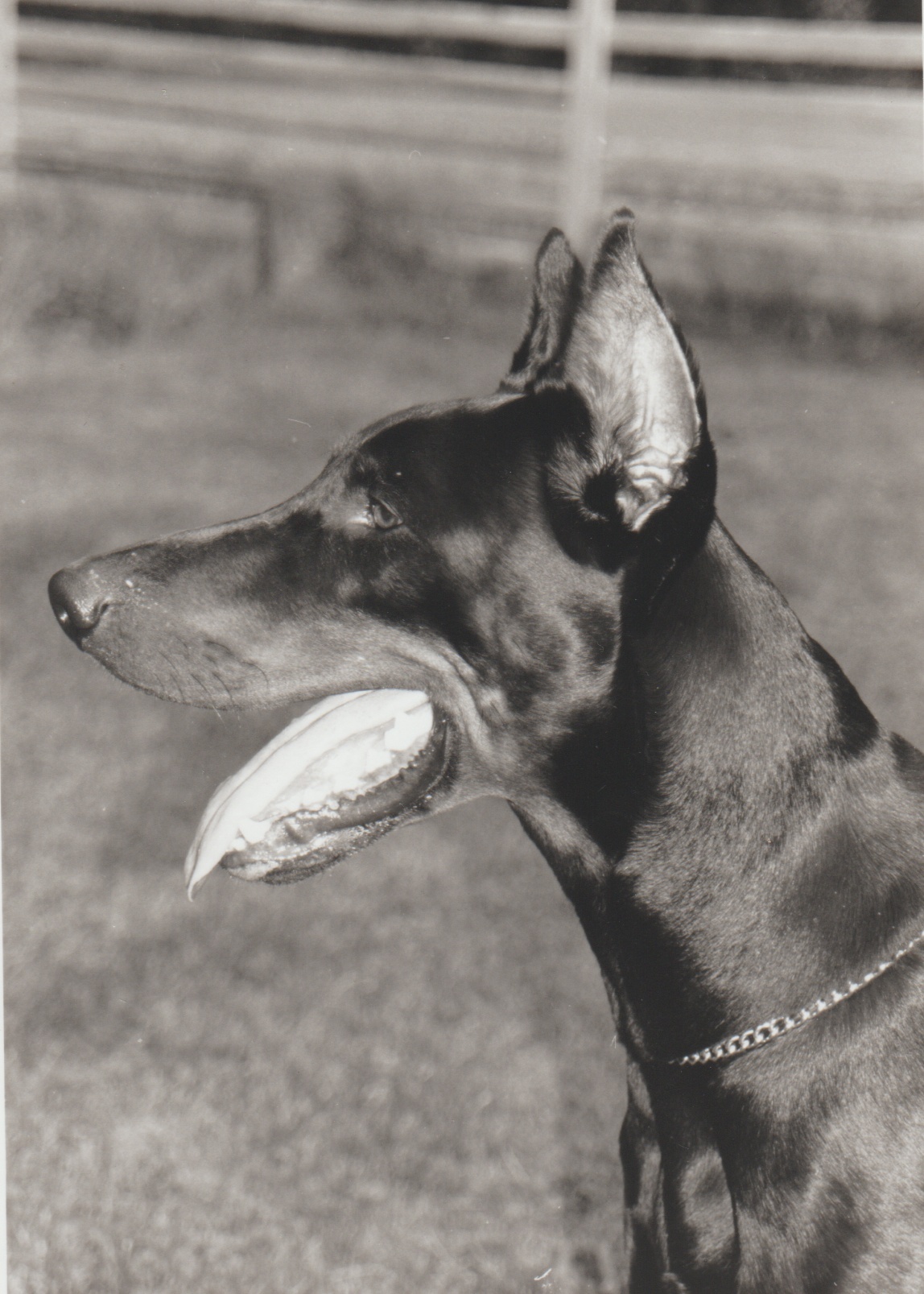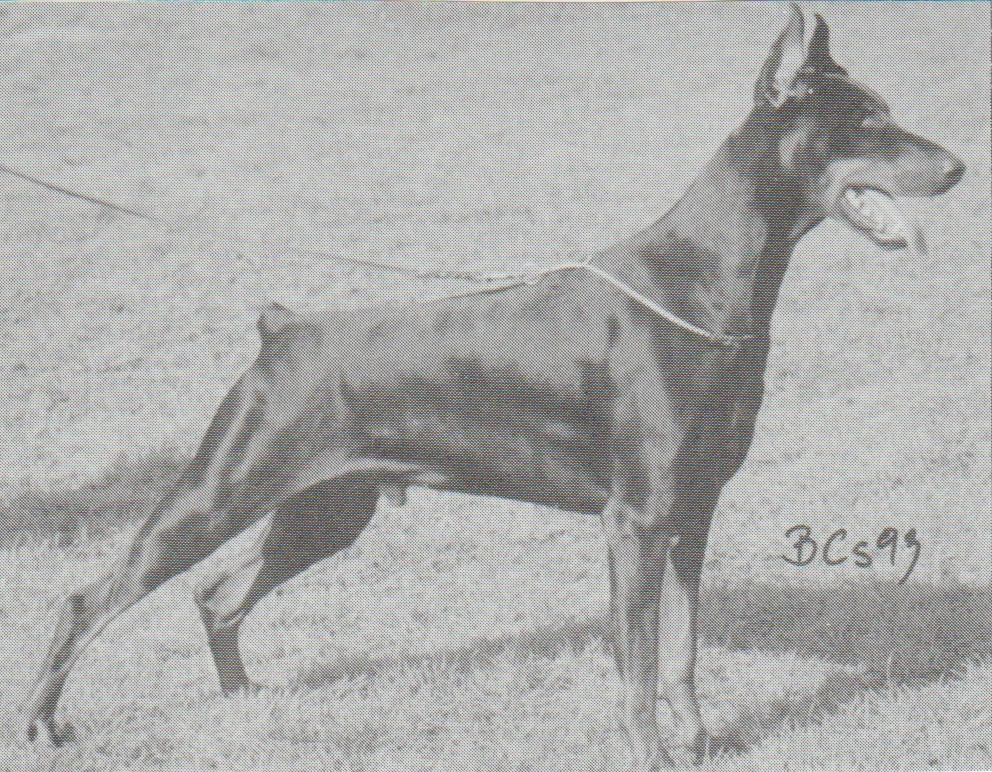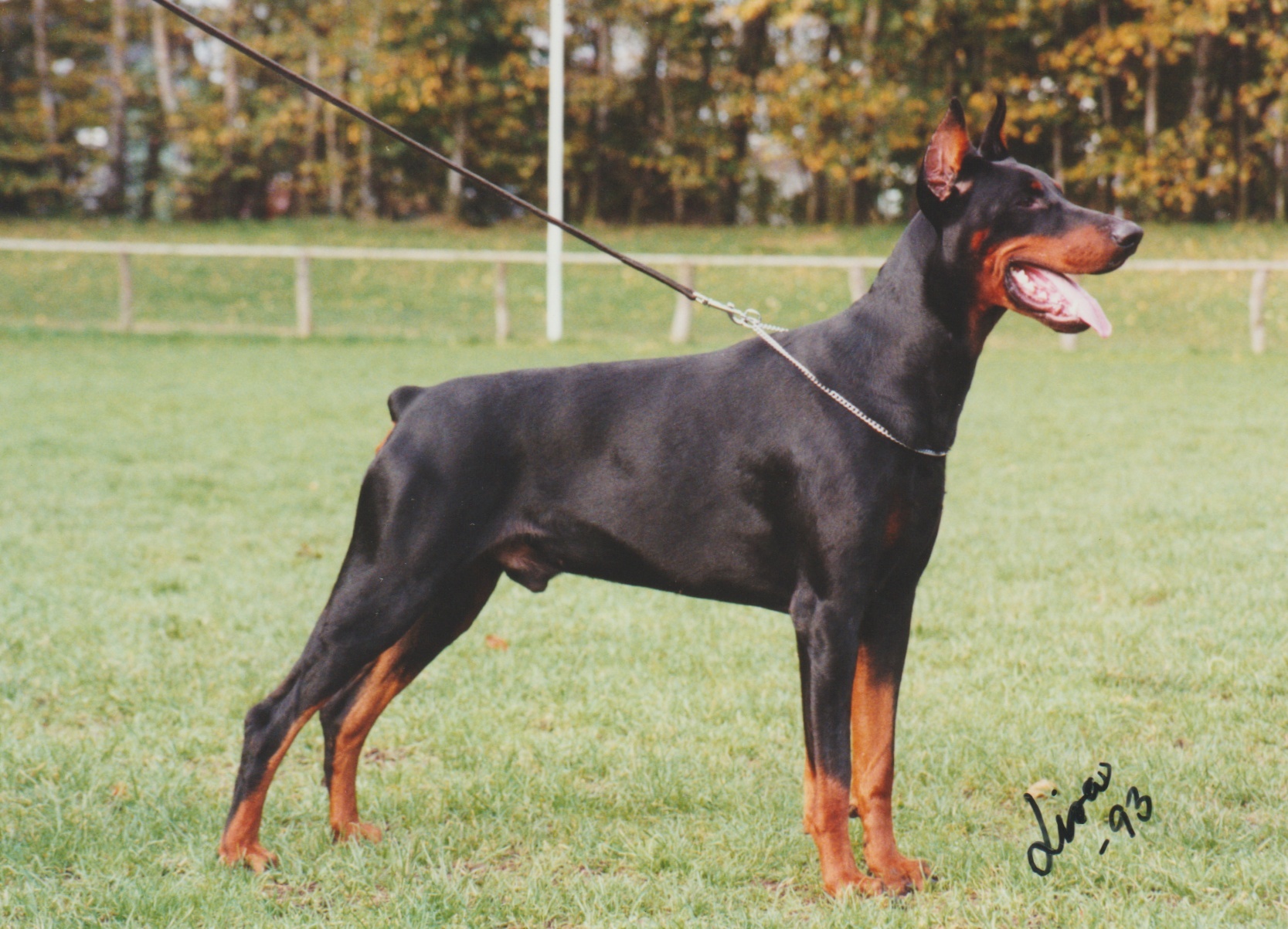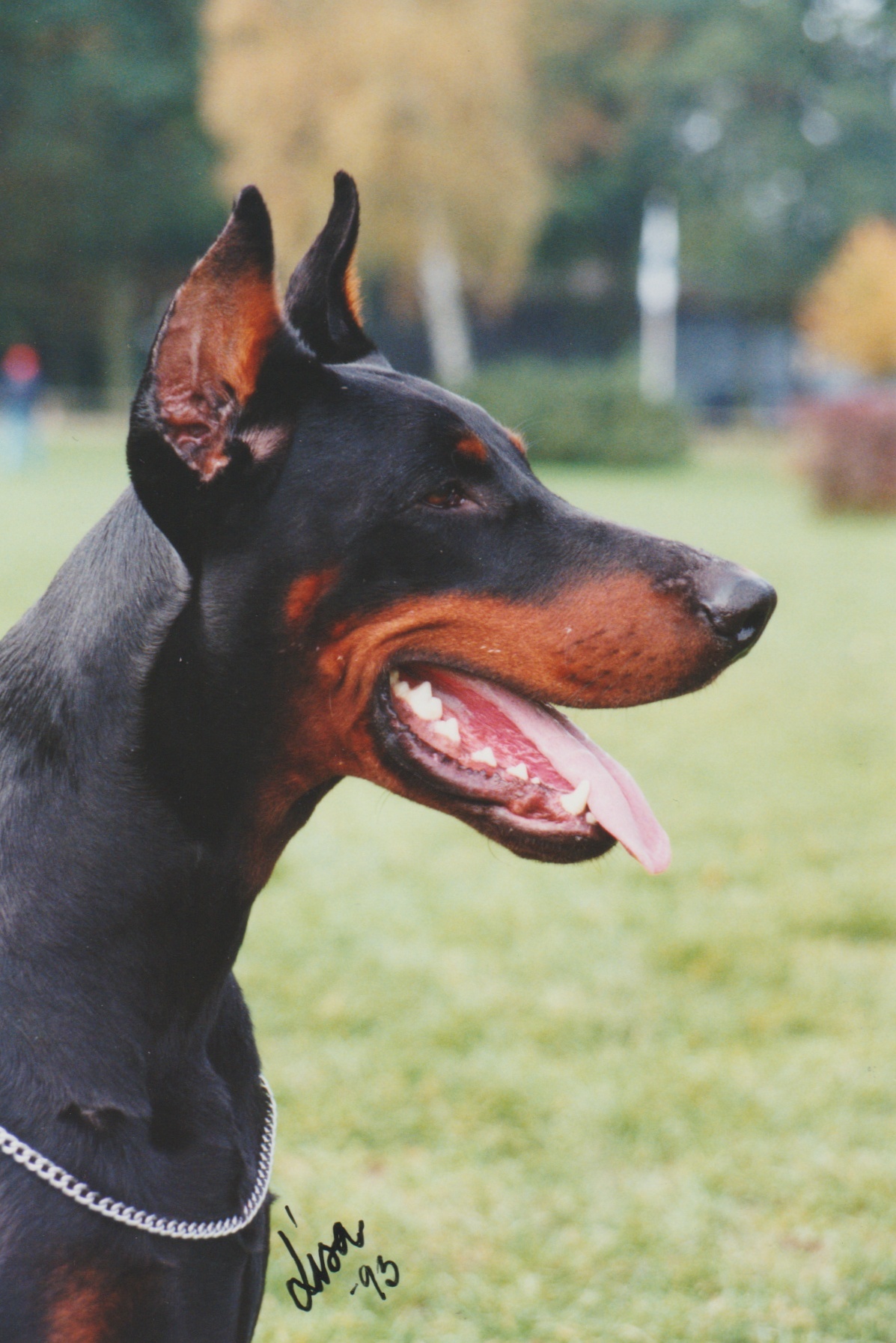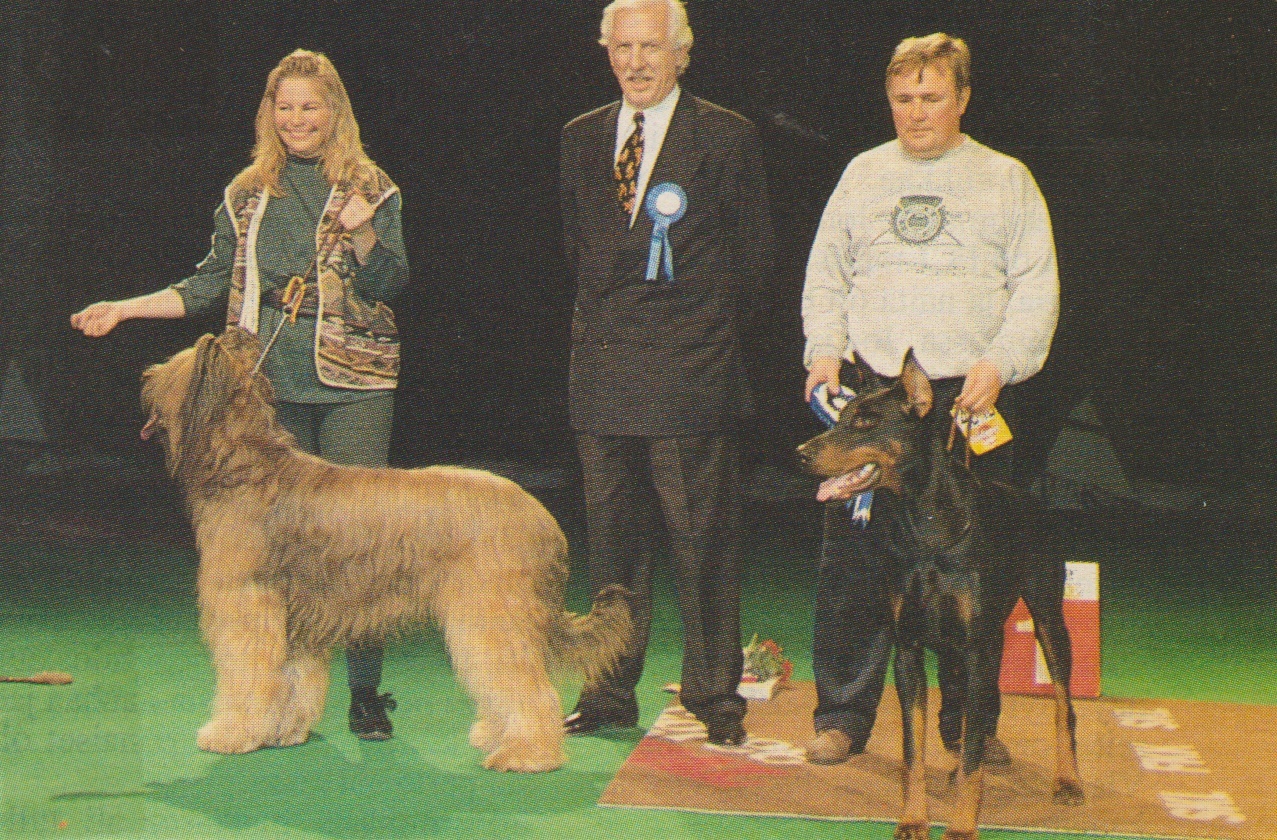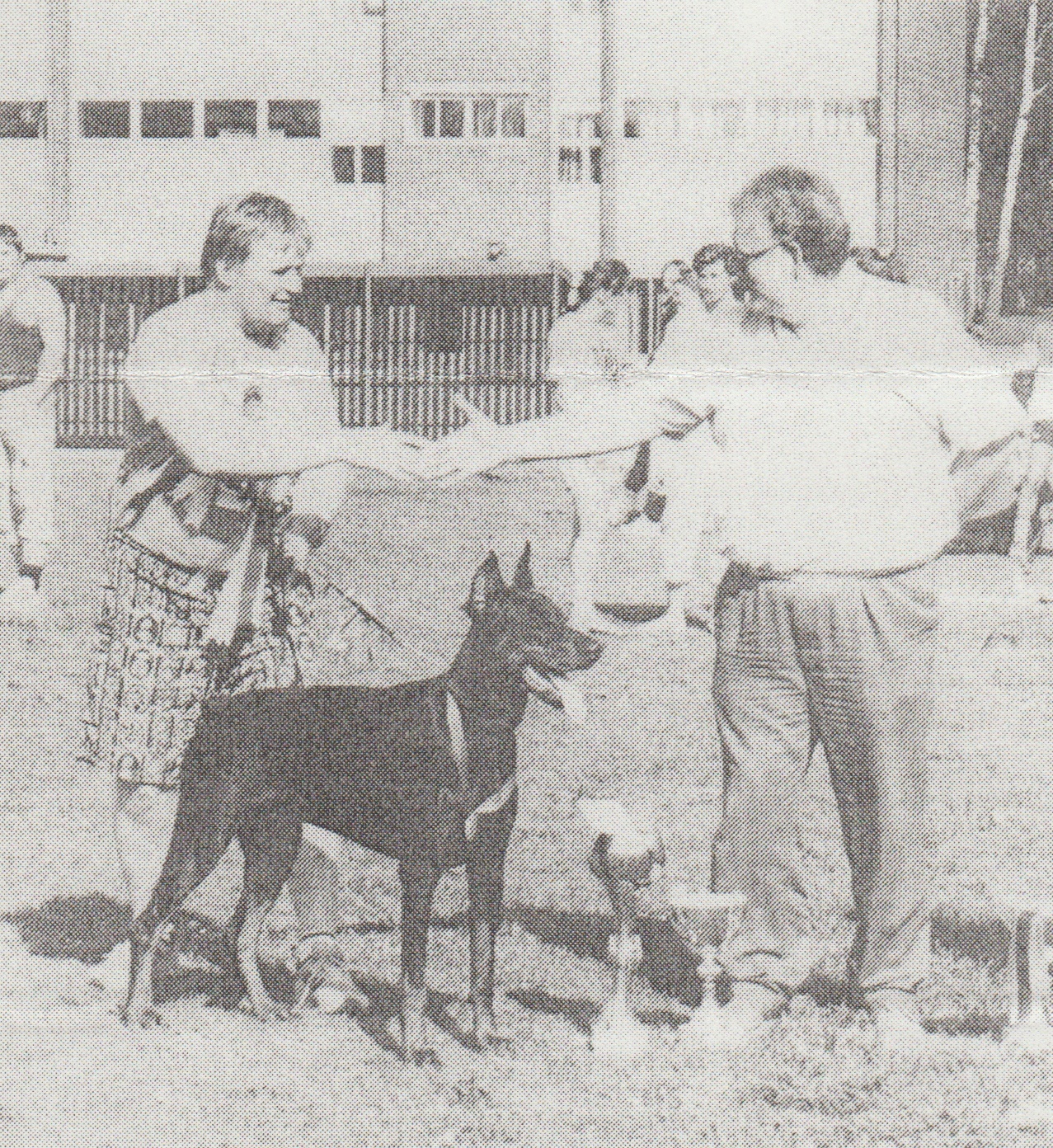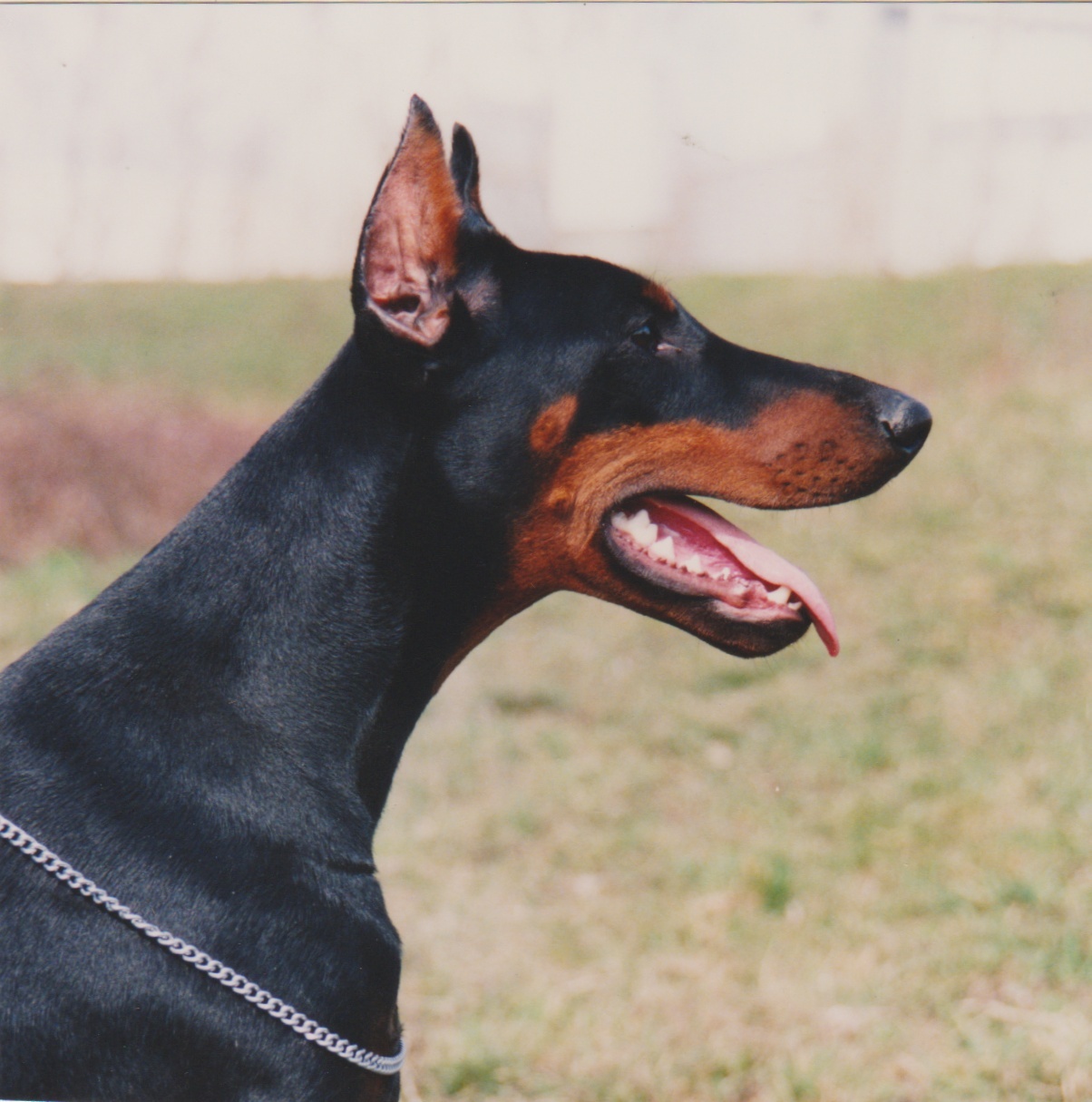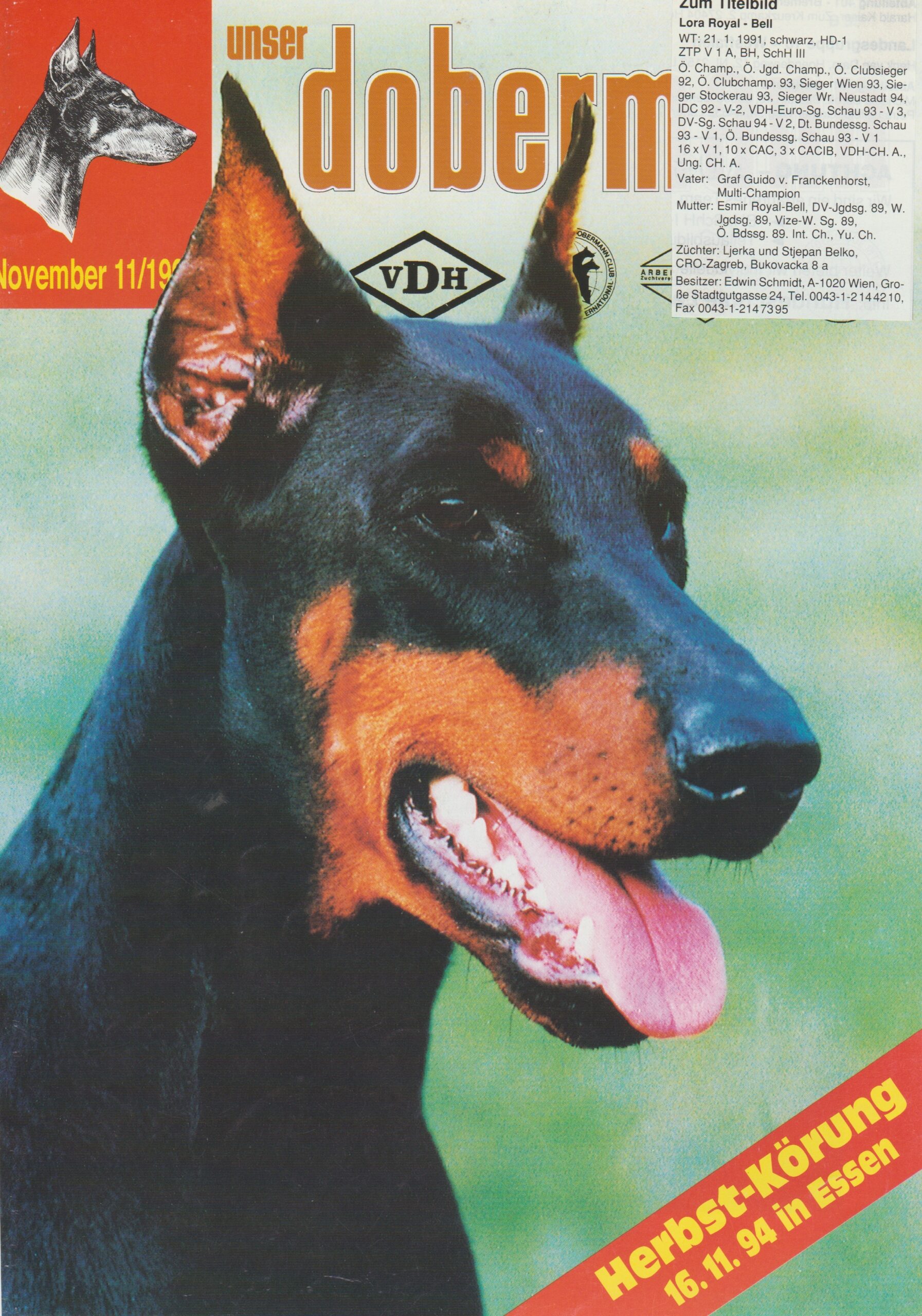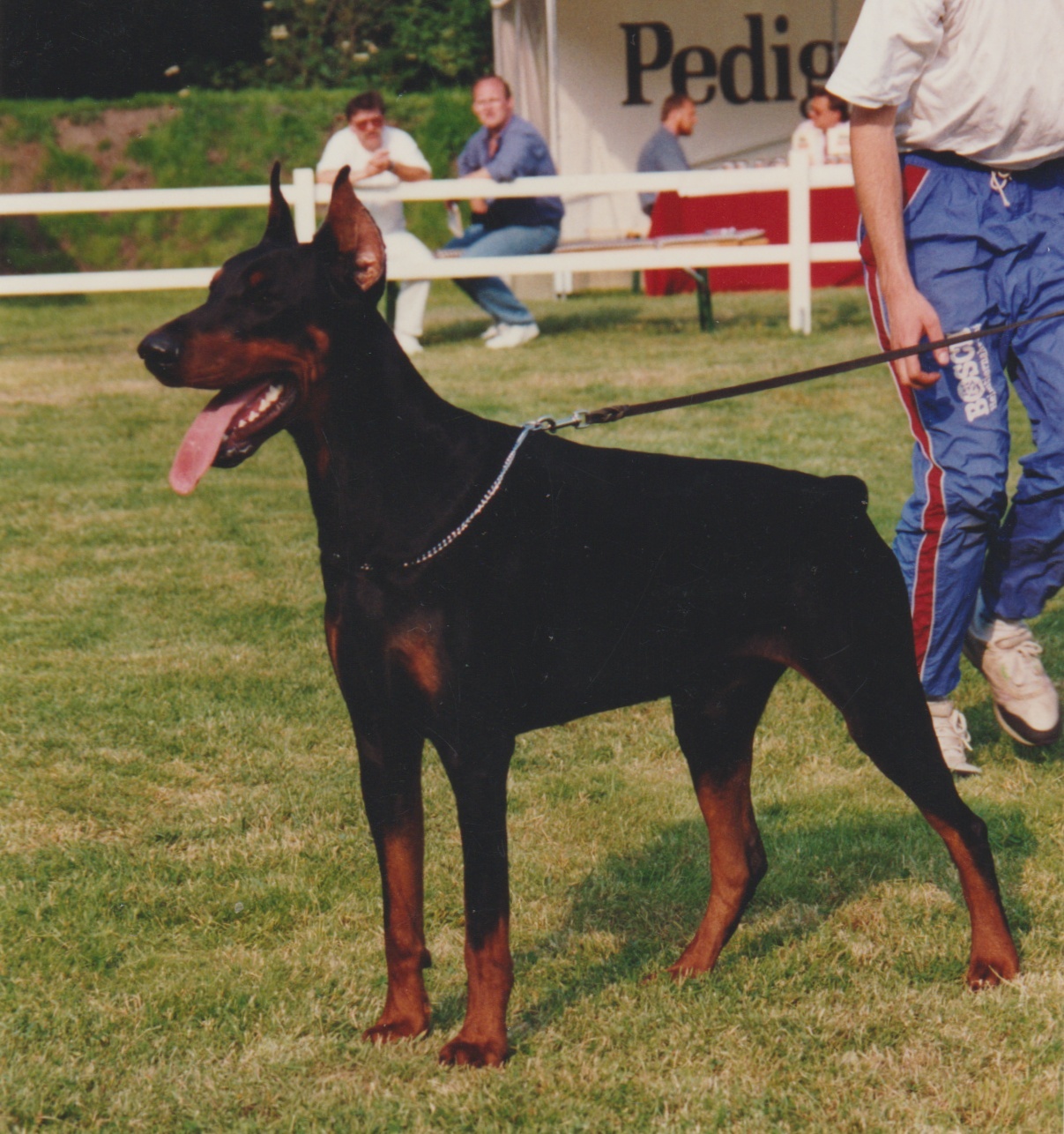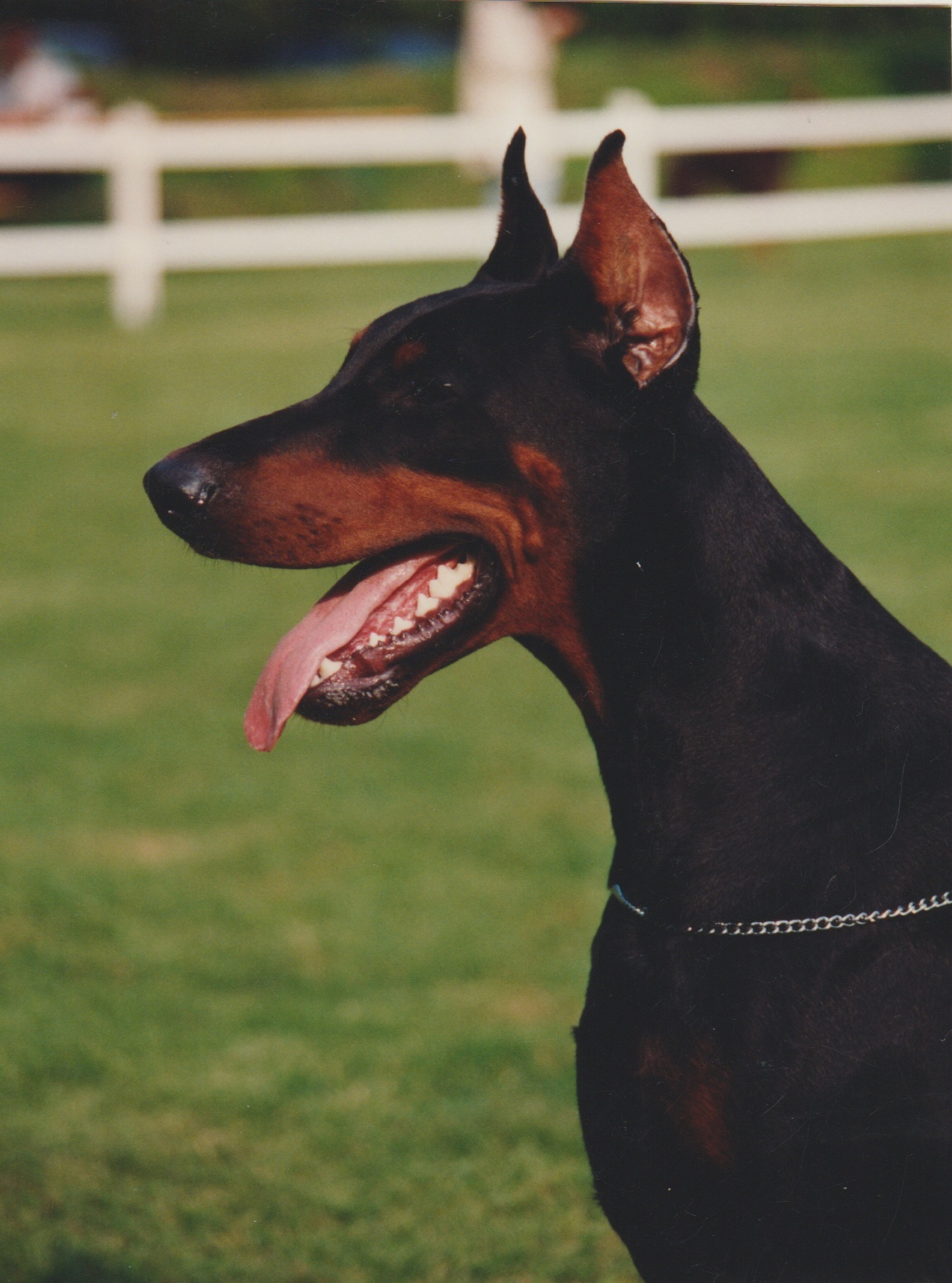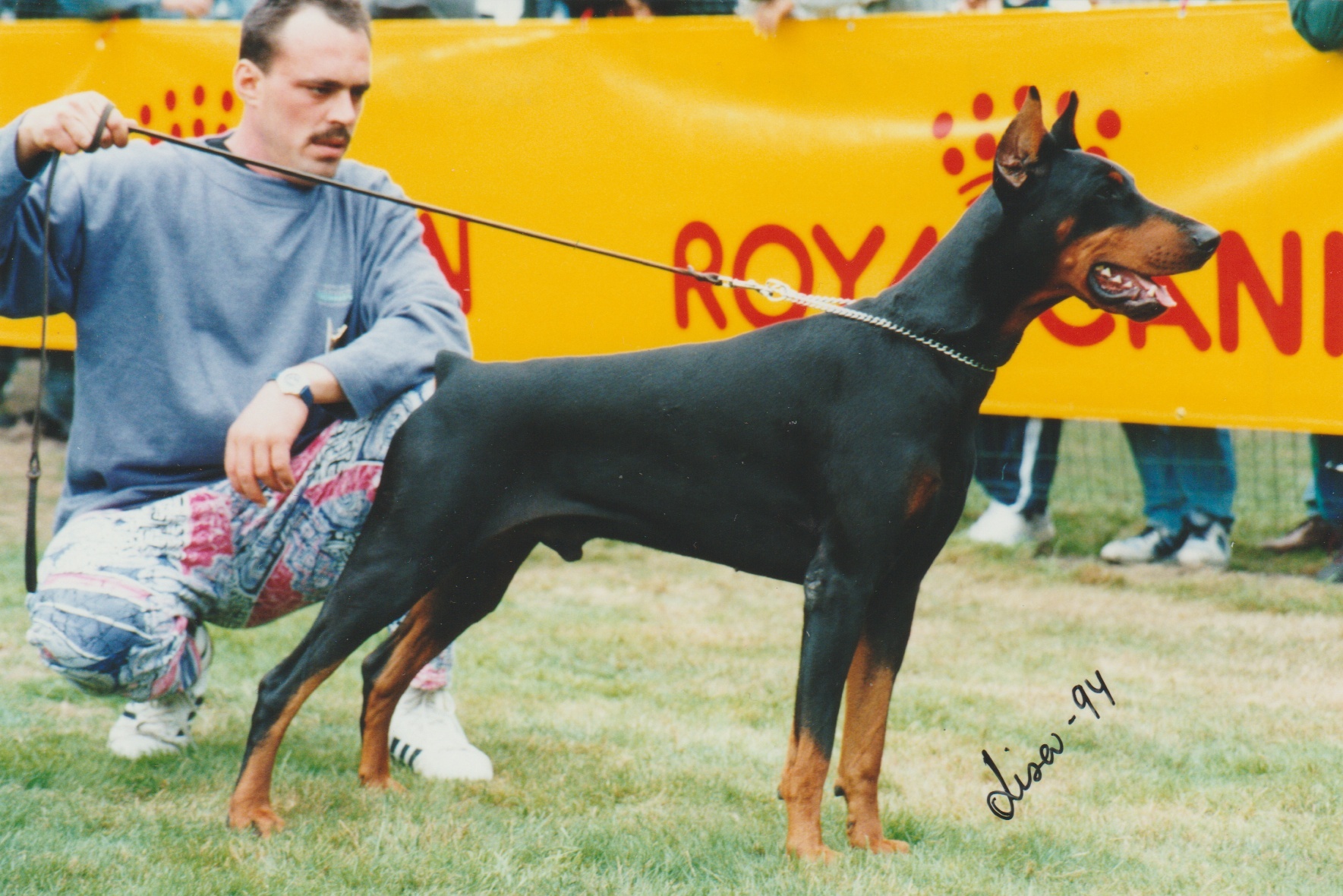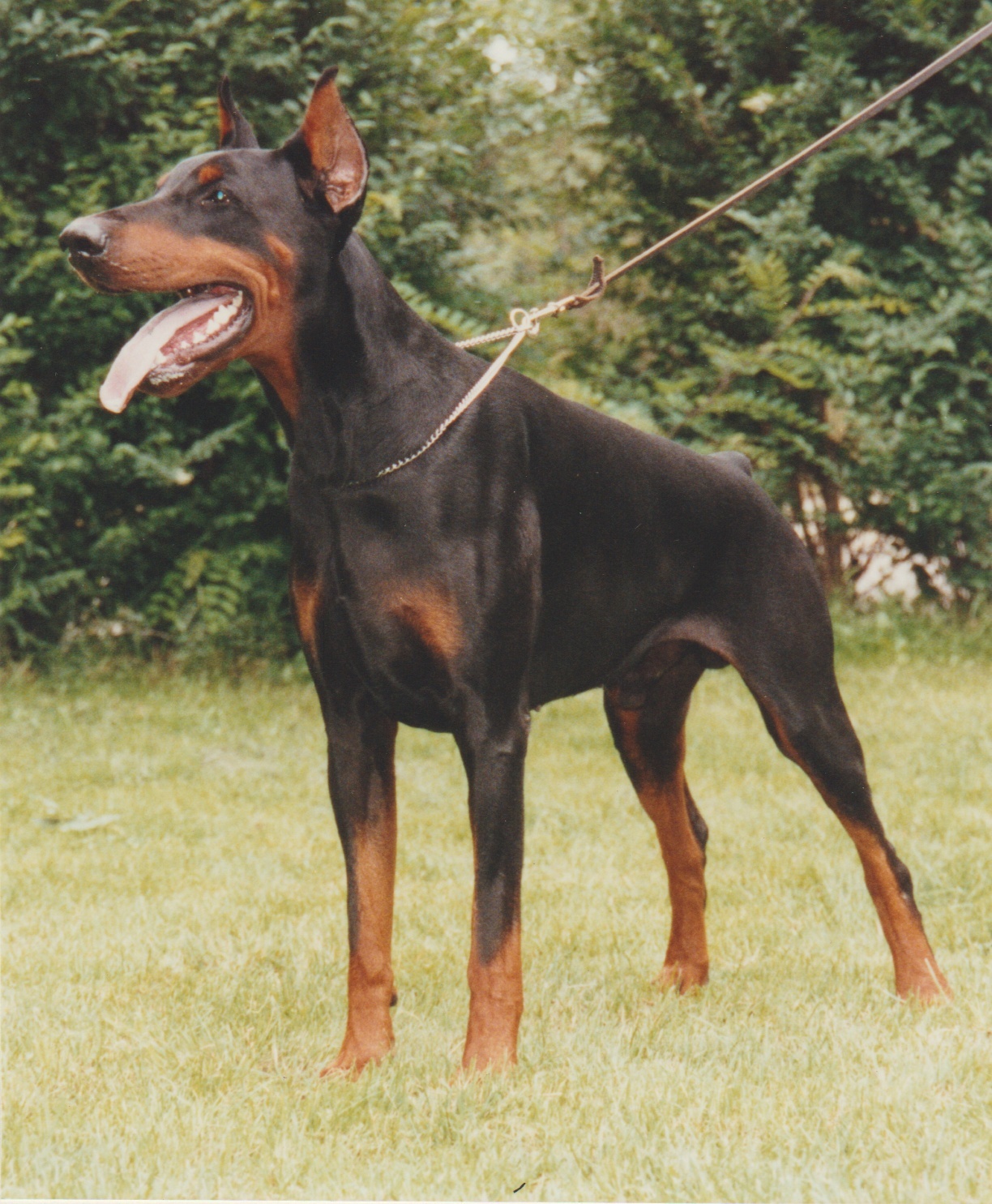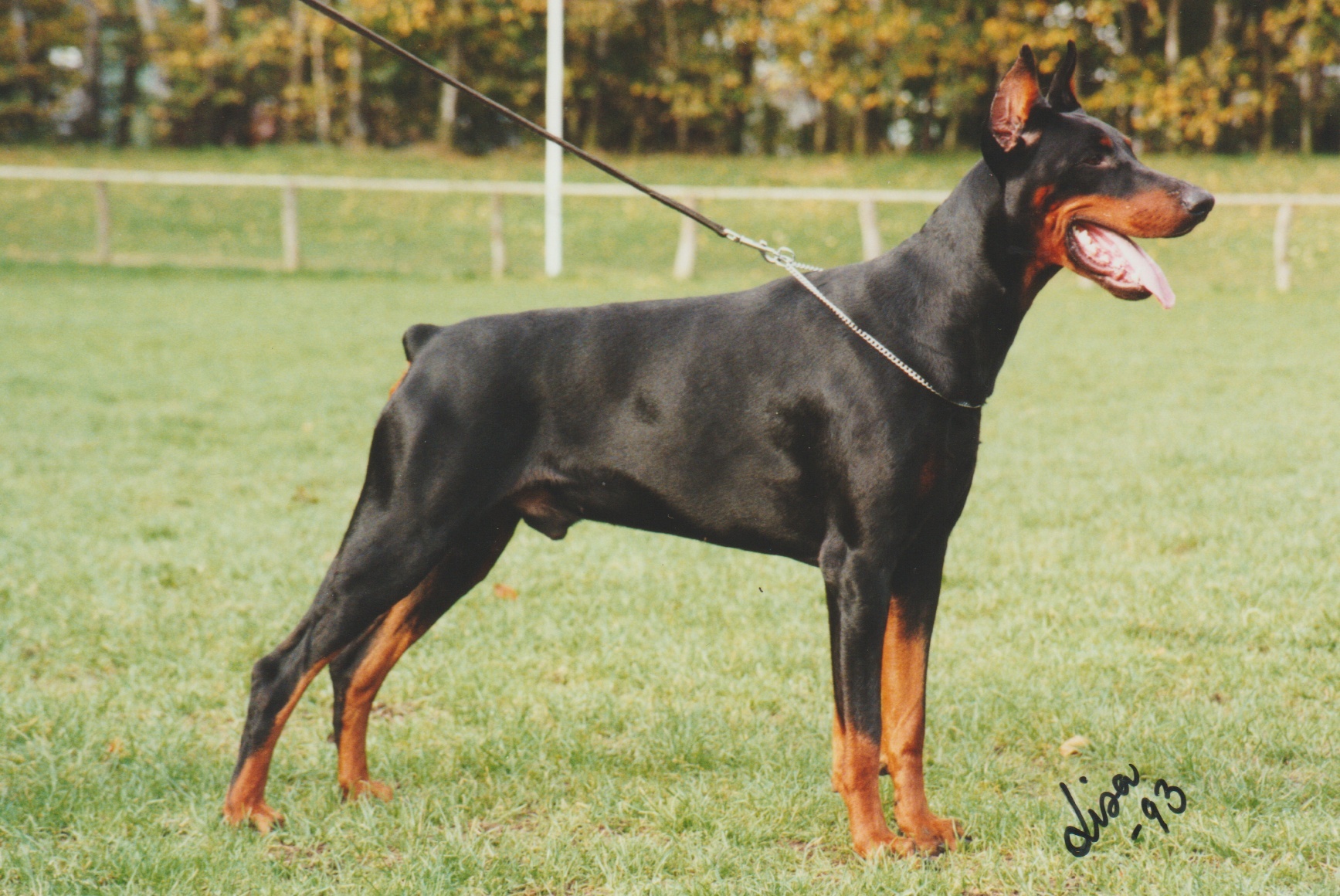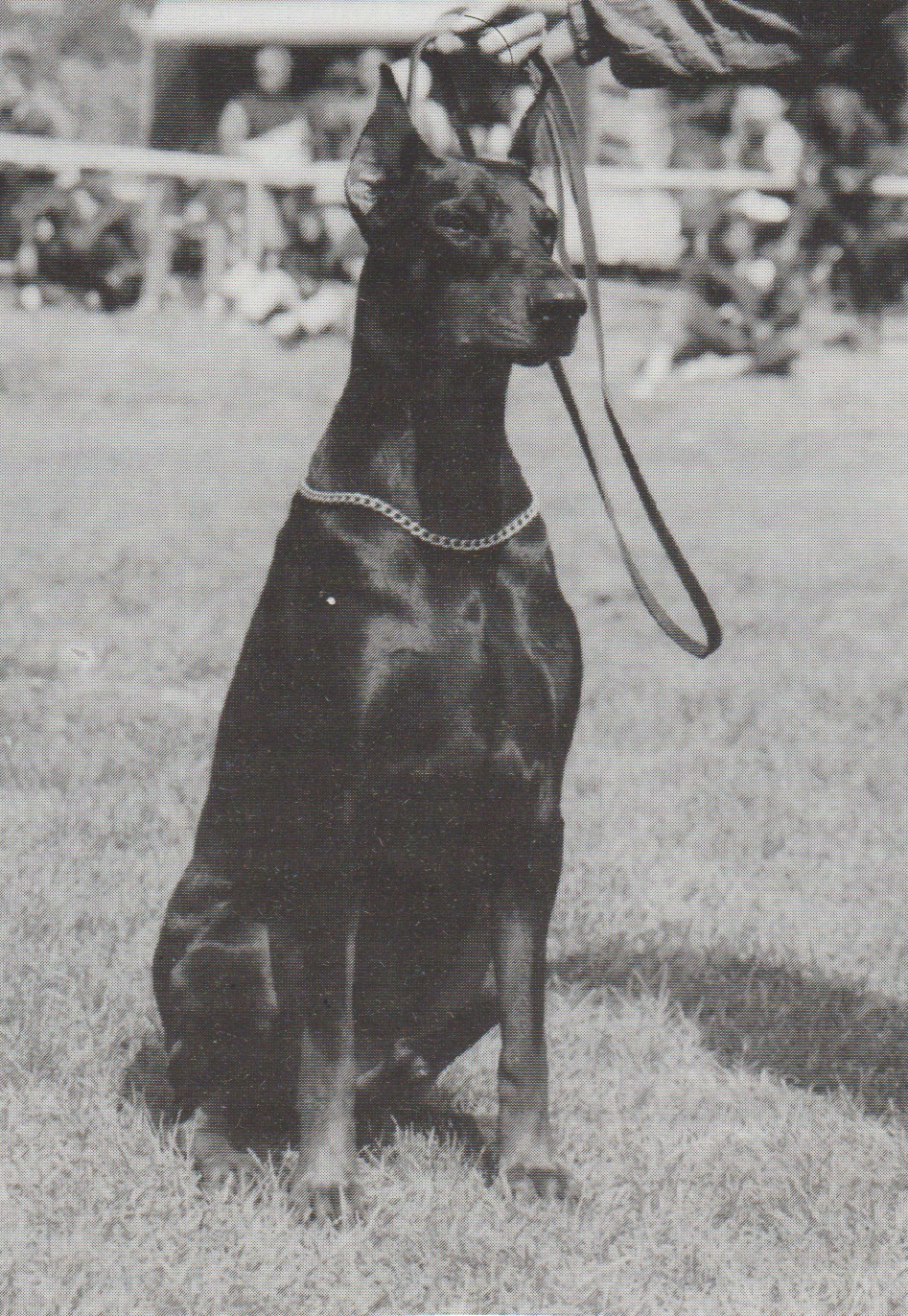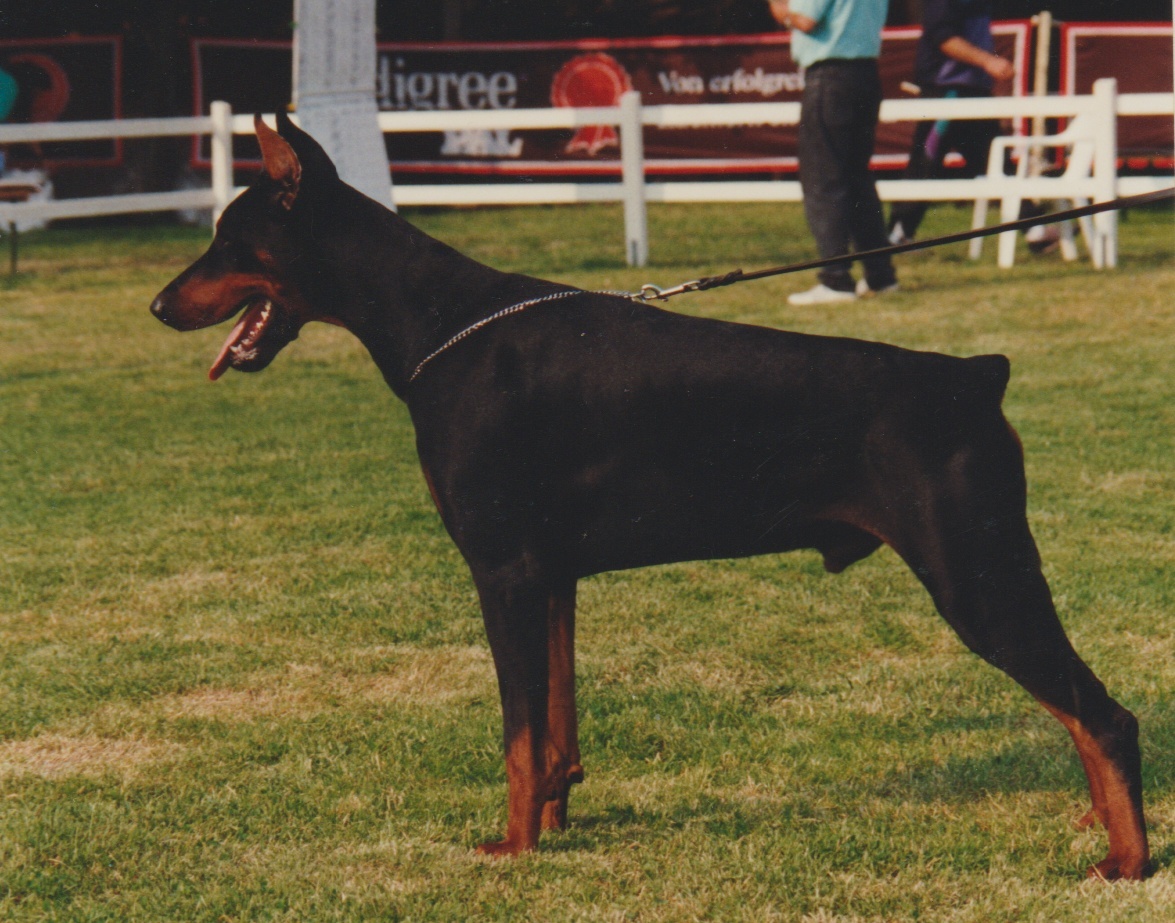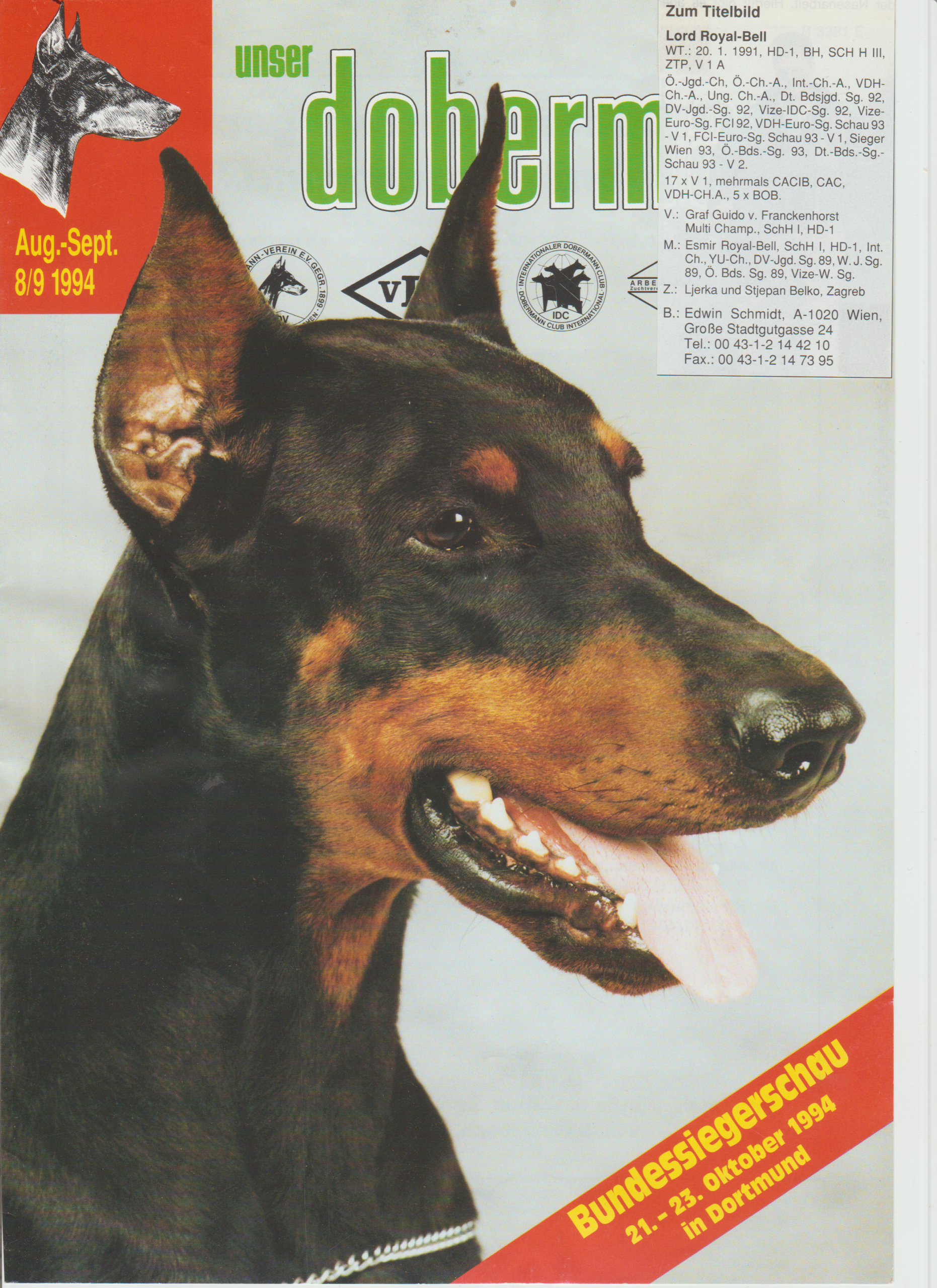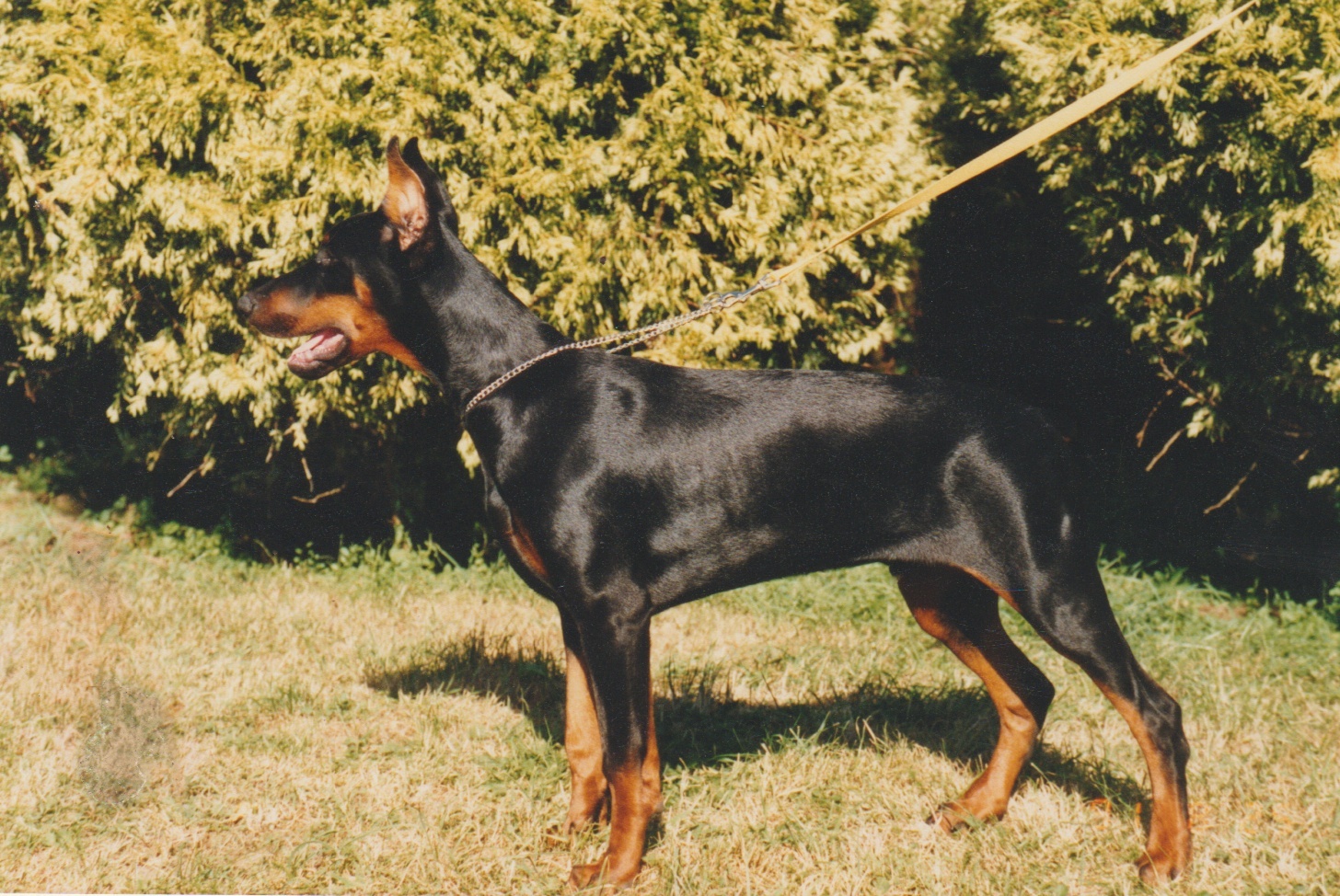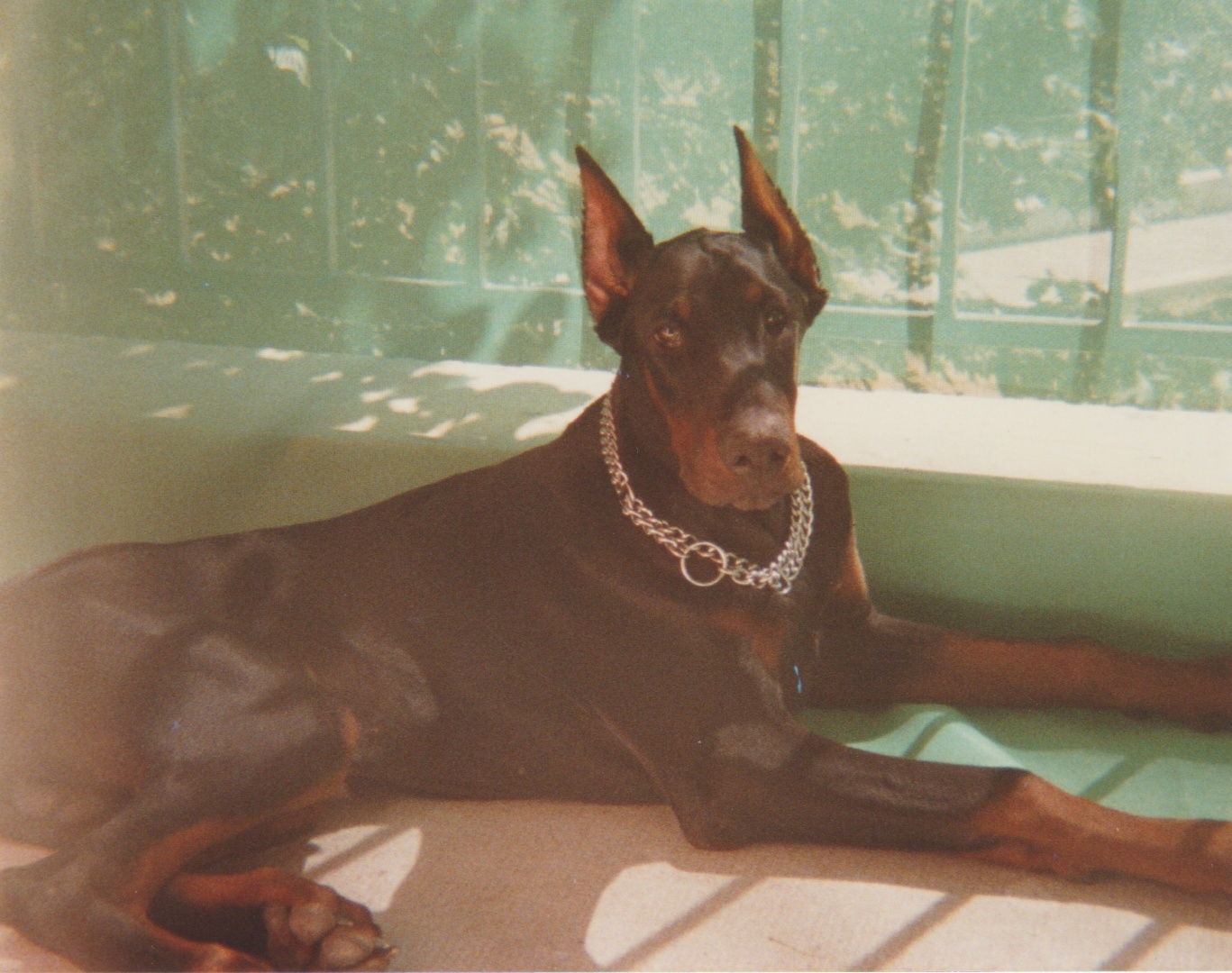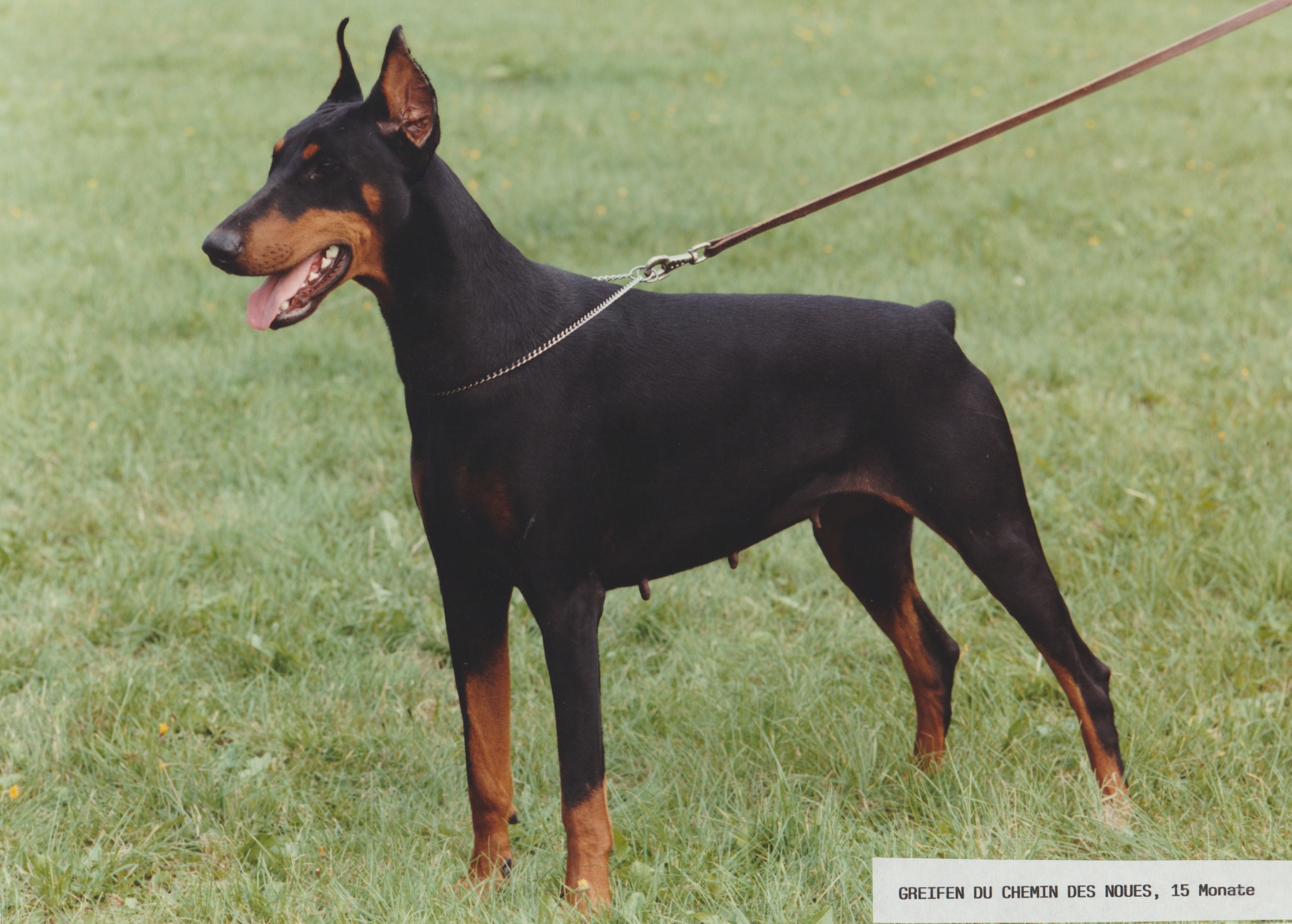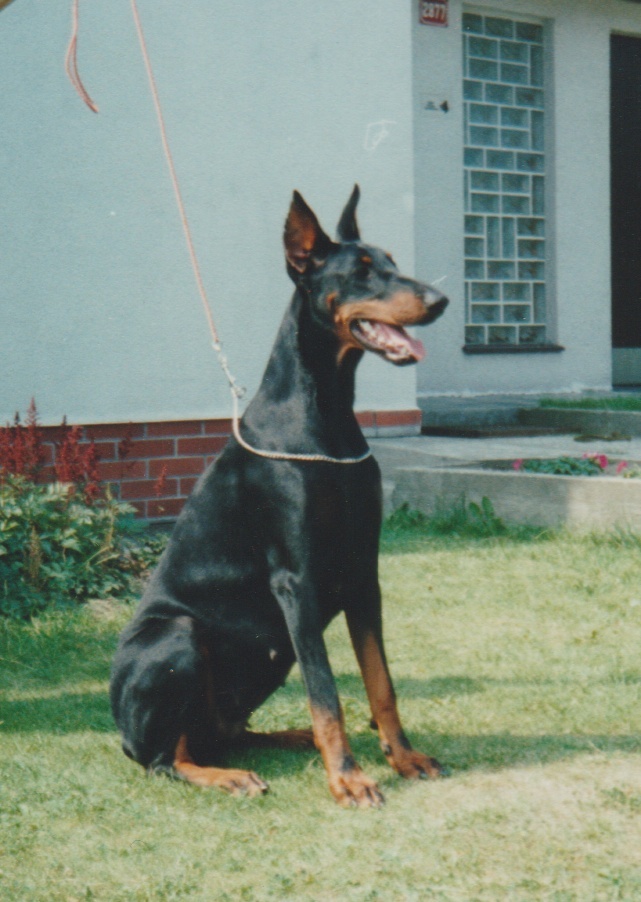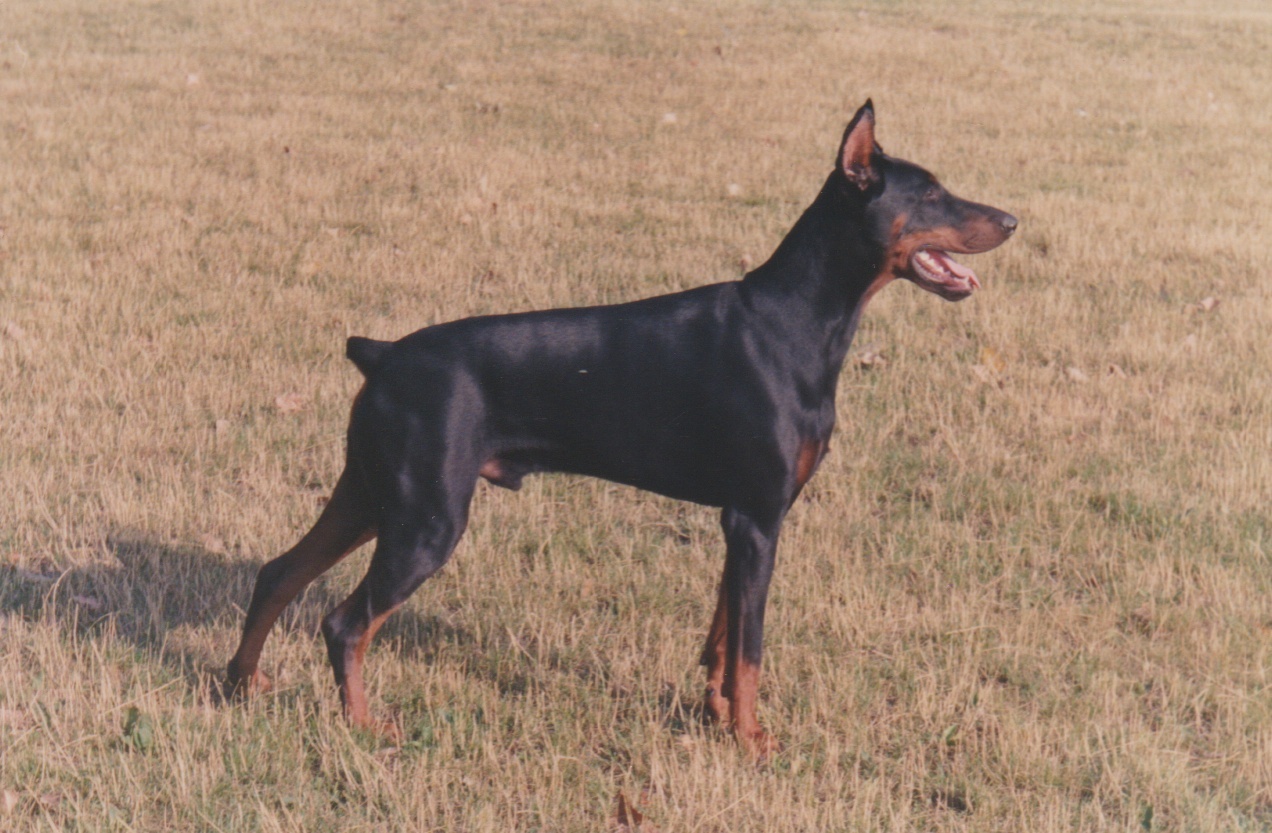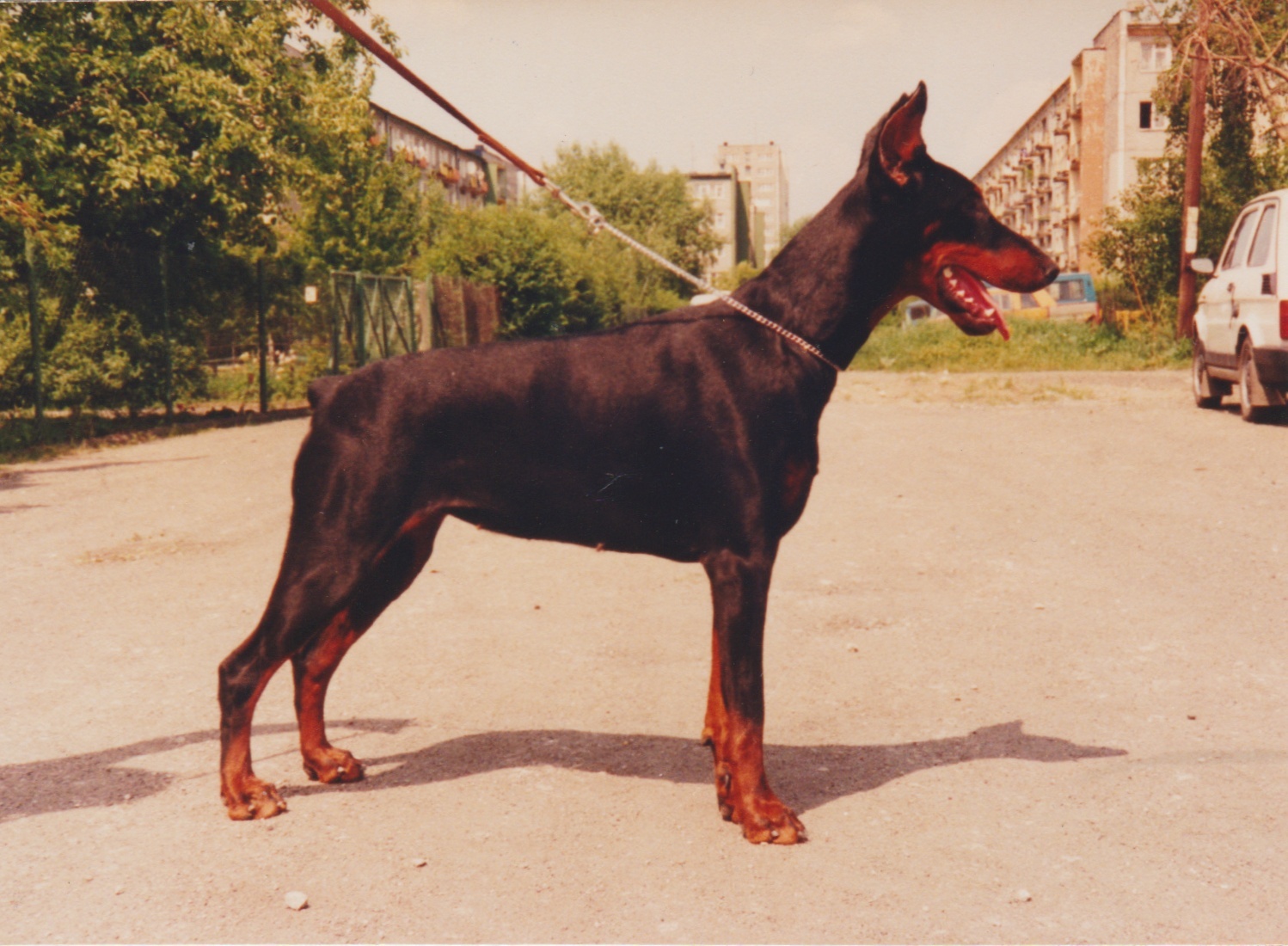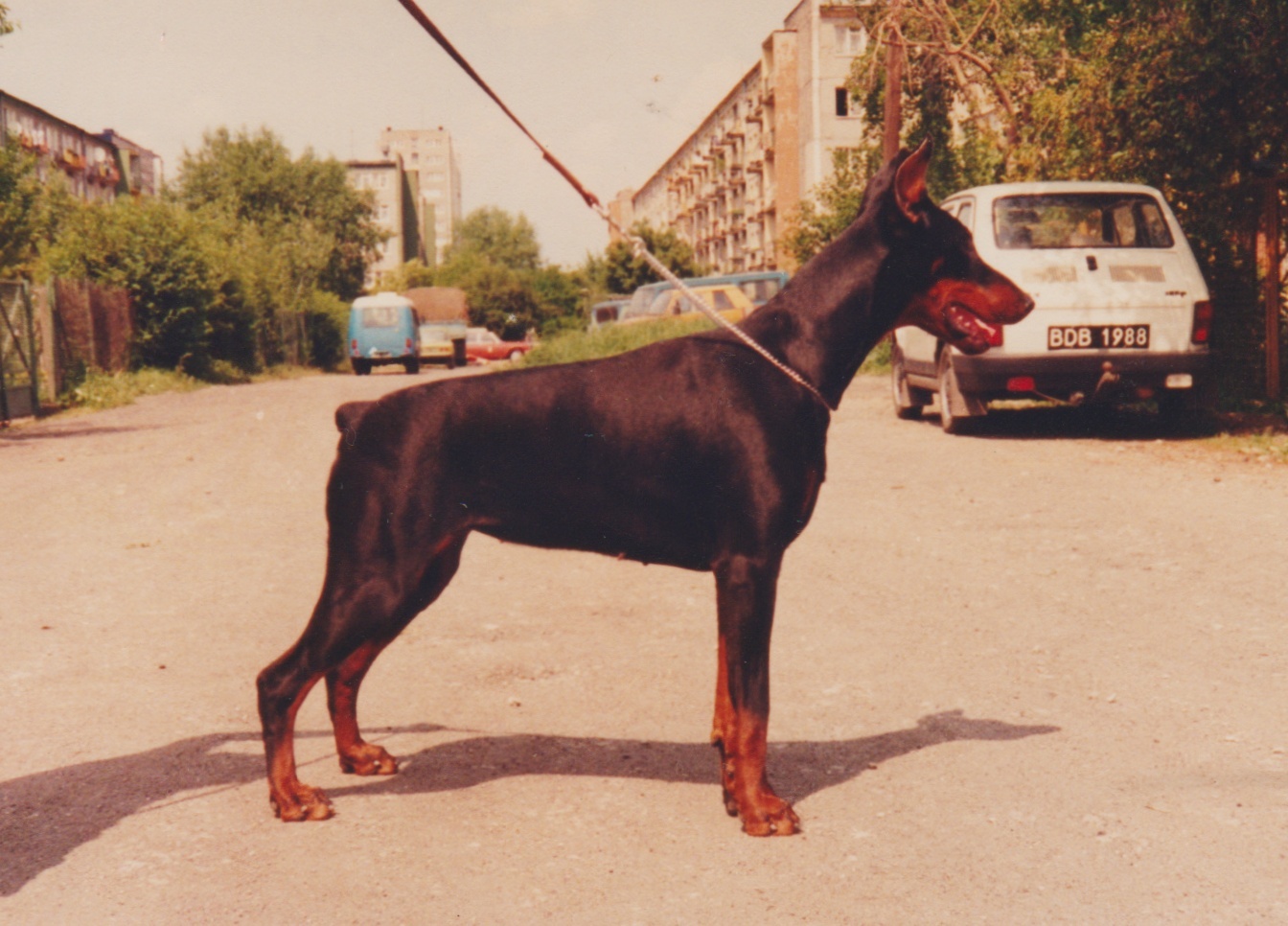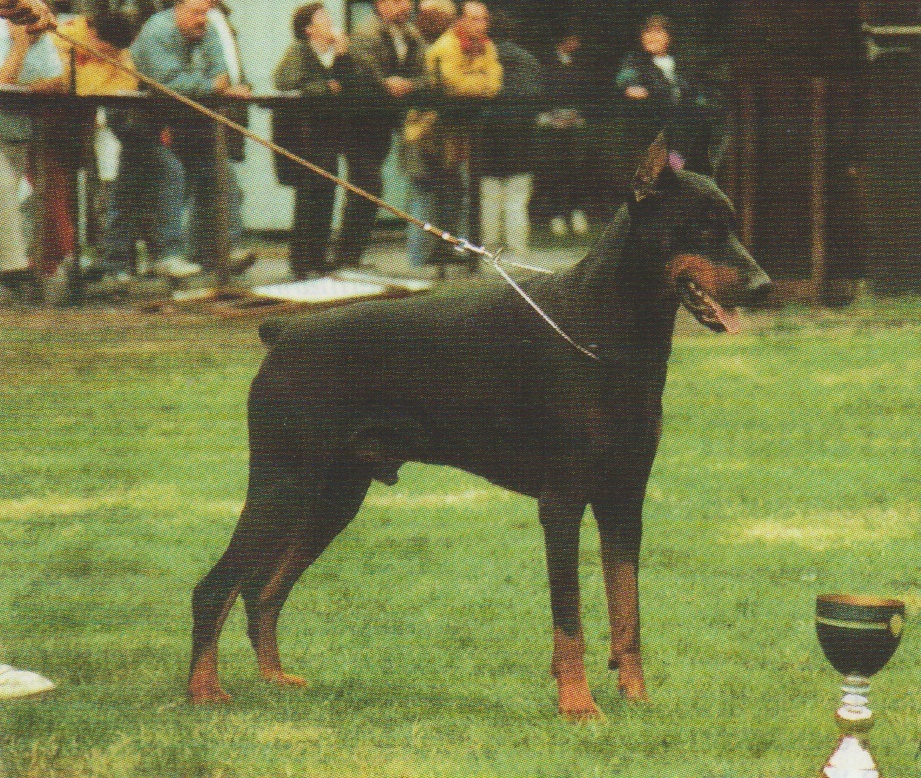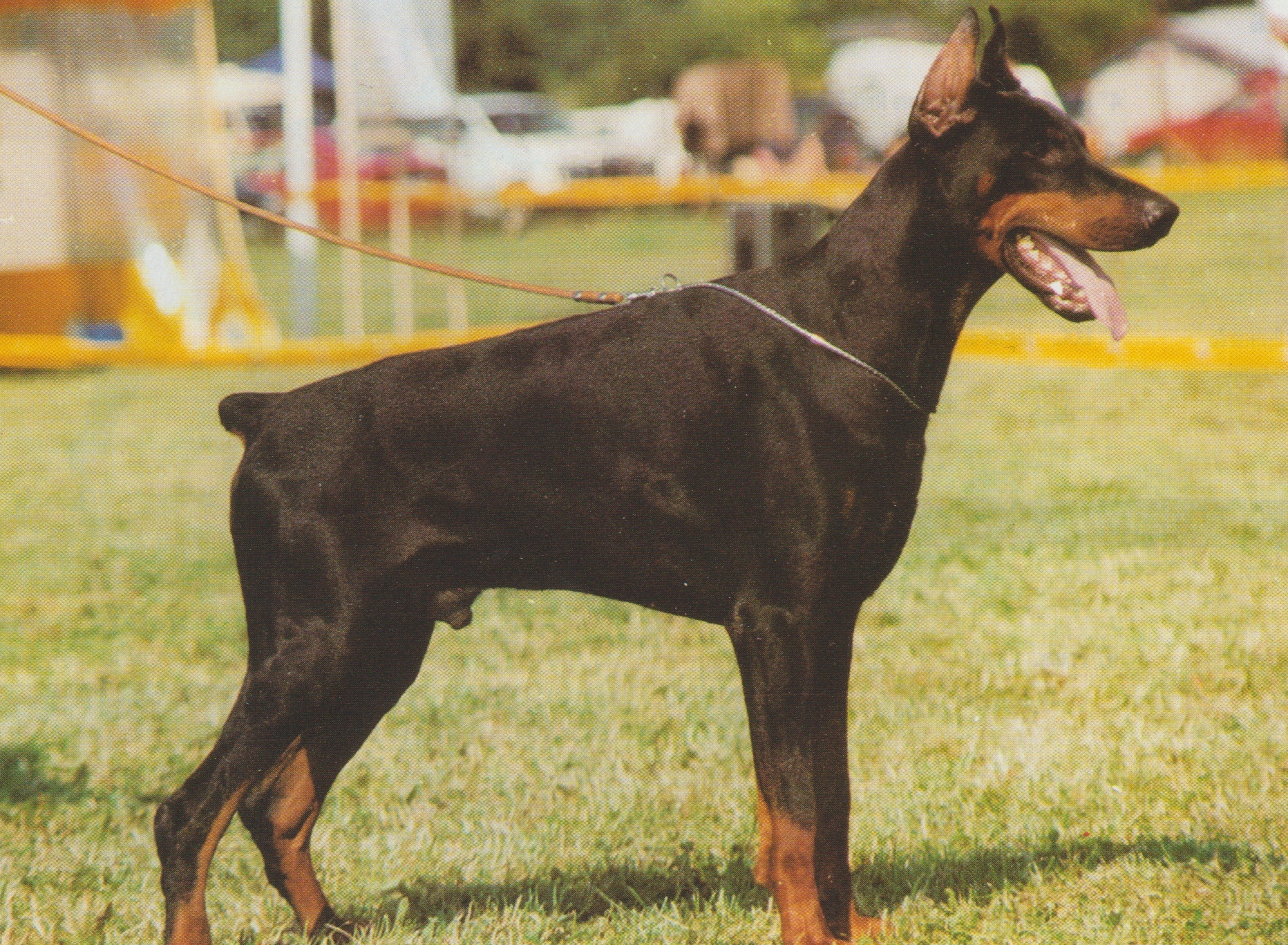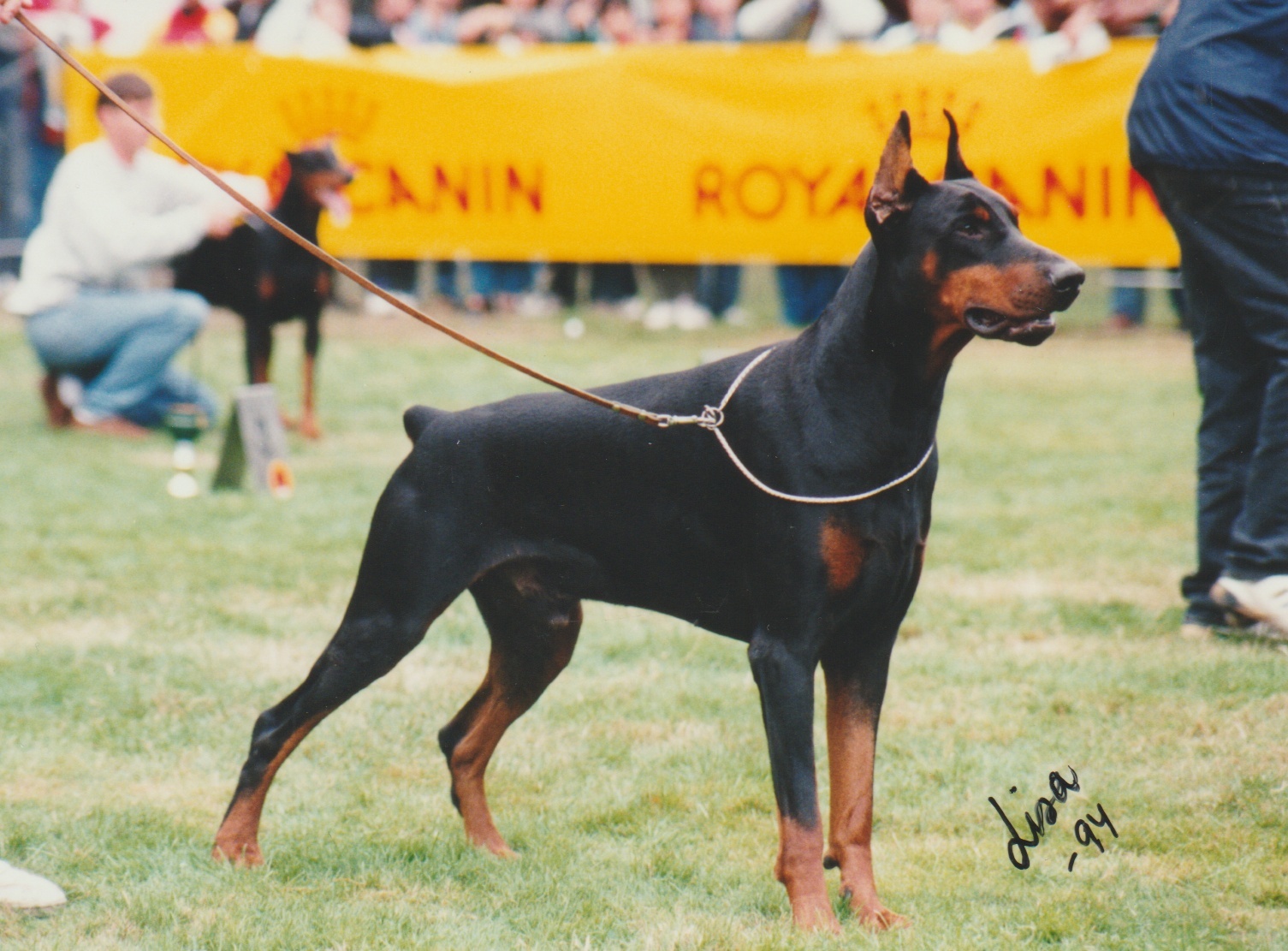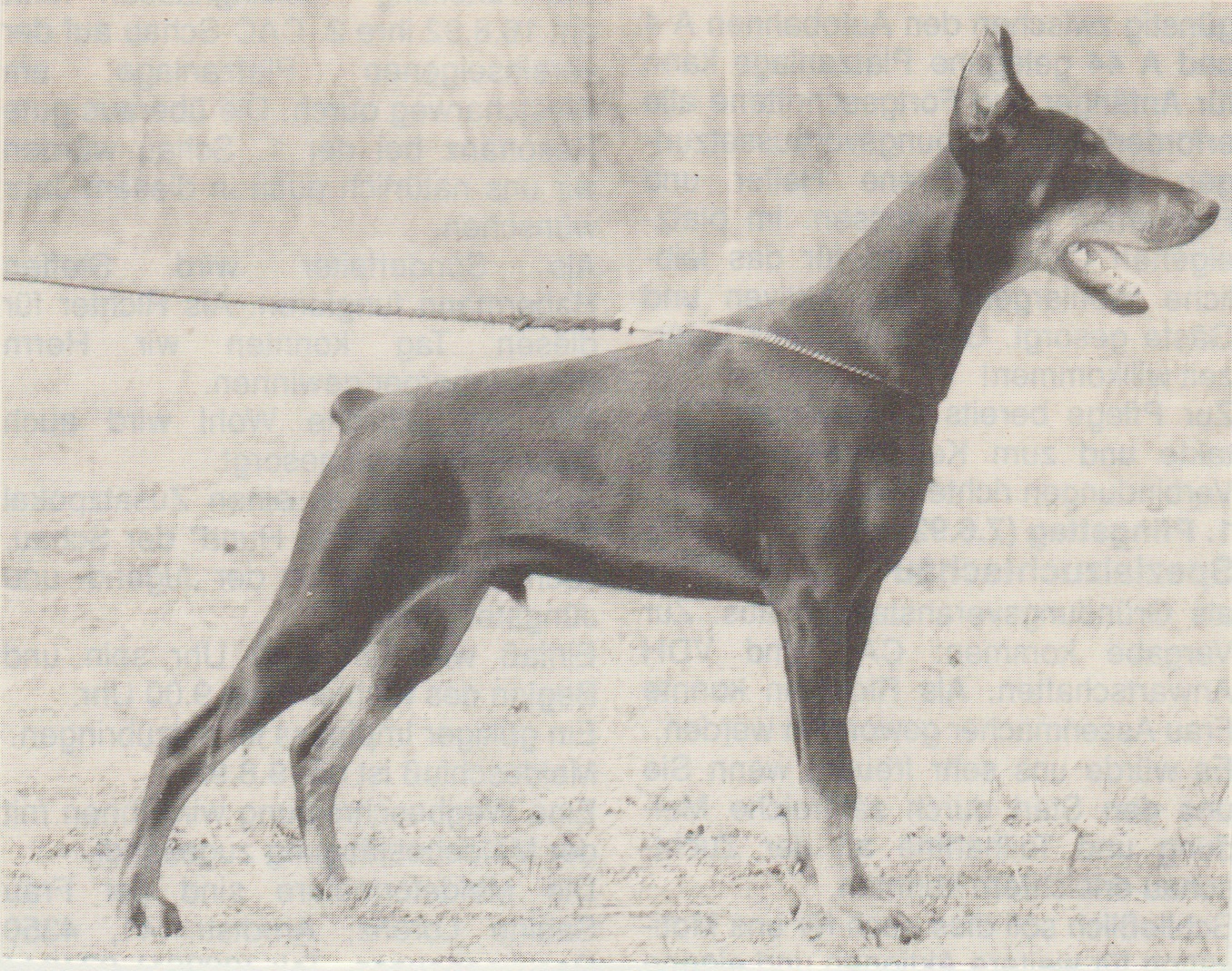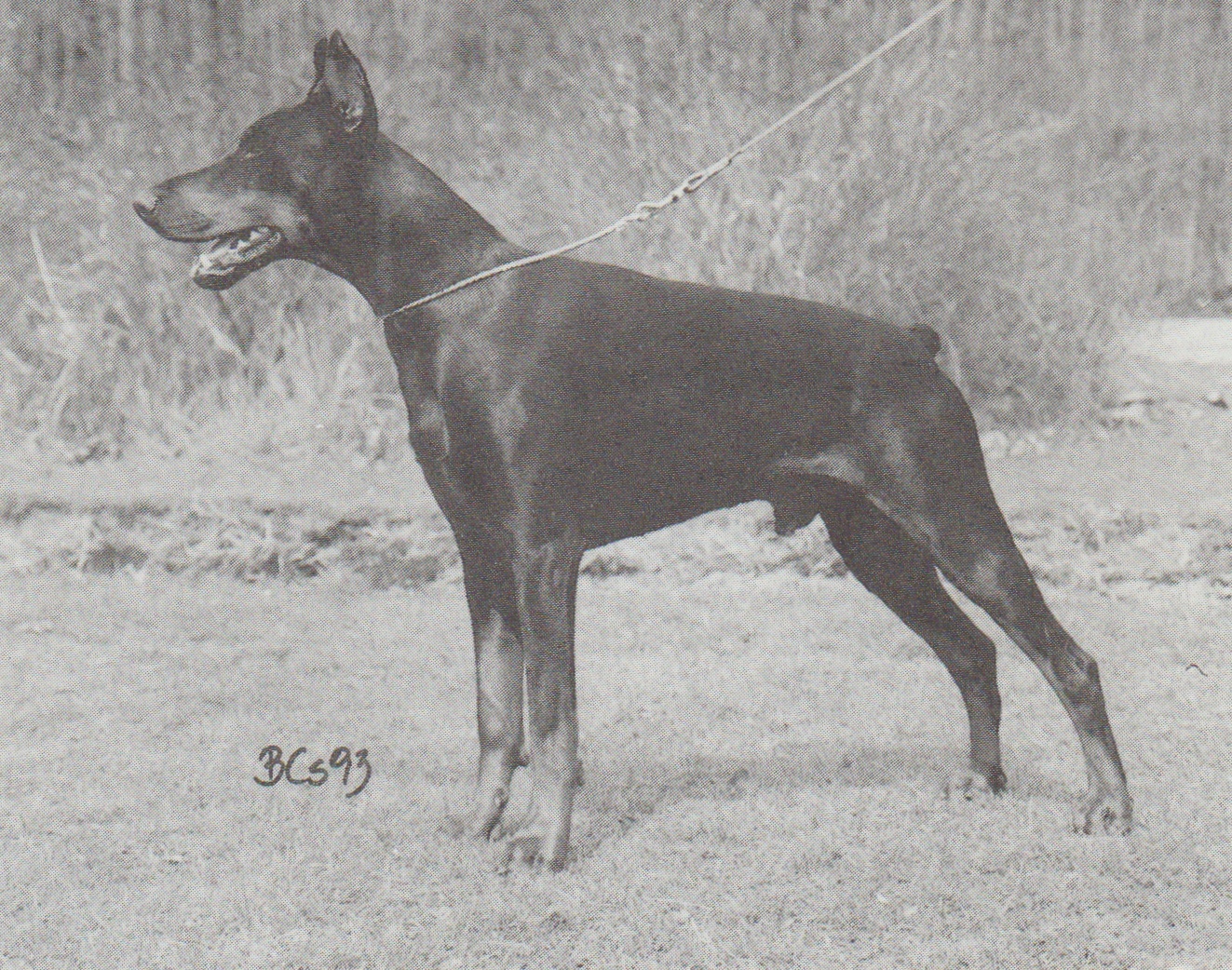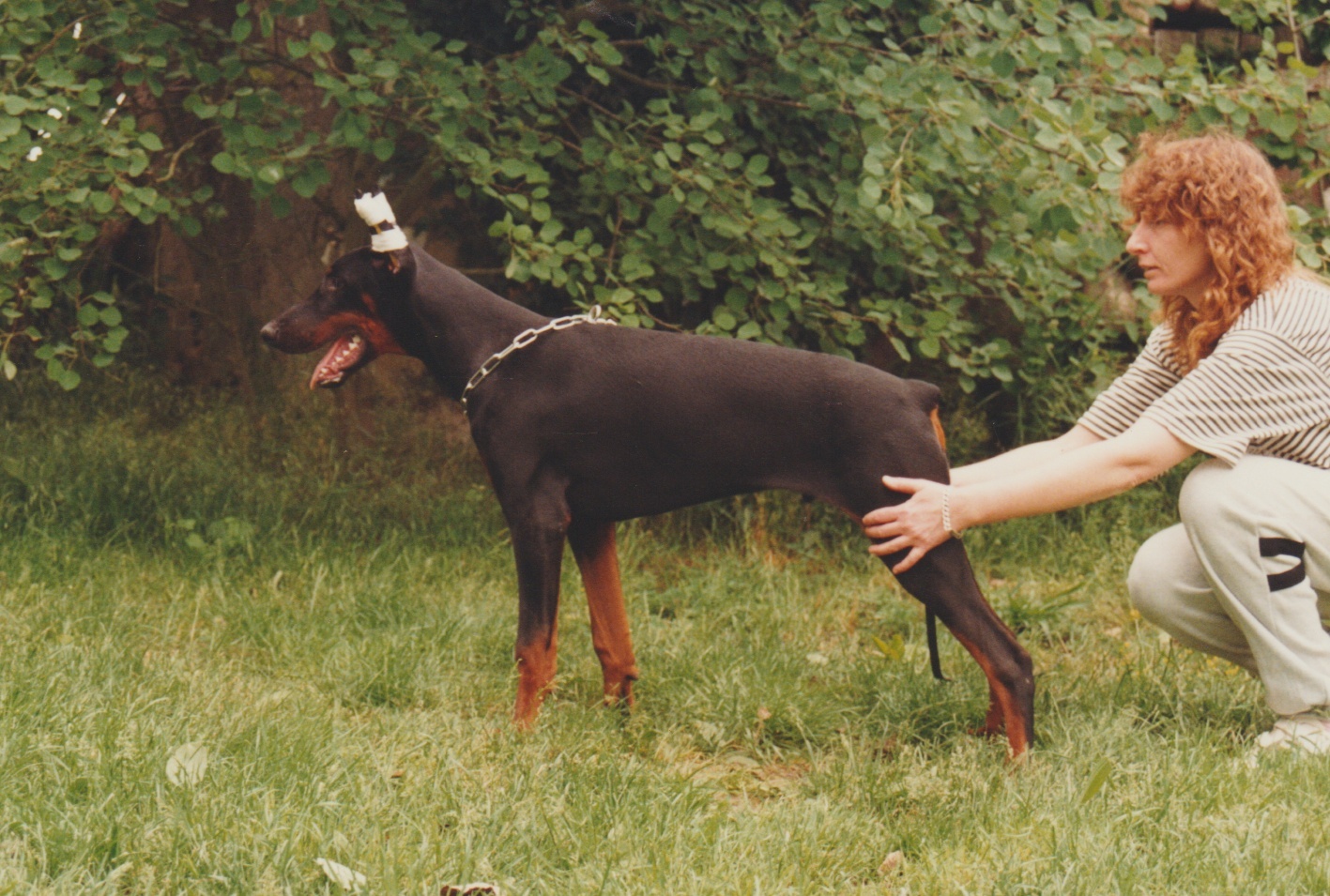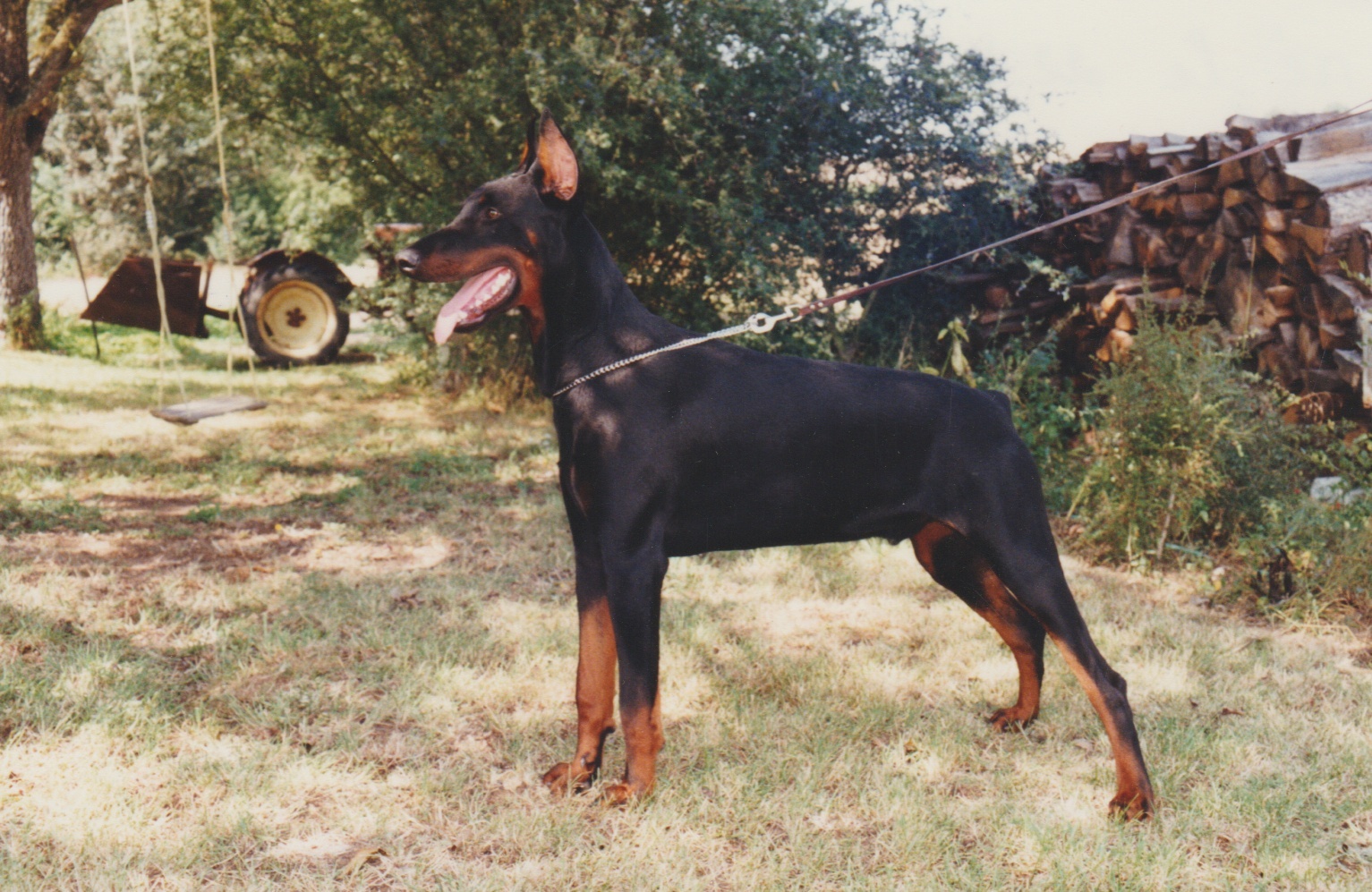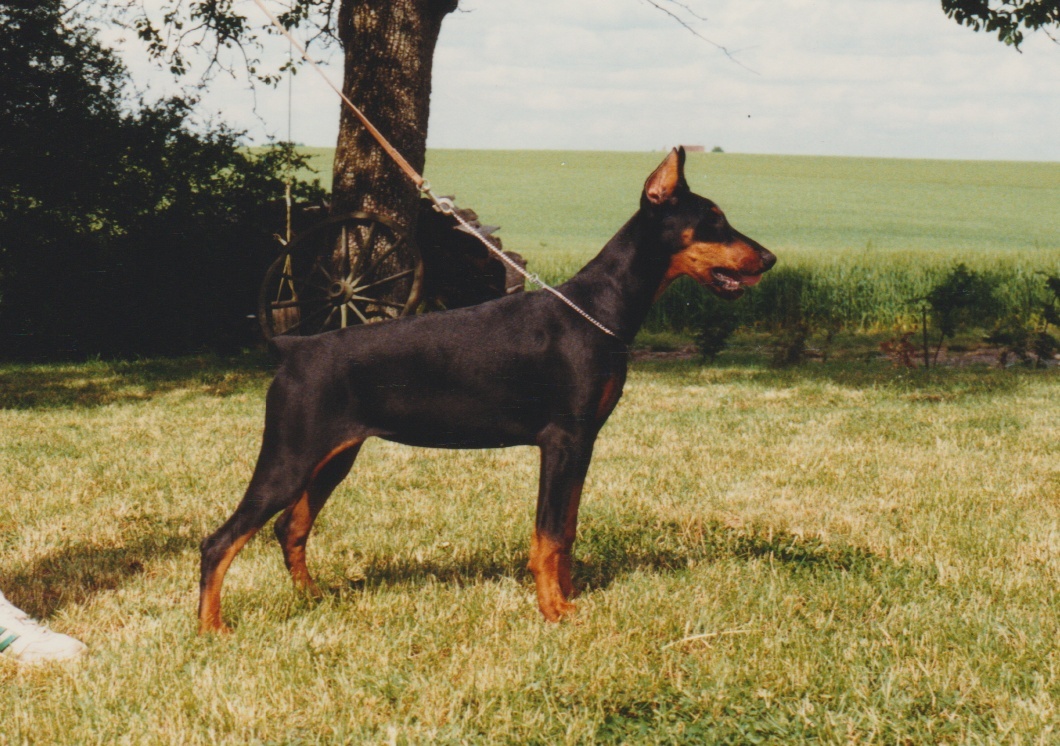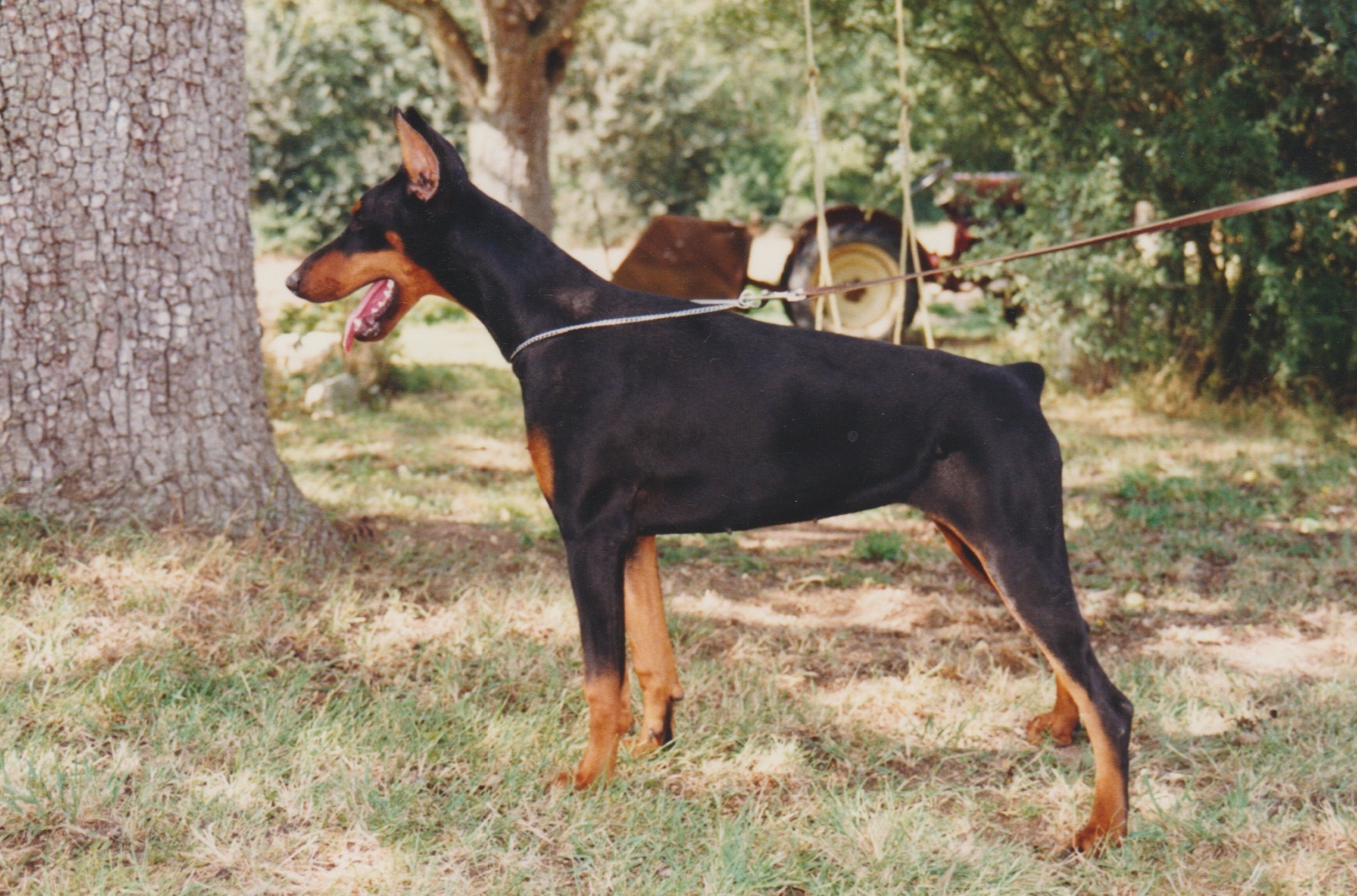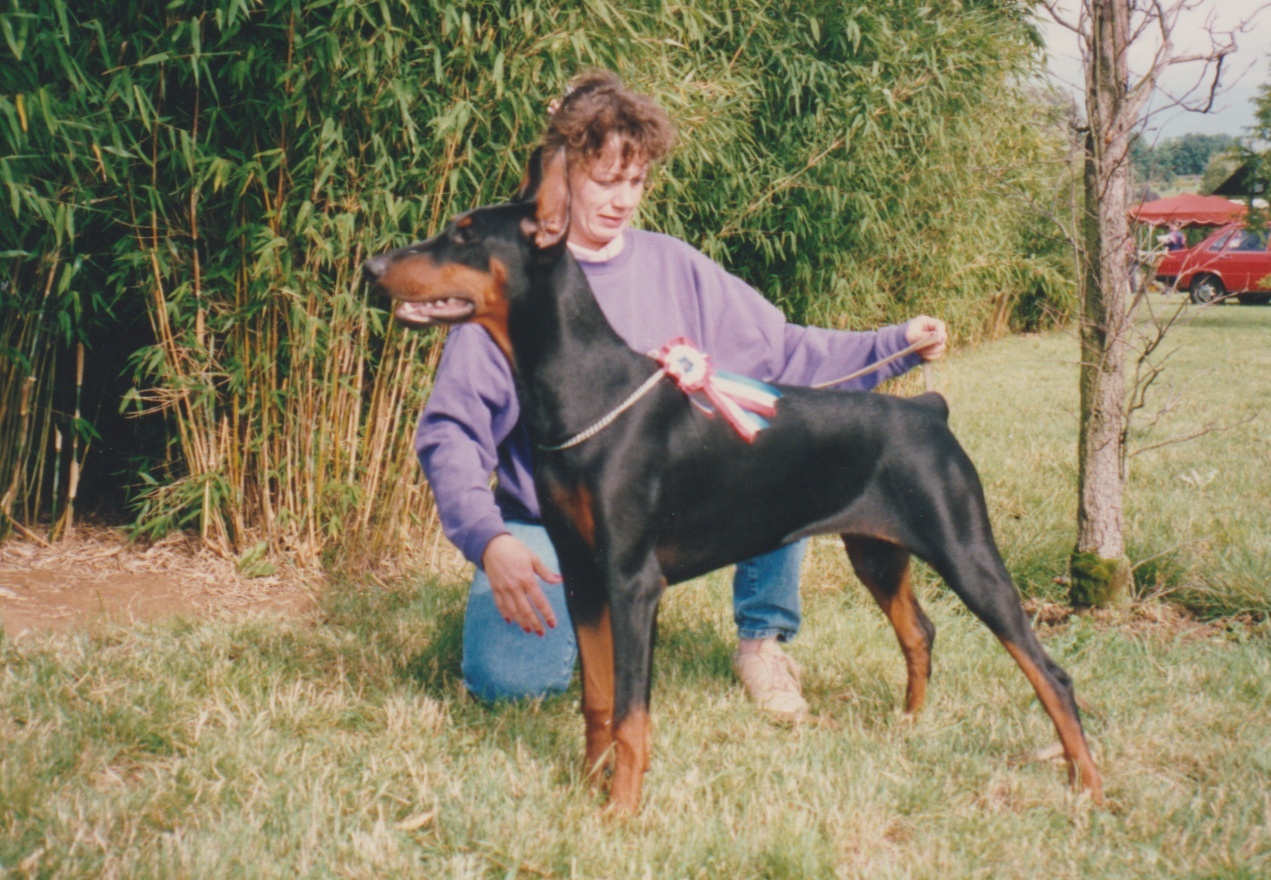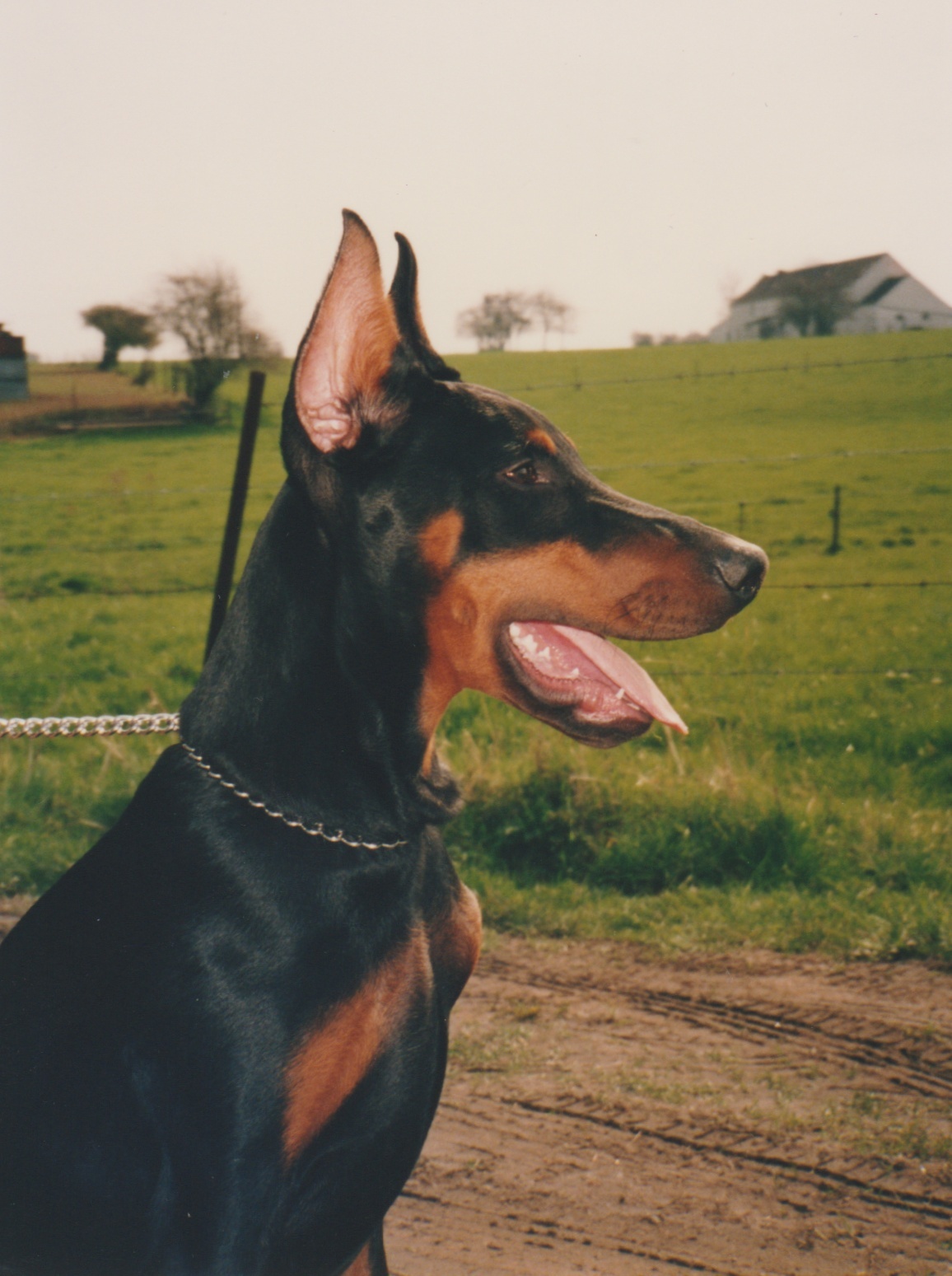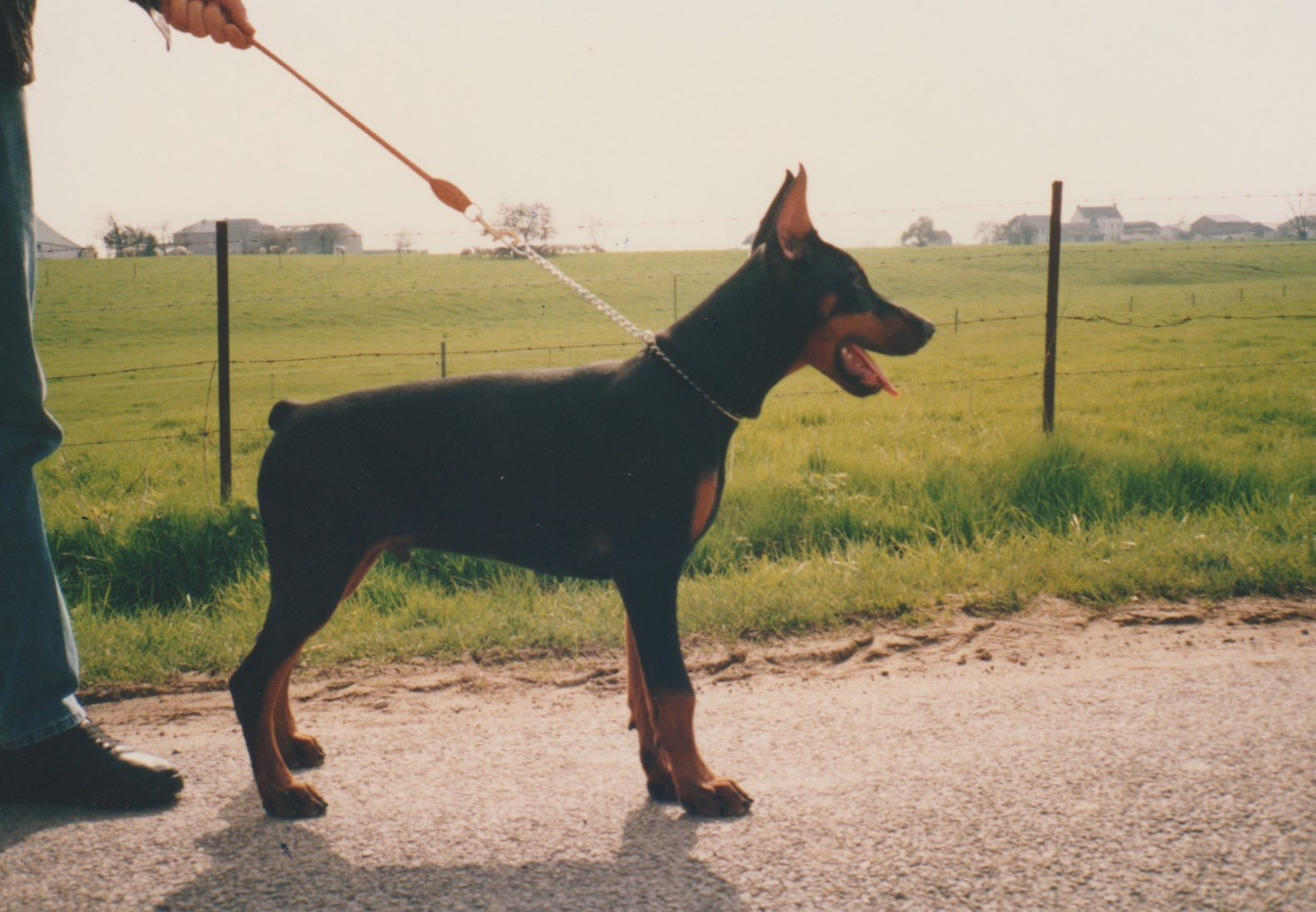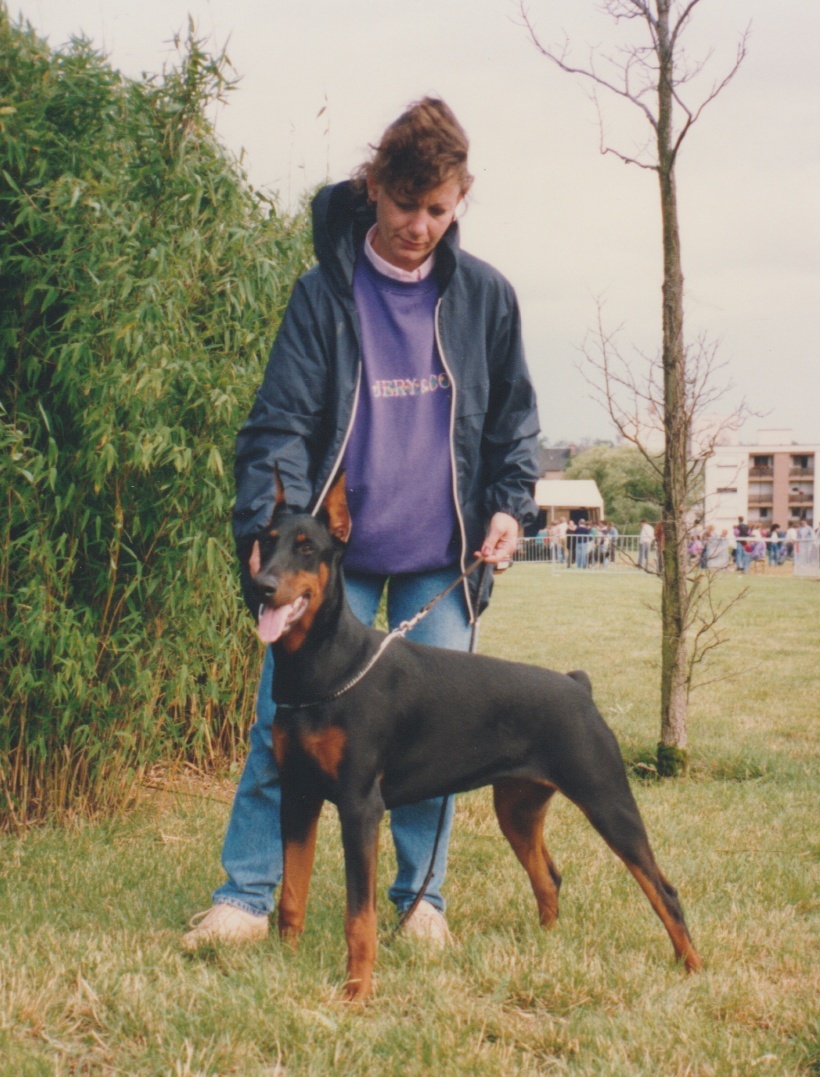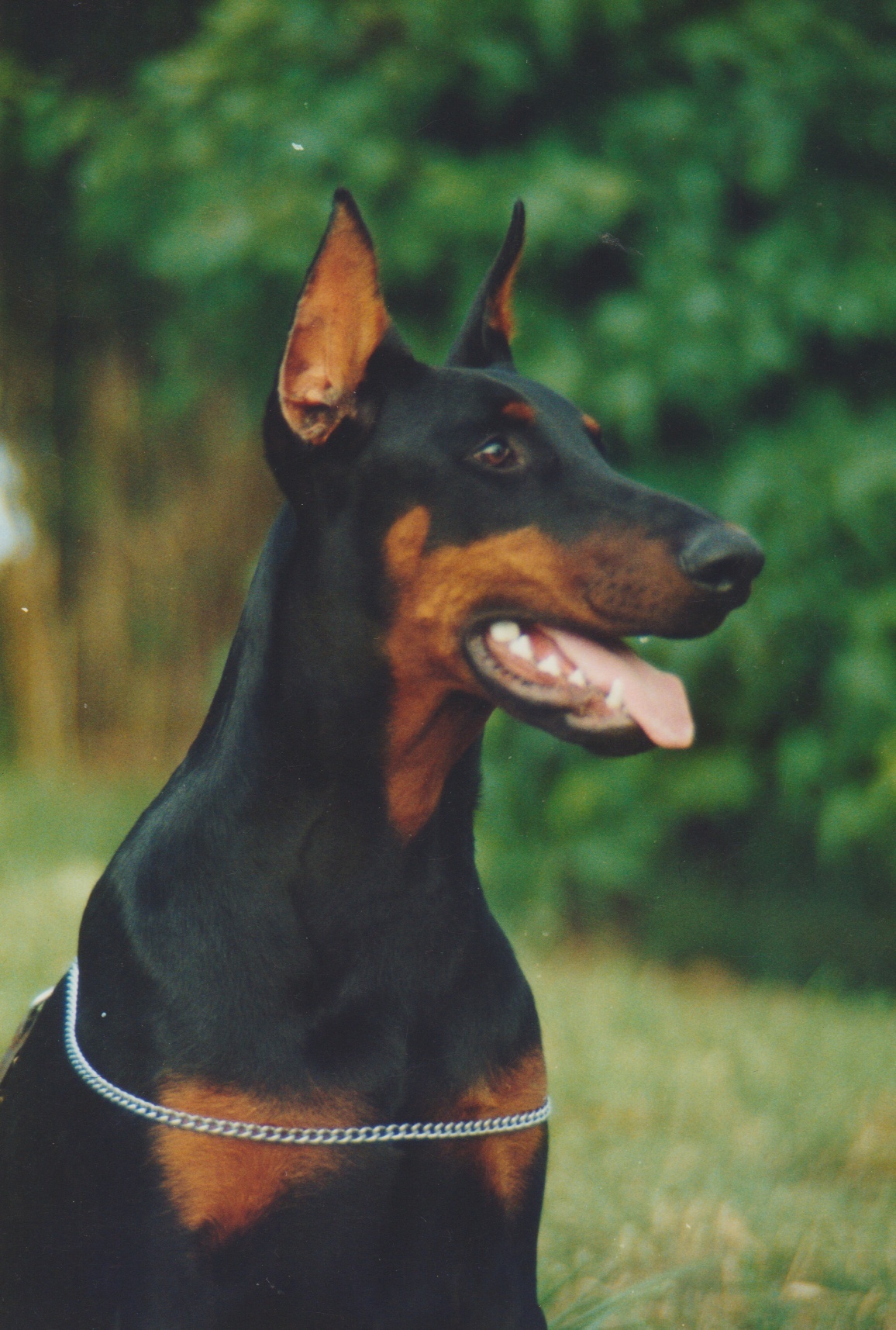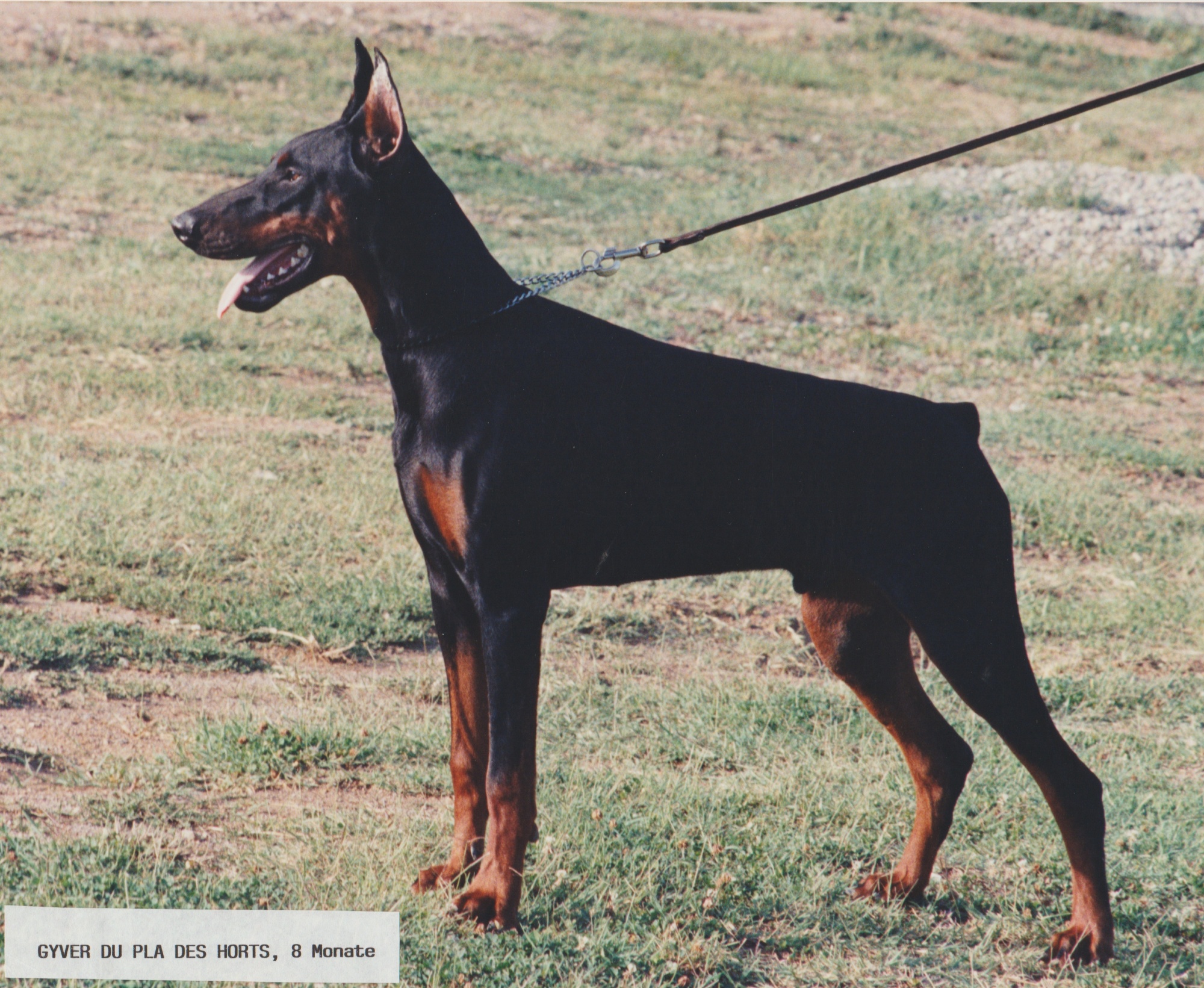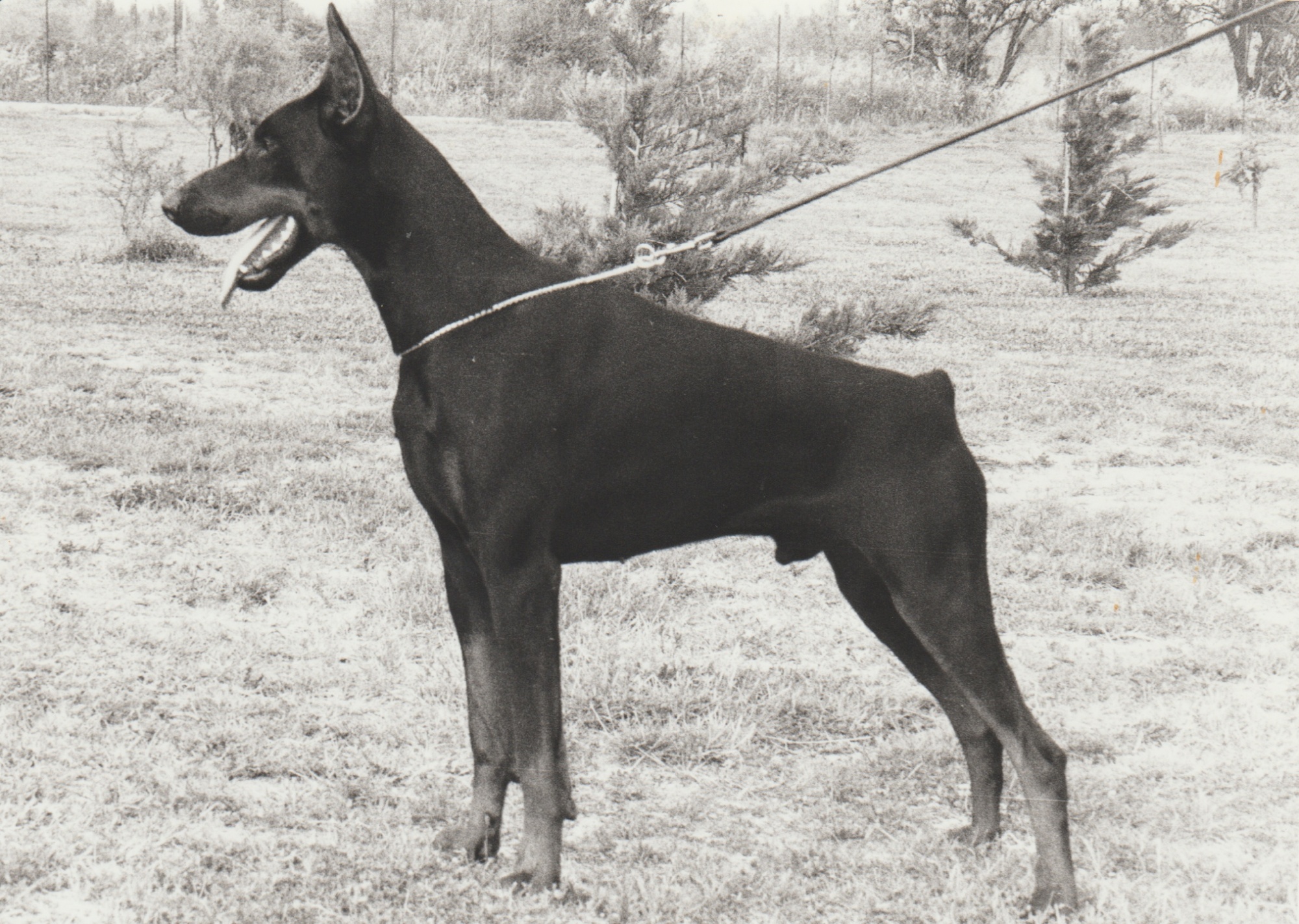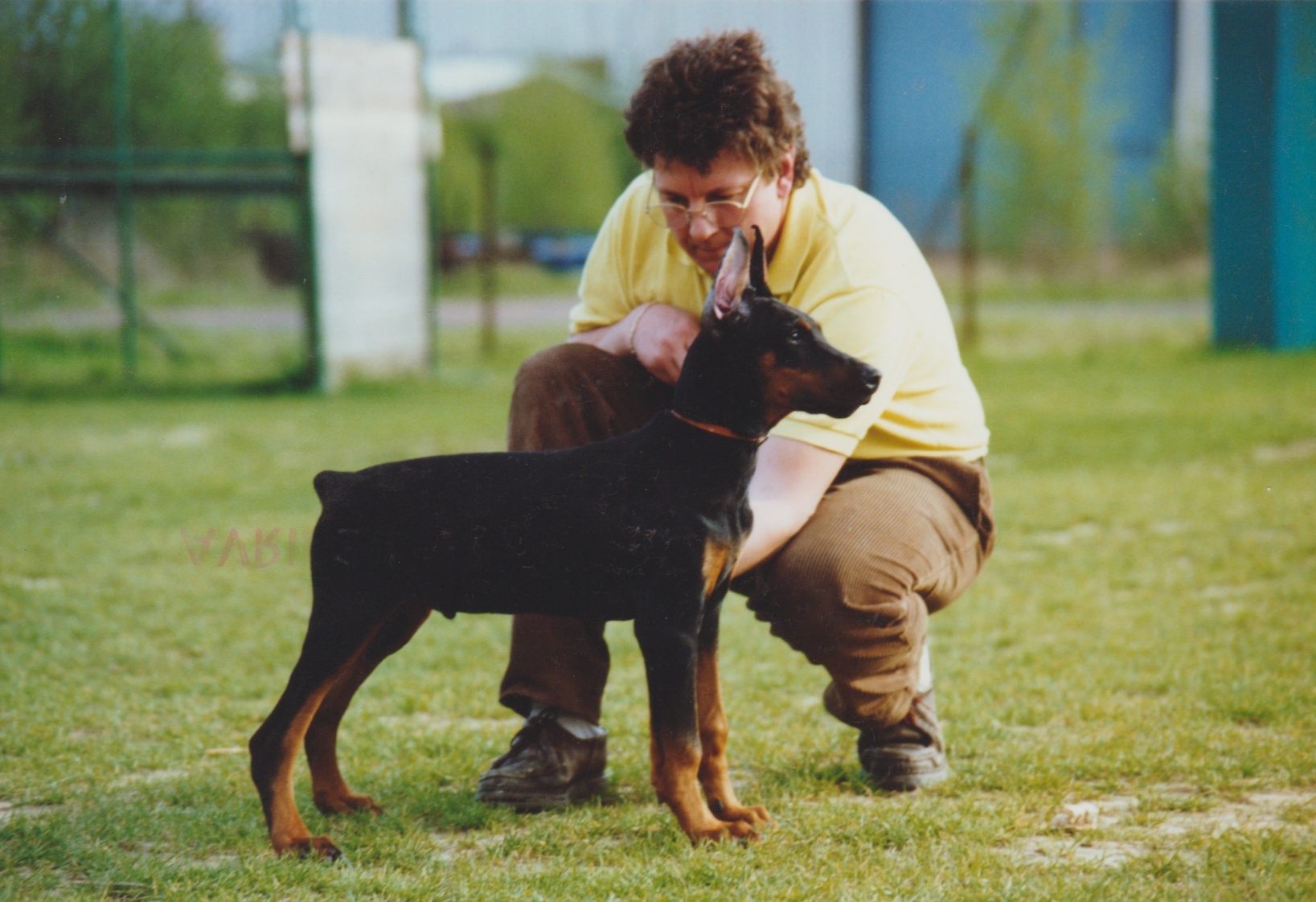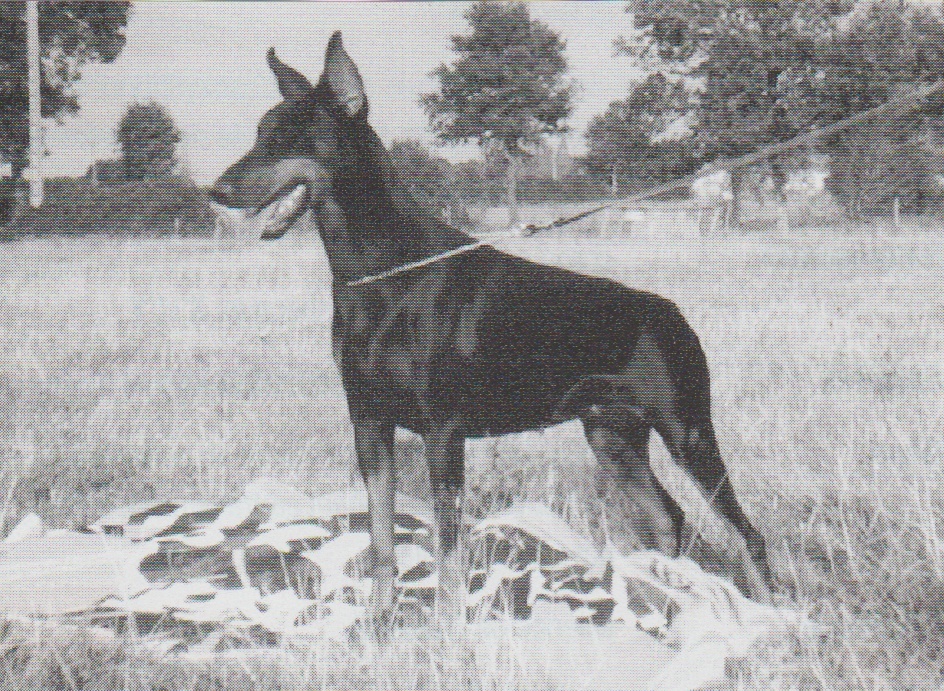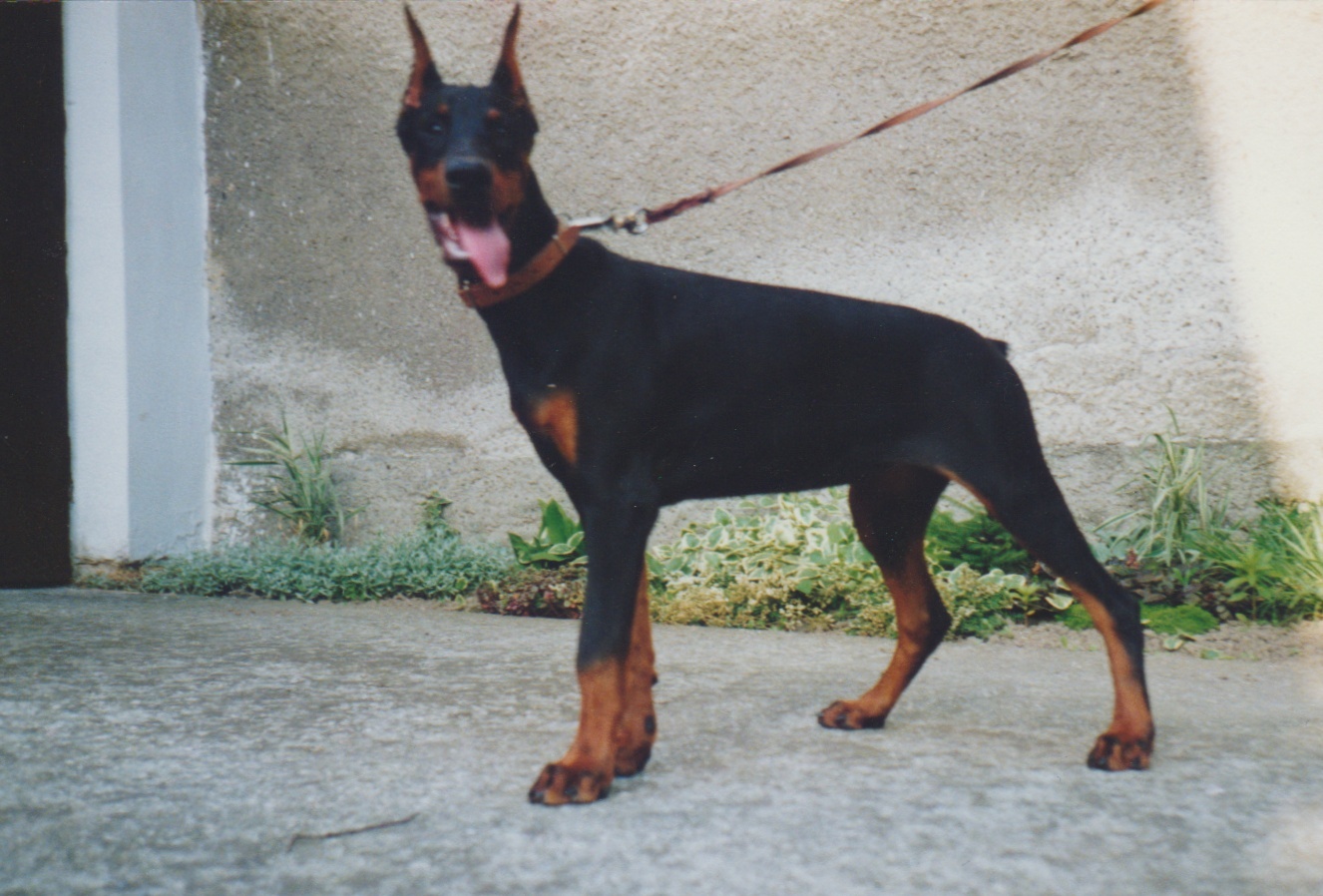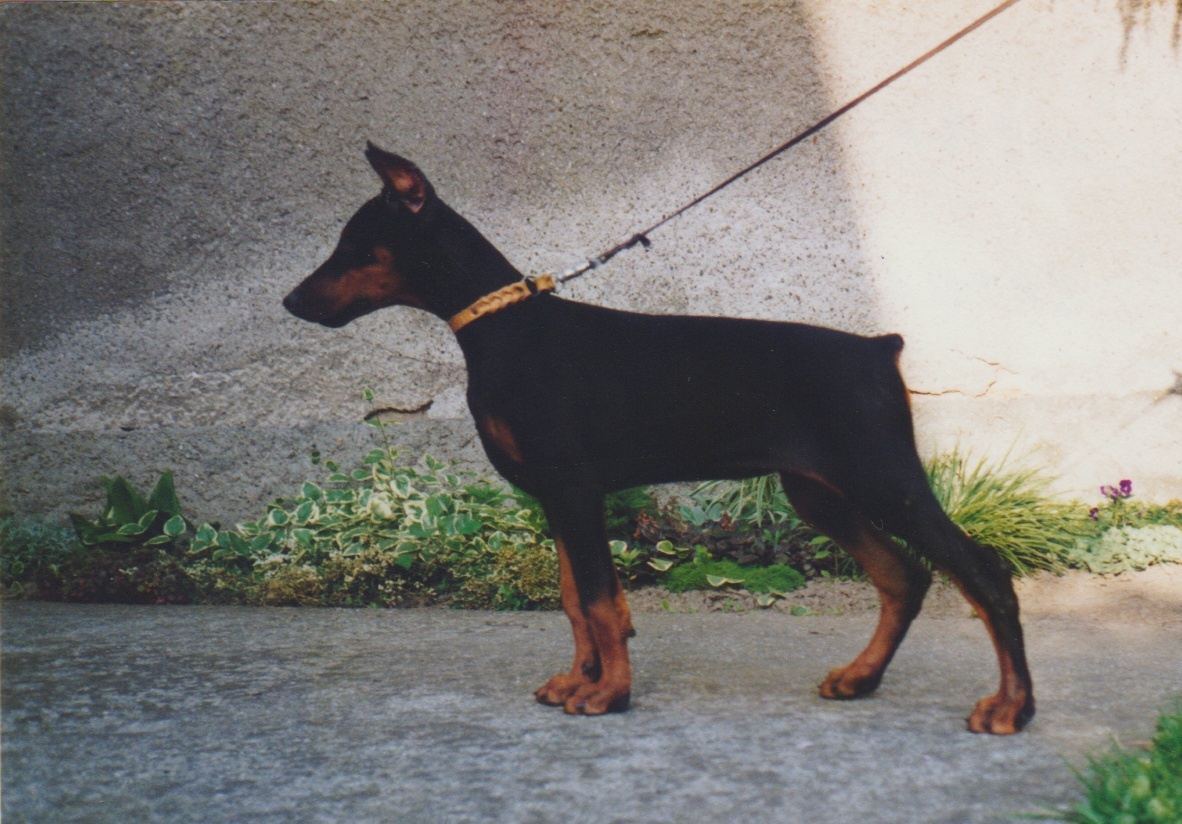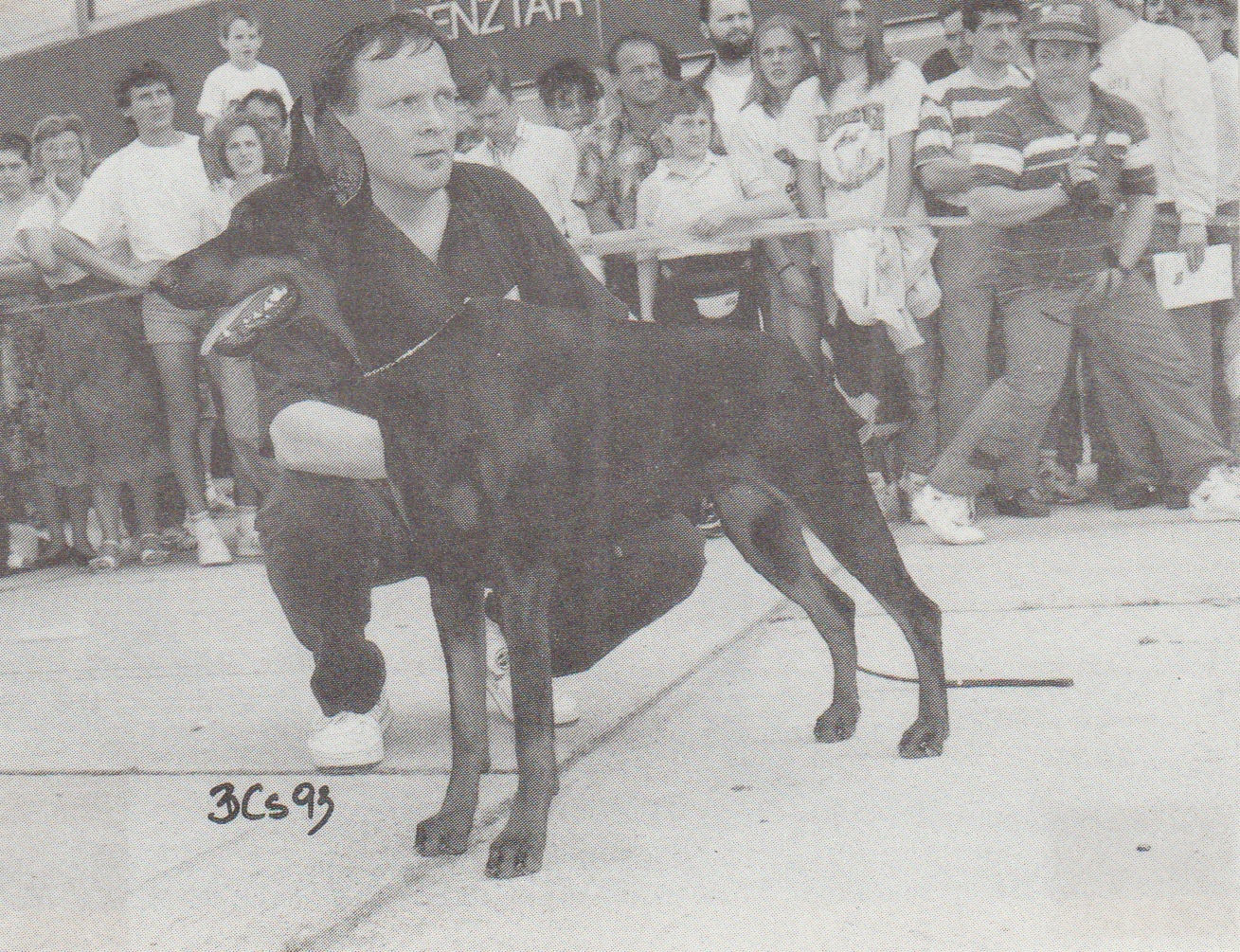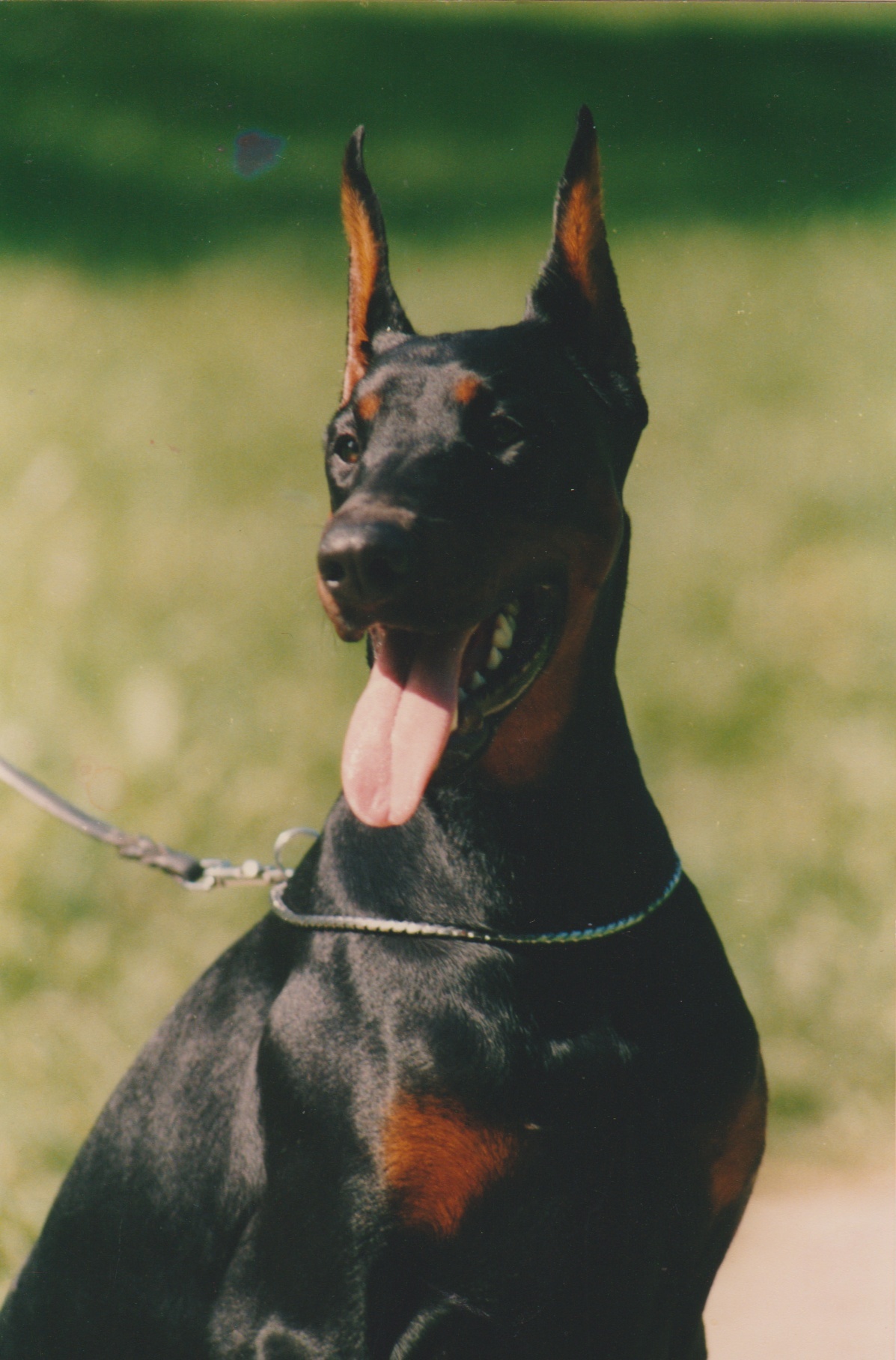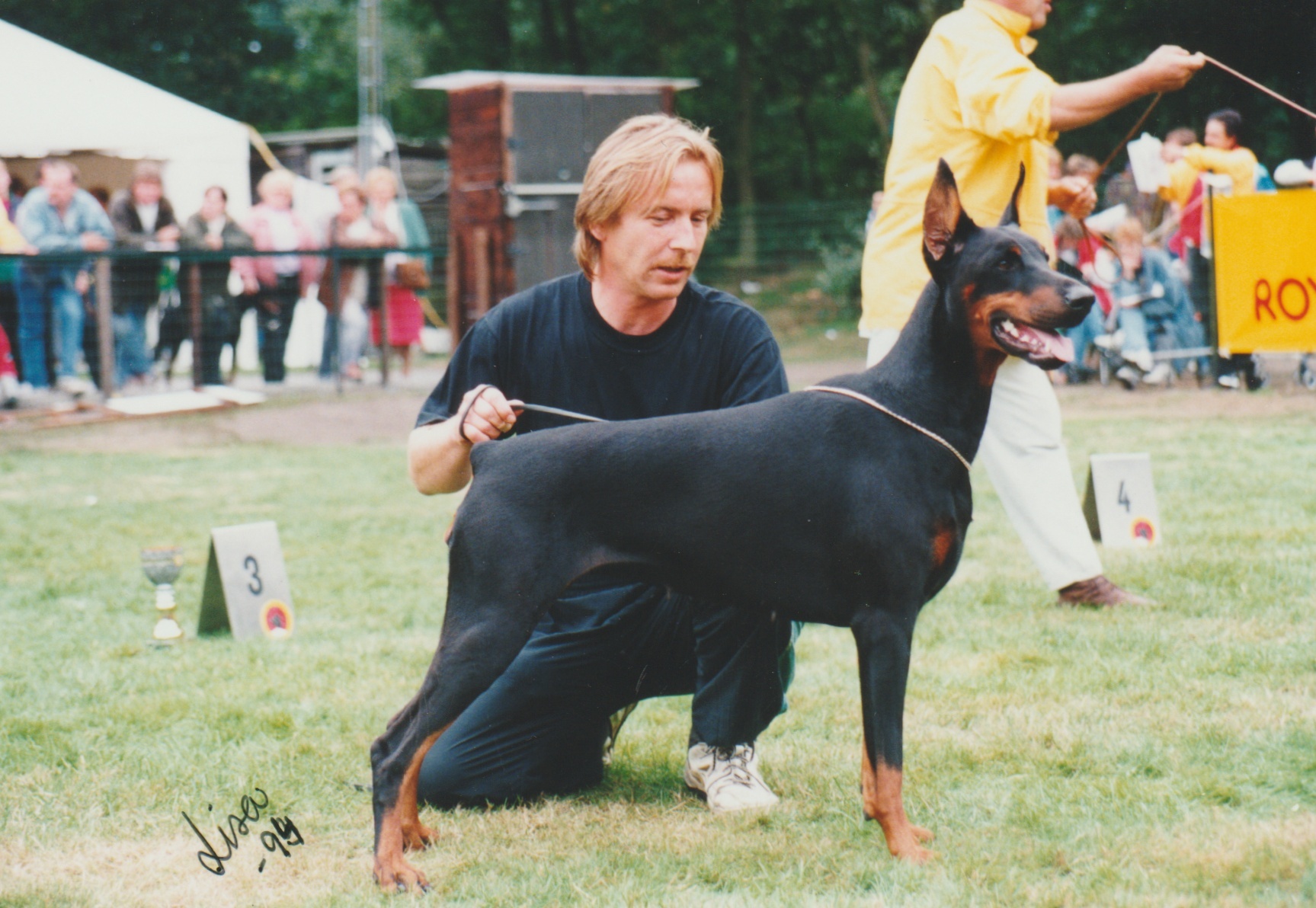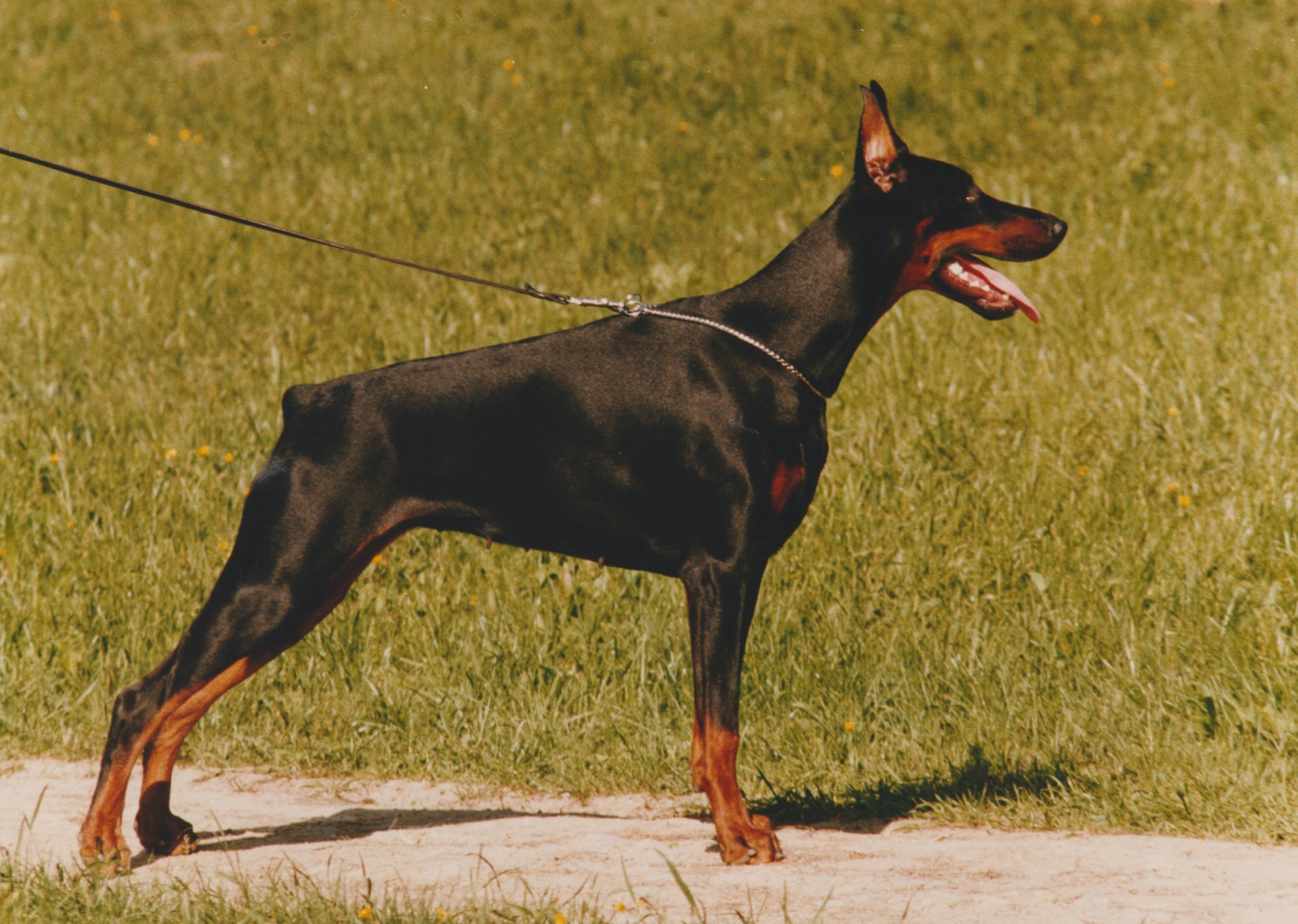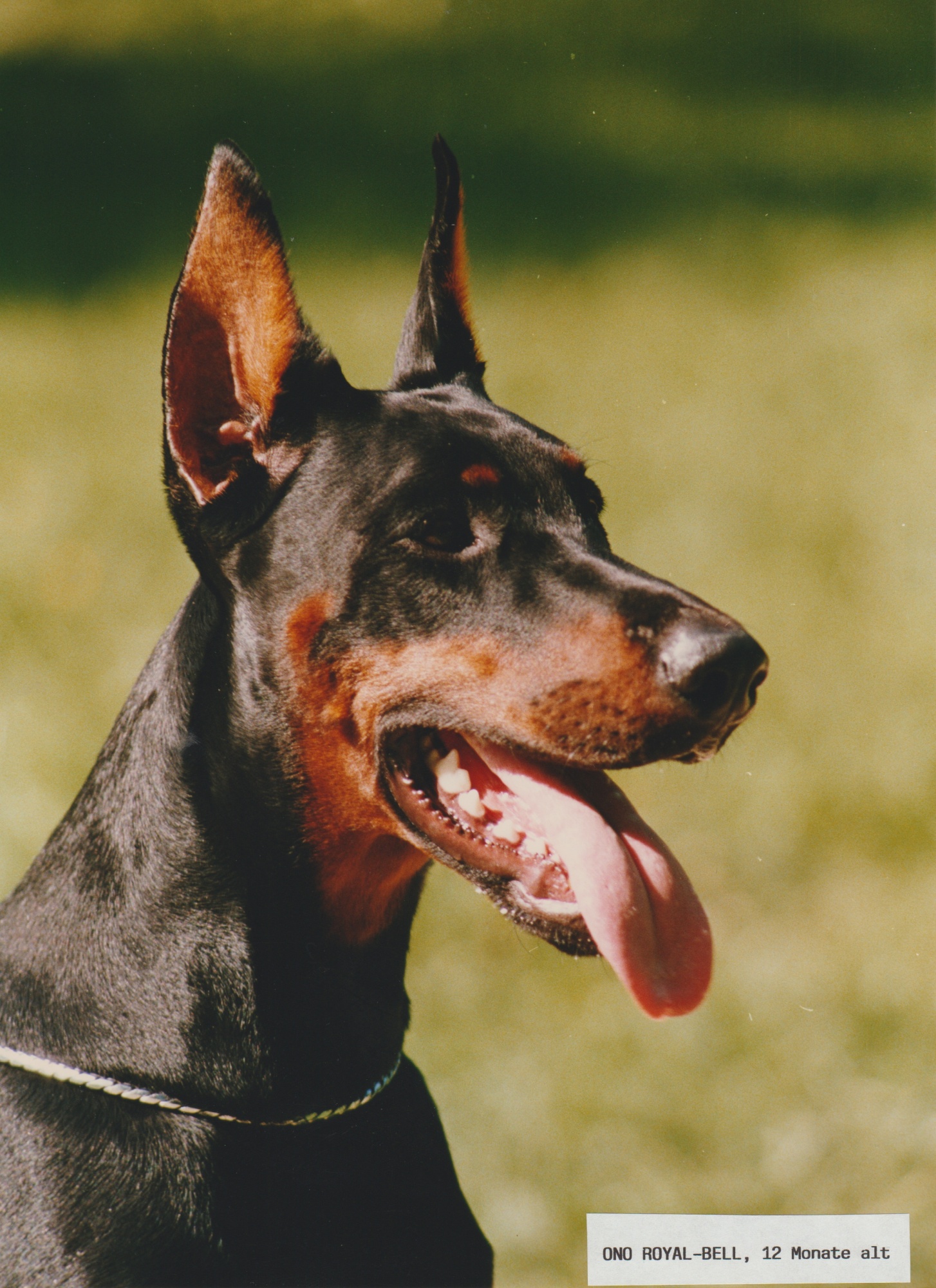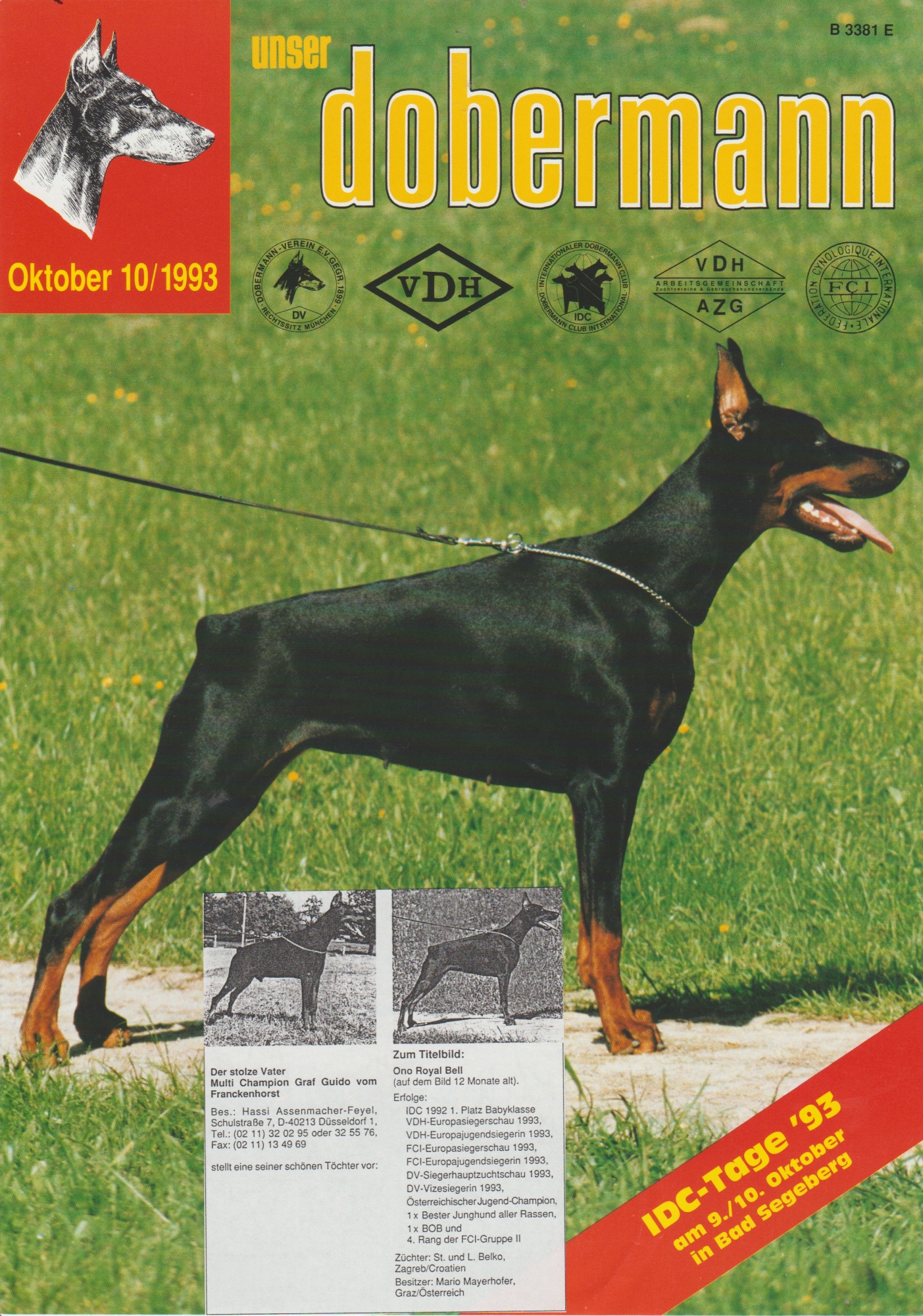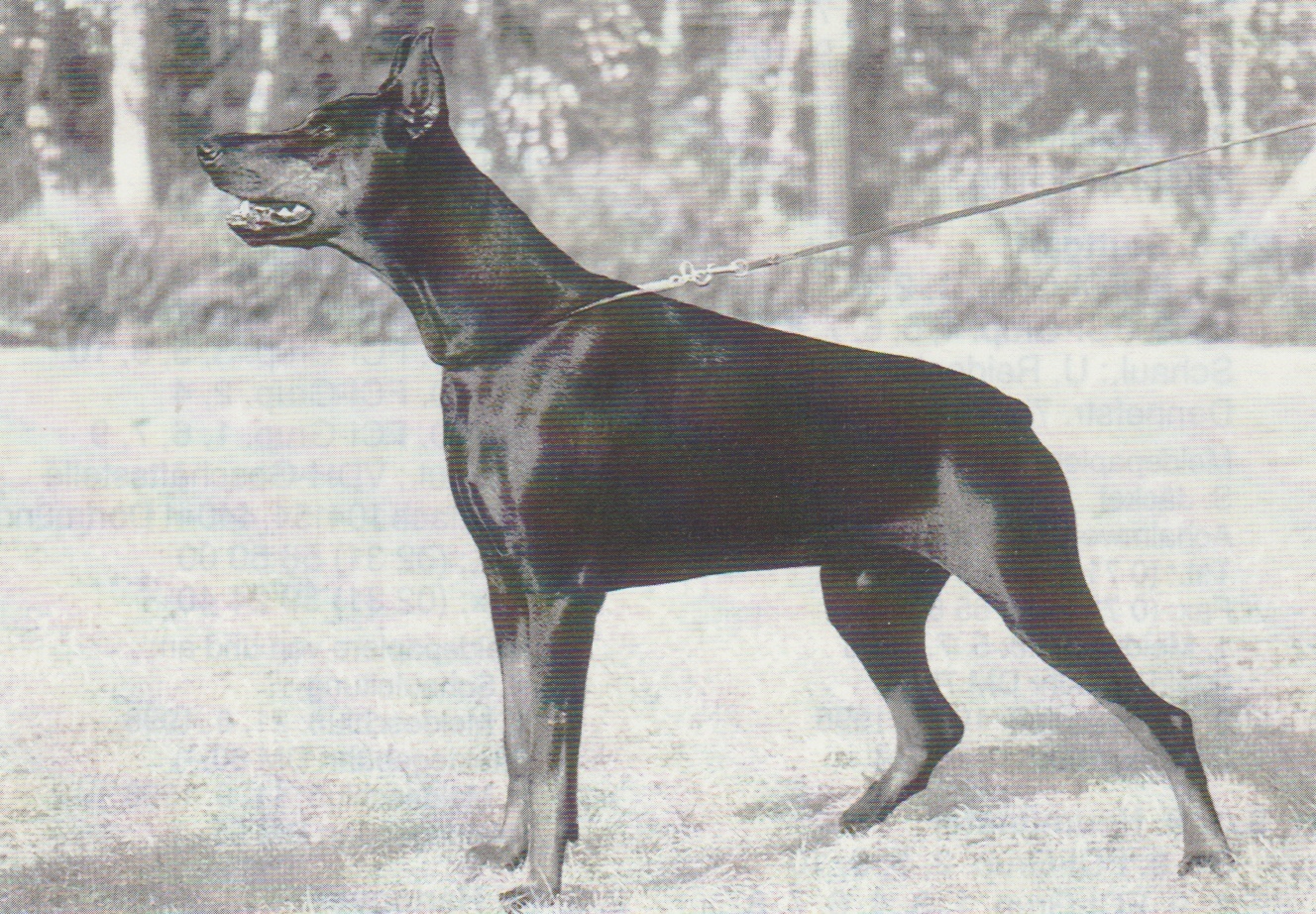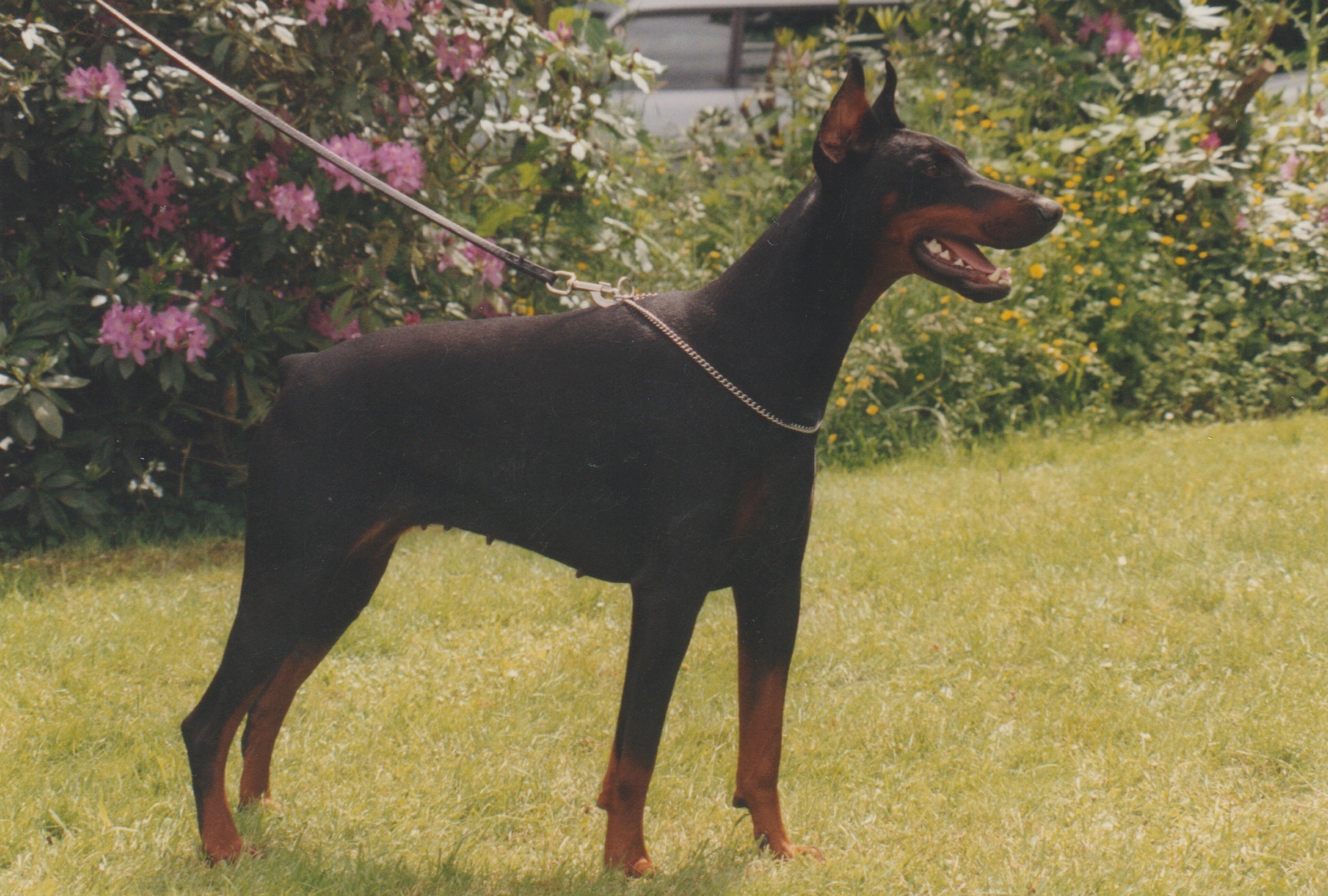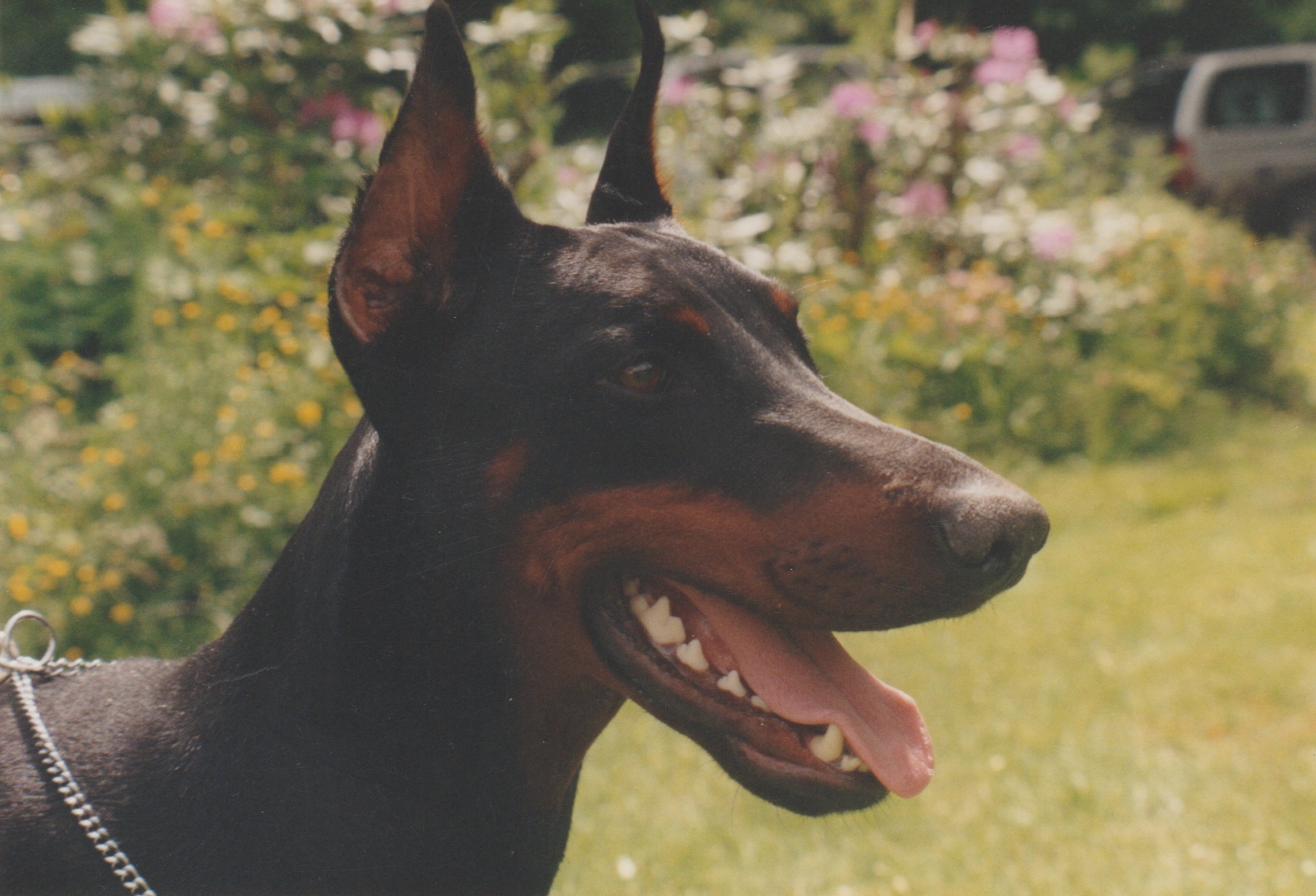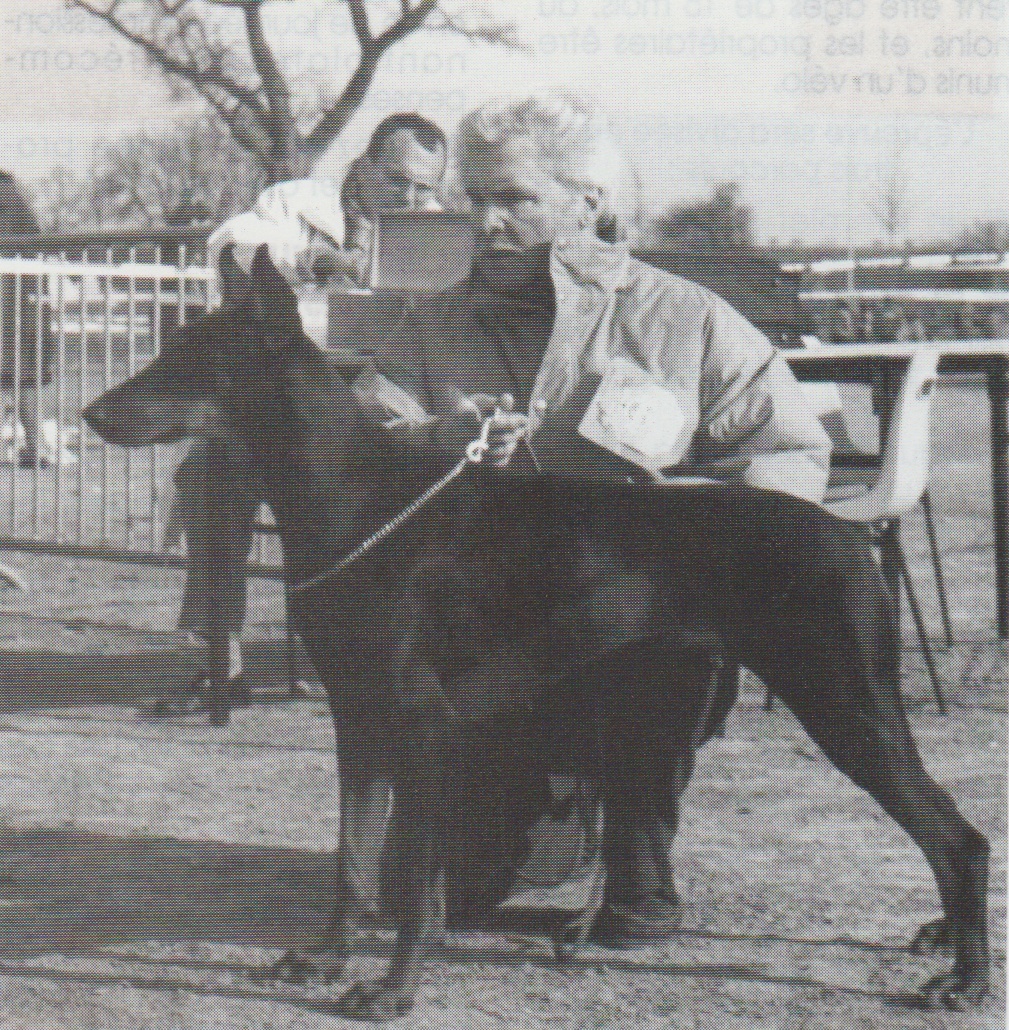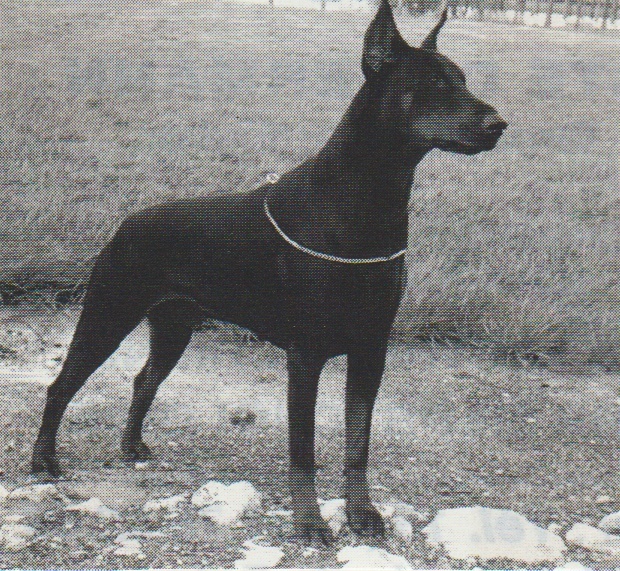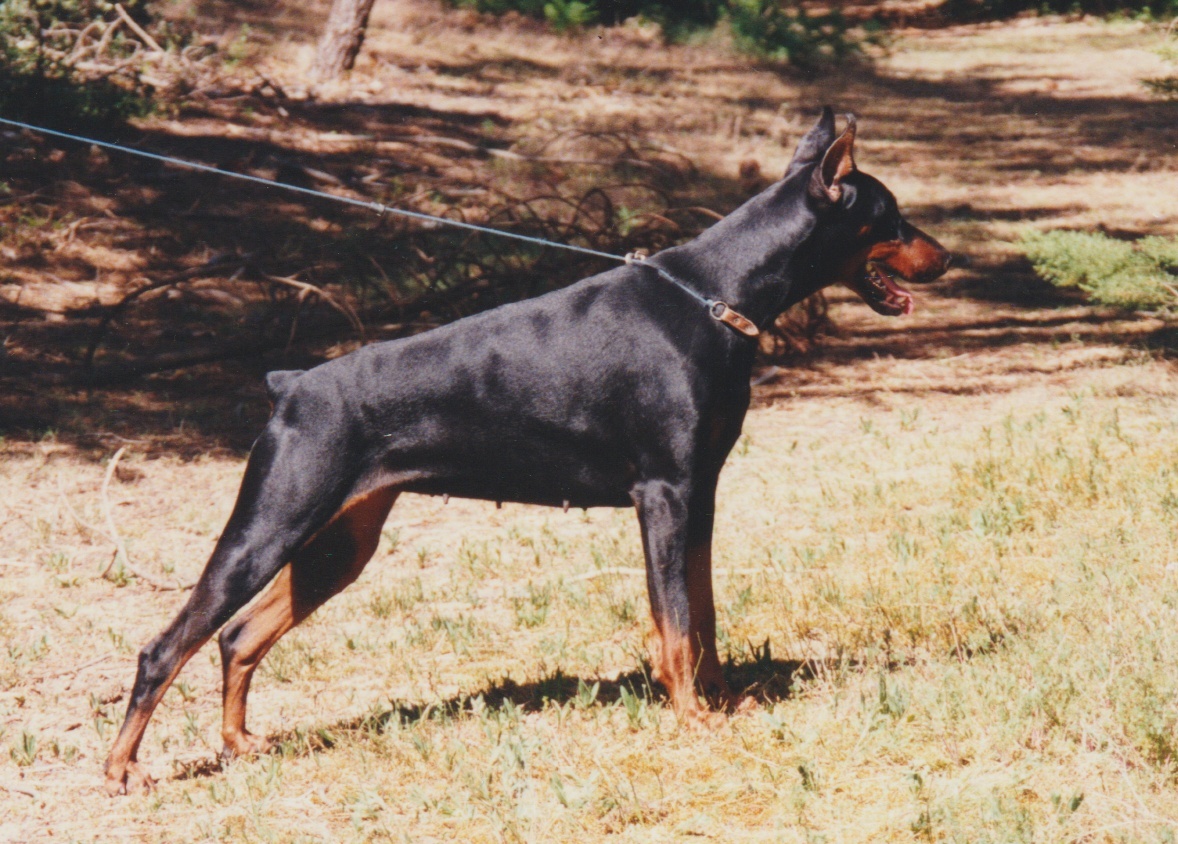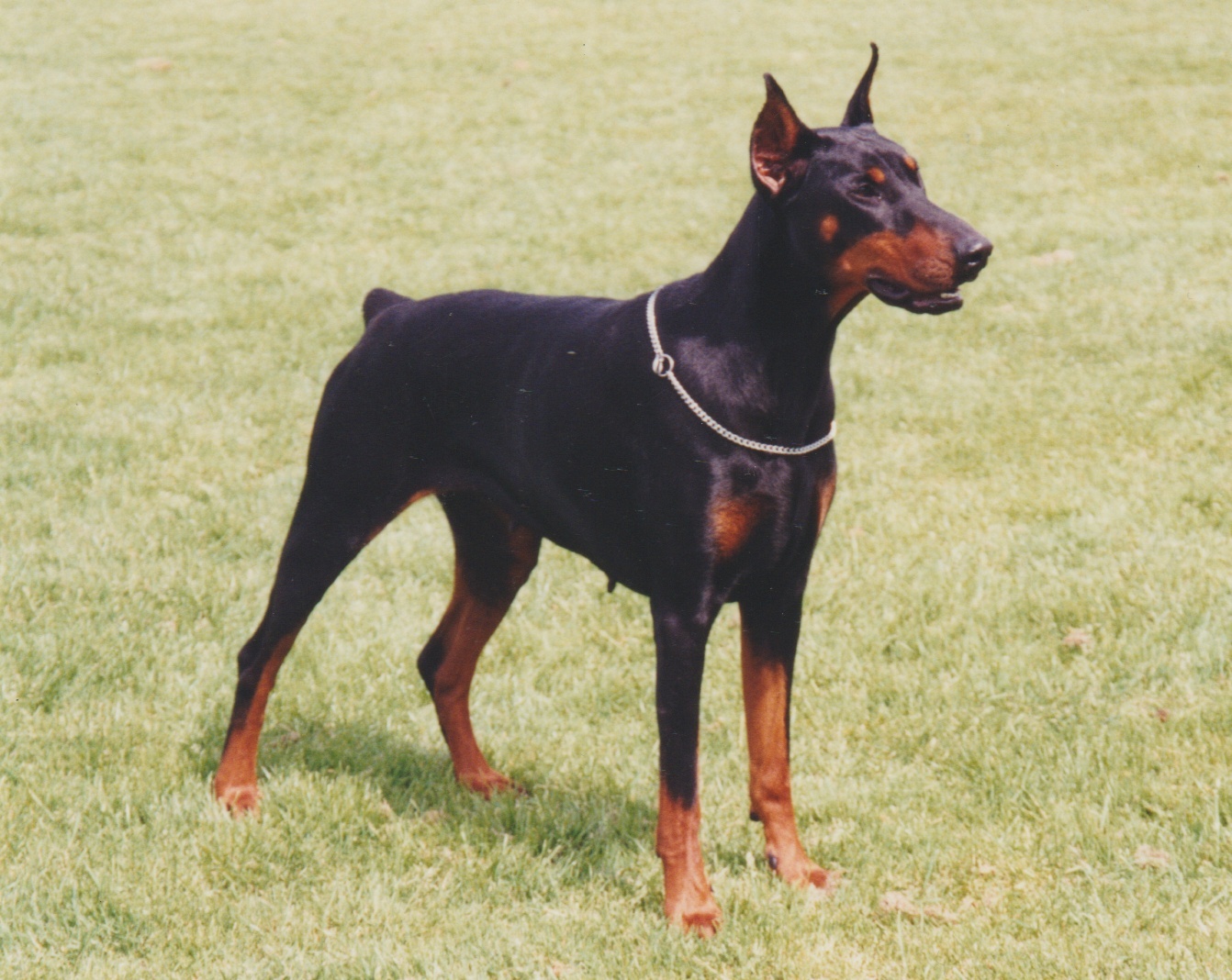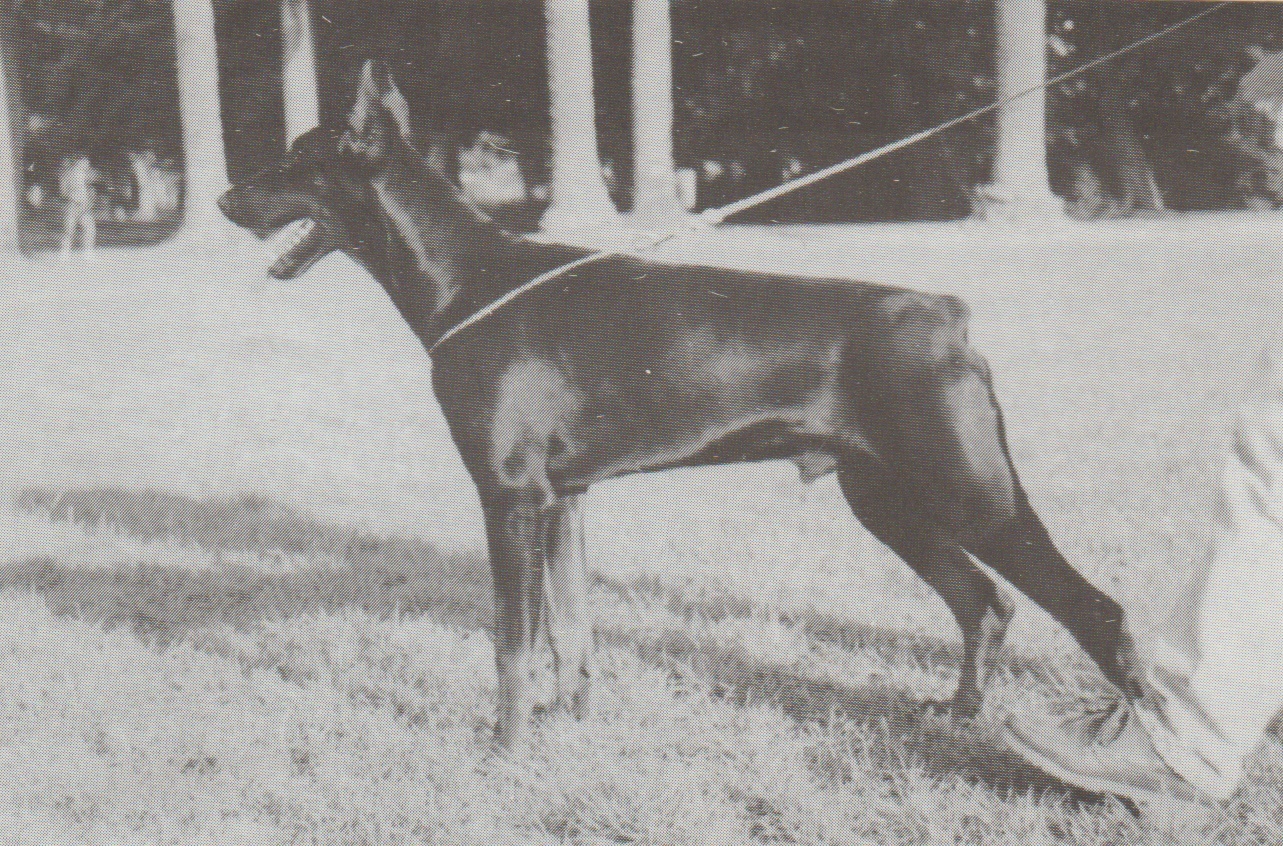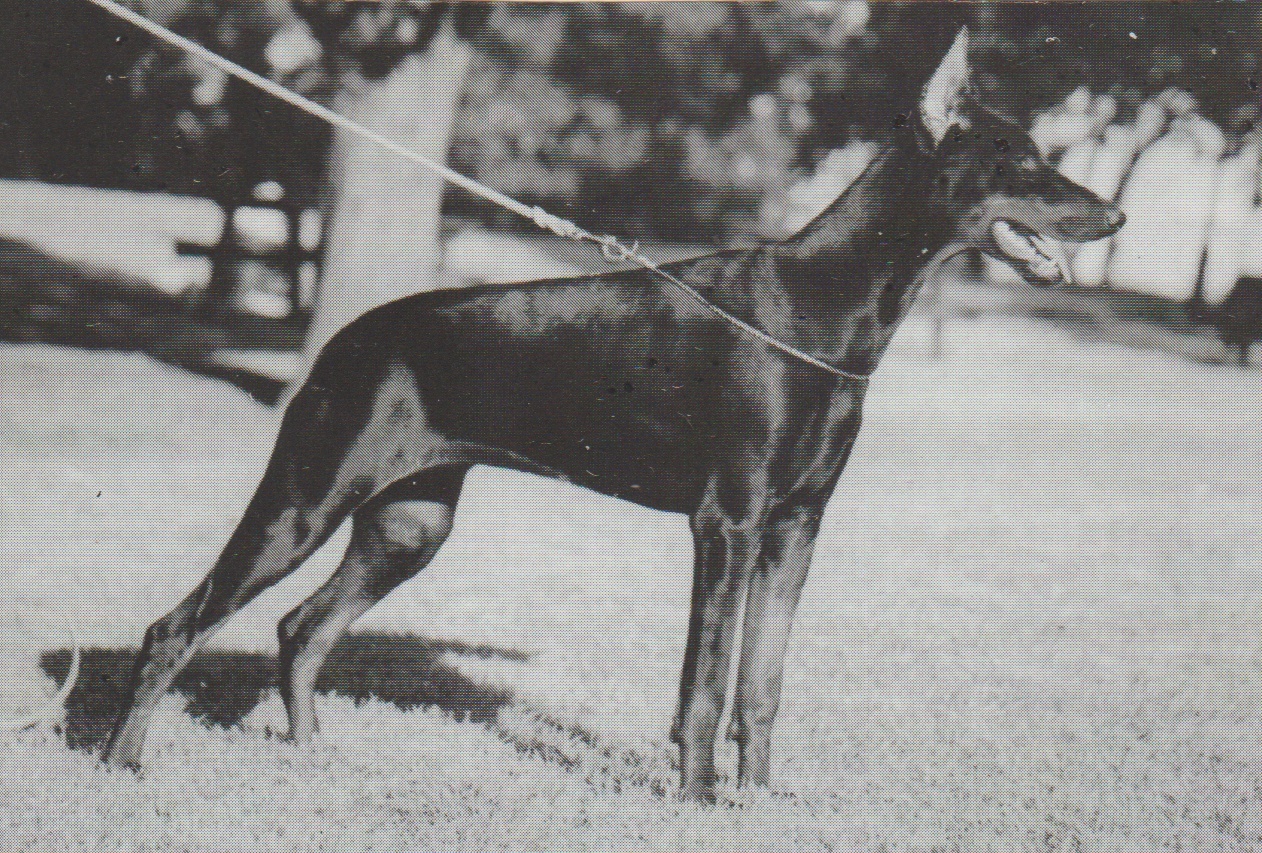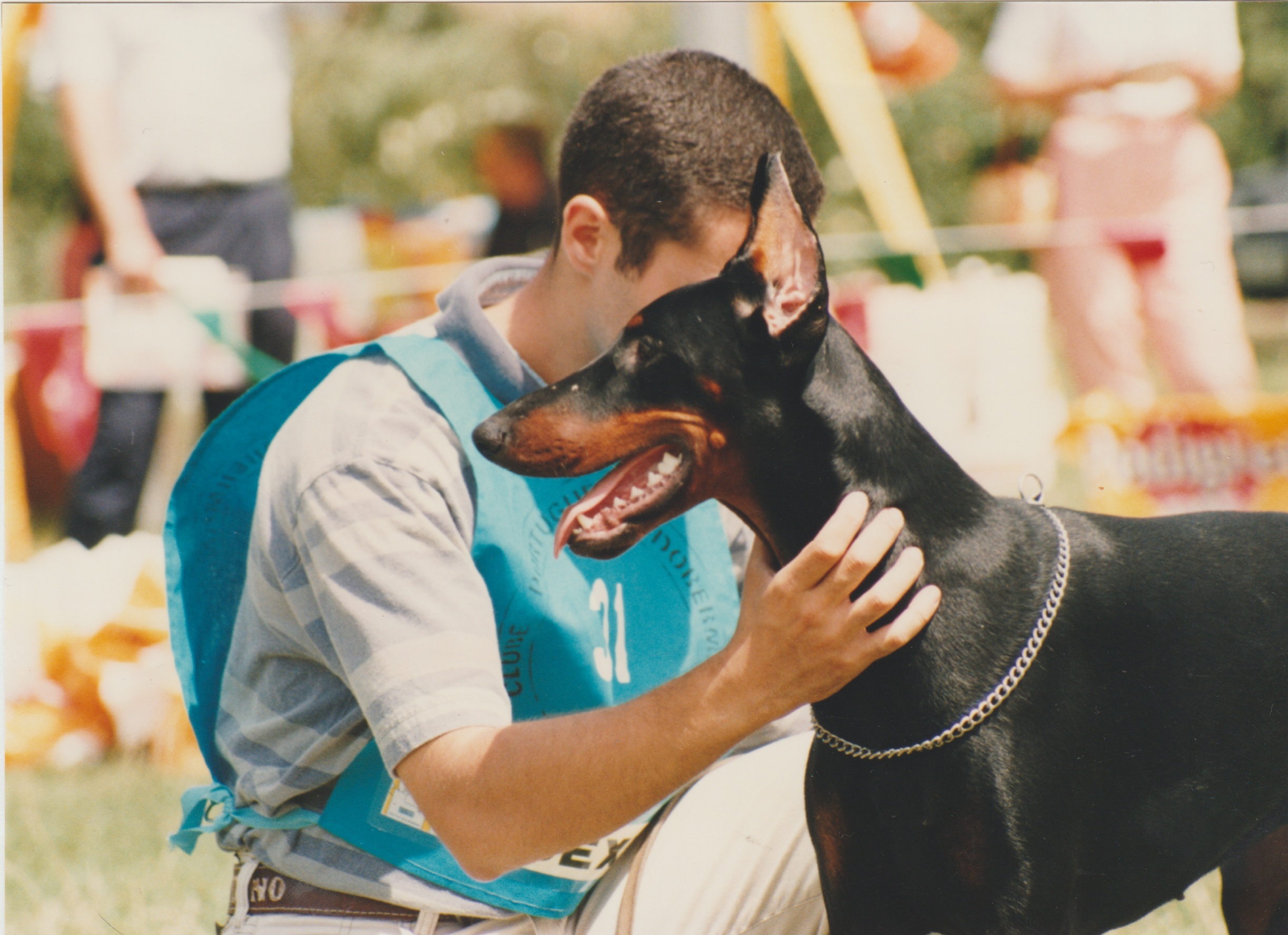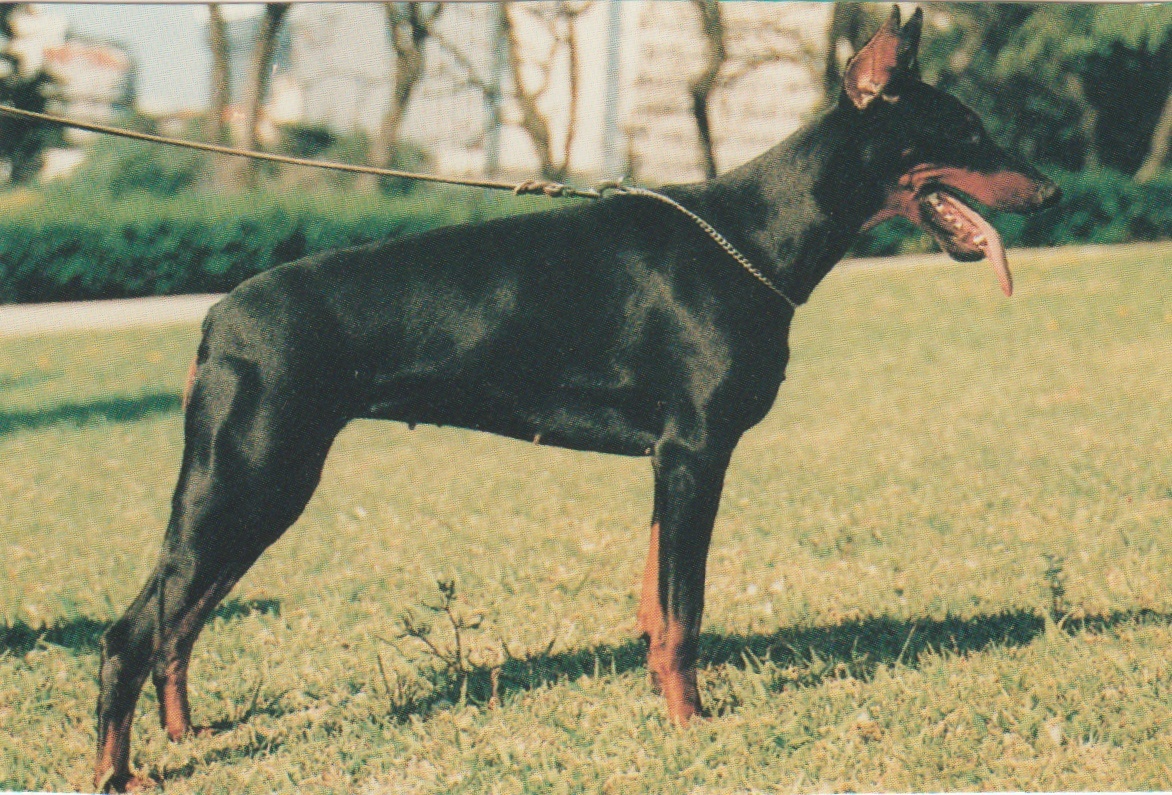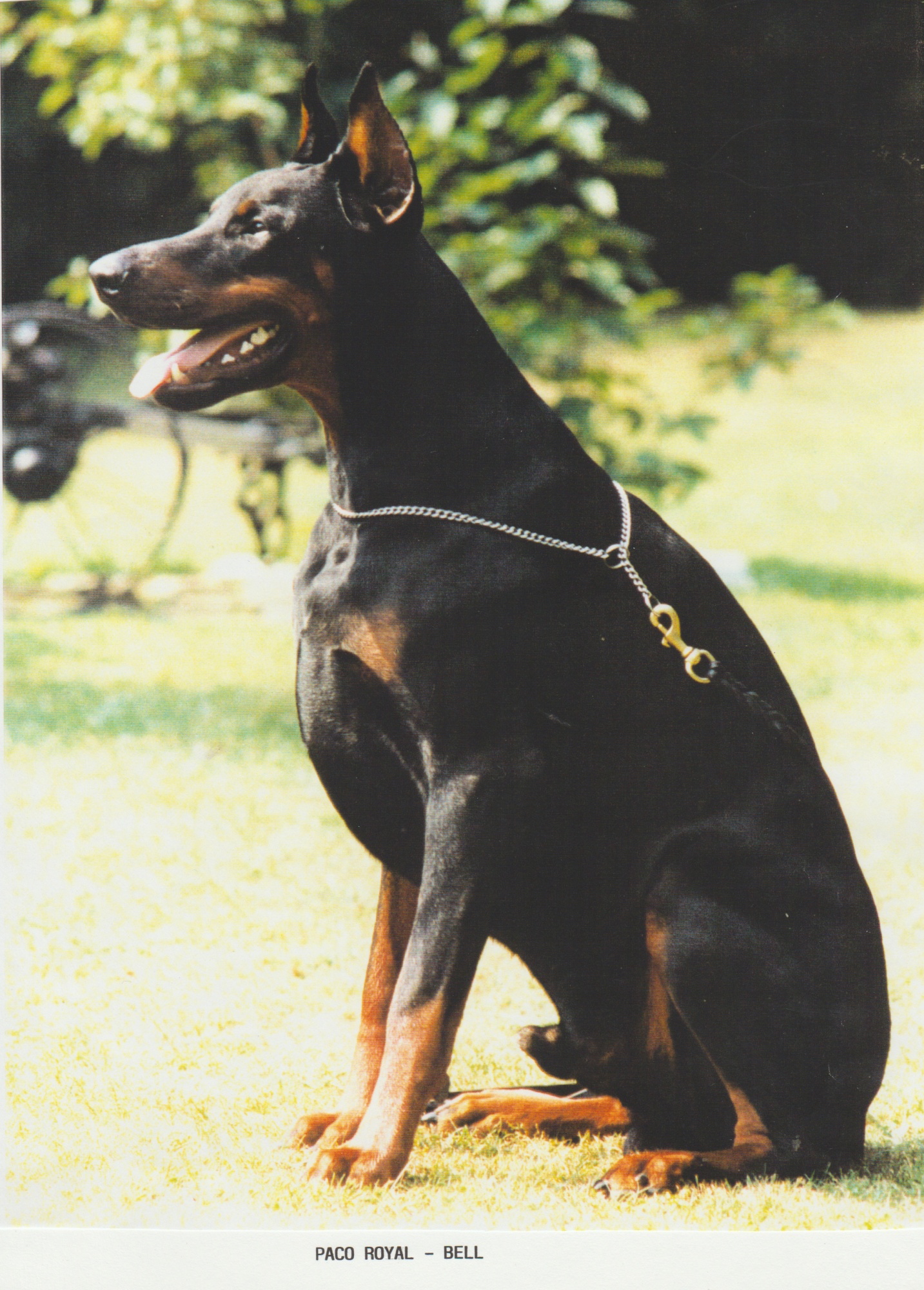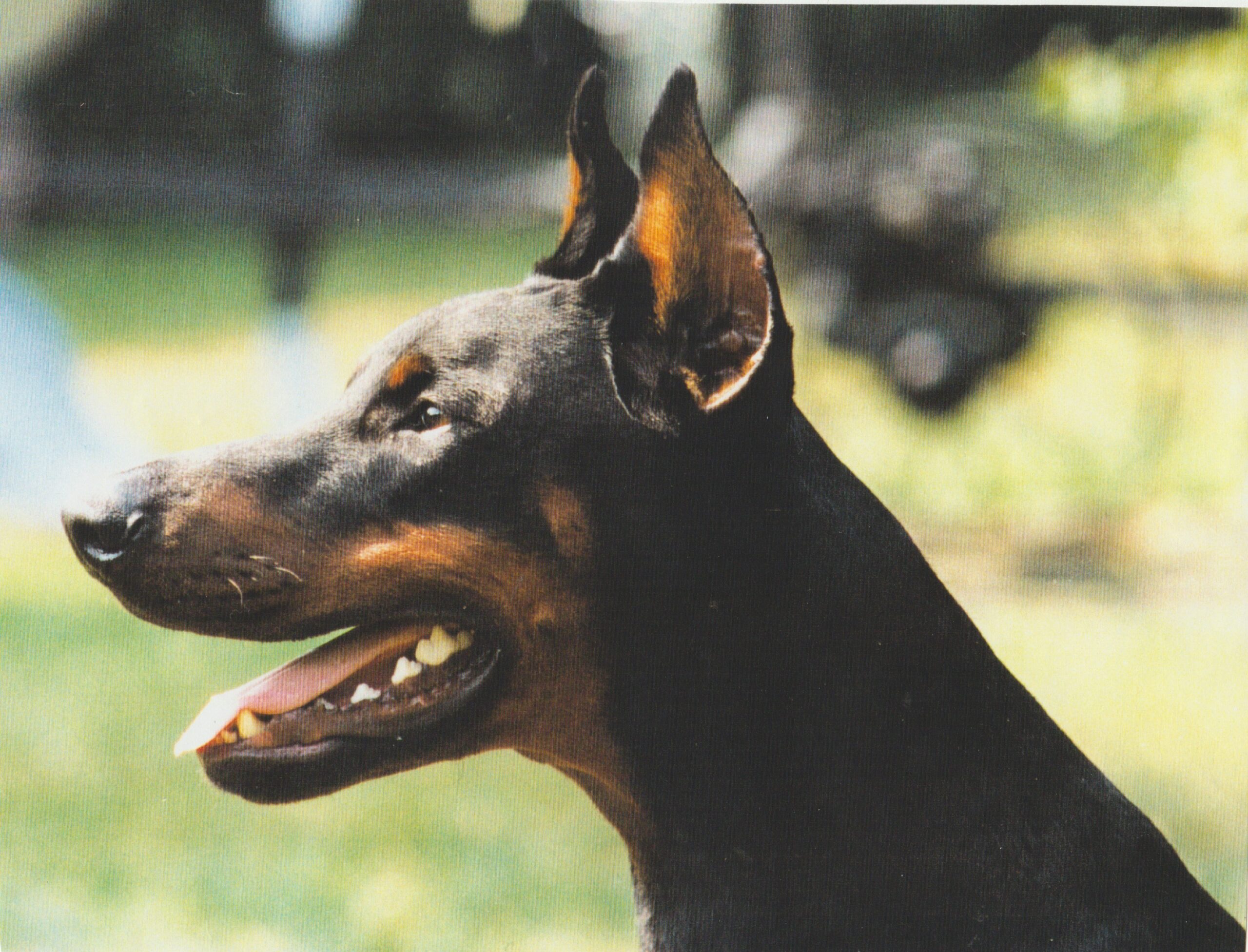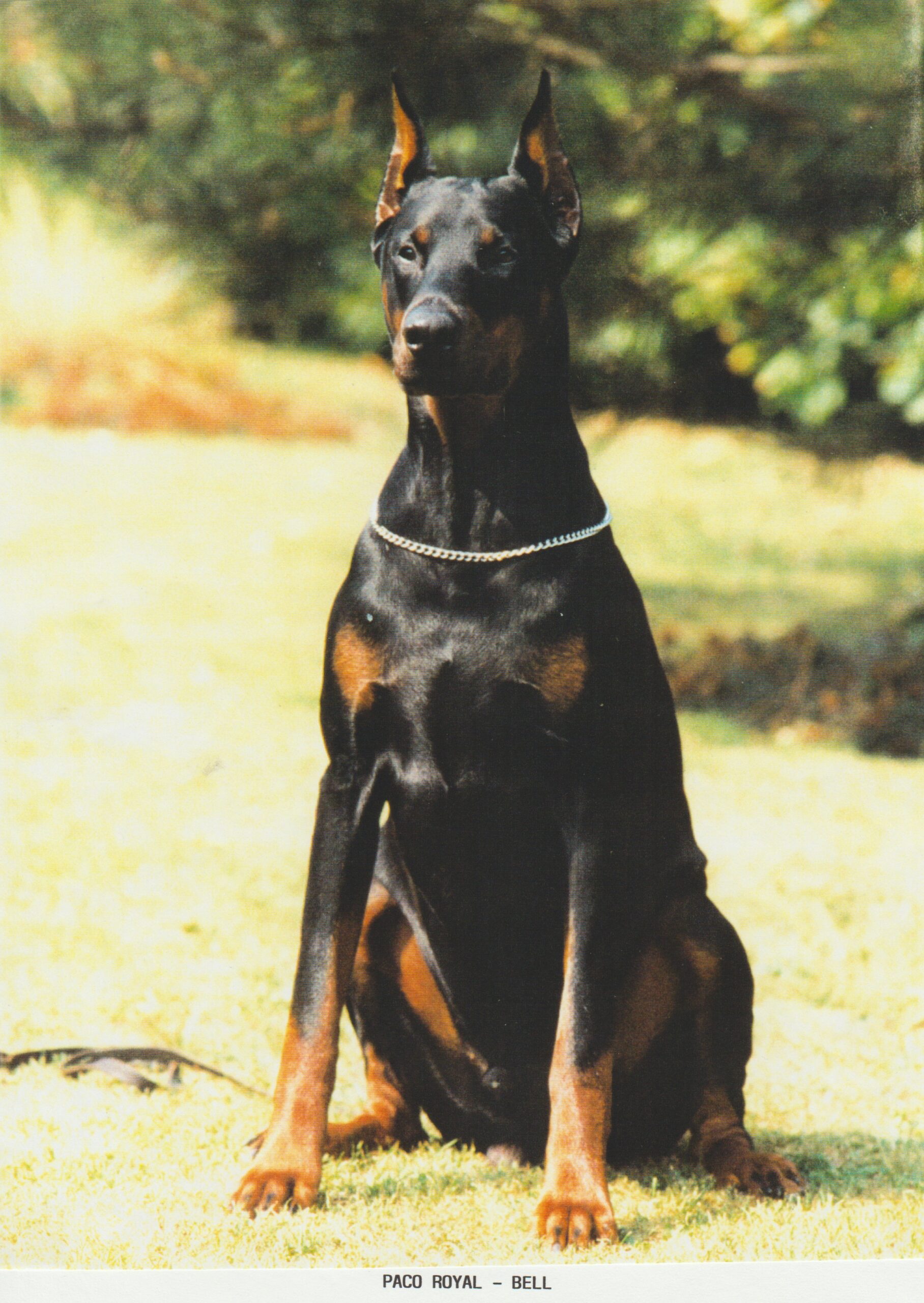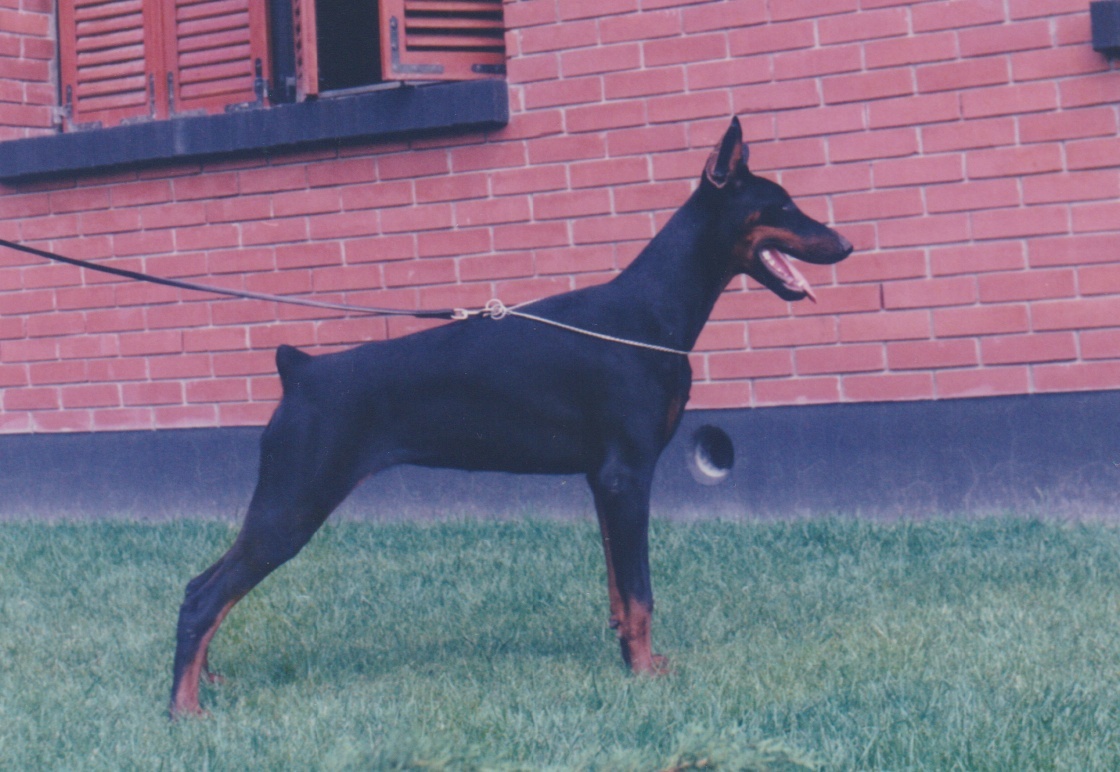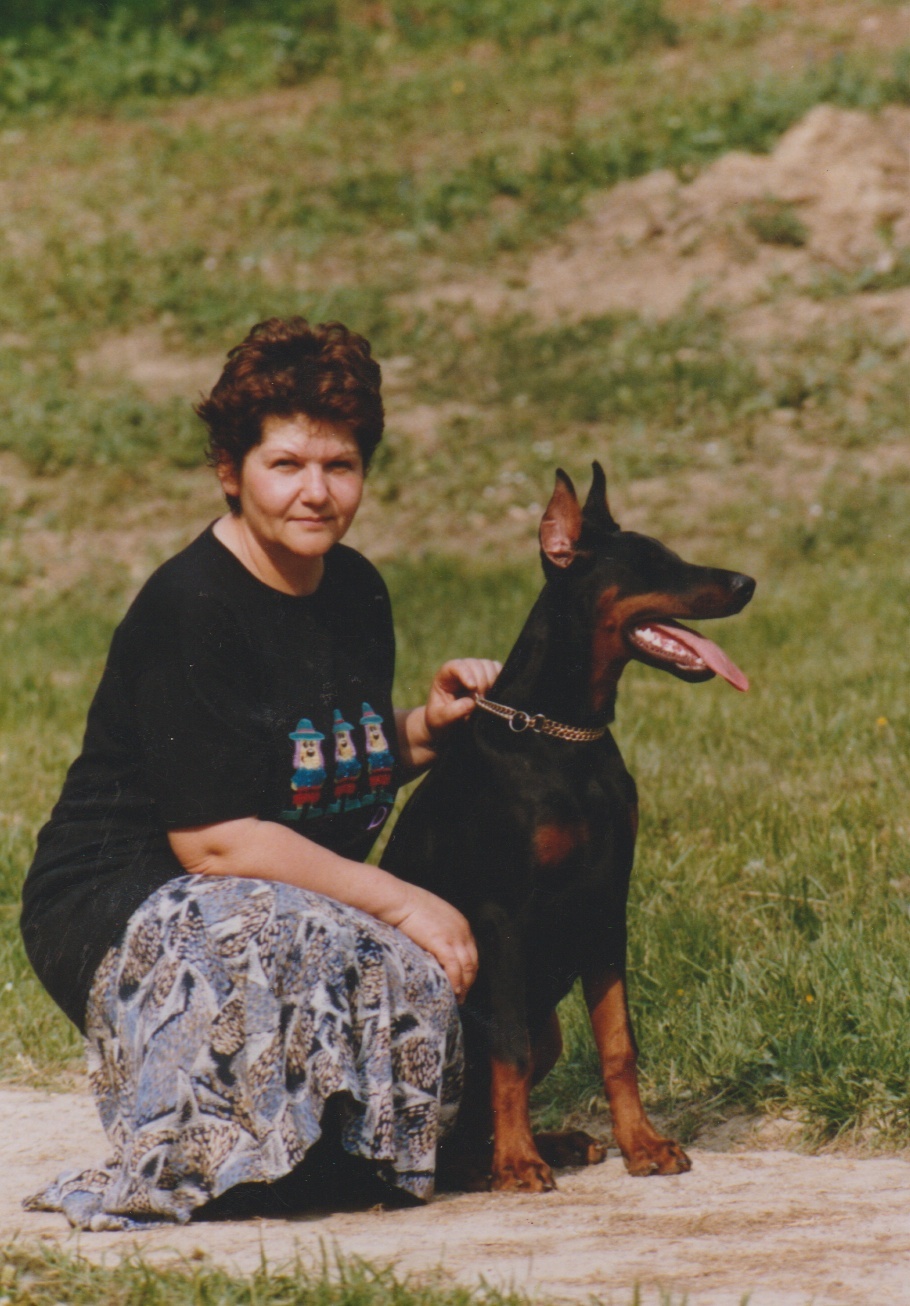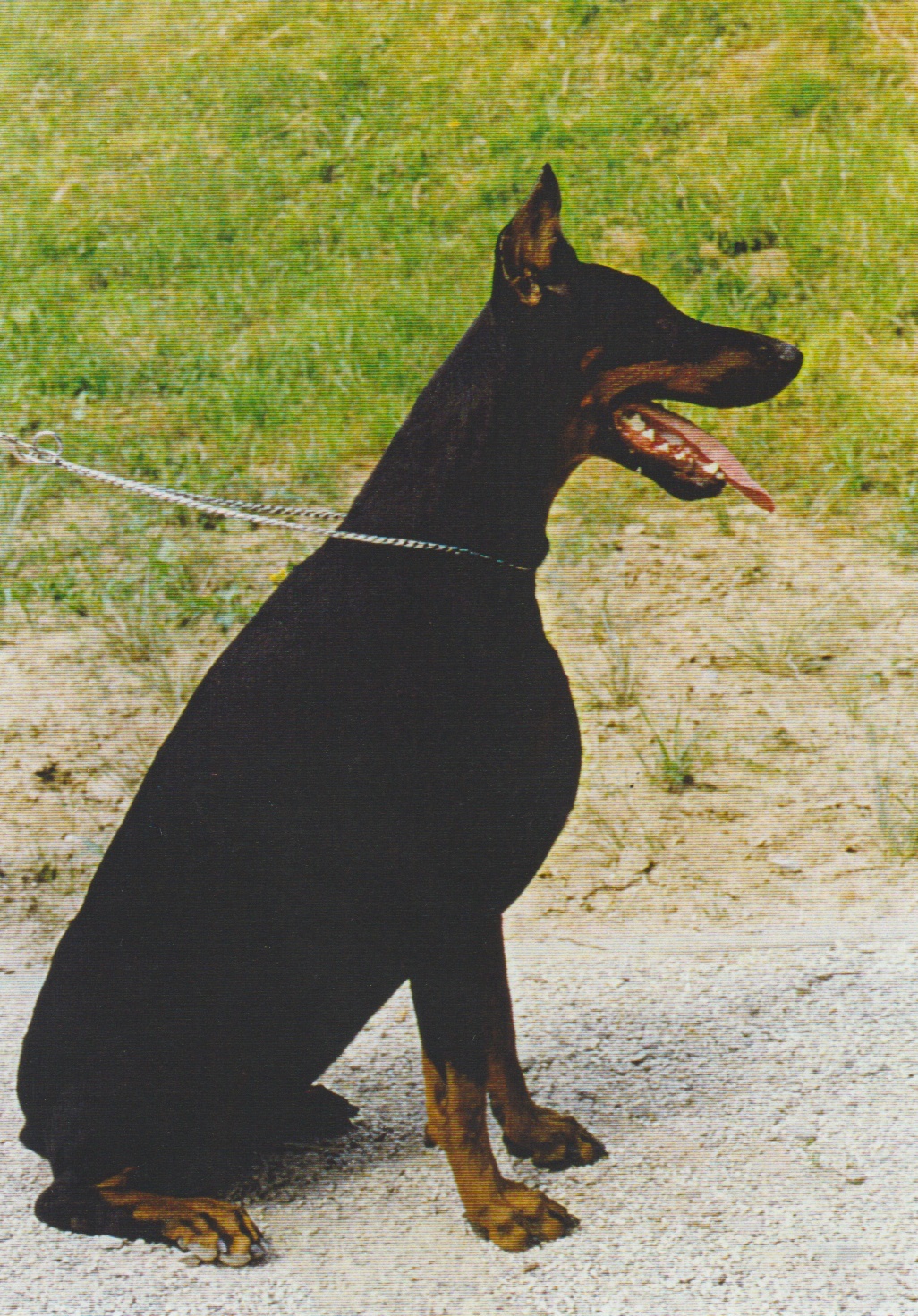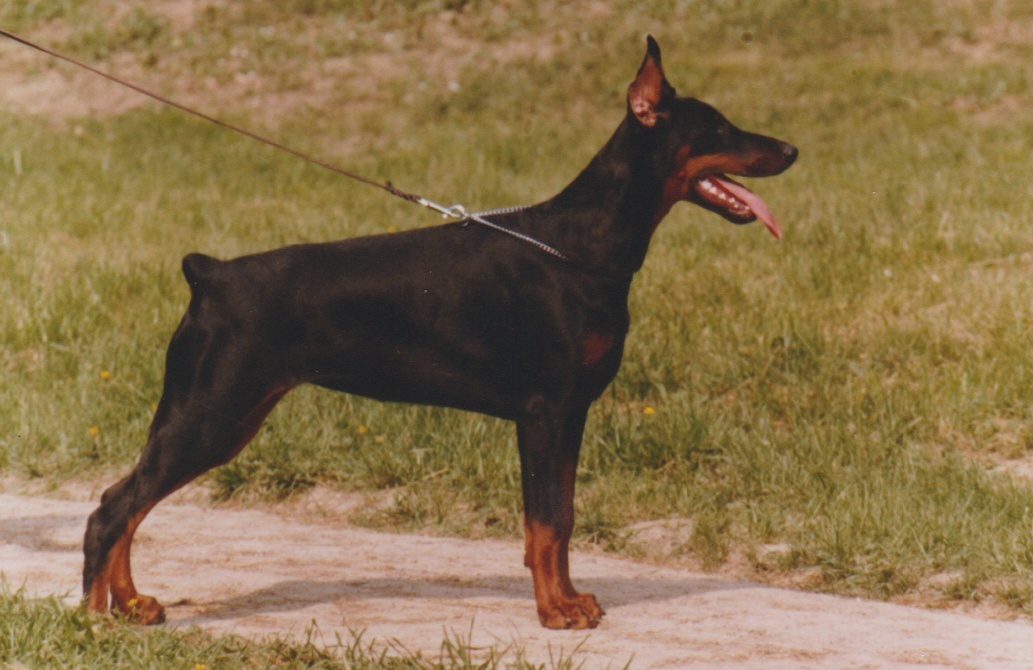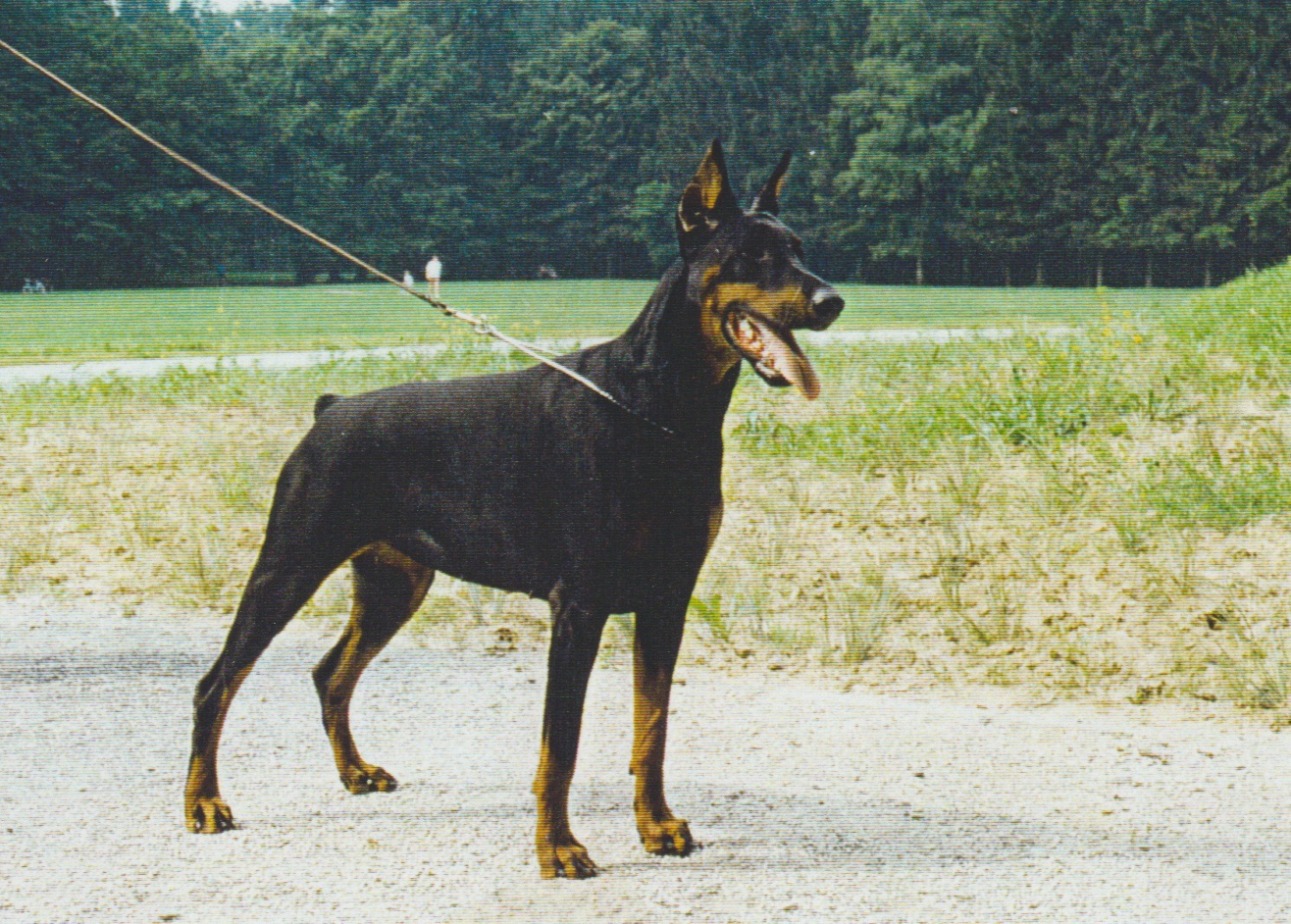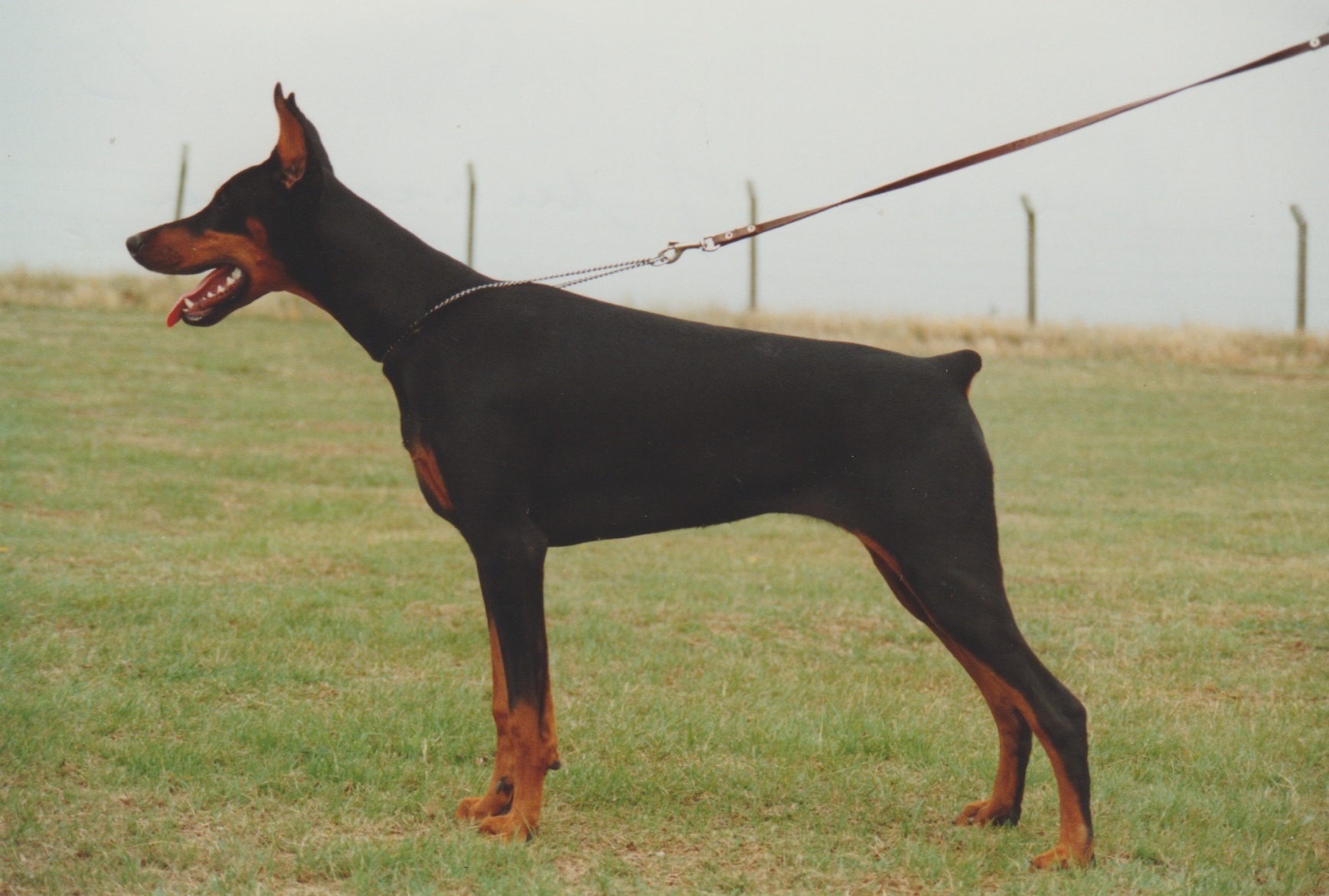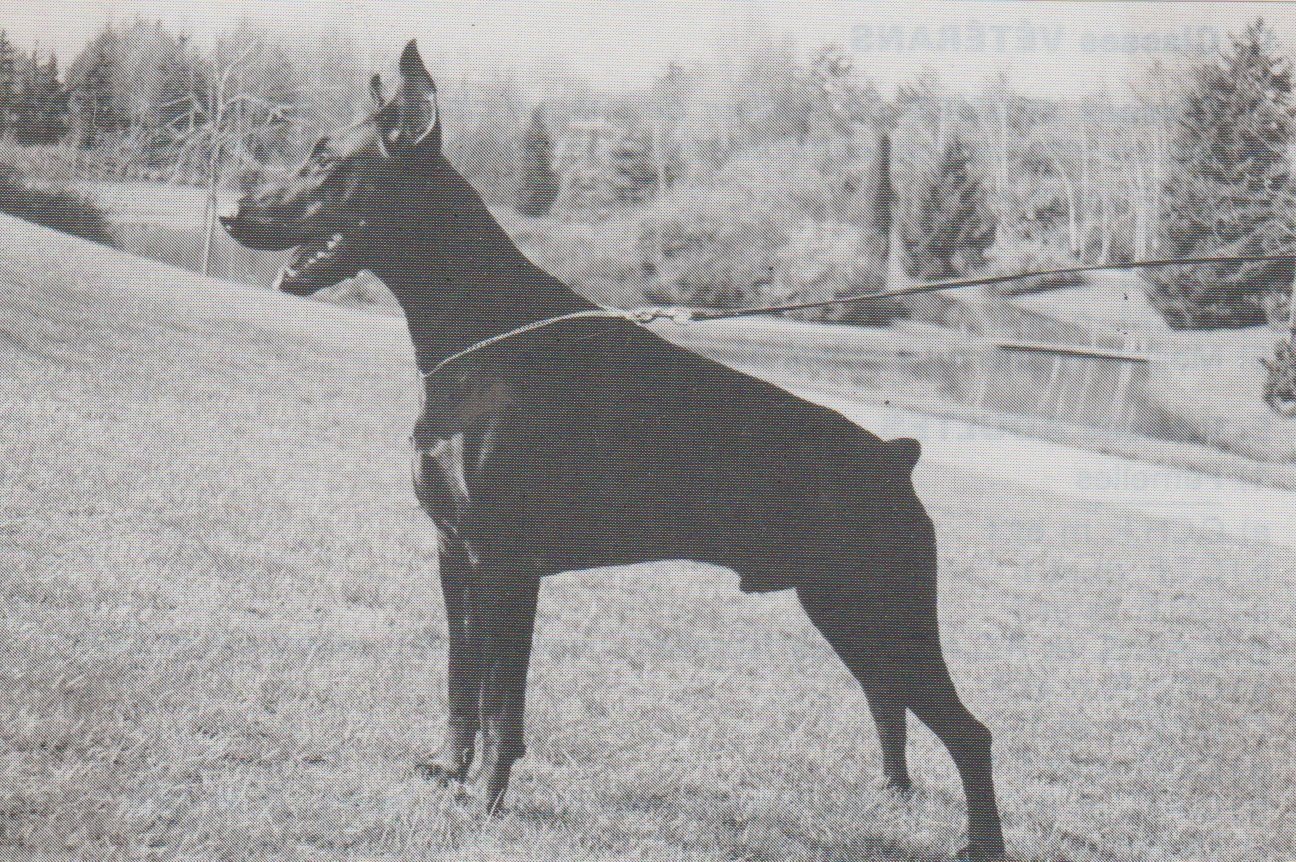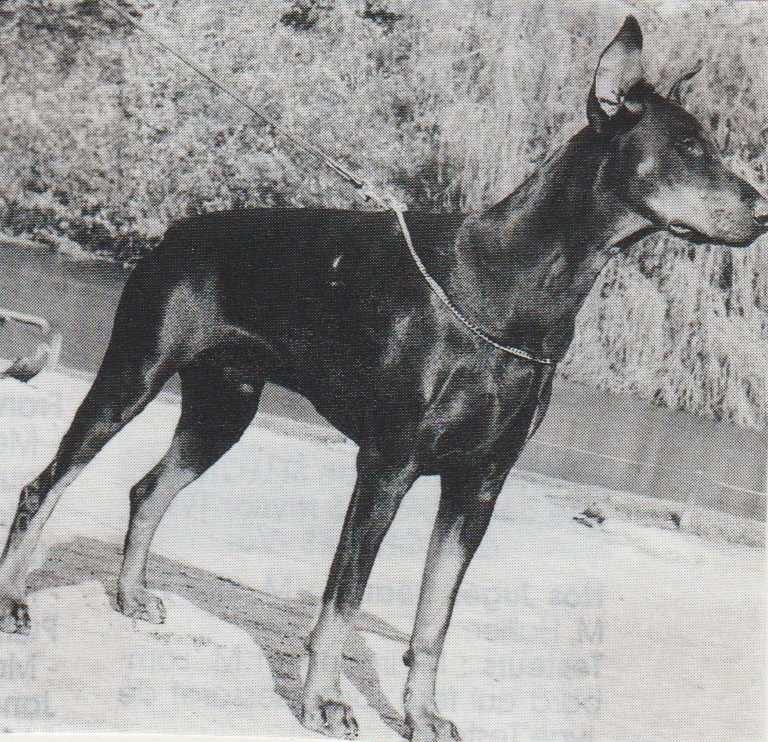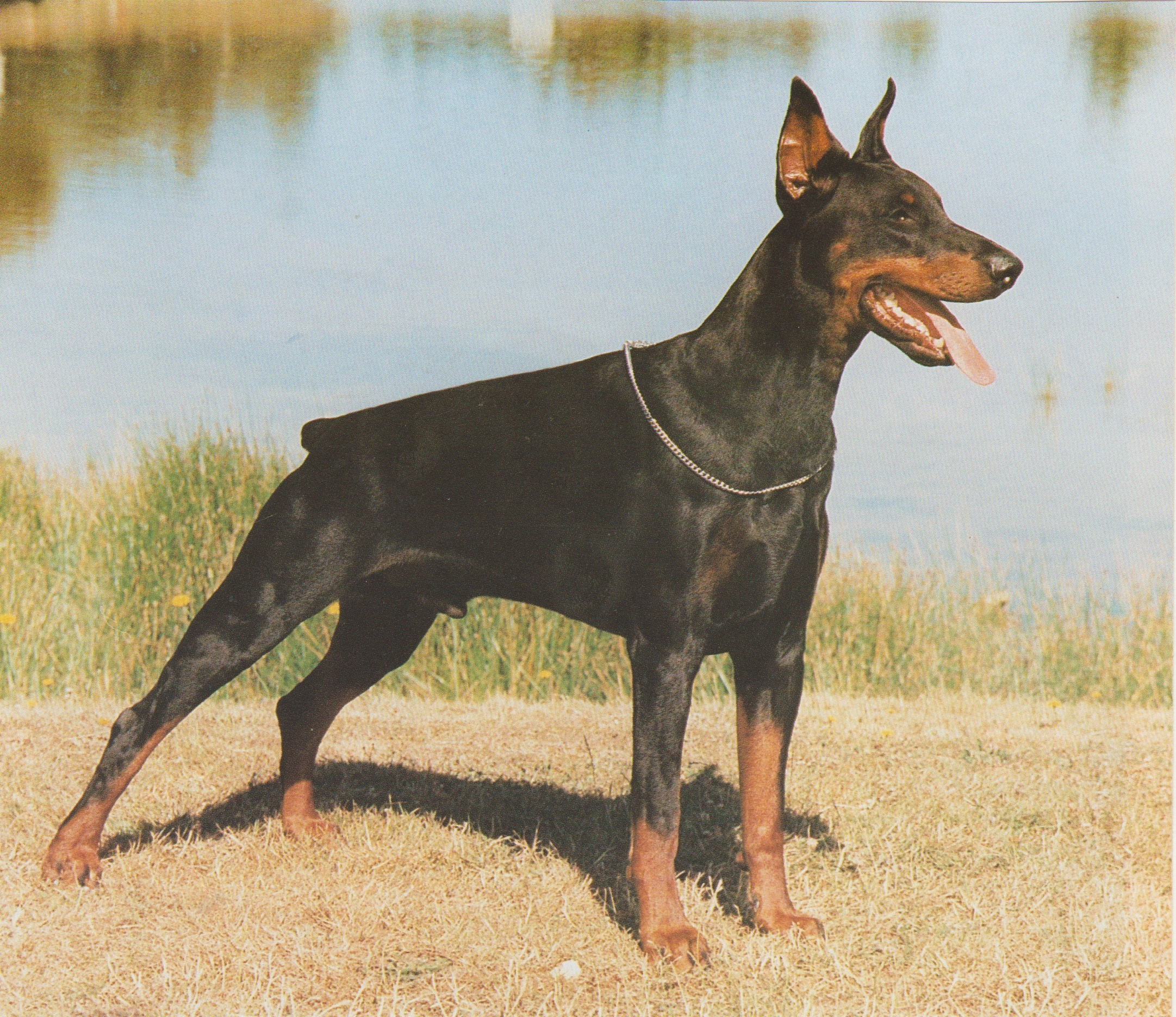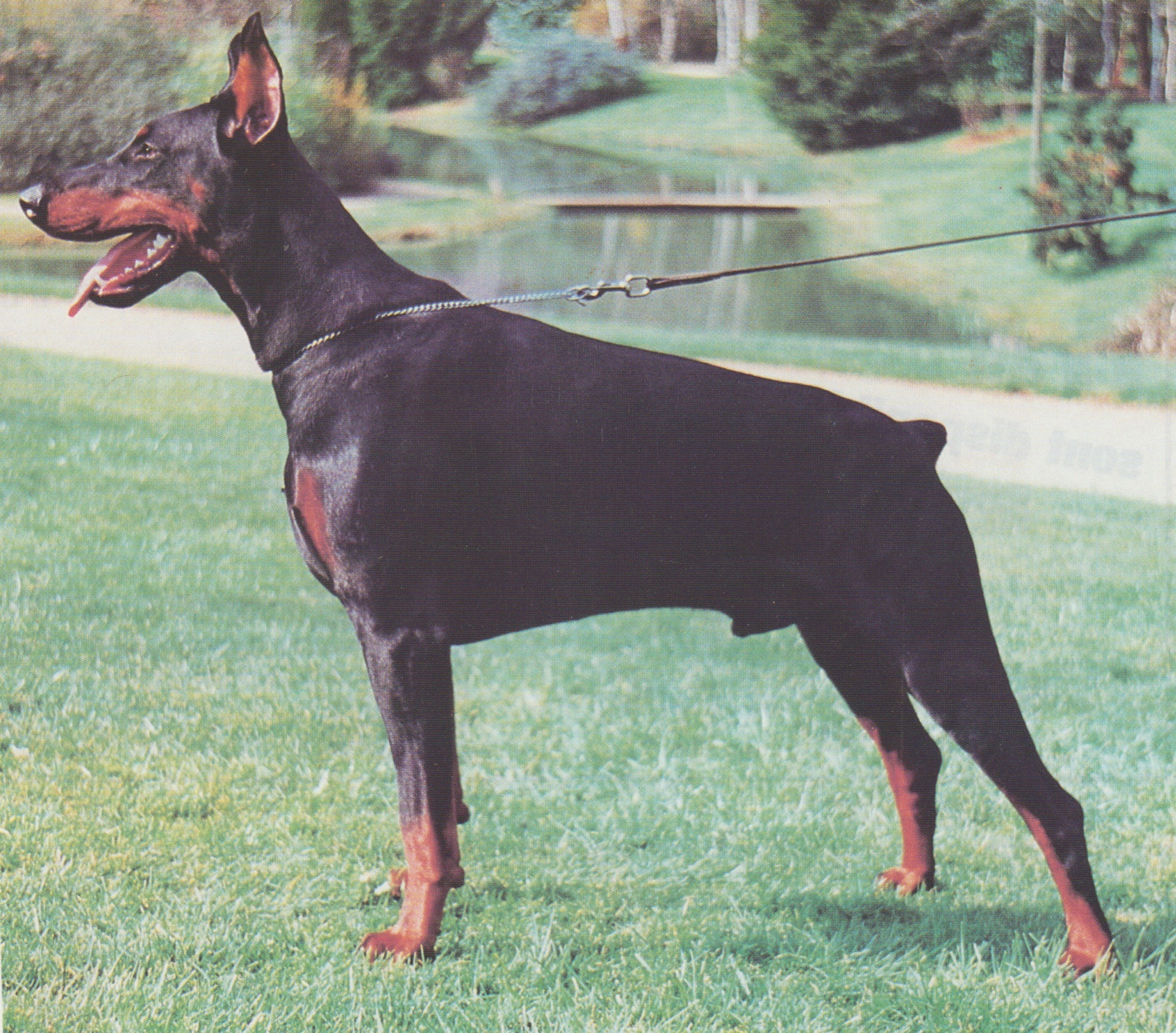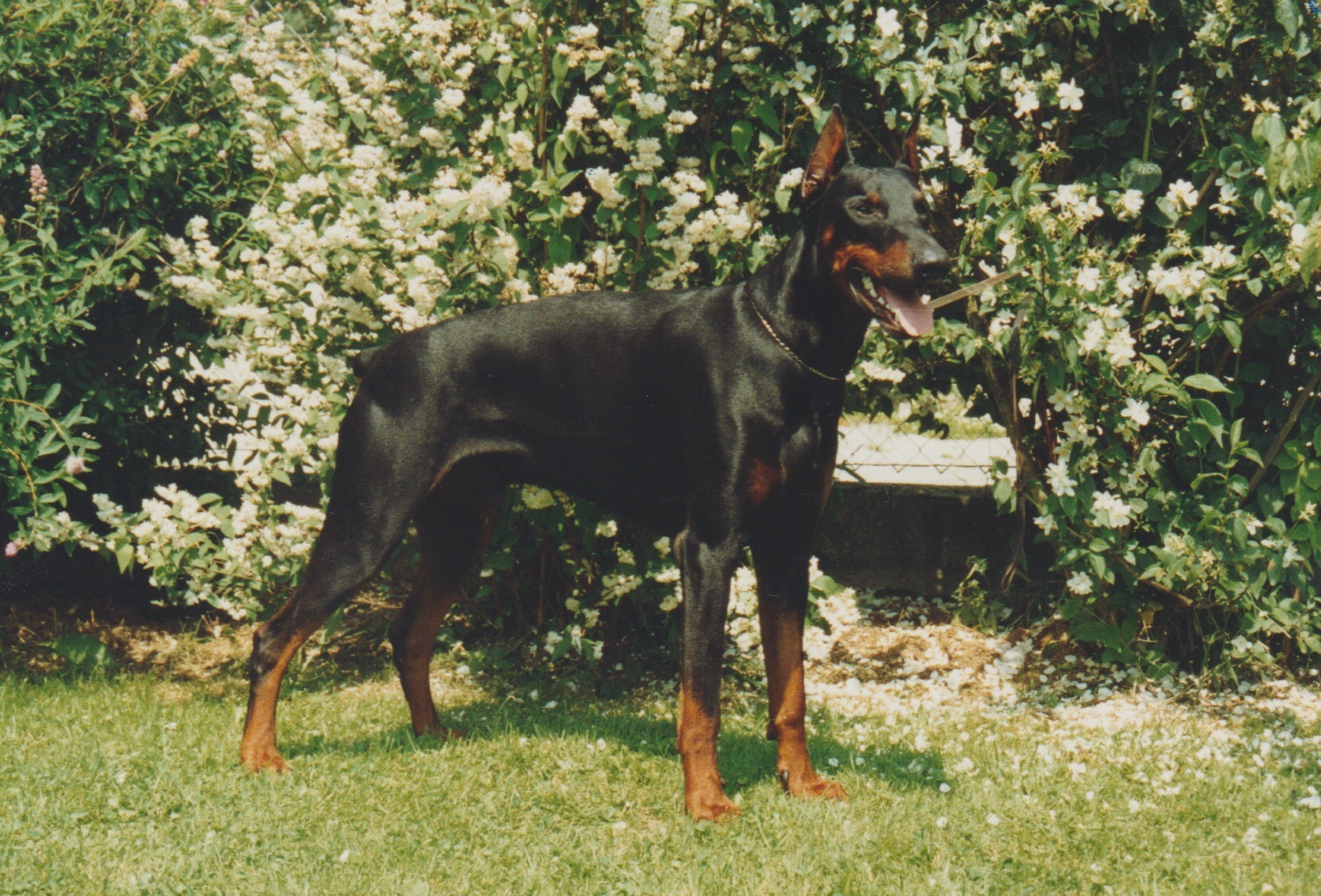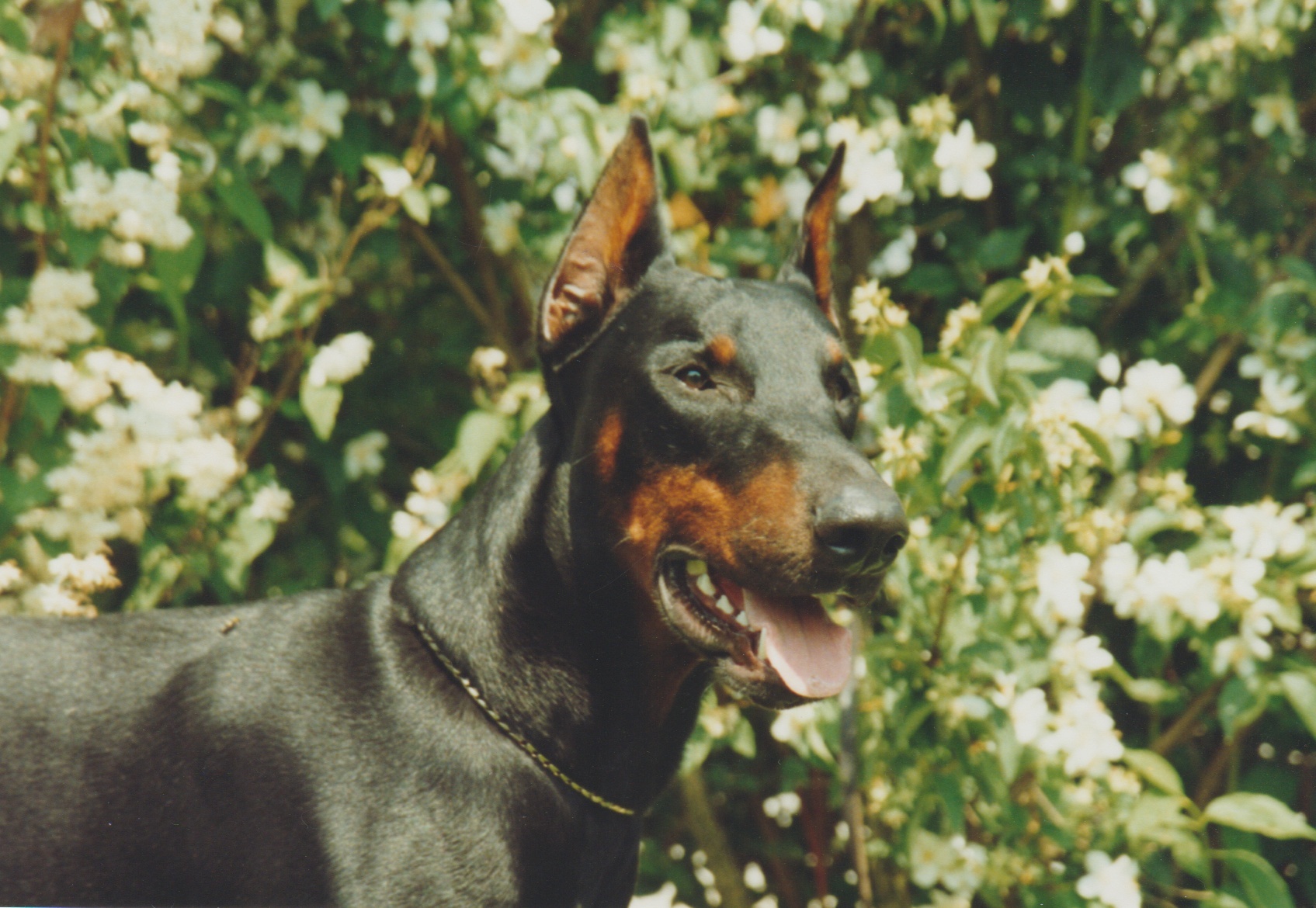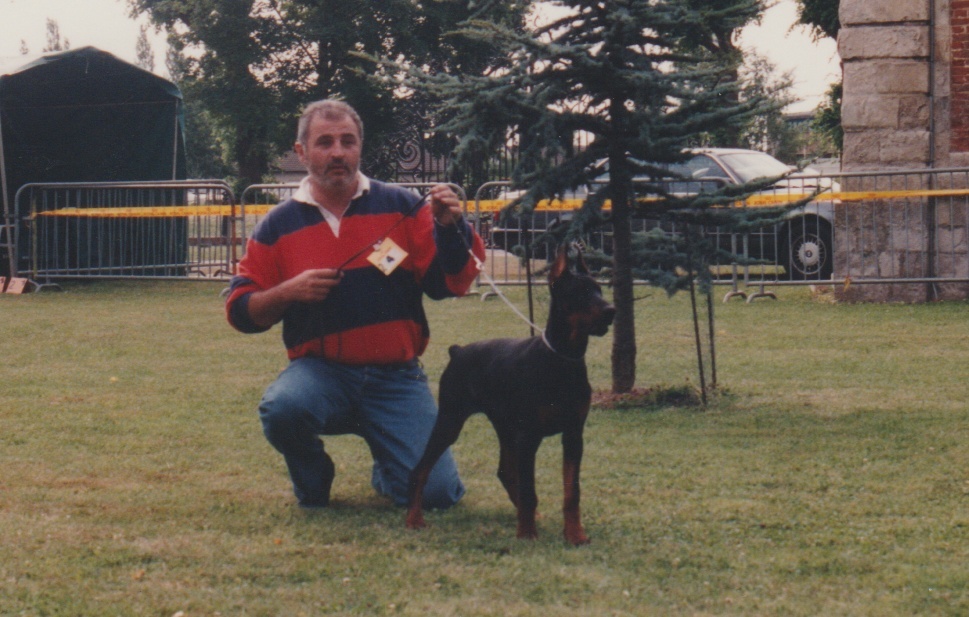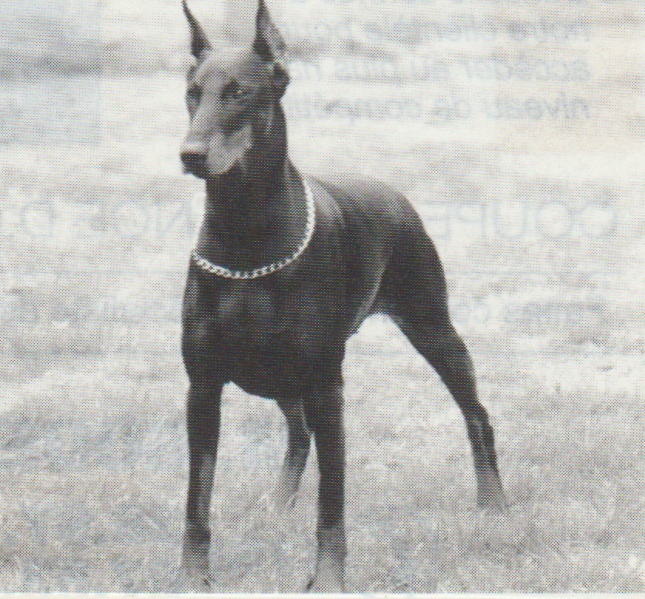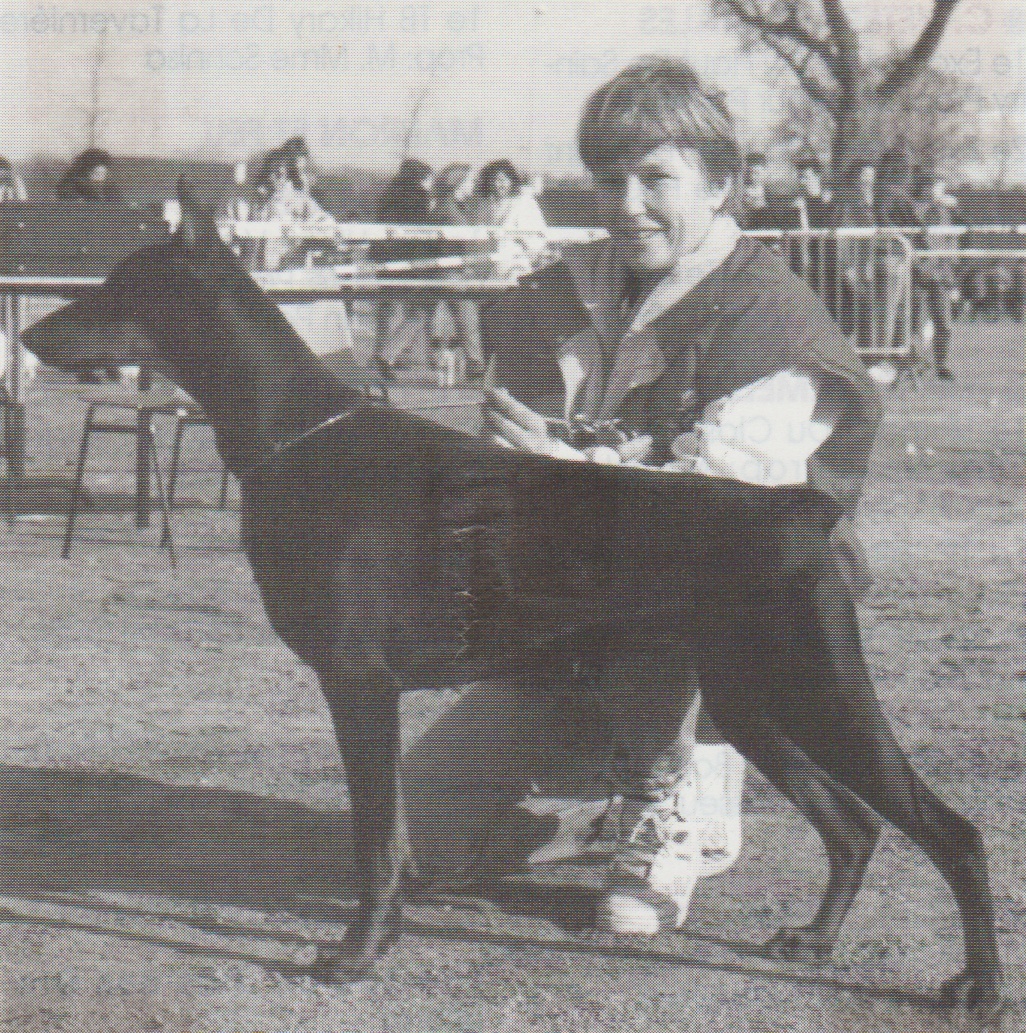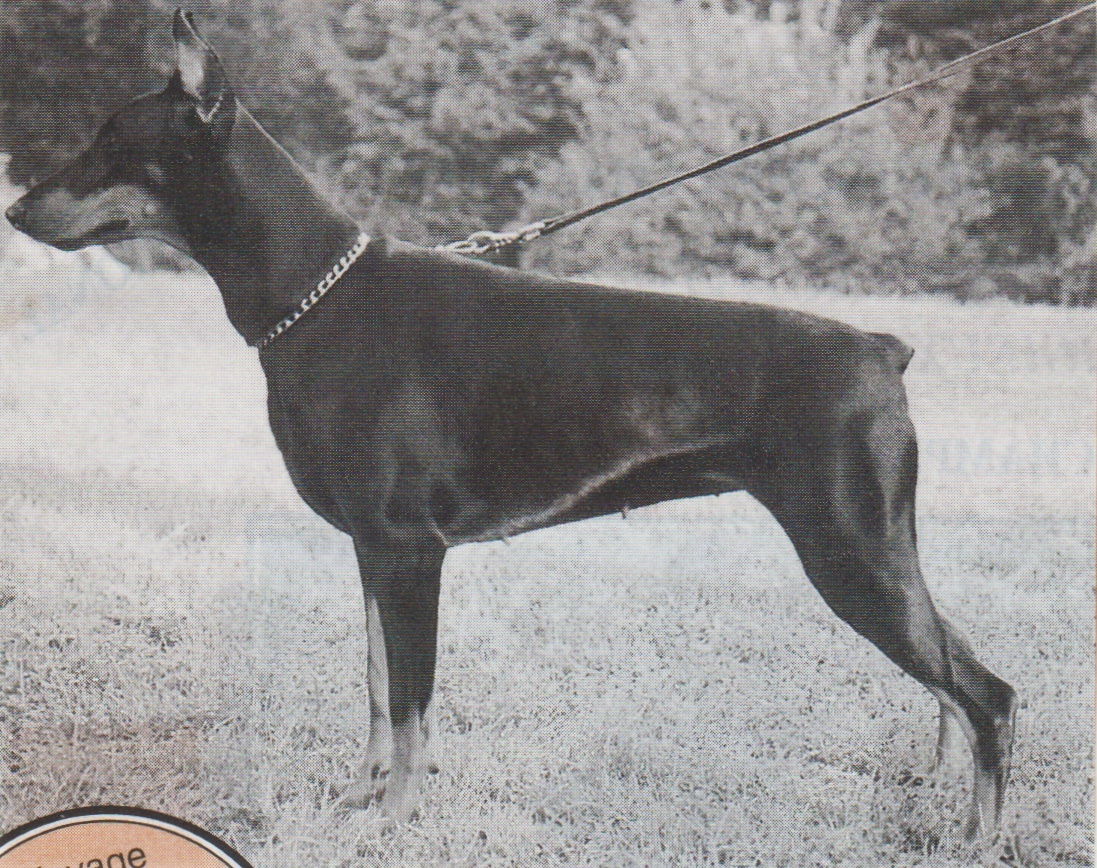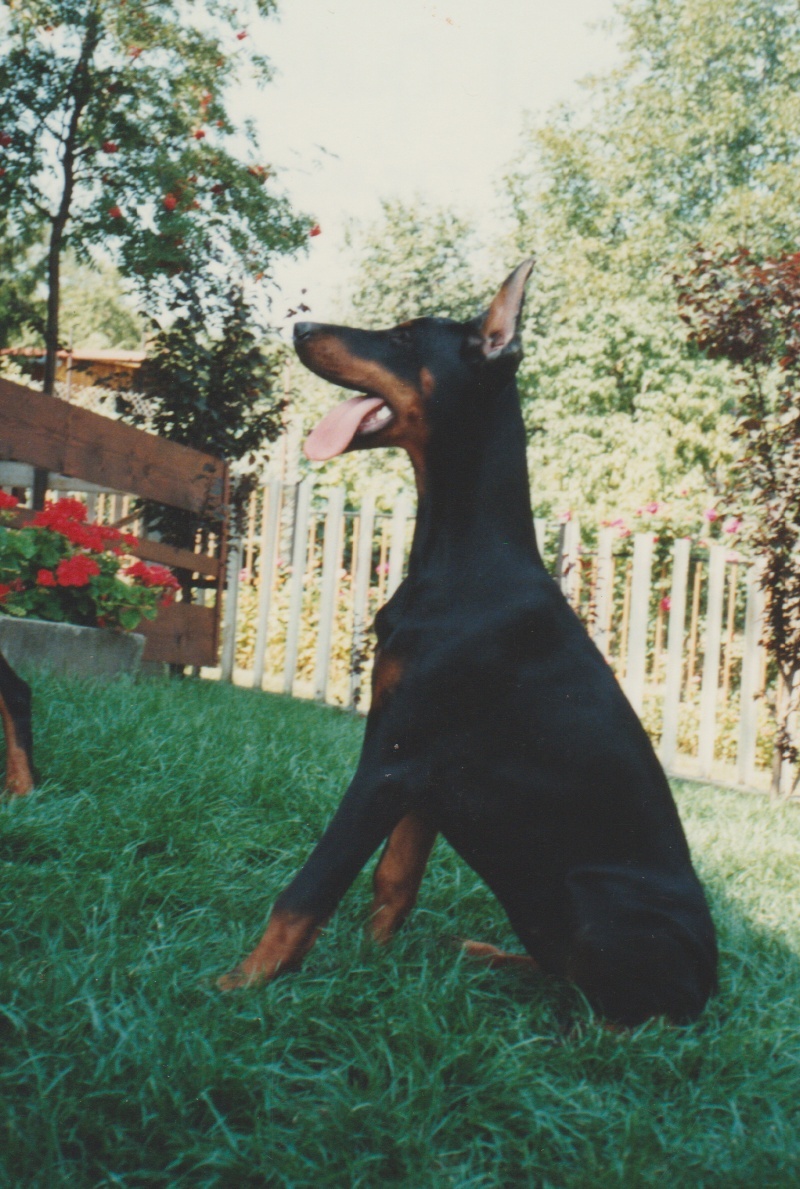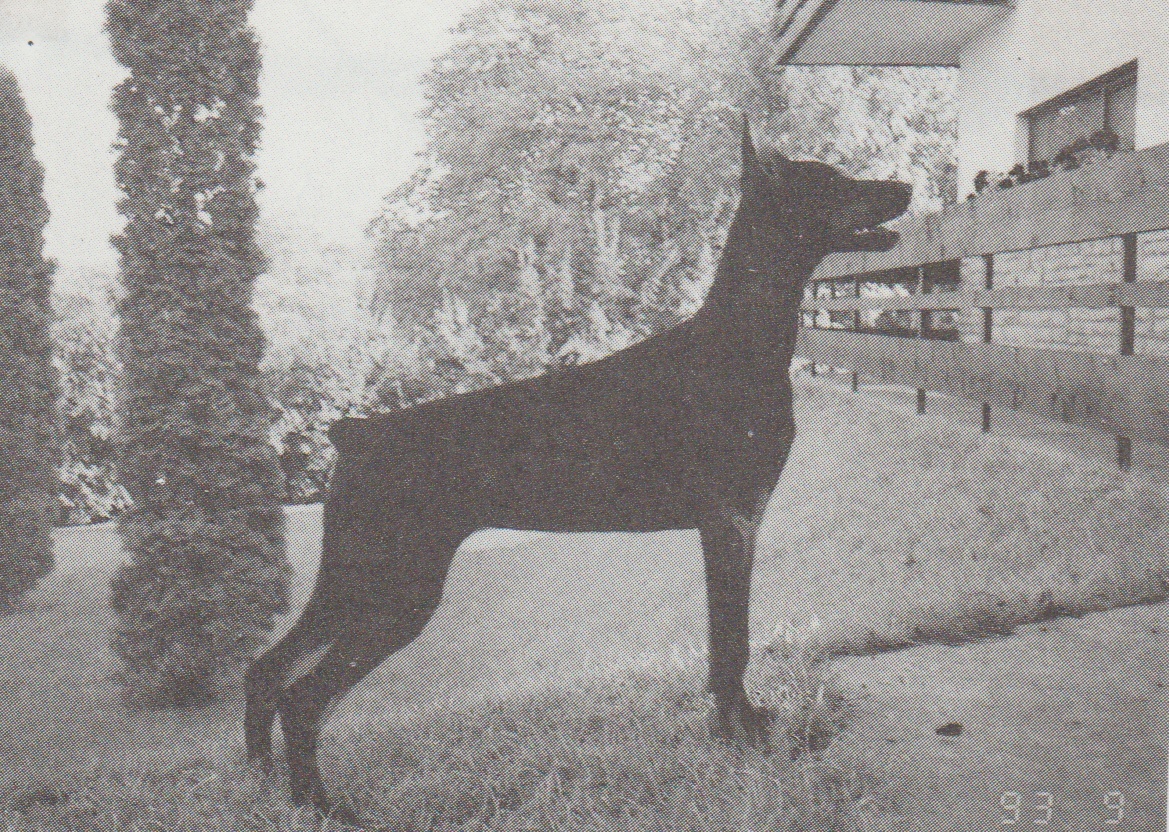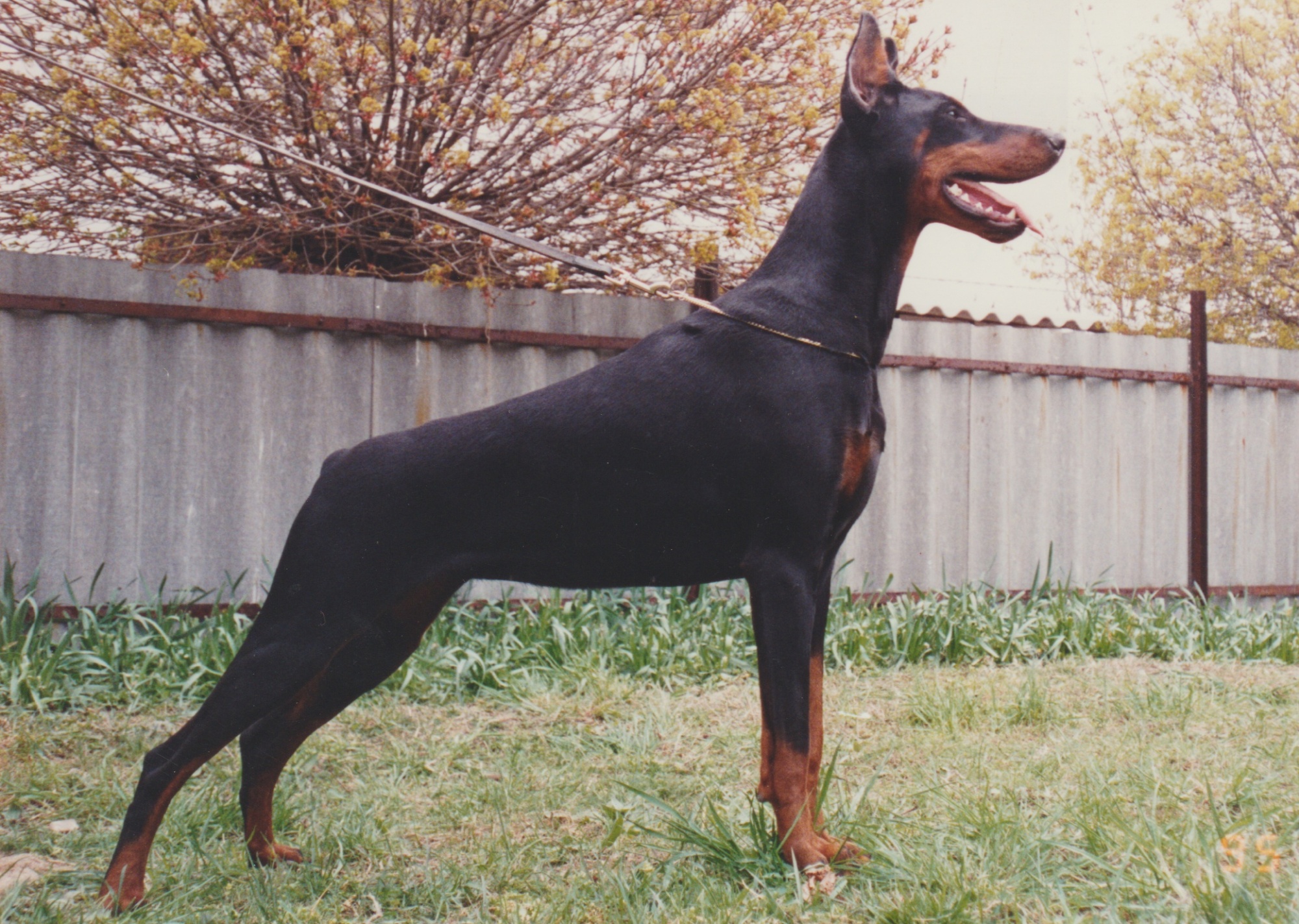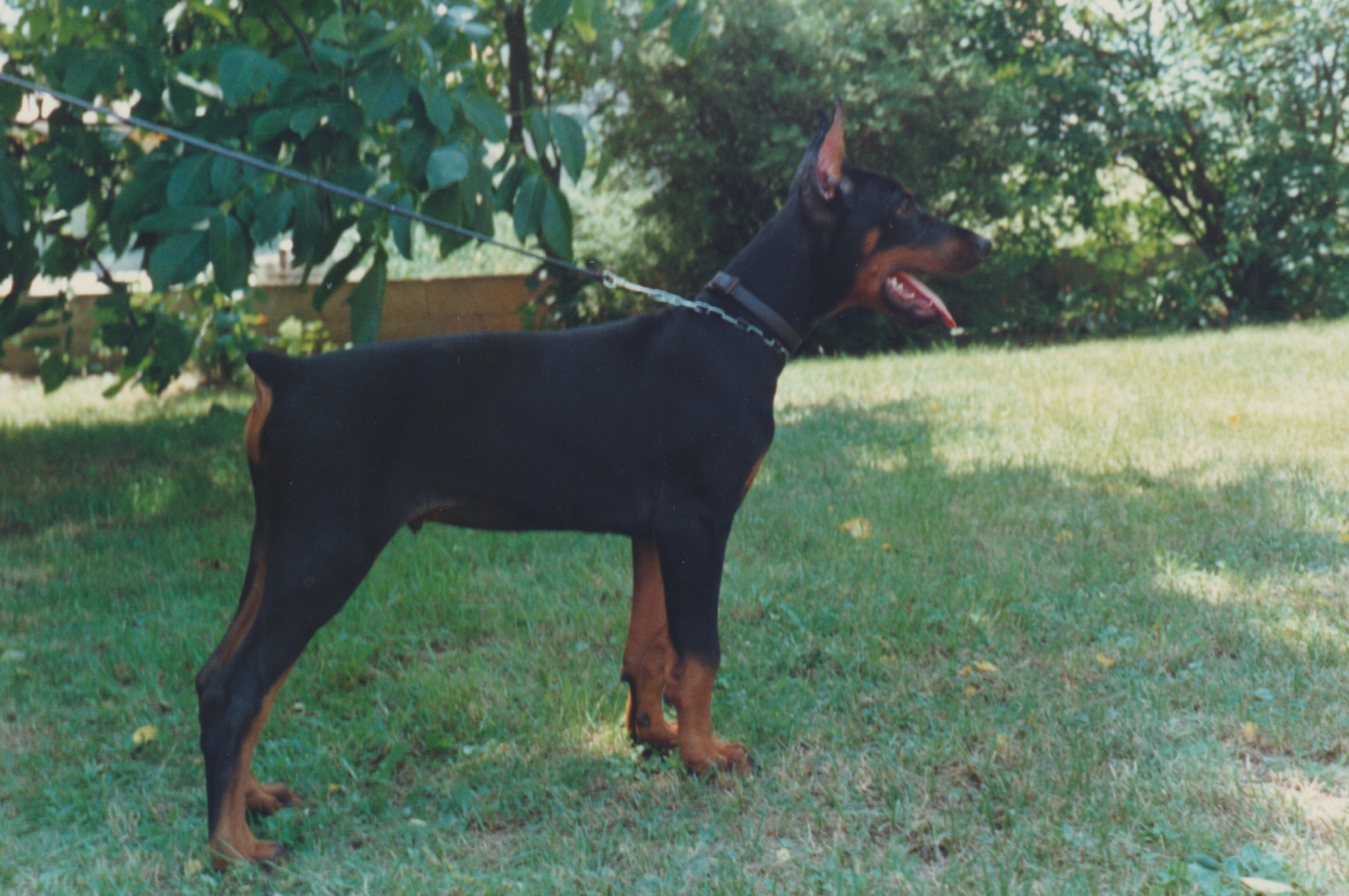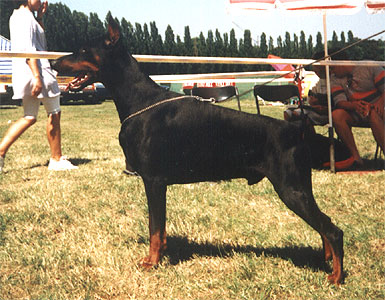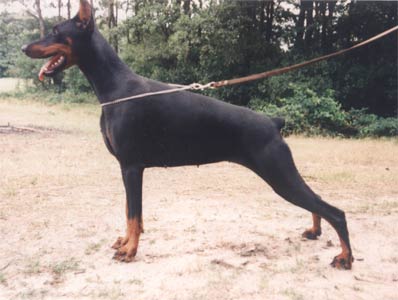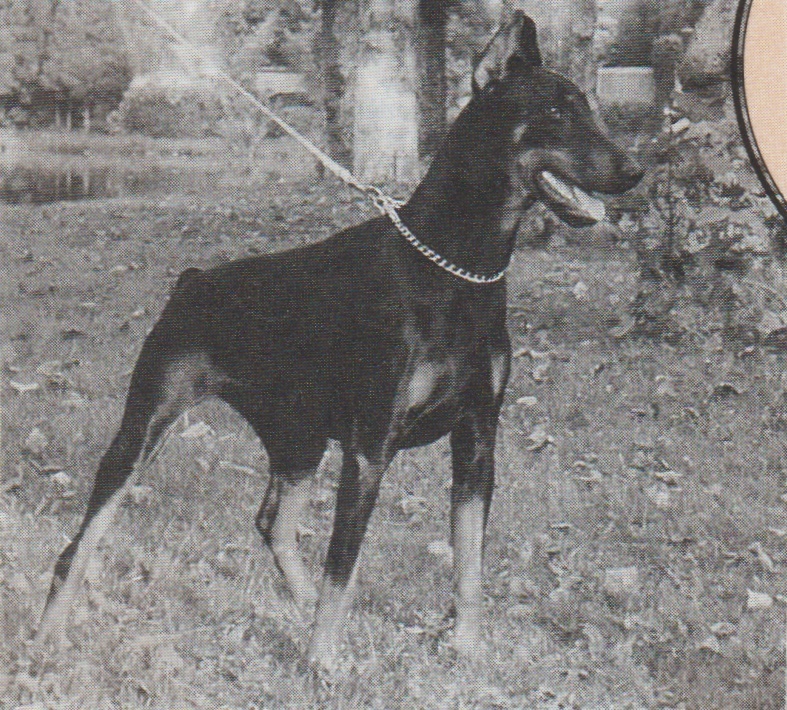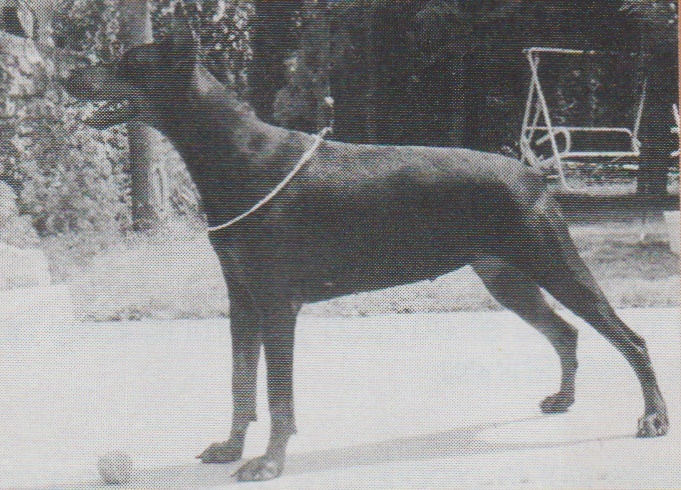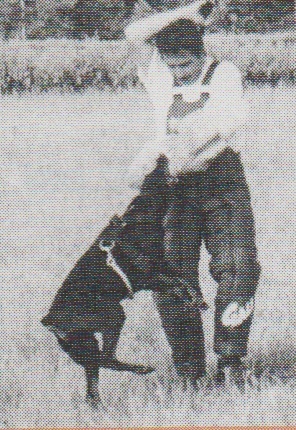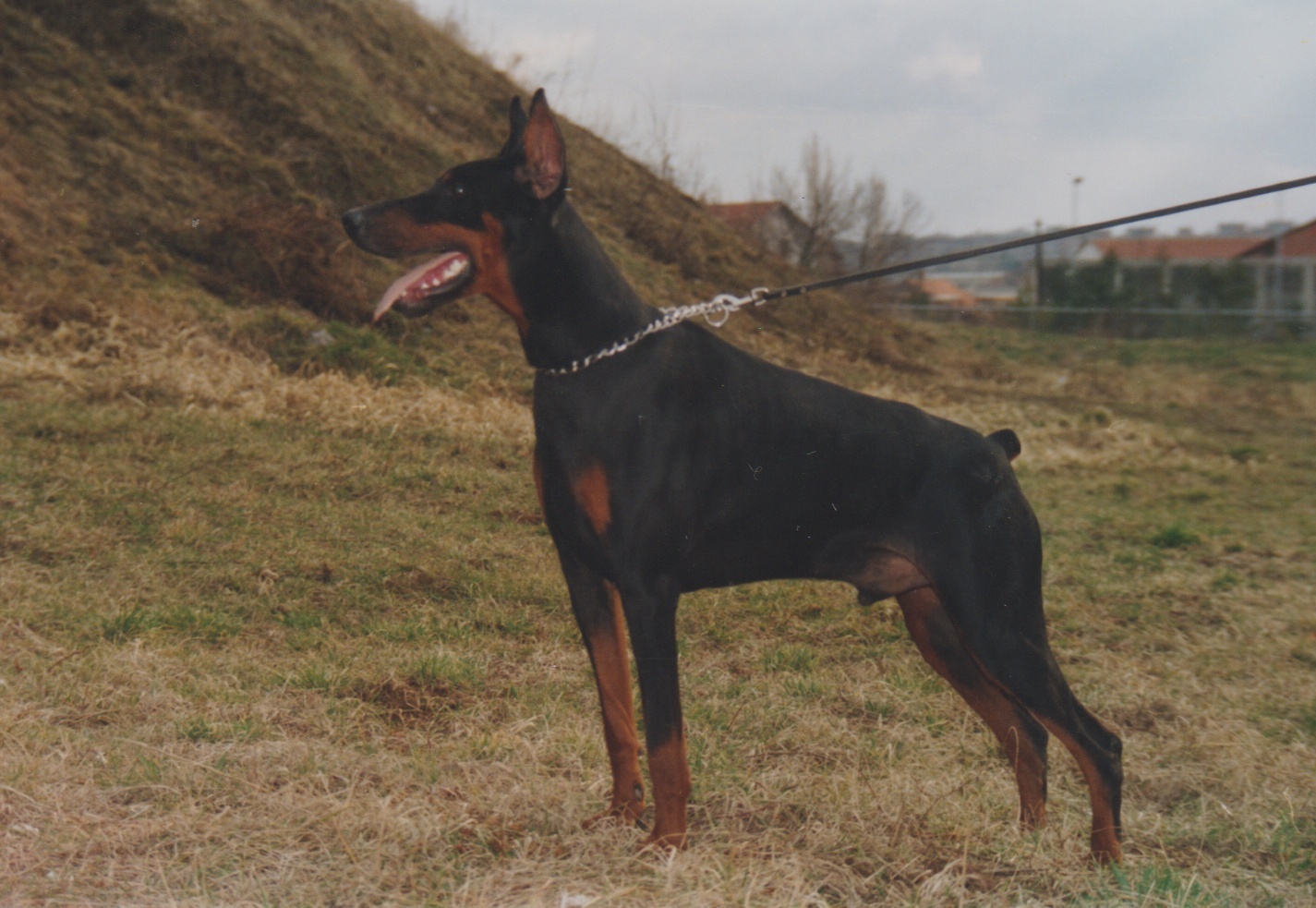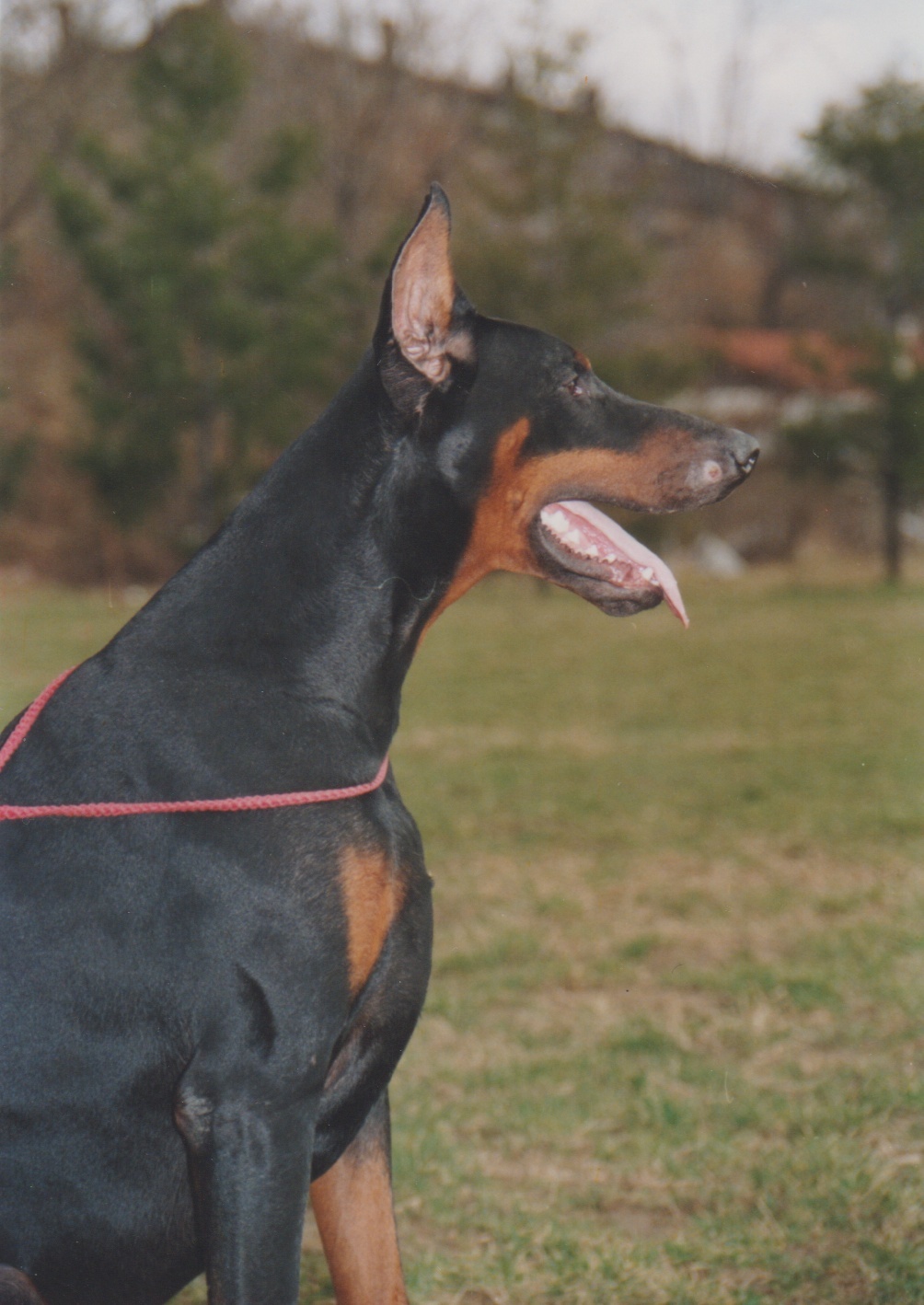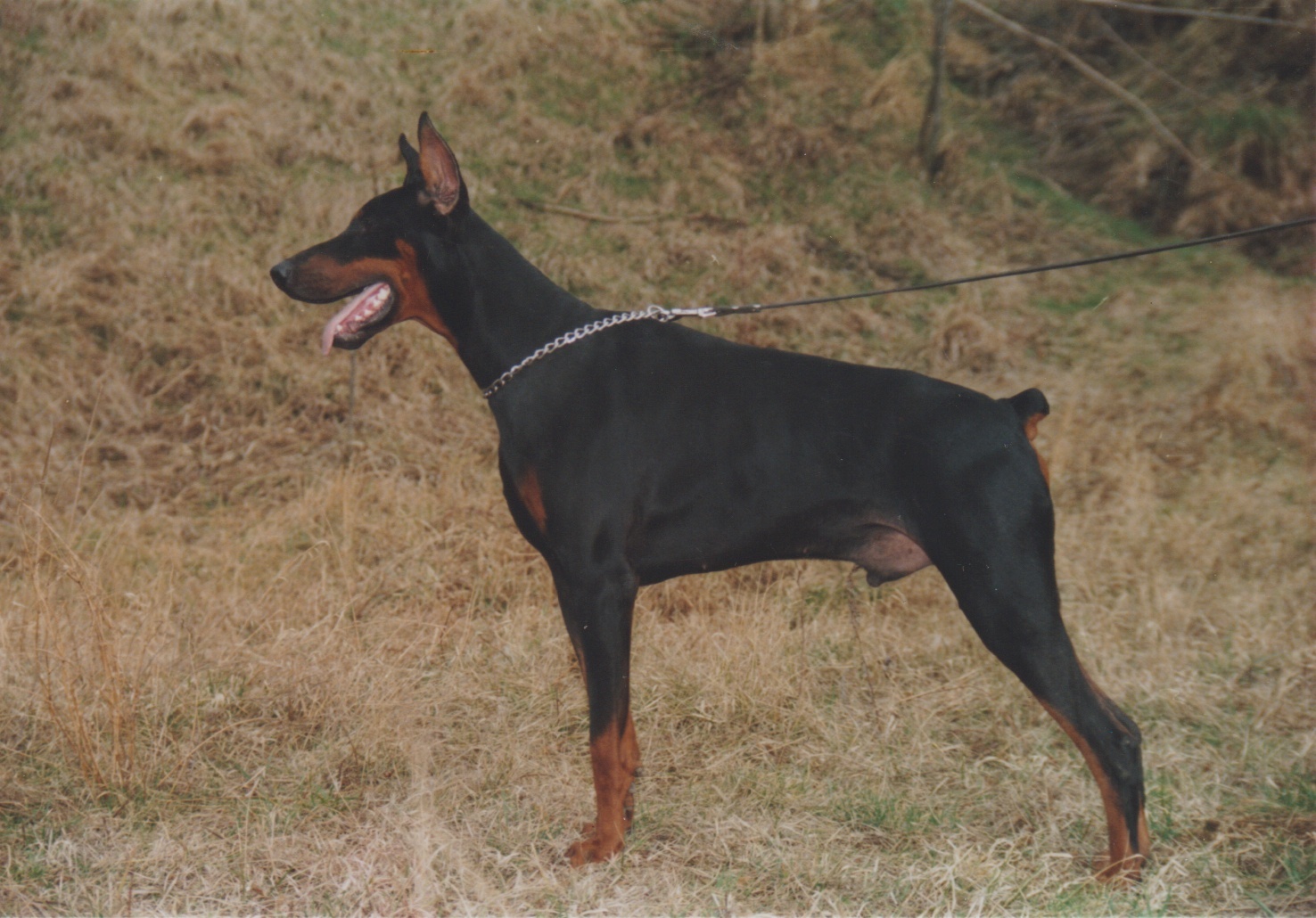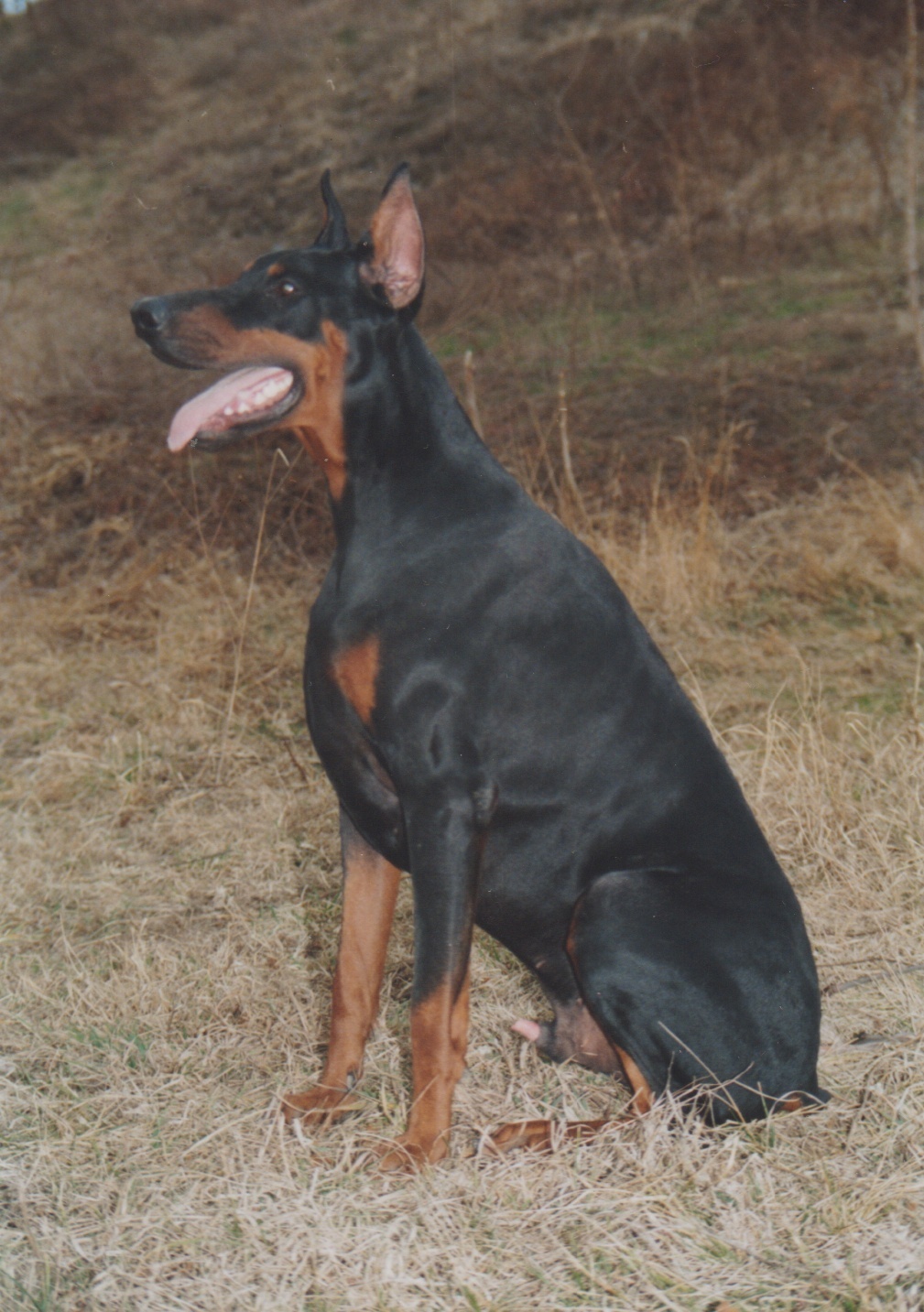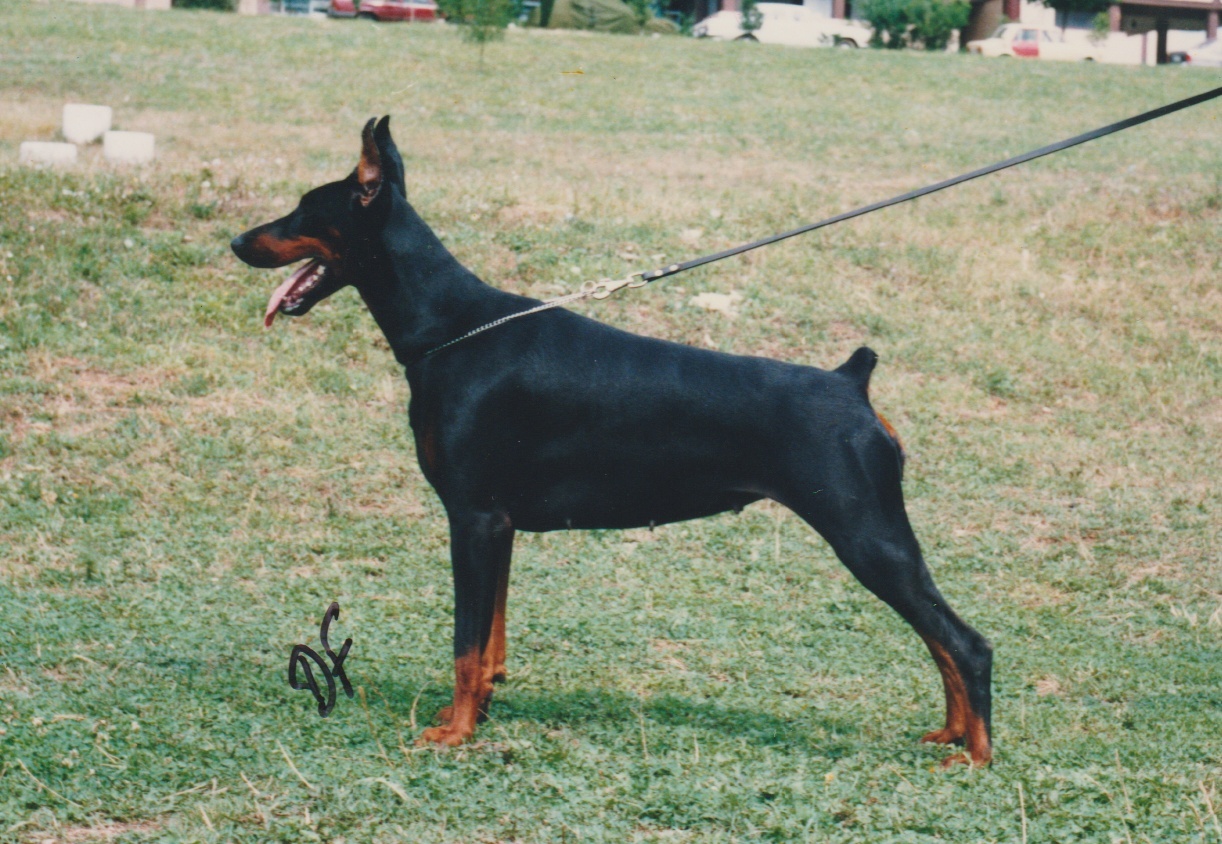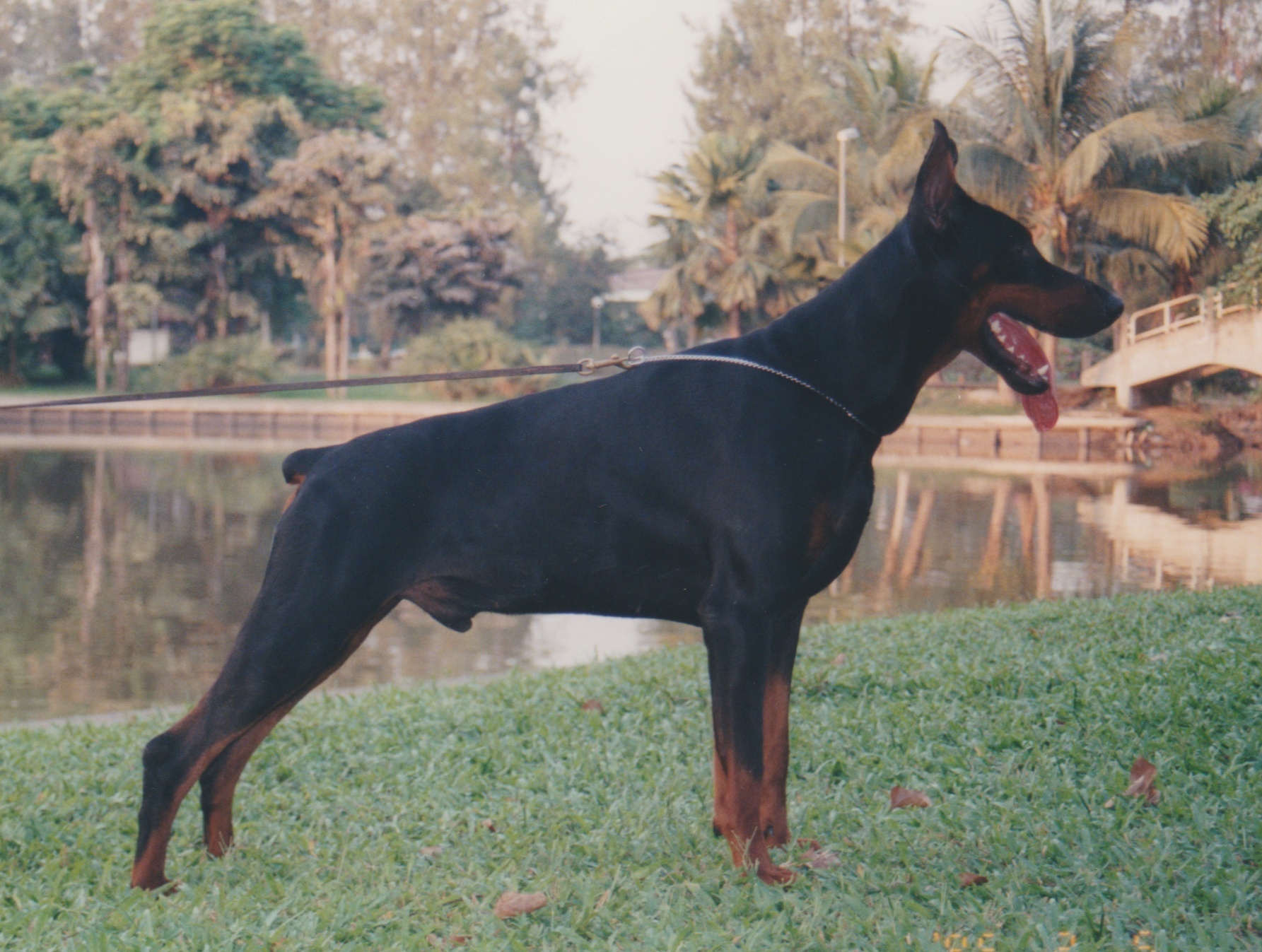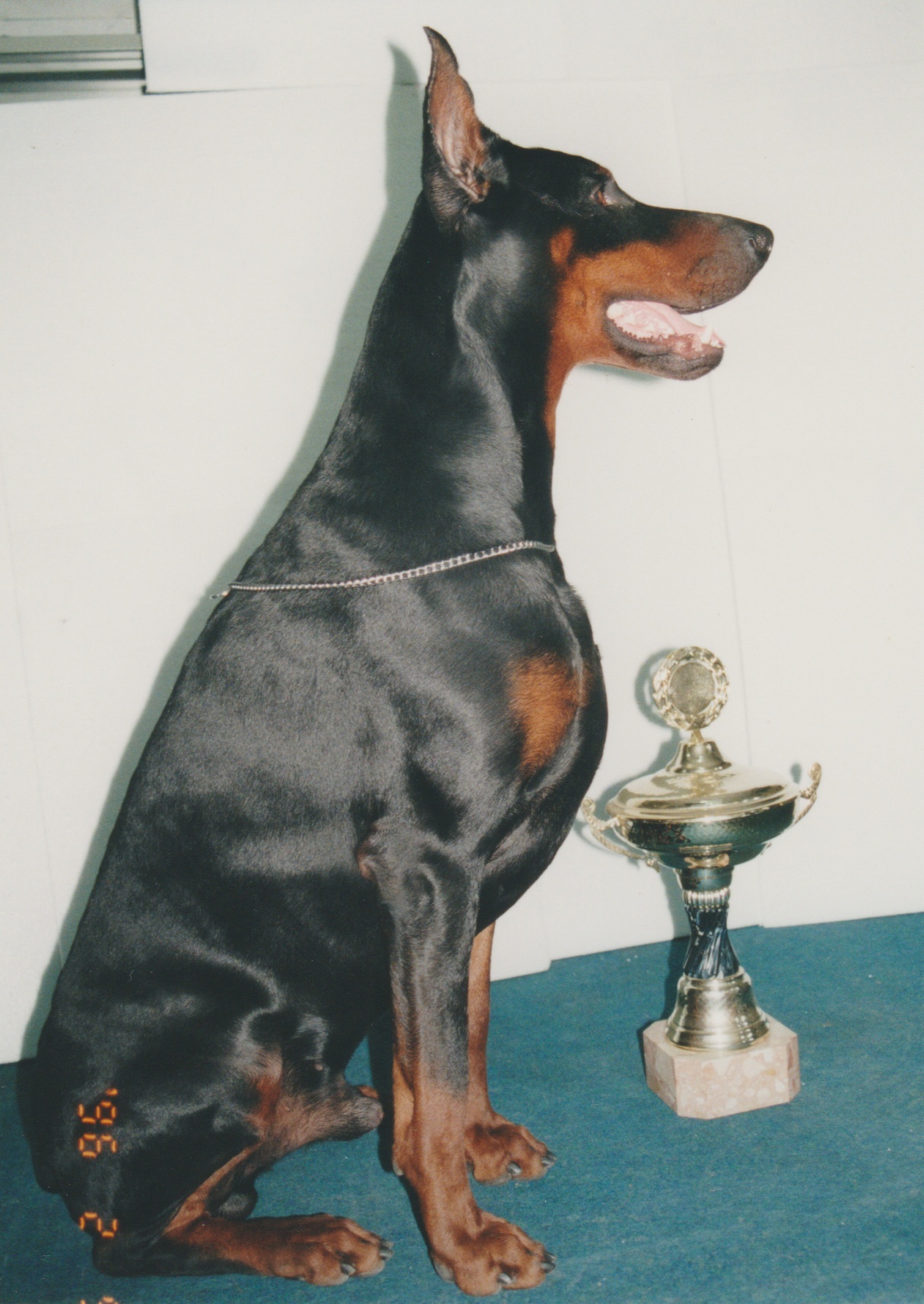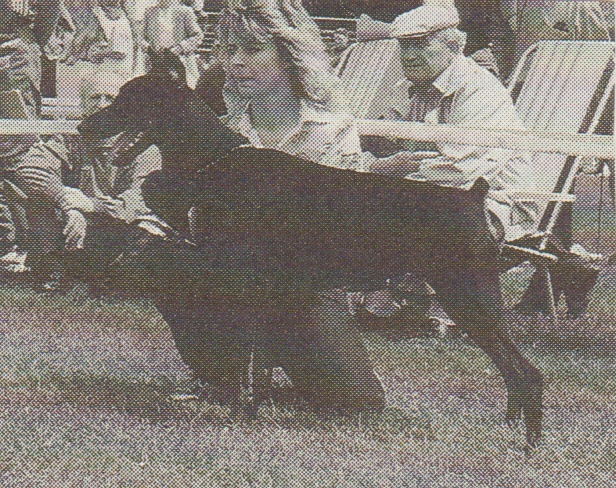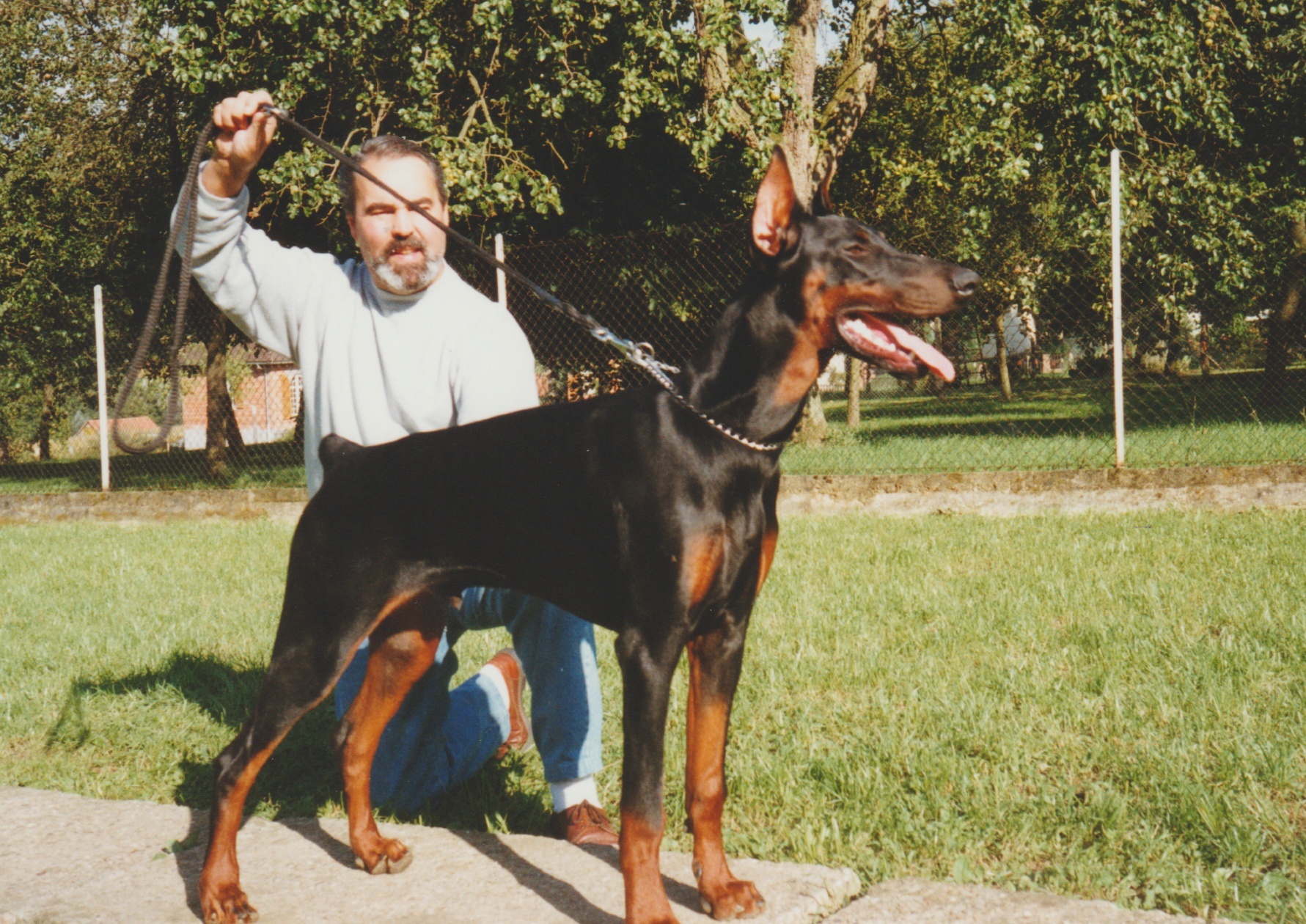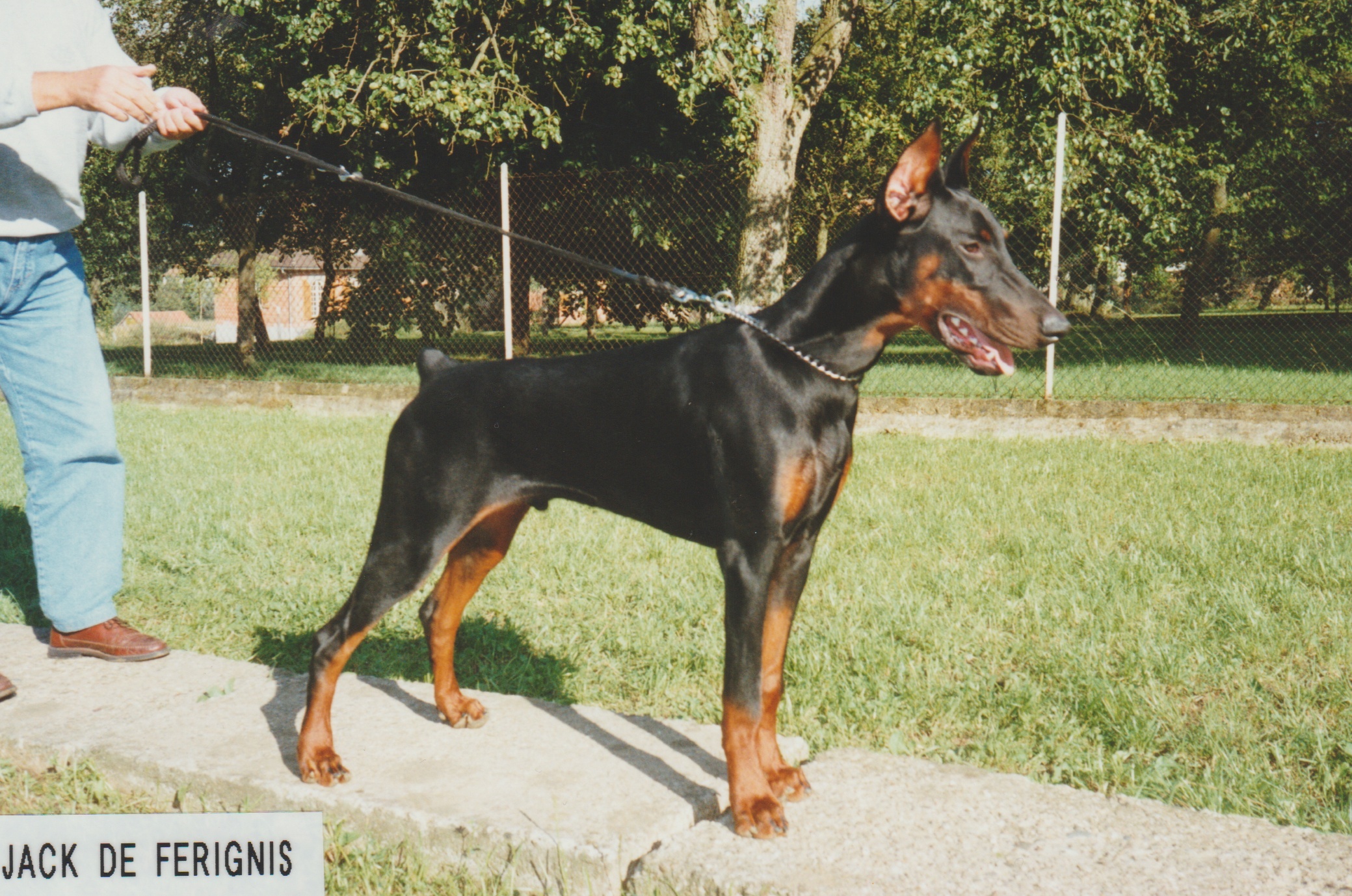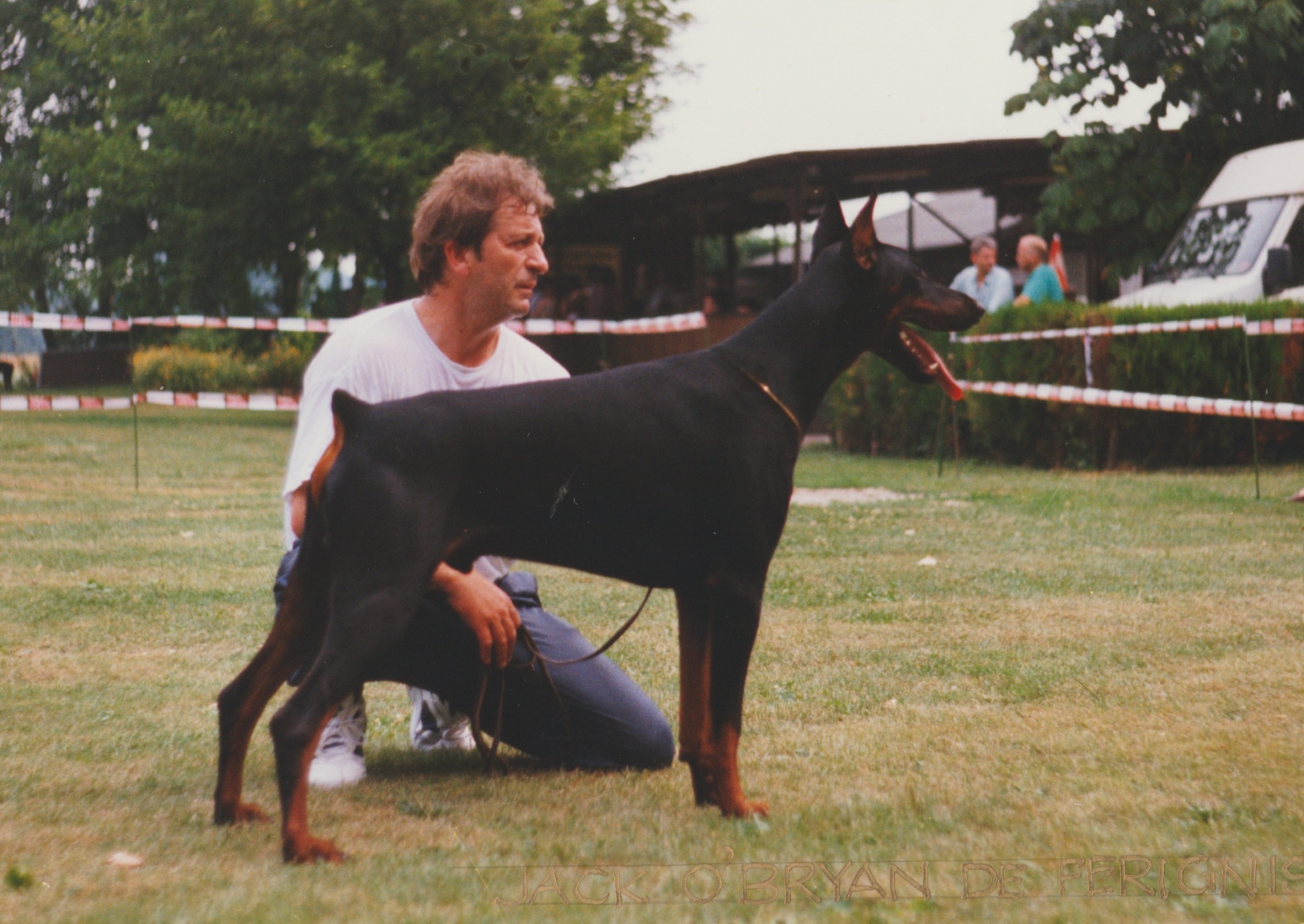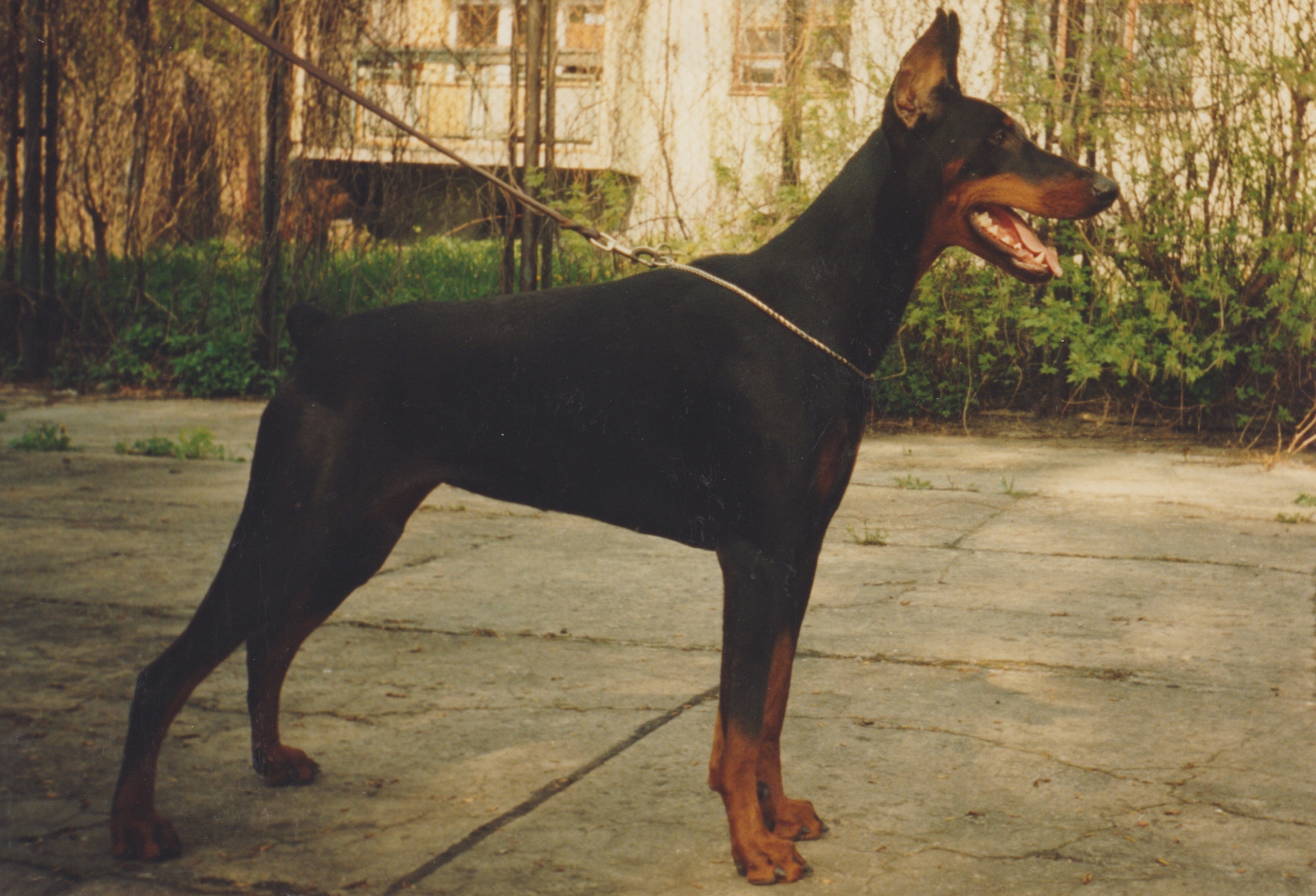
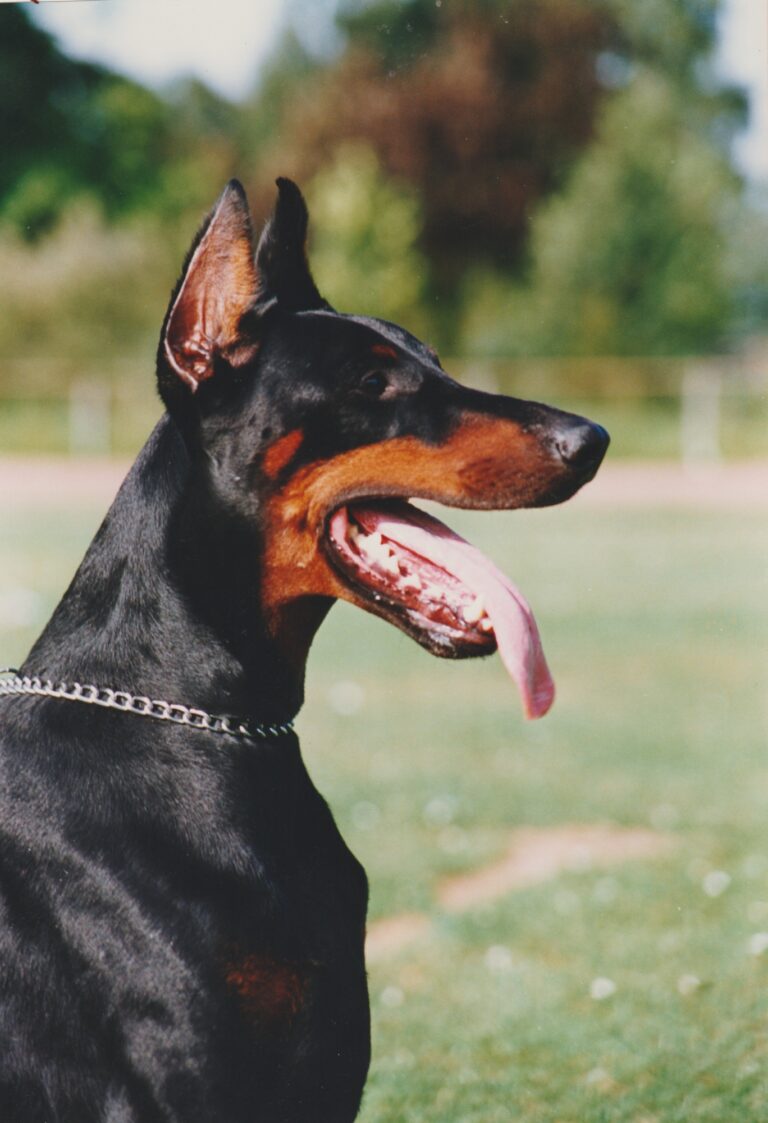
Graf Guido von Franckenhorst
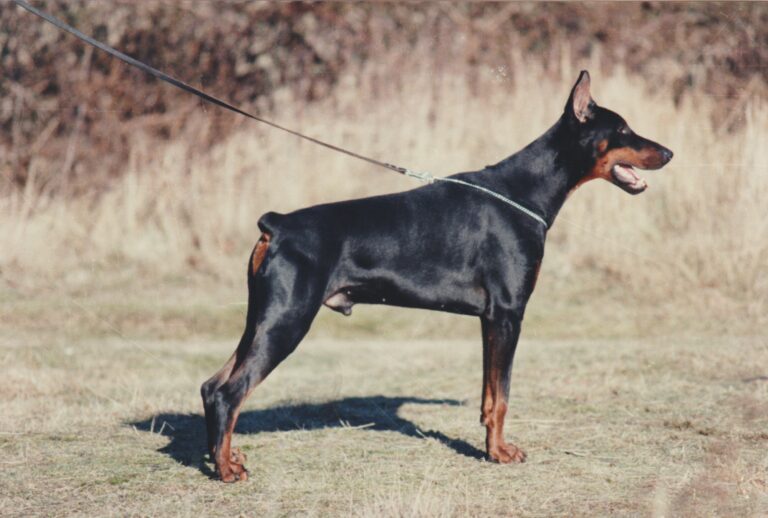
About
- 4.10.1985 – 1.11.1995
- breeder: Sonja & David v. Franquemont, Freudenberg/NL
- owner: Hassi Assenmacher-Feyel/DE
Health
- HD-A
- all eye diseases free
- SNP DNA profile
- vWD-clear
- DCM1 N/N
- DCM2 N/N
- DCM3 N/DCM3
- DCM4 N/DCM4
- B Locus N/N (black dominant)
- D Locus N/N (Dilute free)
- S Locus N/N
- Narcolepsy N/N
- Malignant Hyperthermia N/N
- Degenerative Myelopathy N/N
- prcd PRA N/N
- CT N/N
- CT PCR N/CT
- DINGS1 & DINGS2 N/N
- Ehlers-Danlos Syndrome N/N
- Hyperurikosurie N/N
- CDDY & IVDD N/N
- Lysosomal Storage Disease N/N
Work
- BH
- ZTP V1b (Hans Wiblishauser)
- SchH I (86/82/92a)
Titles
- World Champion 1987
- International Champion C.I.B.
- German VDH Champion
- German DV Champion
- Luxembourg Champion
- Italian Champion
- Belgian Champion
- CSSR Champion
- Austrian Champion
- Swiss Champion
- Finnish Champion
- Hungarian Champion
- Israel Champion
- Netherlands Champion
- Portuguese Champion
- Yugoslavian Champion
- Champion d’Europe 1988
- Bayernsieger 1988
- Club Winner CSSR 1988 & 1989
- V-ce DV Sieger 1988 & 1989
- IDC Strasbourg 1988 – Exc2
- IDC Fuessen 1989 – Exc3
- Middle Europe Winner 1988
- Bundessieger 1989
- Olimpic Winner 1990
- Winner Bosnia & Herzegovina 1990
Show
Puppy class
- 1.06.1986 DV Siegerschau Erwitte/DE, judge: Fischer/DE – vp1, BEST PUPPY
Junior class
- 13.07.1986 CAC Essen/DE, judge: Fischer/DE – Vg
- 17.08.1986 CACIB Valkenburg/NL, judge: Harris/GB – Exc2
- 26.10.1986 Bundessiegerschau Dortmund/DE, judge: Kugel/DE – Vg2
- 15.11.1986 CACIB Amsterdam/NL, judge: Misselyn/BE – Vg2
- 20.11.1986 CAC Wijchen/NL, judge: Doconinck-Derycke/BE – Vg3
Open class
- 11.01.1987 CAC Aalst/BE, judge: Weustenraed/BE – Exc4
- 1.03.1987 CACIB Stuttgard/DE, judge: Vogel/DE – Vg3
- 22.03.1987 CACIB Berlin/DE, judge: Kollenberg/DE – Exc1, Anw.VDH Ch, res-CAC
- 8.06.1987 CACIB Arnhem/NL, judge: Mencke/NL – Exc2
- 21.06.1987 CACIB Besancon/FR, judge: Striby/FR – Exc3
- 26.06.1987 World Dog Show Tel Aviv/ISR, judge: Avi Marshak/ISR – Exc1, CAC, CACIB, World Champion 1987
Champion class
- 2.08.1987 CAC Hueckelhoven/DE, judge: Kugel/DE – Exc1, Anw.VDH Ch, CAC, BOB, BIS
- 14.08.1987 CACIB Valkenburg/NL, judge: Liet/NL – Exc1, res-CAC, res-CACIB
- 16.08.1987 CAC Schoeneck/DE, judge: Hans Wiblishauser/DE – Exc1, Anw.VDH Ch, CAC, Best Male
- 29.08.1987 CACIB Ingolstadt/DE, judge: Gendrung/DE – Exc1, Anw.VDH Ch, CAC, CACIB, BOB
- 30.08.1987 IDC Muenchen/DE, judge: Striby/FR – Exc
- 5.09.1987 CACIB Friedrichshafen/DE, judge: Kugel/DE – Exc2, res. Anw.VDH Ch, res-CAC, res-CACIB
- 13.09.1987 CAC Mechelen/BE, judge: de Wilde/BE – Exc1, CAC
- 27.09.1987 CACIB Lausanne/CH, judge: Erath/CH – Exc1, res-CAC
- 4.10.1987 CACIB Tulln/A, judge: Muehle-Krinninger/A – Exc1, CACA
- 11.10.1987 Bundessiegerschau Dortmund/DE, judge: Hans Wiblishauser/DE – Exc1, Anw.VDH Ch, res-CAC, res-CACIB
- 28.11.1987 CACIB Amsterdam/NL, judge: Mencke/NL – Exc2
- 12.12.1987 CACIB Hoogstraten/BE, judge: Renders/NL – Exc2
- 26.03.1988 CACIB Luxembourg/LUX, judge: Hans Wiblishauser/DE – Exc1, CAC, CACIB, BOB, Luxembourg Champion, Champion D’Europe 1988
- 4.04.1988 CACIB Leeuwarden/NL, judge: Frankenberger – Exc1, CAC, CACIB
- 17.04.1988 CACIB Muenchen/DE, judge: Dr. Marchetti/IT – Exc1, Anw.VDH Ch, CAC, CACIB, BOB, Bayernsieger 1988, BIS
- 30.04.1988 European Dog Show Dortmund/DE, judge: Schellmann/DE – Exc2, res.Anw.VDH Ch.
- 1.05.1988 CACIB Hertogenbosch/NL, judge: Krake/NL – Exc1, res-CAC, res-CACIB
- 23.05.1988 CACIB Arnhem/NL, judge: Steinhausen/DE – Exc2
- 5.06.1988 DV Siegerschau Pfungstadt/DE, judge: Hans Wiblishauser/DE – Exc2, res-CAC, V-ce DV Sieger 1988
- 3.07.1988 CACIB Brno/CSSR, judge: Dr. Benes/CSSR – Exc1, CAC, CACIB, BOB, Middle Europe Winner, BIS 1st
- 7.08.1988 CACIB Osnabrueck/DE, judge: Utecht/DE – Exc1, Anw.VDH Ch, CAC, CACIB, BOB
- 12.08.1988 CACIB Valkenburg/NL, judge: Hans Wiblishauser/DE – Exc1, CAC, CACIB, BOB, BOG 1st, BIS 5th
- 14.08.1988 CACIB Burgdorf/CH, judge: Erath/CH – Exc1, res-CAC, res-CACIB
- 28.08.1988 IDC Strasbourg/FR, judge: Hans Wiblishauser/DE – Exc2
- 30.10.1988 CAC Hasselt/BE, judge: Krake/NL – Exc1, CAC
- 3.12.1988 CACIB Amsterdam/NL, judge: Exc2, res-CACIB
- 21.01.1989 CACIB Eindhoven/NL, judge: Lowe/GB – Exc1, CAC, CACIB, BOB, BOG 1st
- 1.04.1989 CACIB Bern/CH, judge: Erath/CH – Exc1, CAC, CACIB, BOB, BOG 2nd
- 16.04.1989 CACIB Salzburg/A, judge: Bierwolf/A – Exc1, CACA
- 1.05.1989 CACIB Opatija/YU, judge: Ringer/A – Exc1, CAC, CACIB, BOB, BOG 1st, BIS 1st
- 7.05.1989 Bundessiegerschau Dortmund/DE, judge: Hans Wiblishauser/DE – Exc1, Anw.VDH Ch, CAC, CACIB, Bundessieger 1989
- 15.05.1989 CACIB Arnhem/NL, judge: McManus/IR – Exc2
- 20.05.1989 CAC Wien/A, judge: Tschoep/A – Exc2, res-CACA
- 21.05.1989 CACIB Wien/A, judge: Muehle-Kinninger/A – Exc1, CACA
- 3.06.1989 CACIB Luzern/CH, judge: Walker/CH – Exc1, CAC, CACIB, BOB
- 18.06.1989 DV Siegerschau Schonungen/DE, judge: Vogel/DE – Exc3
- 13.08.1989 CACIB Maastricht/NL, judge: Montfoort/NL – Exc3
- 27.08.1989 CACIB Rotterdam/NL, judge: Ringer/A – Exc3
- 9.09.1989 CACIB Venlo/NL, judge: van Os/NL – Exc3
- 10.09.1989 IDC Fuessen/DE, judge: Striby/FR – Exc3
- 1.10.1989 CACIB Zagreb/YU, judge: Schellmann/DE – Exc1, CAC, CACIB, BOB
- 2.02.1990 CACIB Eindhoven/NL, judge: v.d.Berg/NL – Exc2
- 25.02.1990 CACIB Zuidlaren/NL, judge: Richter/DE – Exc2, res-CAC, res-CACIB
- 16.04.1990 CACIB Leeuwarden/NL, judge: Onstenk-Schenk/NL – Exc1, CAC, CACIB
- 3.06.1990 DV Siegerschau Nuernberg/DE, judge: Hans Wiblishauser/DE – Exc1, res-CAC
Working class
- 1.11.1987 CACIB Metz/FR, judge: Schmitt/FR – Exc2
- 23.01.1988 CACIB Paris/FR, judge: Hans Wiblishauser/DE – Exc1, CAC, CACIB, BOB
- 20.03.1988 CACIB Bern/CH, judge: Walker/CH – Exc1, CAC, CACIB, BOB, BOG I, Best Dog of 2nd Day, res-BIS
- 23.04.1988 Club Show Galanta/CSSR, judge: Salenka/CSSR – Exc1, CAC, Club Winner CSSR 1988, BOB
- 24.04.1988 CACIB Graz/A, judge: Lowrencic/YU – Exc4
- 7.05.1988 CACIB Florence/IT, judge: Perricone/IT – Exc1, CAC, CACIB, BOB
- 29.05.1988 CACIB Bolognia/IT, judge: Lohmann/DE – Exc1, CAC
- 12.06.1988 CACIB Modena/IT, judge: Dr. di Somma/IT – Exc1, CAC, CACIB, BOB
- 19.06.1988 CACIB Udine/IT, judge: Marchetti/IT – Exc1, CAC, CACIB, BOB
- 25.09.1988 CACIB Budapest/HU, judge: Csepai/HU – Exc1, CAC, CACIB, BOB
- 2.10.1988 CACIB Bellagio/IT, judge: Adlercreutz/SW – Exc1, CAC, CACIB, BOB, BOG 1st, BIS 4th
- 13.11.1988 CACIB Tomar/PT, judge: Perricone/IT – Exc1, CAC, CACIB
- 25.02.1989 CAC Villafranca/PT, judge: Texeira/PT – Exc1, CAC, CACIB, BOB, BOG 1st, BIS 1st
- 22.04.1989 Club Show Galanta/CSSR, judge: Vojtech/CSSR – Exc1, CAC, Club Winner CSSR 1989
- 23.04.1989 CACIB Budapest/HU, judge: Frankenberger/DE – Exc1, CAC, CACIB, BOB
- 23.07.1989 CACIB Pori/FI, judge: v.d.Berg/NL – Exc1, CAC, CACIB, BOB, BOG 3rd
- 7.10.1989 CACIB Tel Aviv/ISR, judge: Badian/ISR – Exc1, CAC, CACIB, BOB, BOG 1st, BIS 1st
- 15.10.1989 CACIB Budapest/HU, judge: Reisinger/A – Exc1, CAC, CACIB
- 7.04.1990 CACIB Mayan Harod/ISR, judge: Badian/ISR – Exc1, CAC, CACIB
- 17.06.1990 CACIB Lissabon/PT, judge: Wilberg/N – Exc1, CAC, CACIB, BOB
- 25.08.1990 CAC Estoril/PT, judge: Pezzano/IT – Exc1, CAC
- 15.09.1990 CACIB Sarajevo/YU, judge: Mencke/NL – Exc1, CAC, CACIB, Best Male, Olimpic Winner 1990, Winner Bosnia & Herzegovina 1990
Honour class
- 21.04.1990 CACIB Frankfurt/DE, judge: Walker/CH – Exc1
- 2.09.1990 CAC Saterland/DE, judge: Kollenberg/DE – Exc1, Best Male, BOB, BIS 1st
Progeny Group
- 17.06.1991 World Dog Show Dortmund/DE, judge: Kliebenstein/DE – Progeny Group Winner with 12 Progeny from 9 different females
- 8.09.1991 IDC Mondorf/LUX, judge: Fischer/Hensel/Dr. Pezzano/Striby/Walker – Progeny Group Winner with 8 Progeny from 8 different females
- 2.05.1992 Bundessiegerschau Dortmund/DE, judge: Steinhausen/DE – Progeny Group Winner with 10 Progeny from 8 different females
- 14.06.1992 DV Siegerschau Beelen/DE, judge: Hensel/Schellmann – Progeny Group Winner with 8 Progeny from 6 different females
- 16.10.1993 Bundessiegerschau Dortmund/DE, judge: Kliebenstein/DE – Progeny Group Winner with 12 Progeny from 7 different females
- 5.06.1994 European Dog Show Dortmund/DE, judge: Gendrung/DE – Progeny Group Winner with 16 Progeny (1st and 2nd generation)
- 21.10.1994 Bundessiegerschau Dortmund/DE, judge: Kliebenstein/DE – Progeny Group Winner with 10 Progeny (1st and 2nd generation)
Pedigree
Graf Guido vom Franckenhorst
The Legend Returns
There are dogs that win.
There are dogs that reproduce.
And there are dogs that define a breed.
Graf Guido vom Franckenhorst belongs to that last category.
He was not just a successful show dog – he became a benchmark.
A dog whose influence shaped entire generations,
whose offspring carried his type,
and whose name still appears in pedigrees today.
Guido was a legend of his time.
And even today, many years later, he is spoken of with respect – not out of nostalgia,
but because of what he consistently passed on.
Type. Expression. Balance. Quality.
At a time when the Dobermann was still defined by elegance, dryness, and functionality,
Guido represented exactly that.
And most importantly – he was able to pass it on.
Today, the breed is changing.
Dogs are becoming heavier, more massive, and often lose the clarity and athleticism
that once defined the Dobermann.
That is why his significance does not belong only to the past.
Because a legend like this does not disappear.
It remains a benchmark.
A standard.
A direction.
A legend is not just a memory.
It returns.
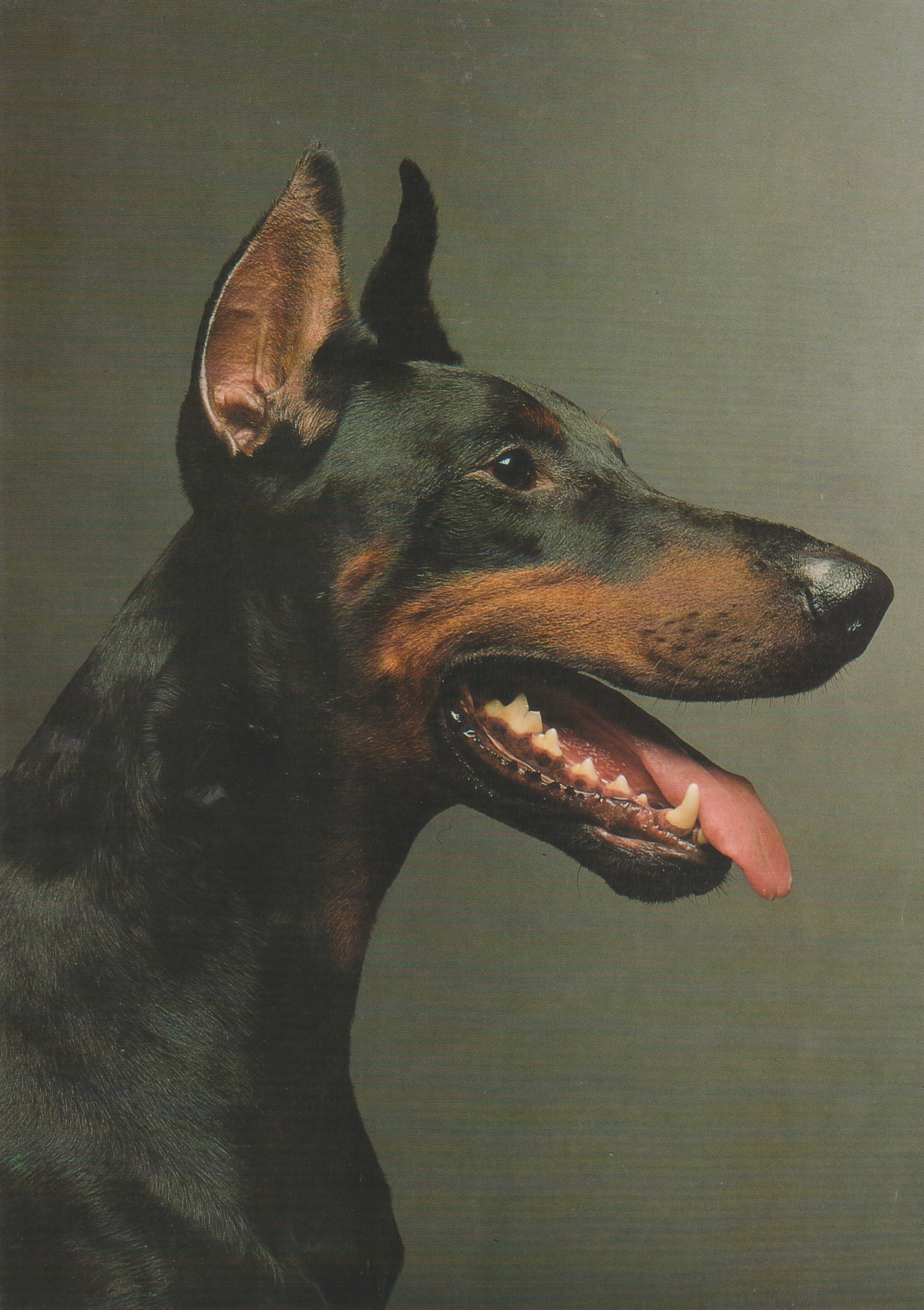
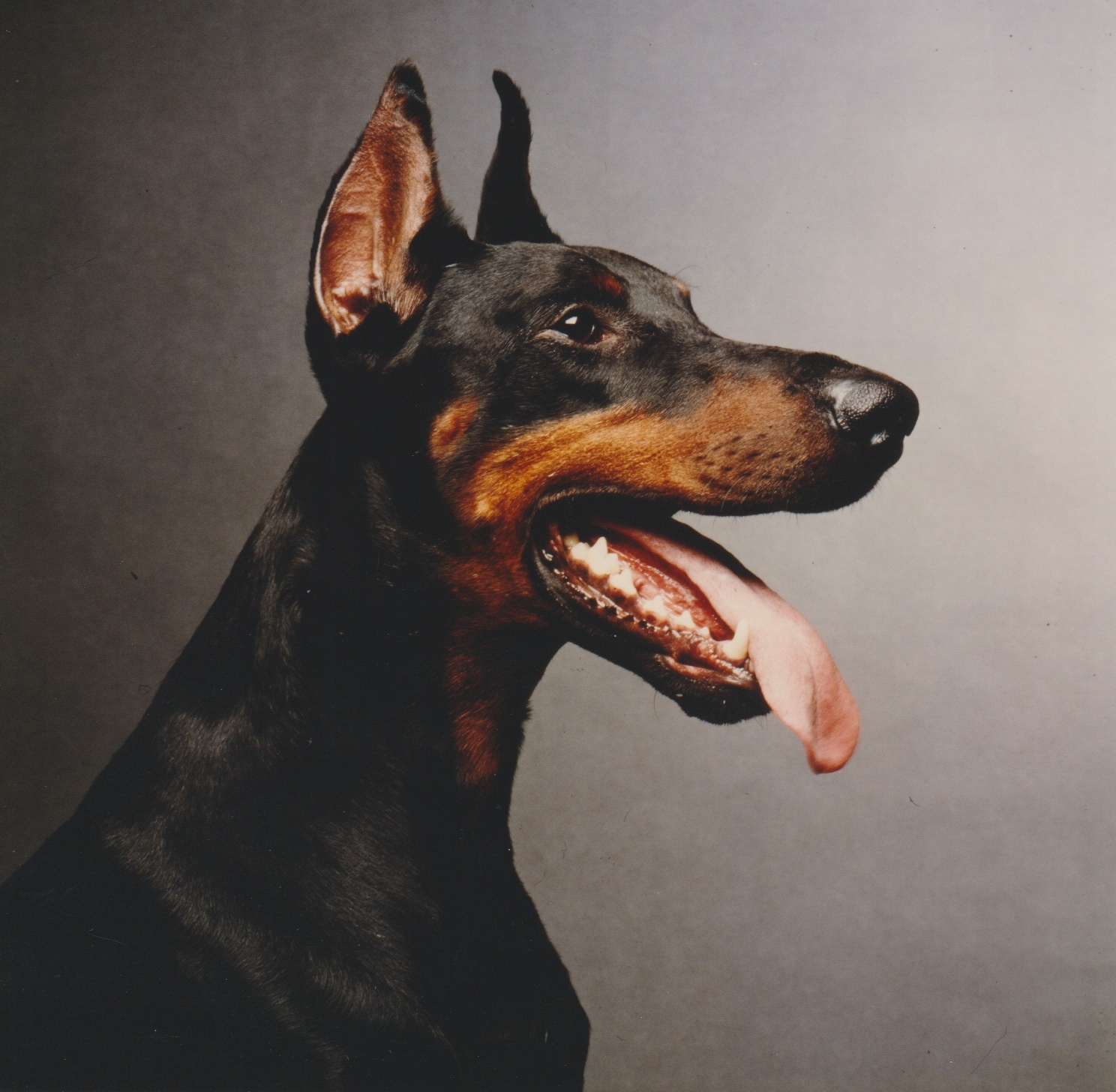
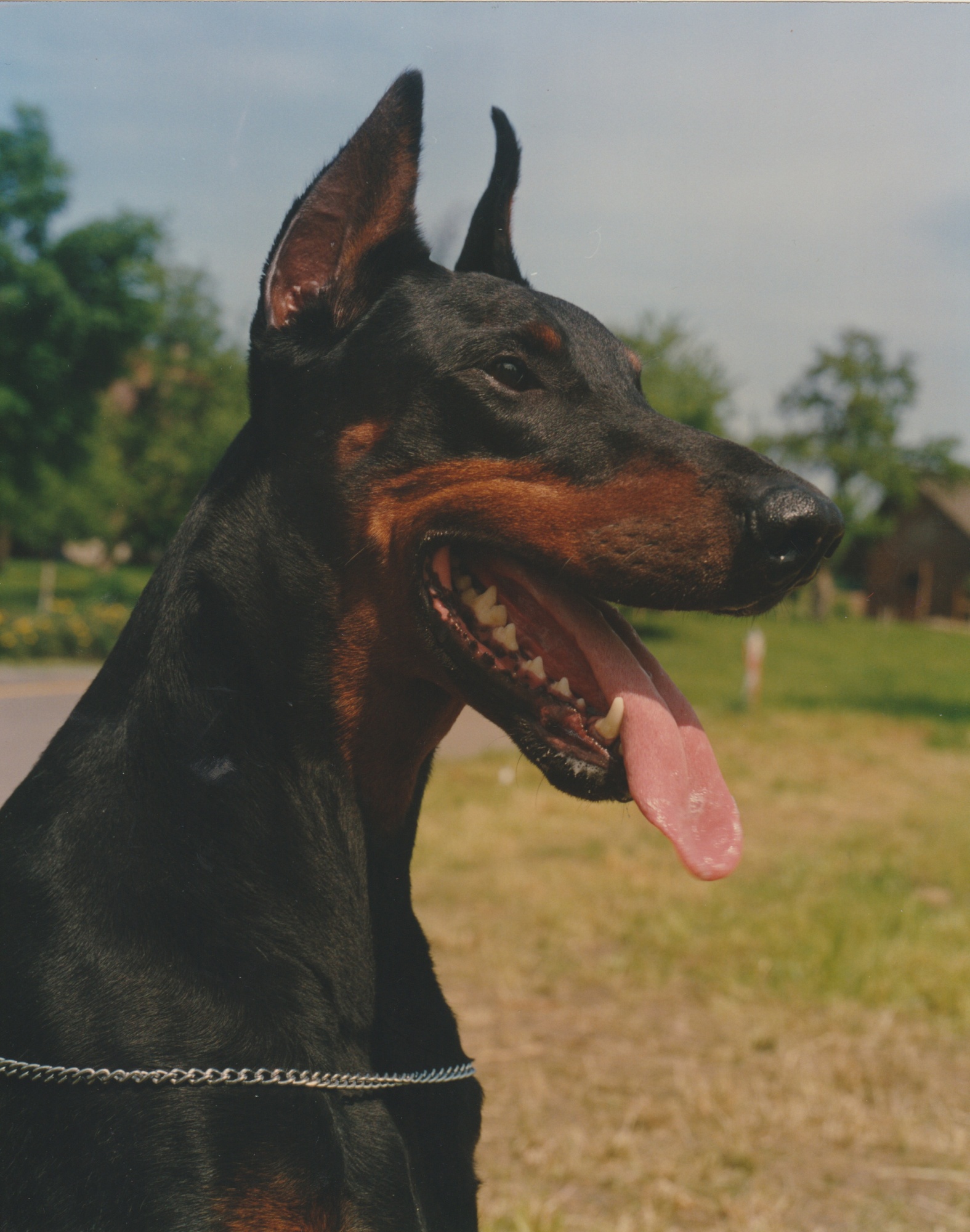
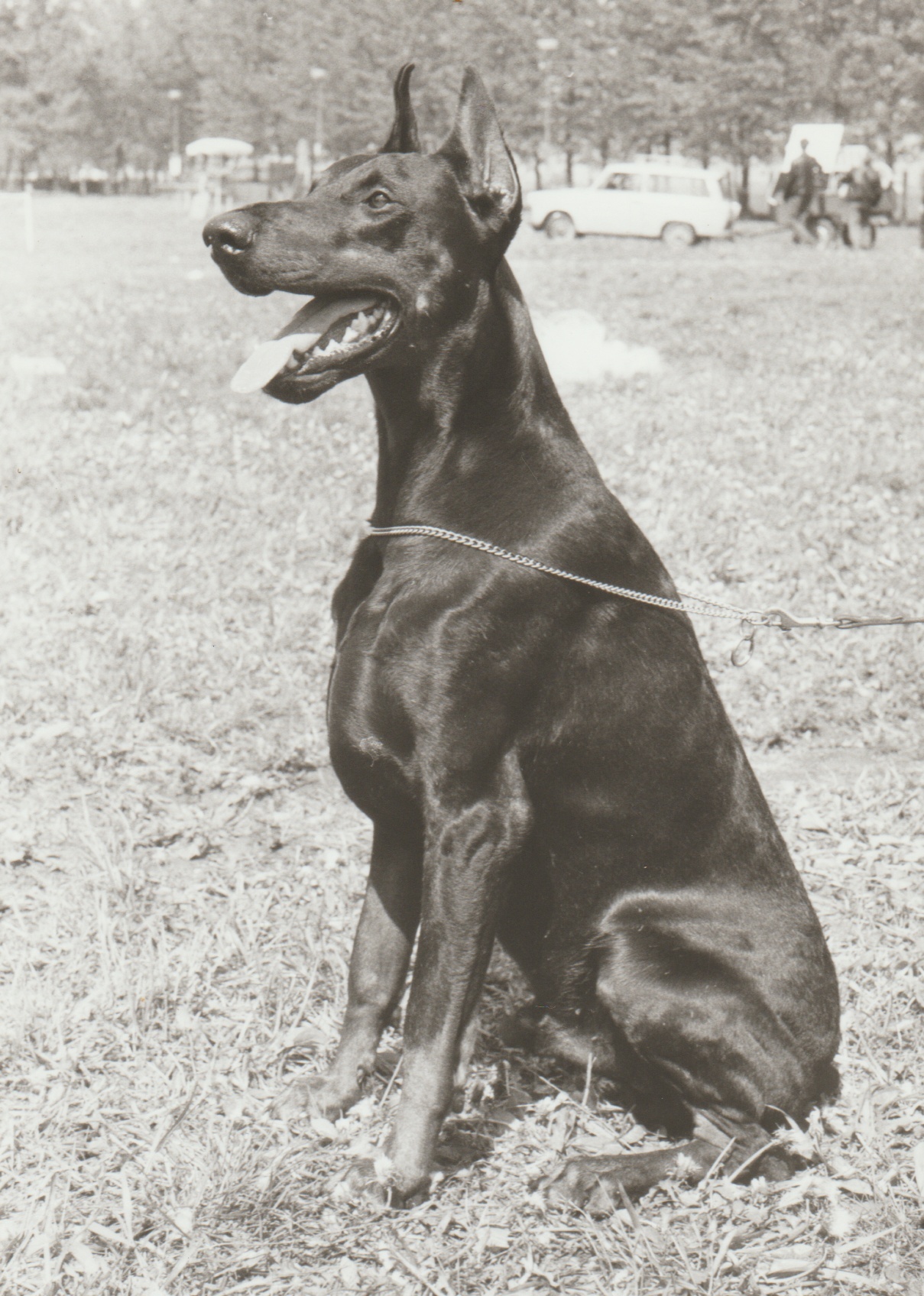
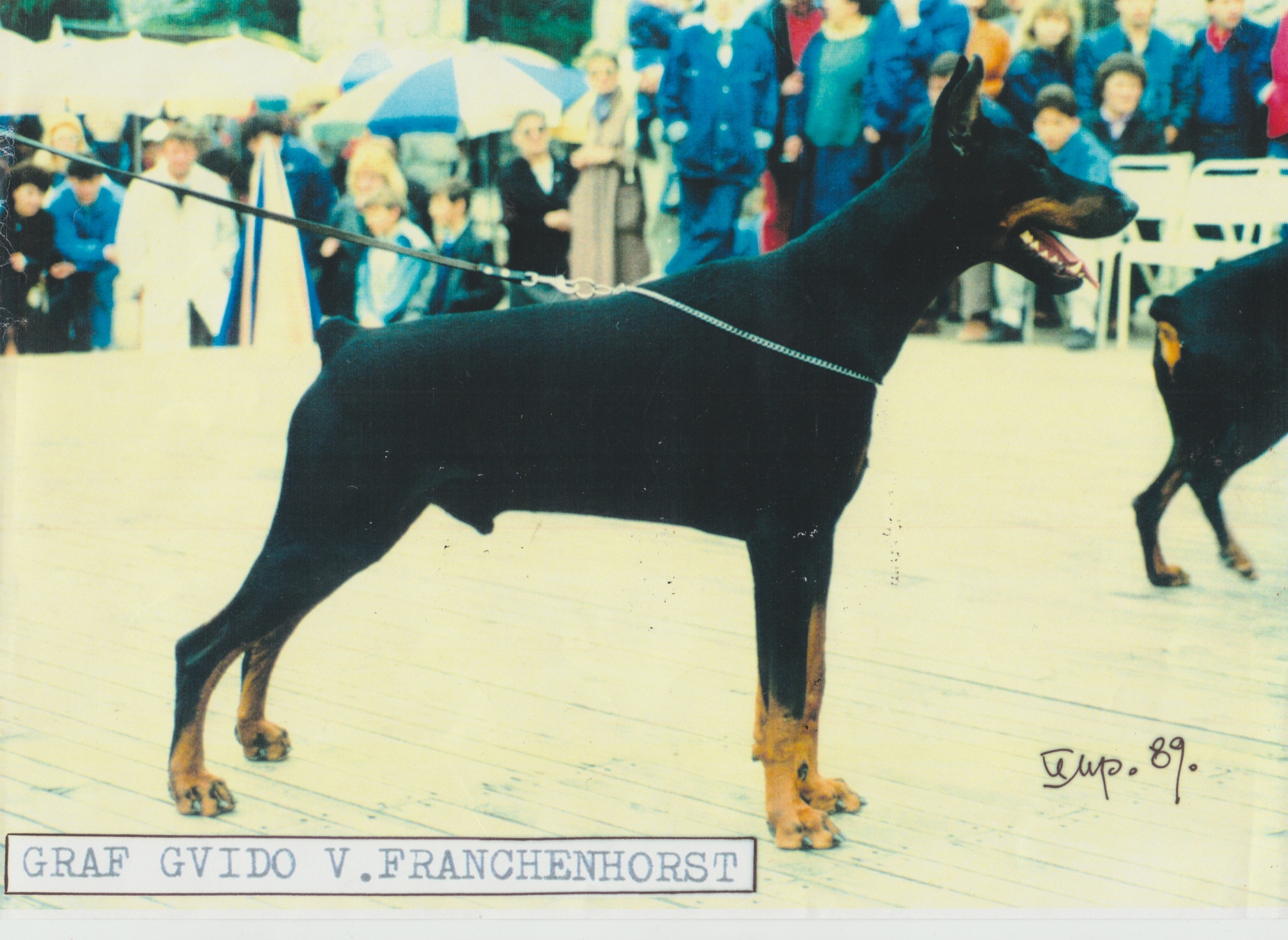
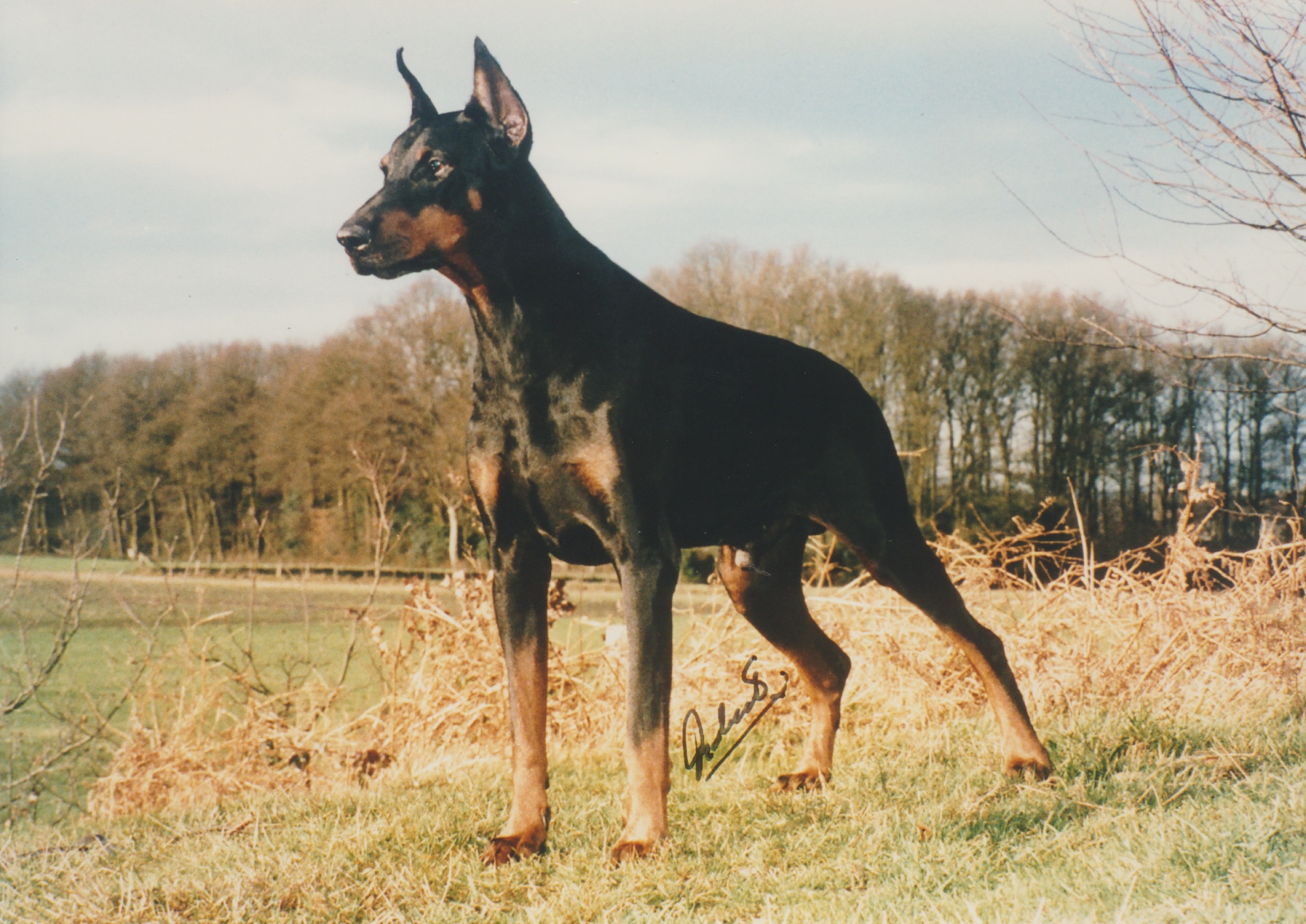
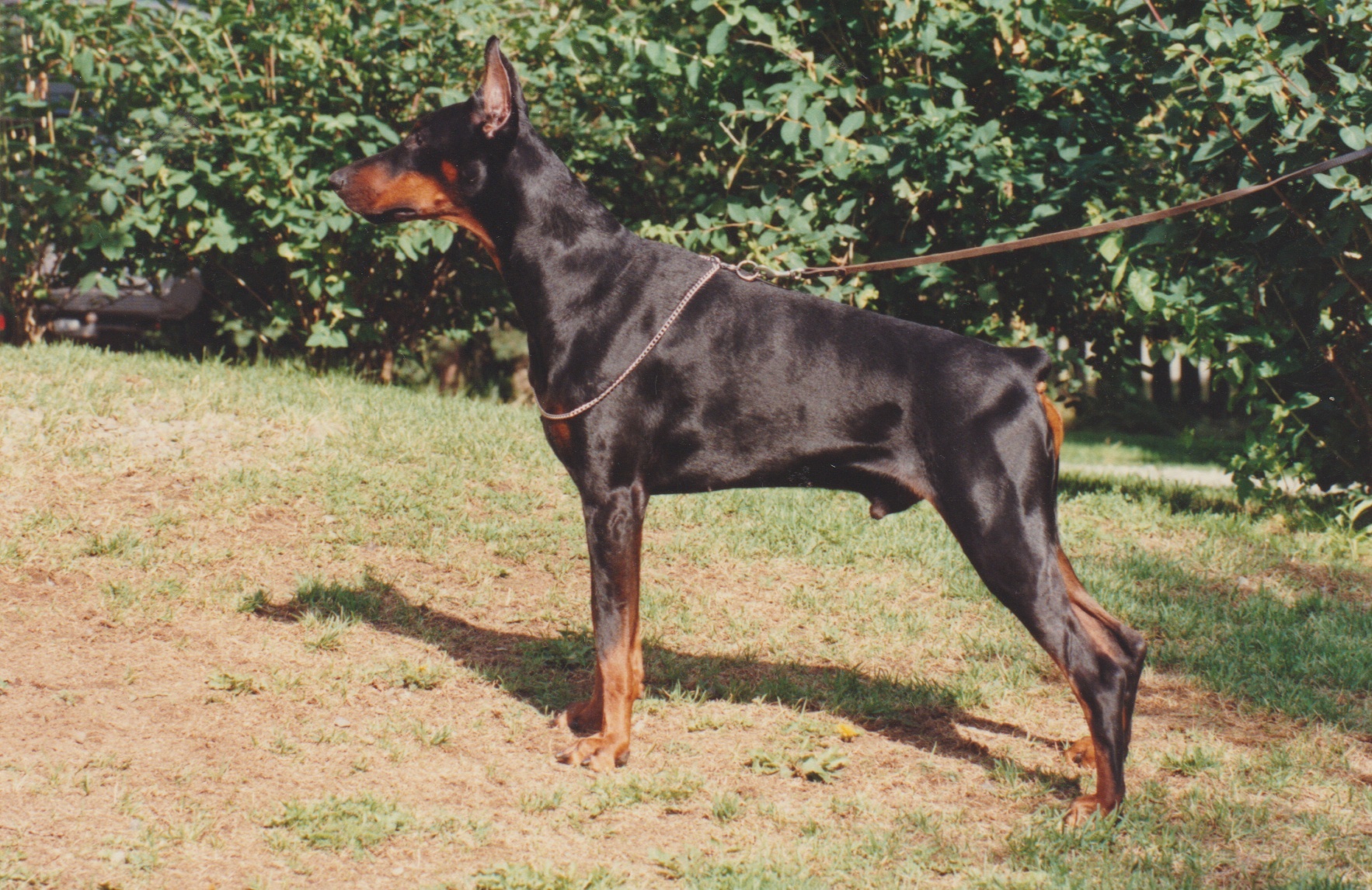
Gallery
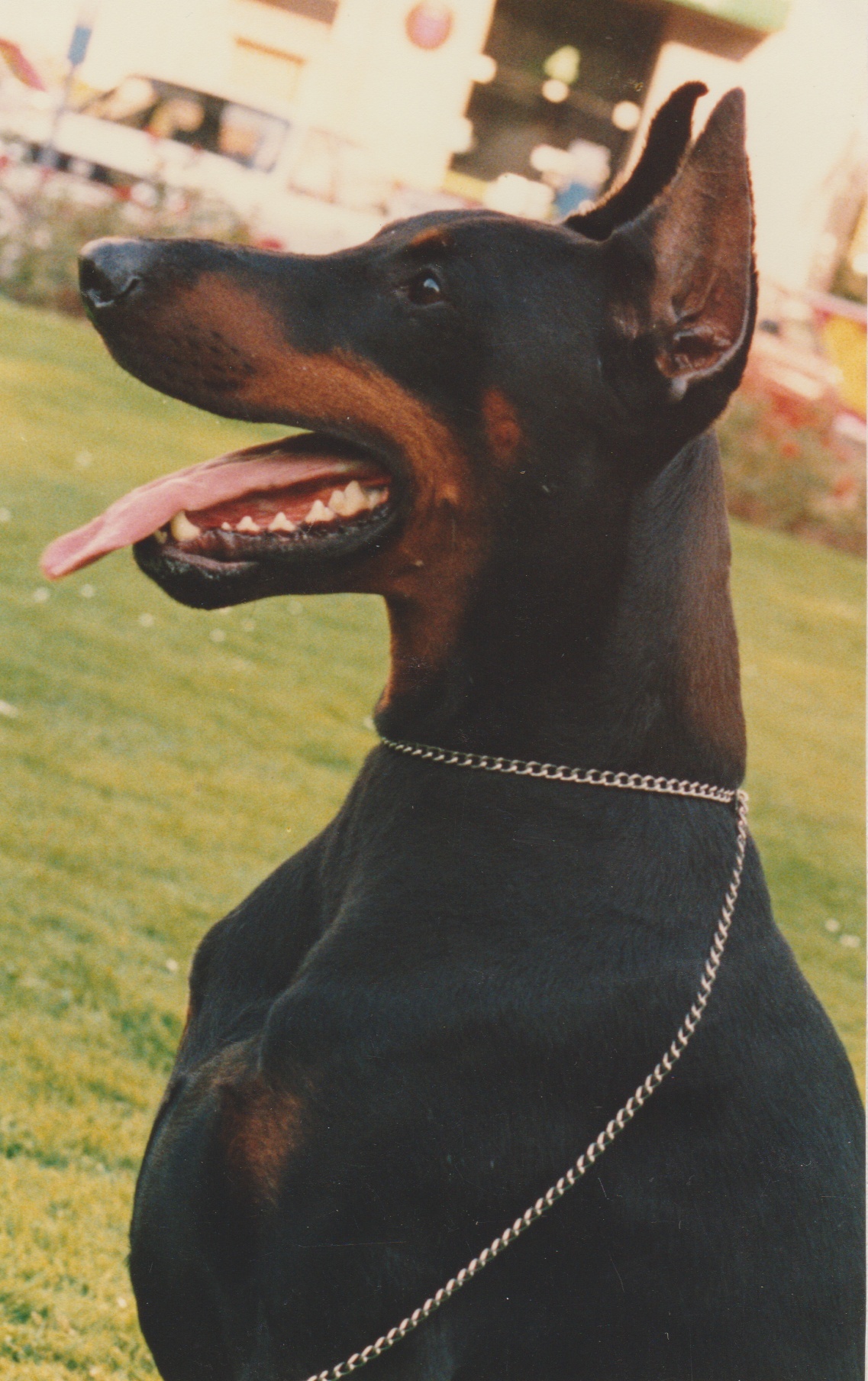
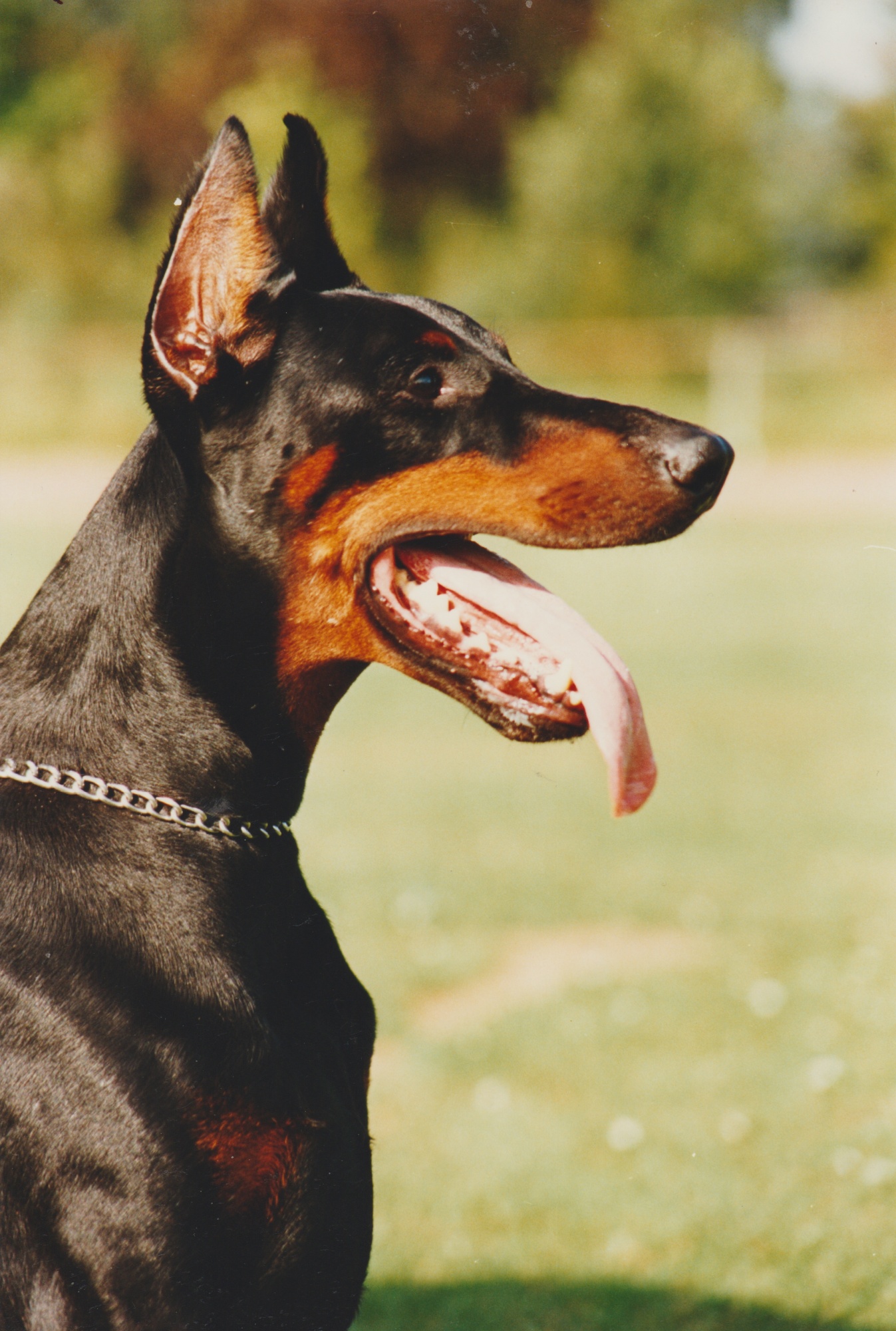
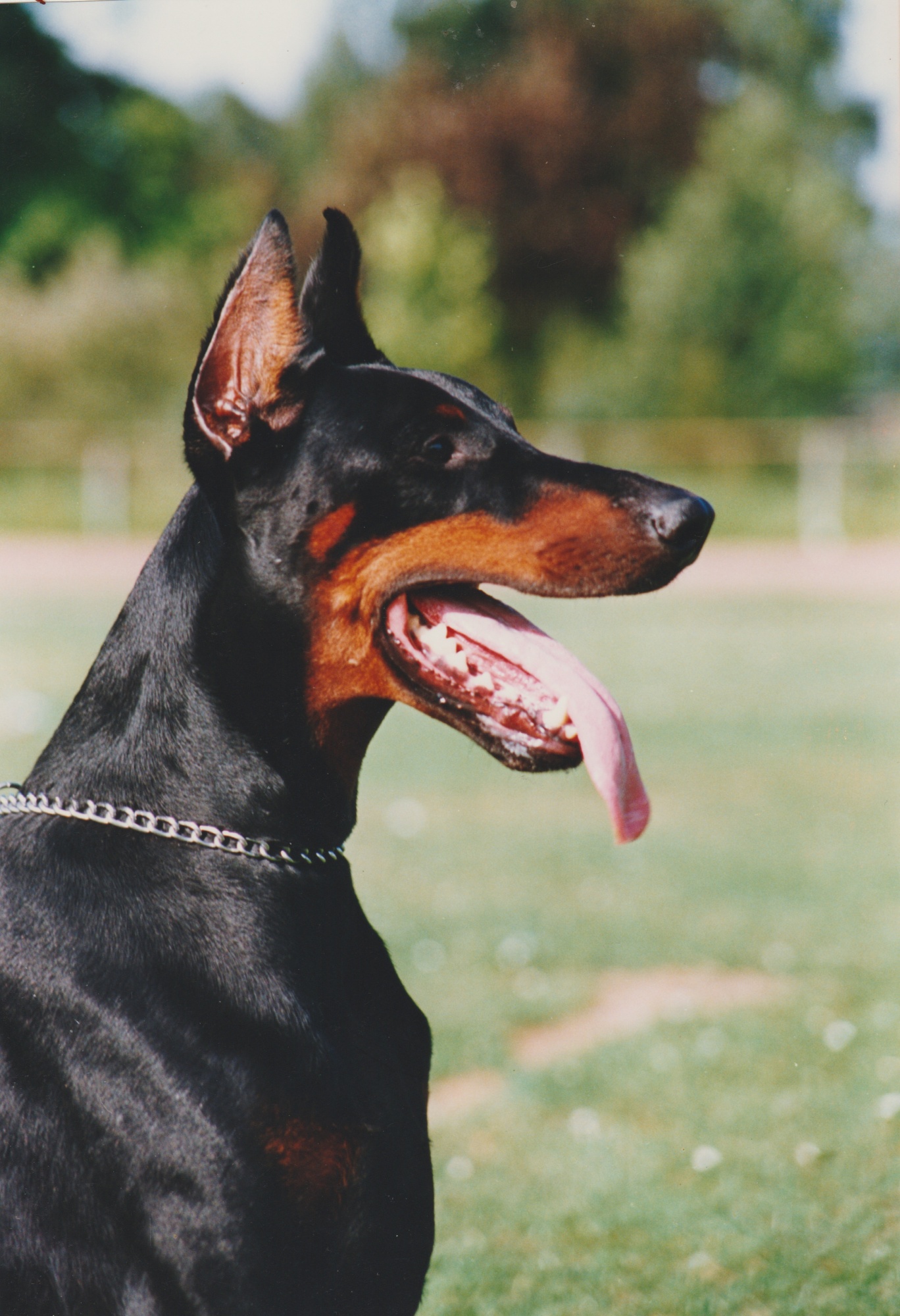
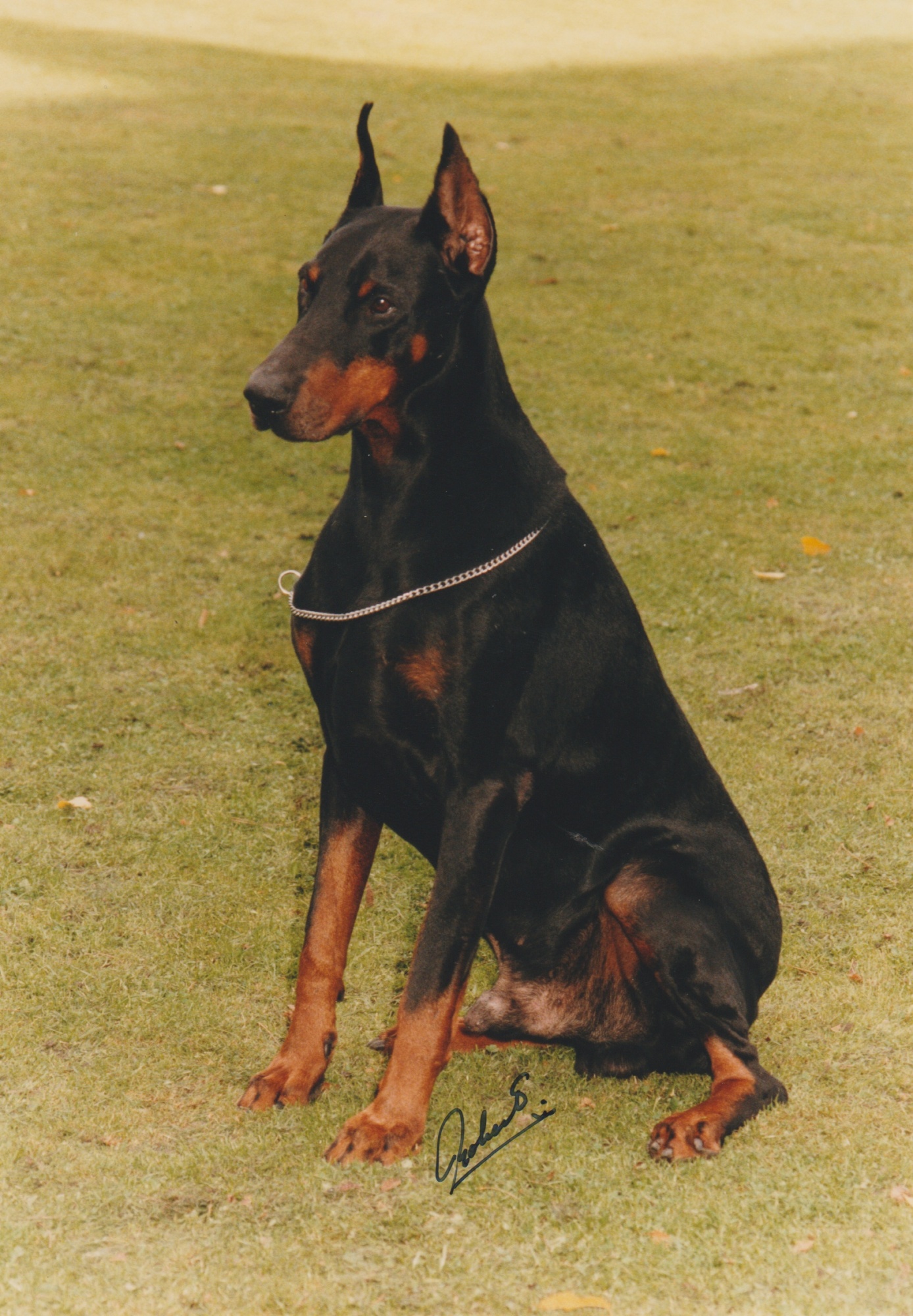
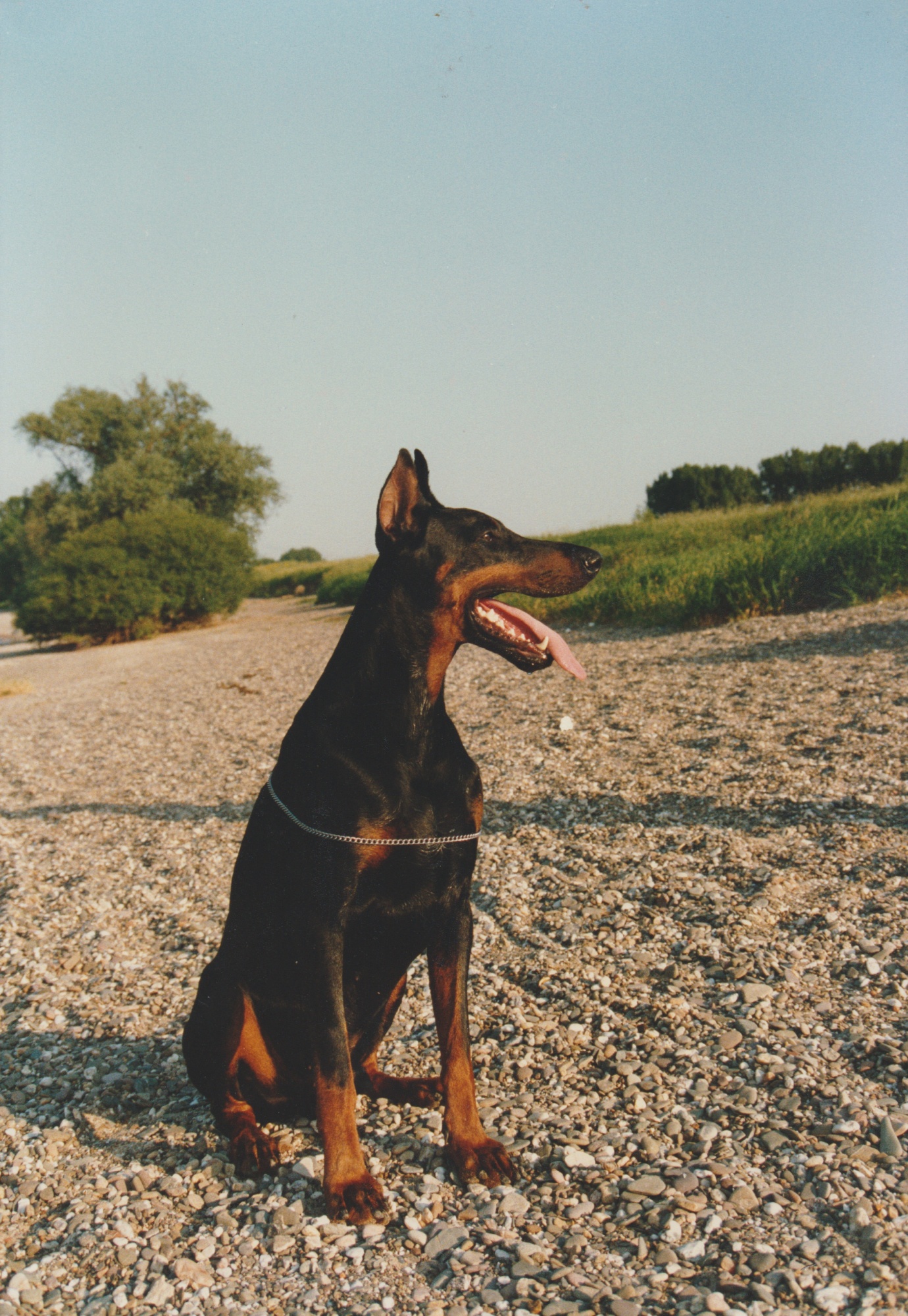
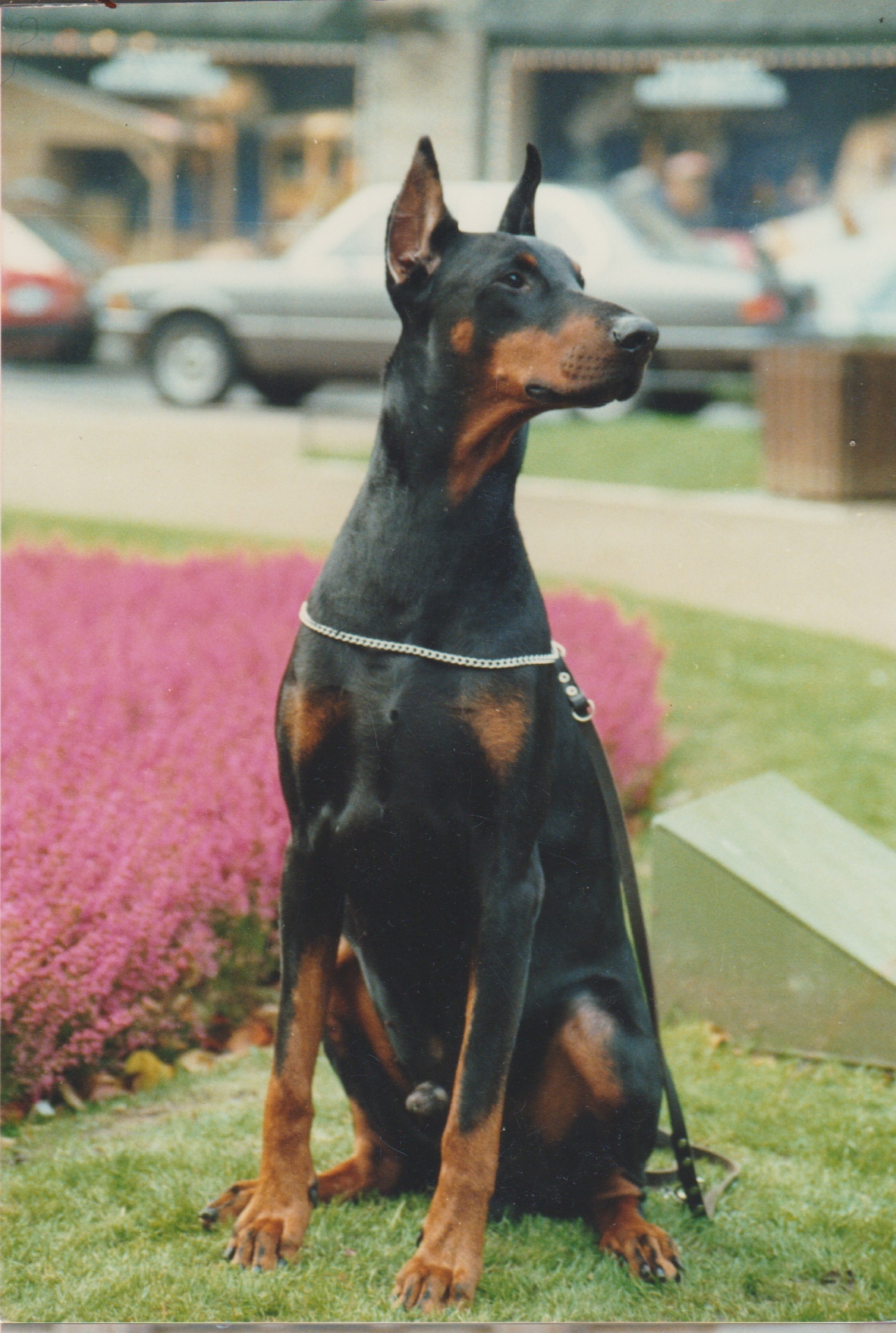
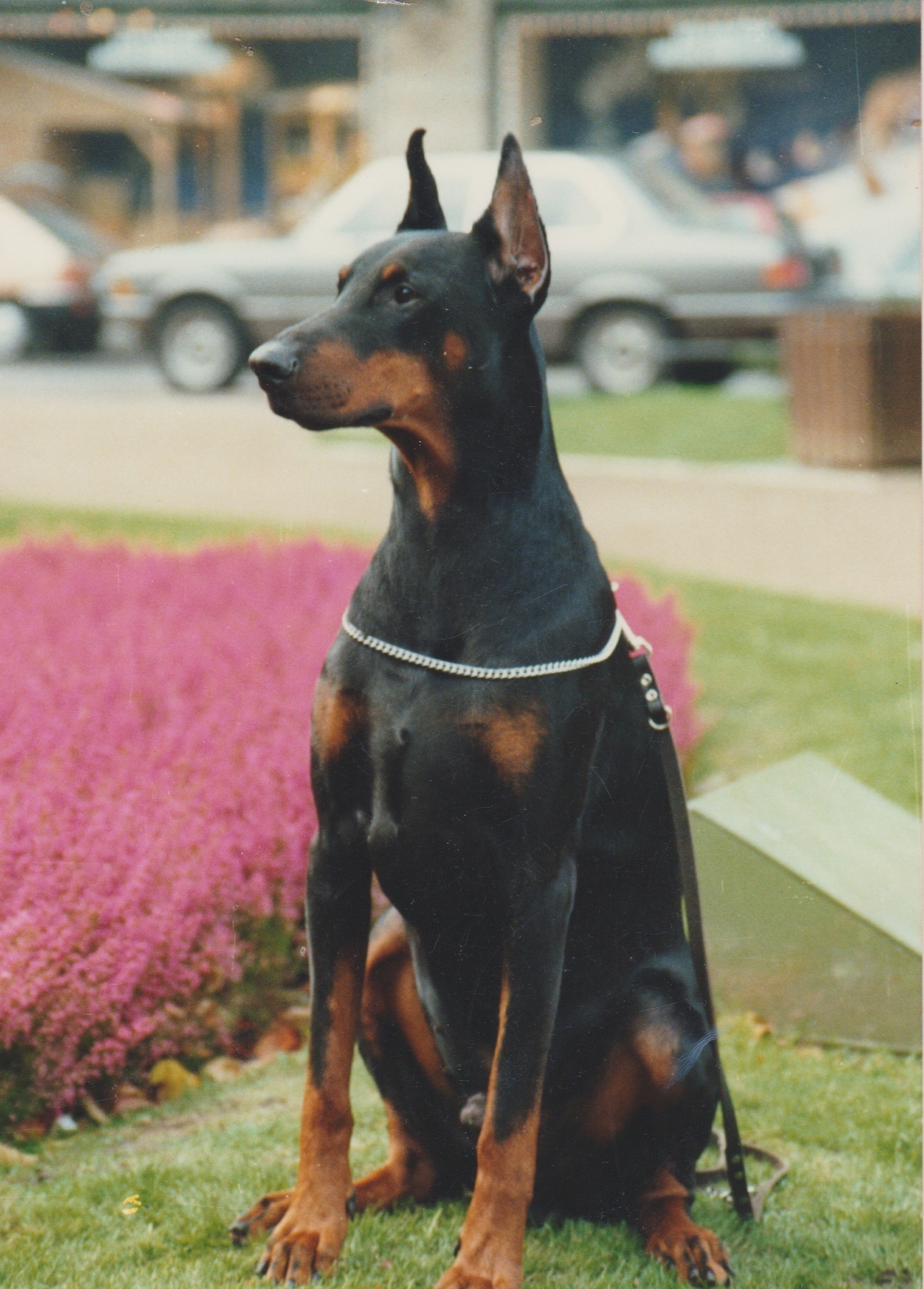
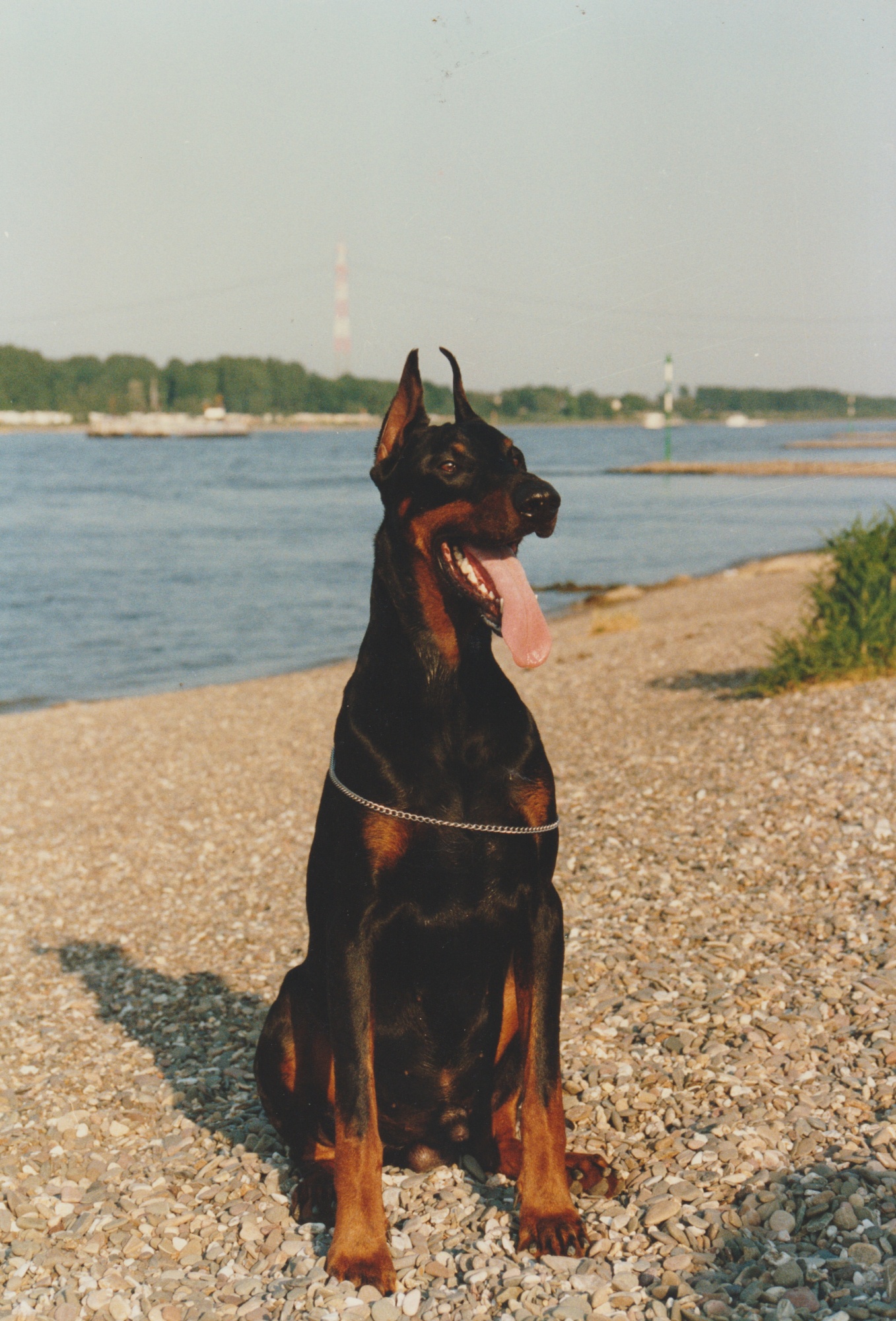
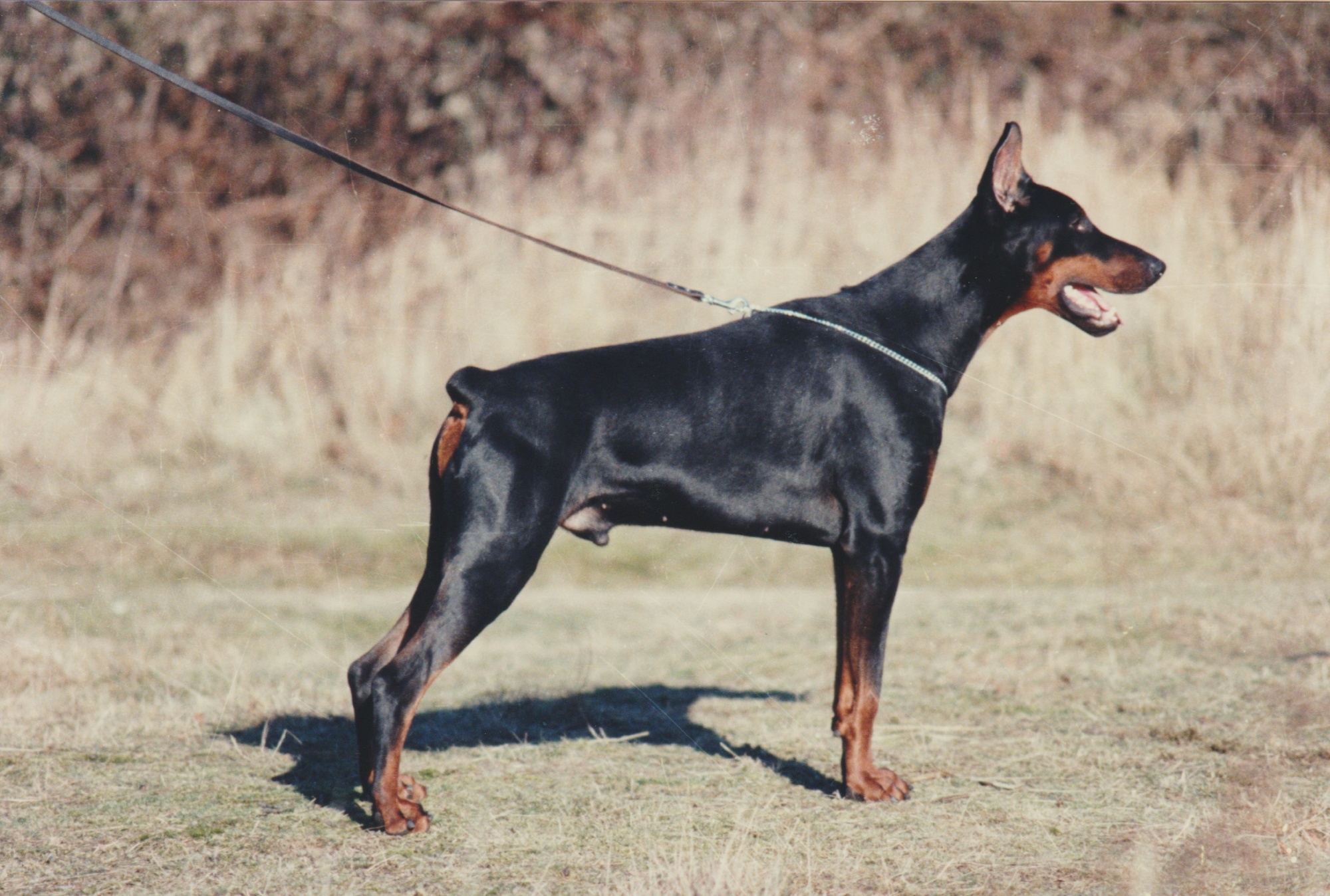
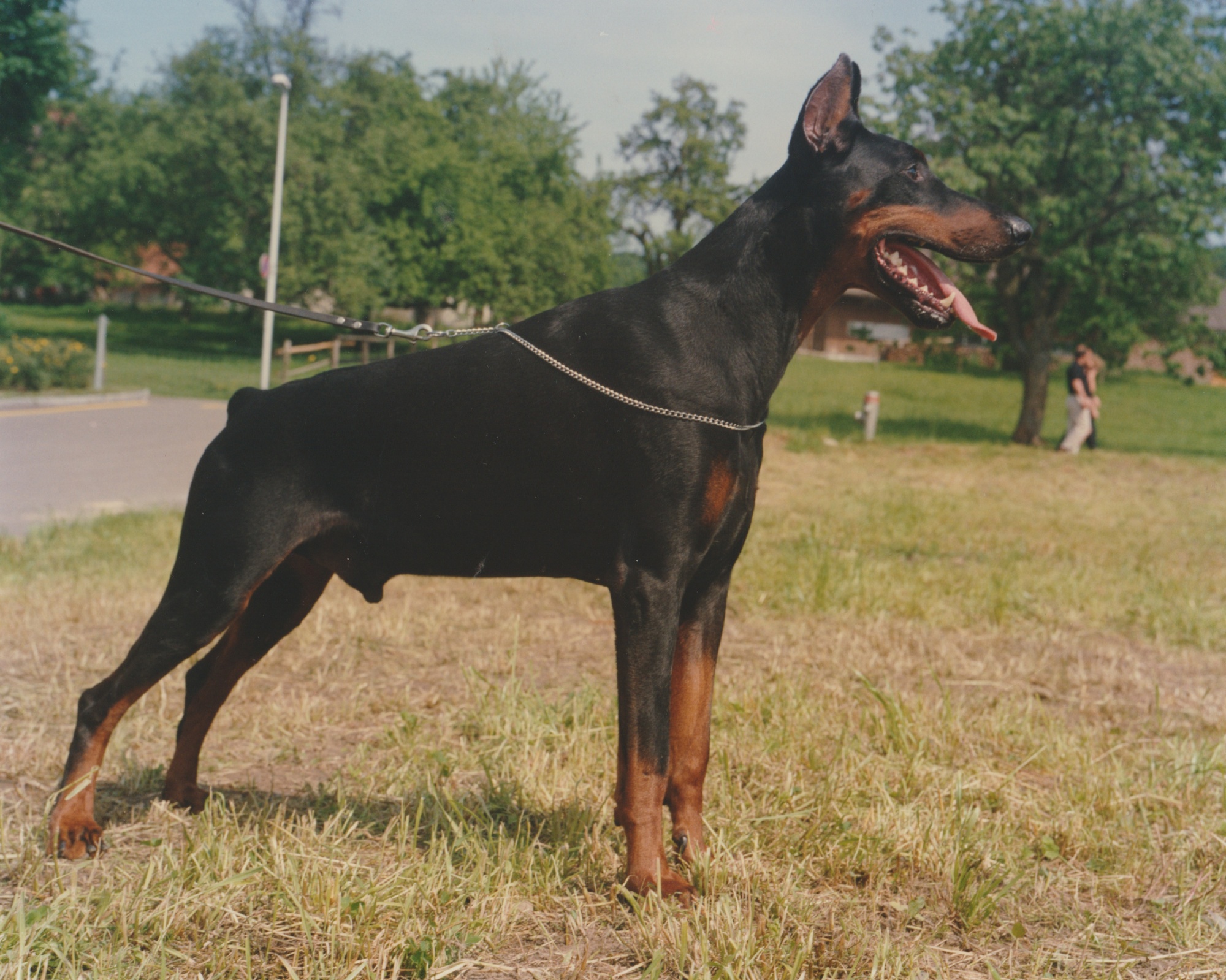
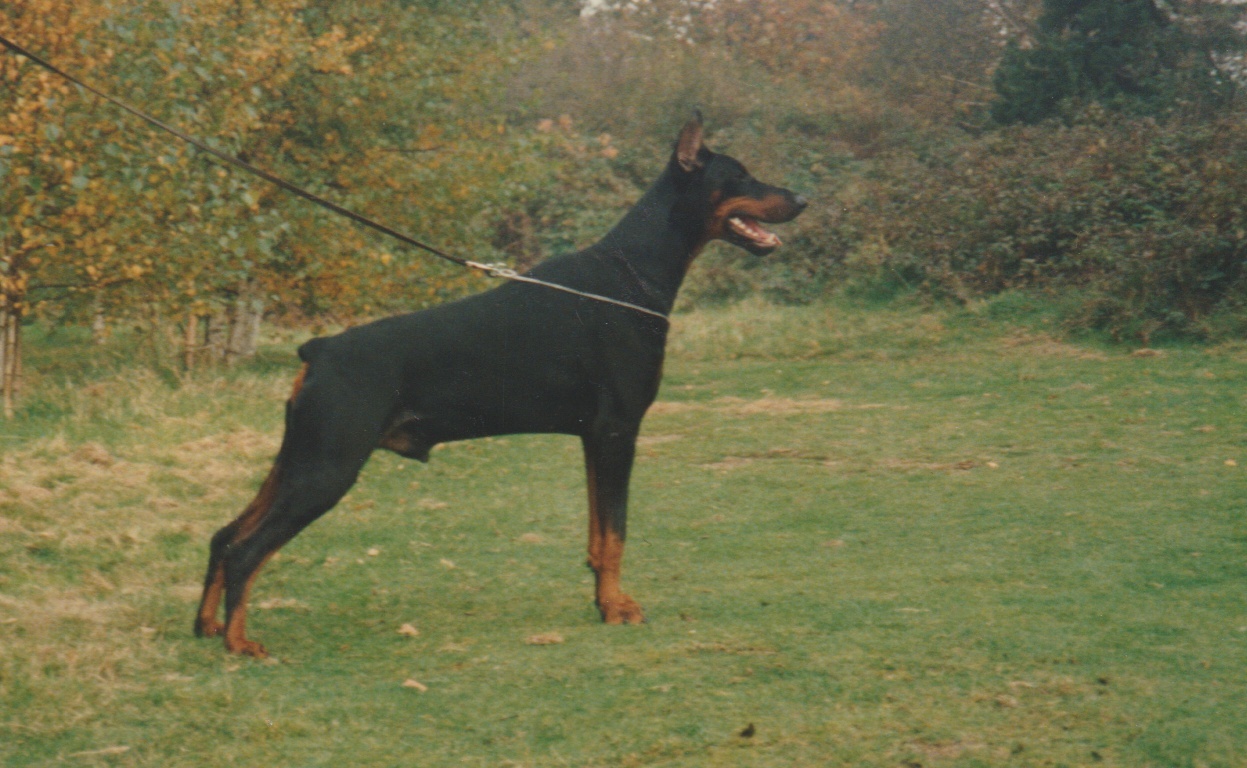
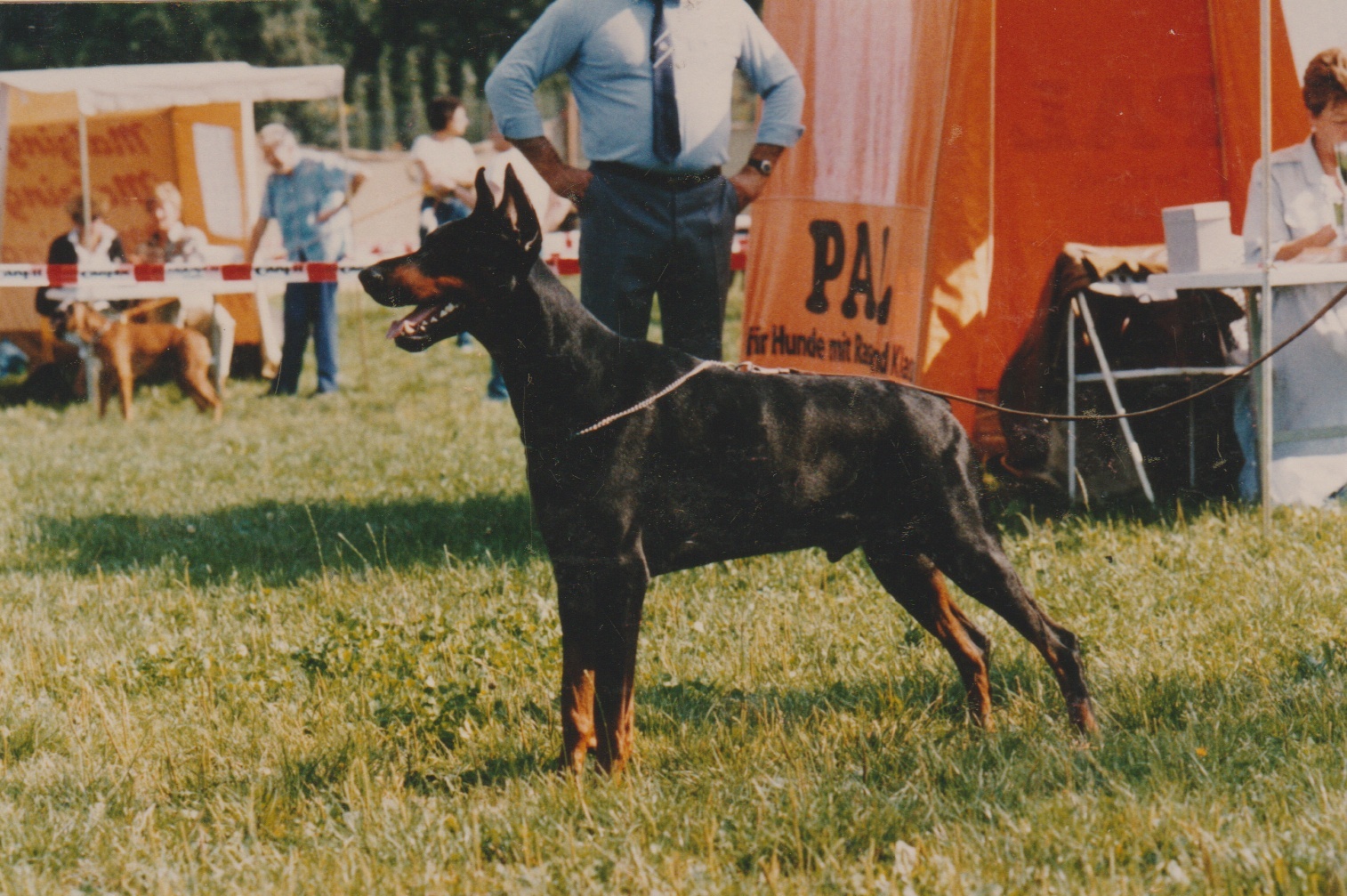
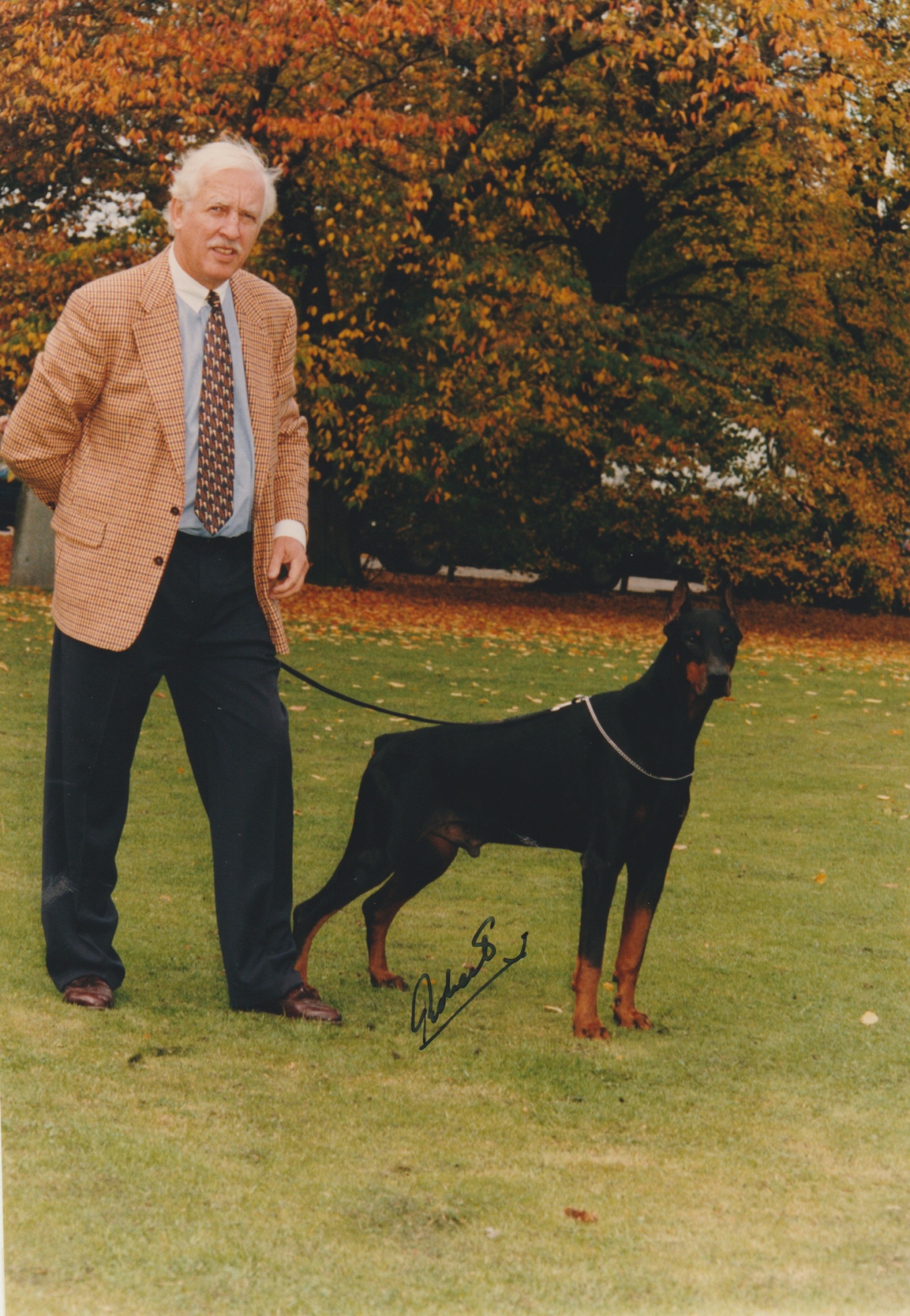
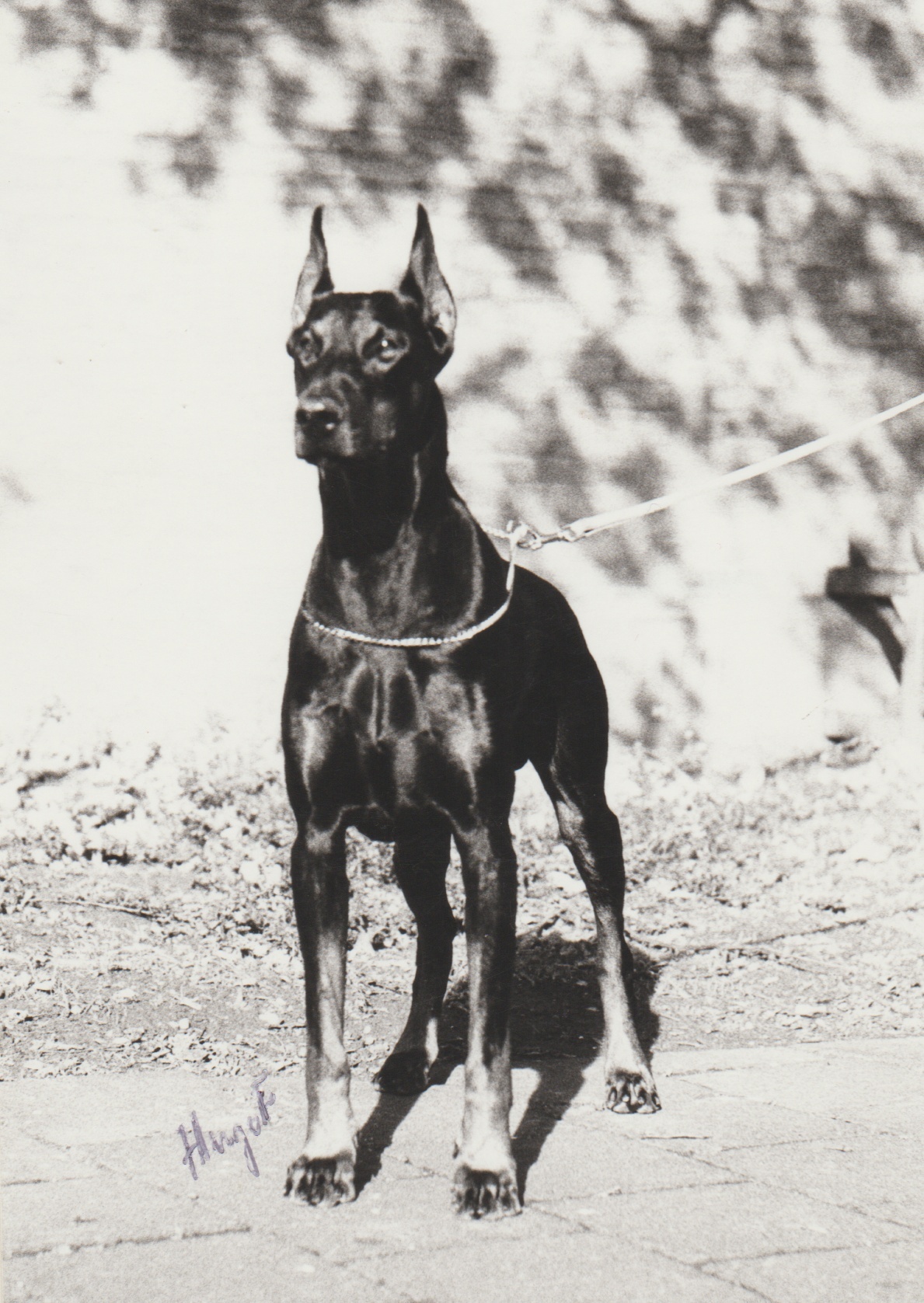
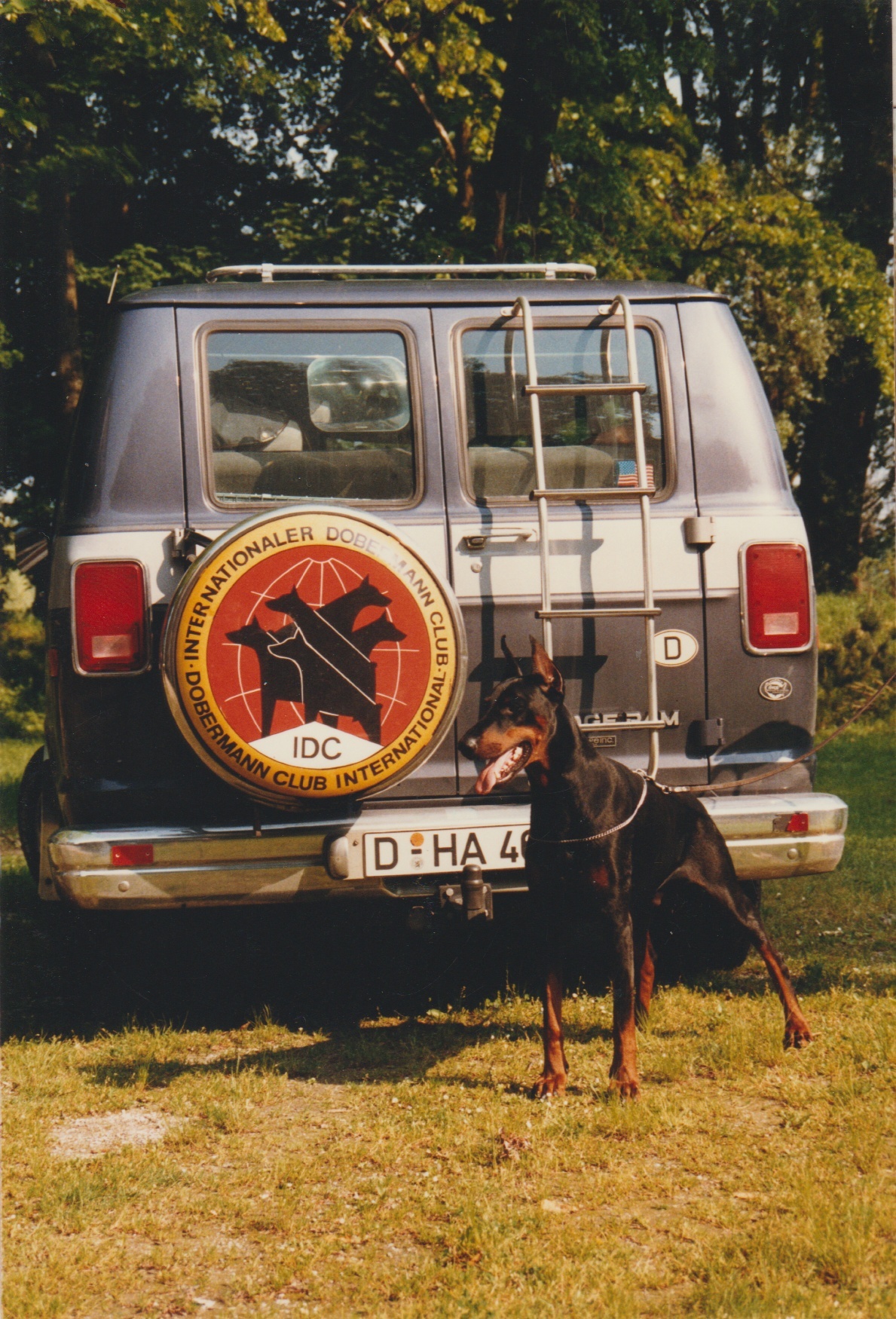
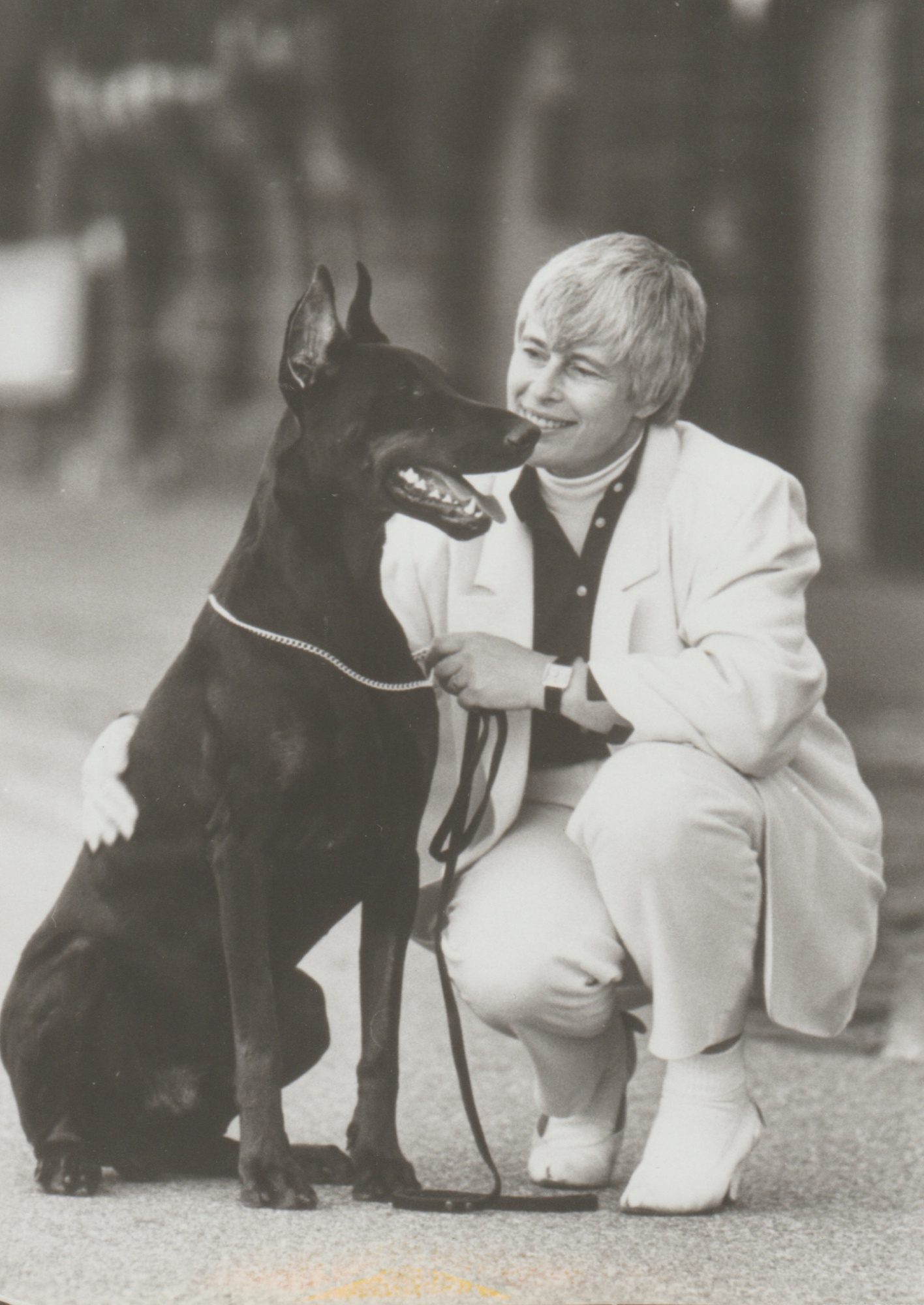
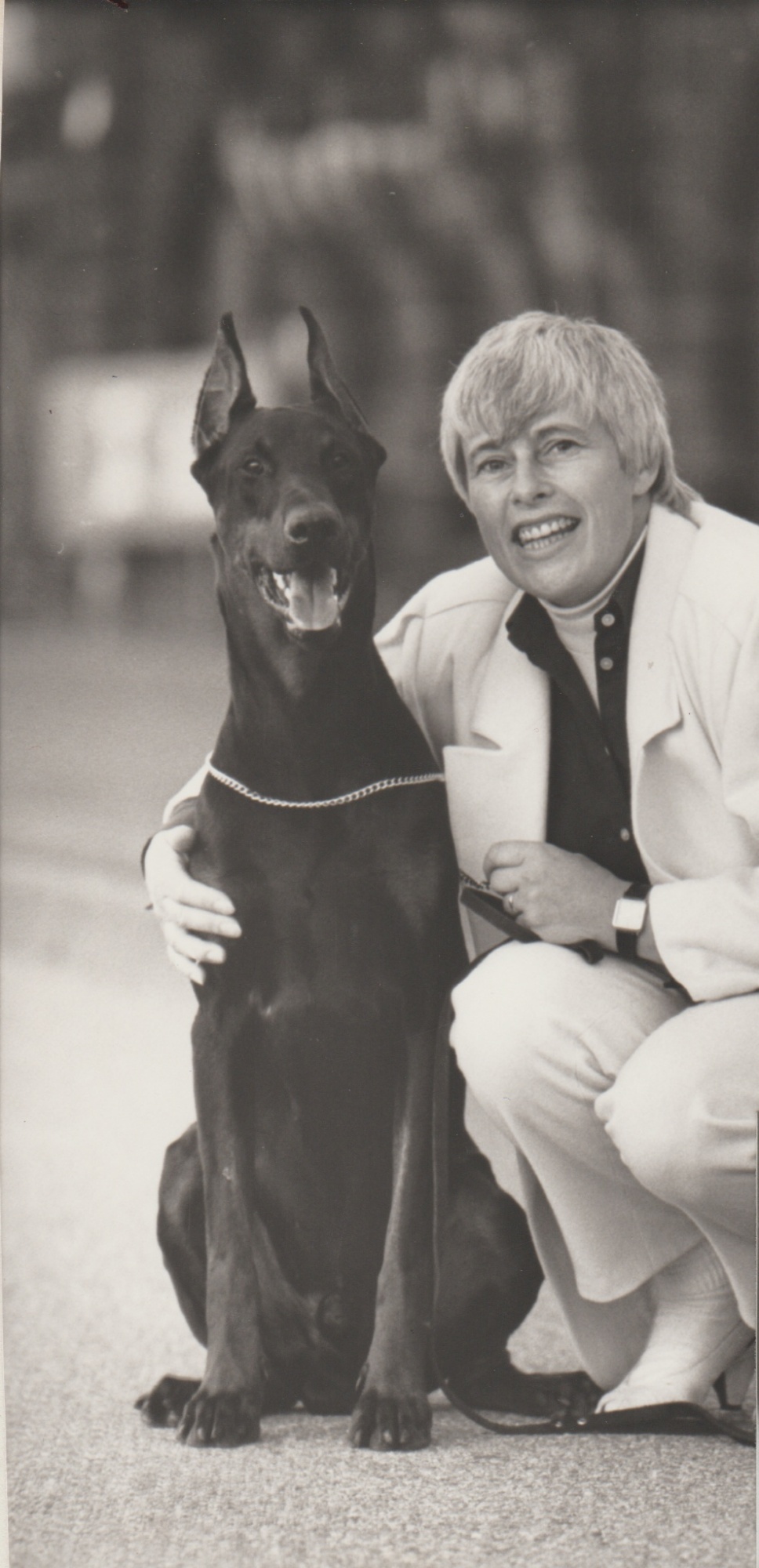
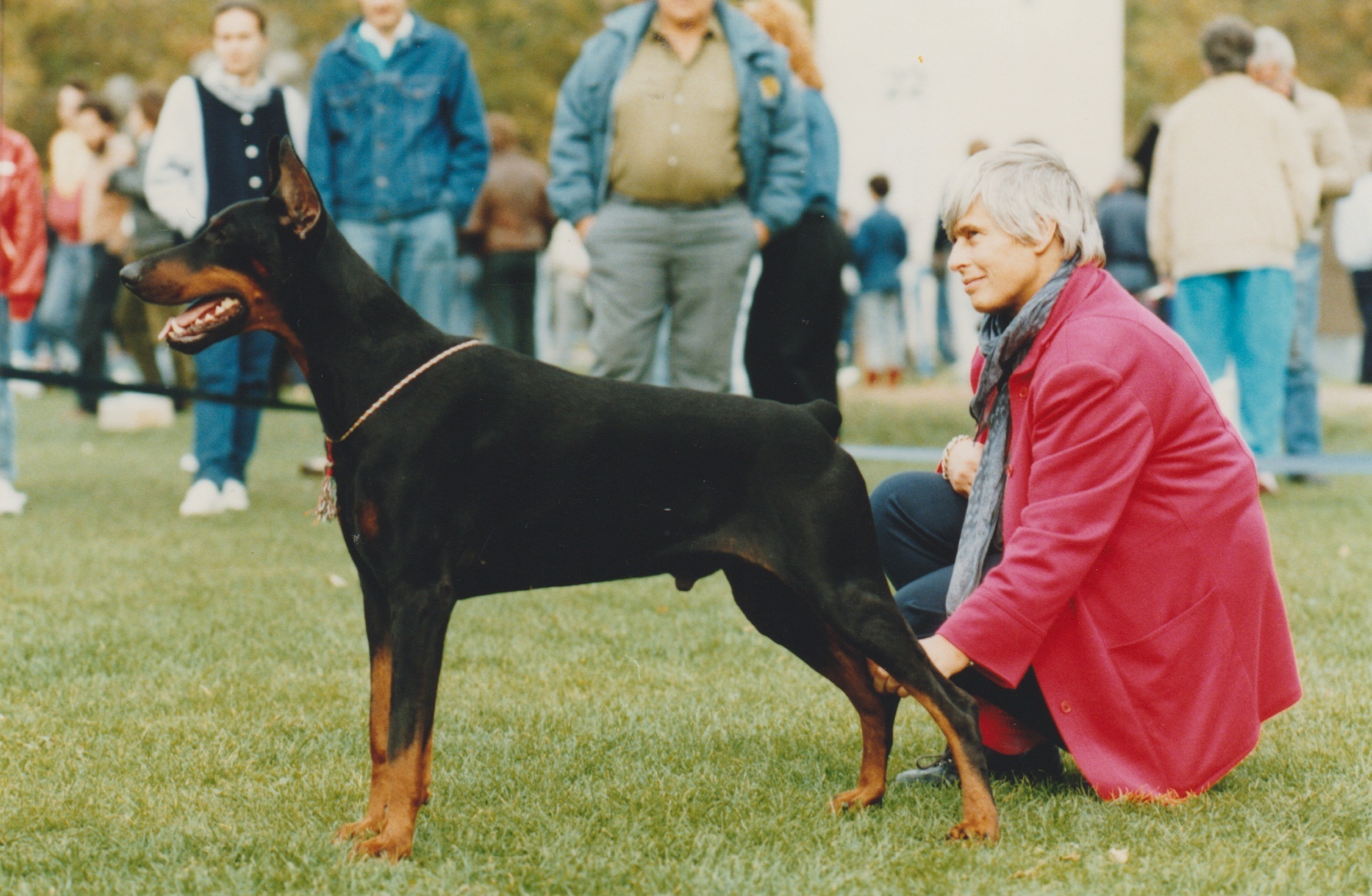
Guido in Media
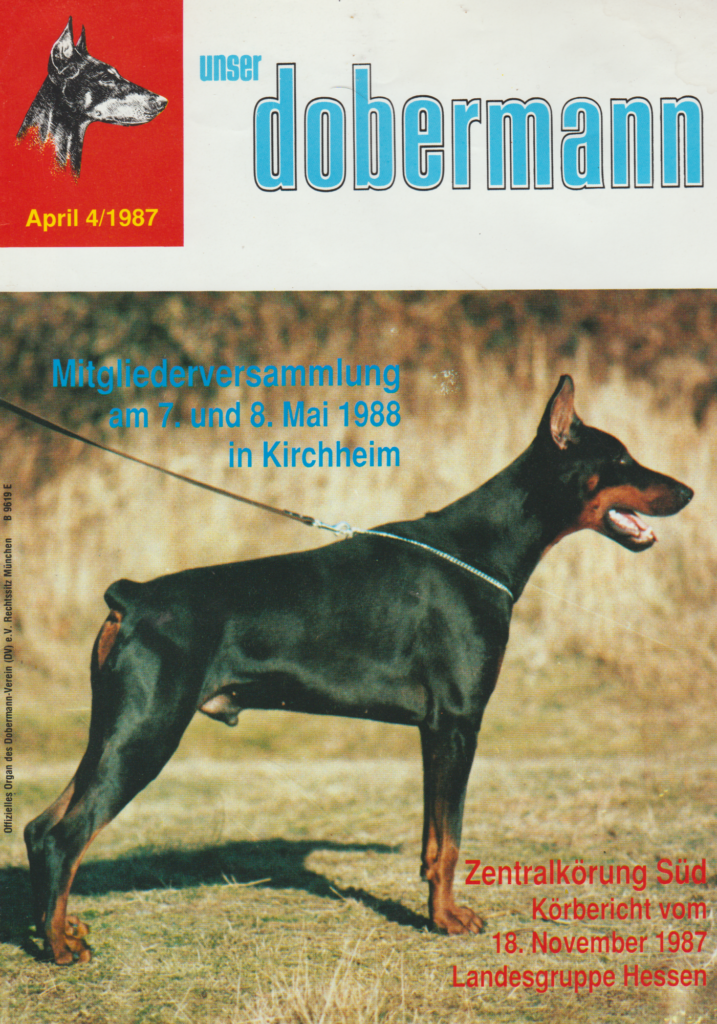
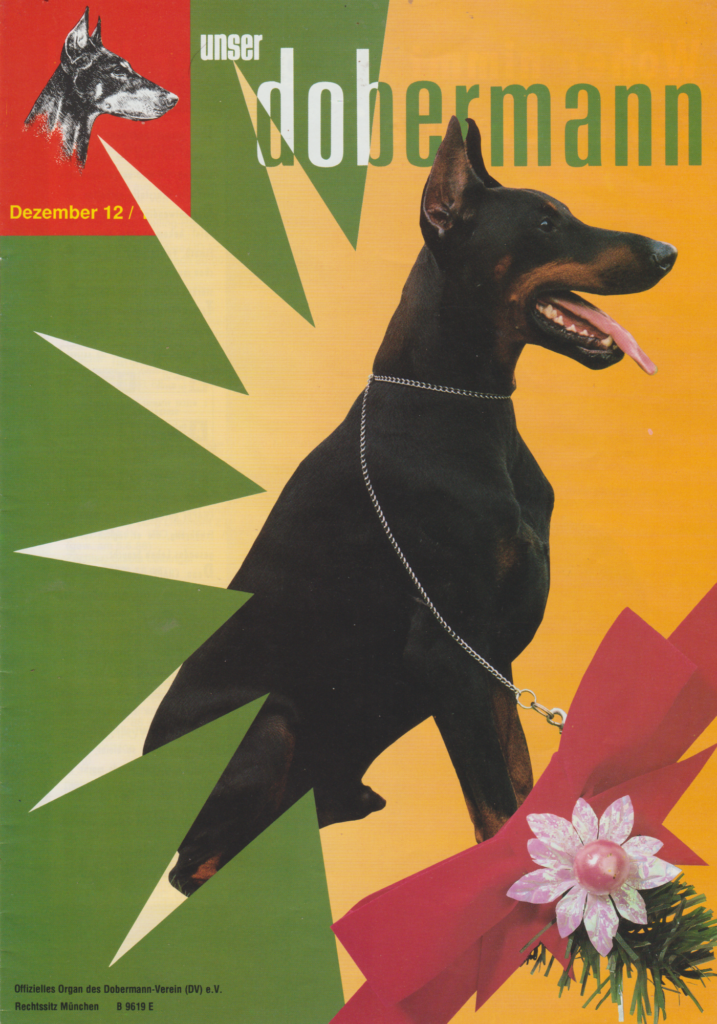
Source: Bild-Zeitung (Germany)
Date: October 24, 1987
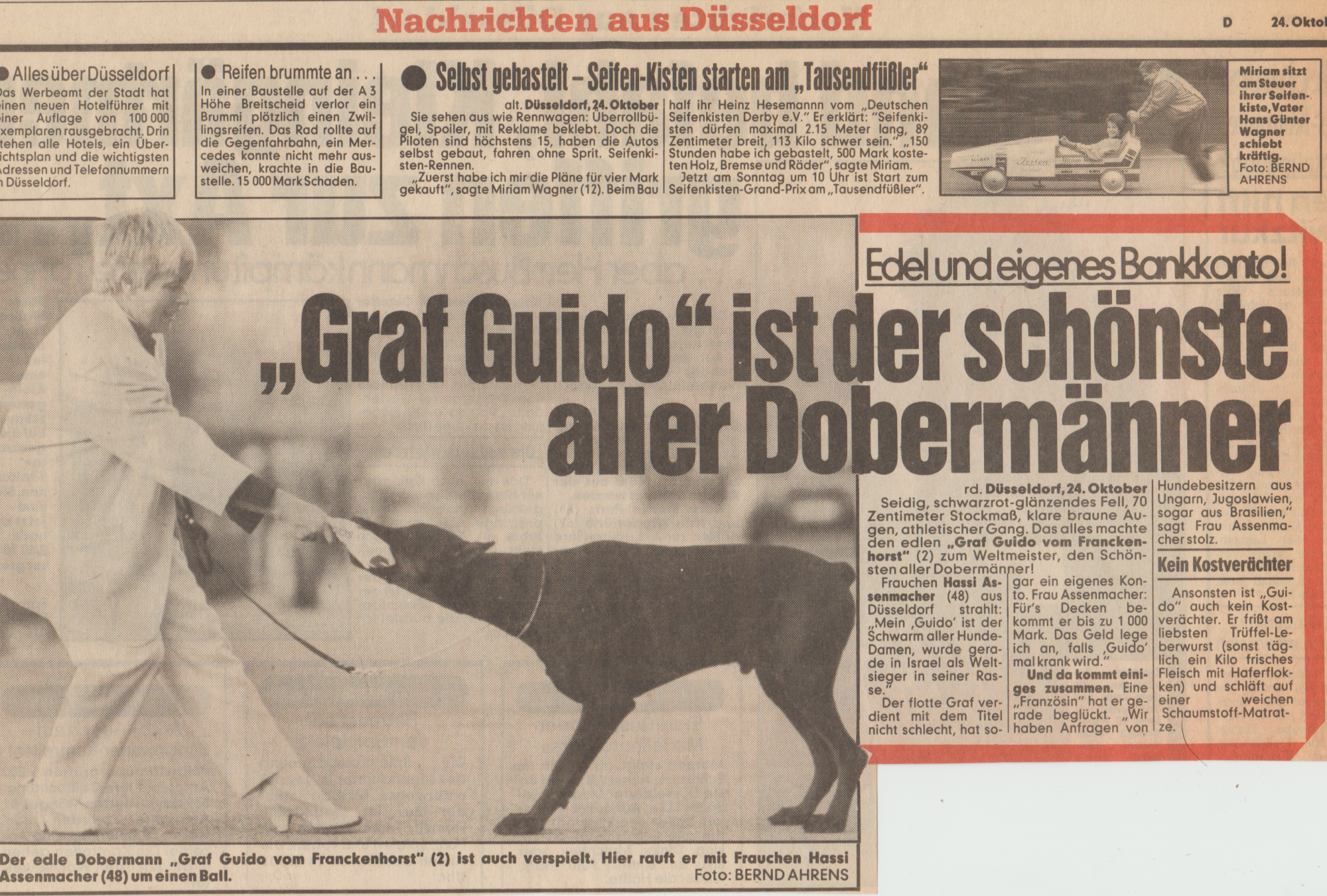
“Graf Guido” is the most beautiful of all Dobermans
Silky, black and glossy coat, 70 cm at the withers, clear brown markings, athletic build — all of this makes the noble “Graf Guido vom Franckenhorst” (2) the world champion and the most beautiful of all Dobermans!
The Düsseldorf-based dog owner Hassi Assenmacher (48) proudly says:
“My ‘Guido’ is the dream of all dog ladies.”
The black noble dog won the World Championship in Israel.
The handsome Graf also earns well — he even has his own bank account!
Mrs. Assenmacher:
“For mating, he brings in up to 1,000 marks. The money is saved — in case Guido ever gets sick.”
And there’s more:
A French woman made him particularly happy.
“We receive inquiries from dog owners from Hungary, Yugoslavia, and even Brazil,” says Mrs. Assenmacher proudly.
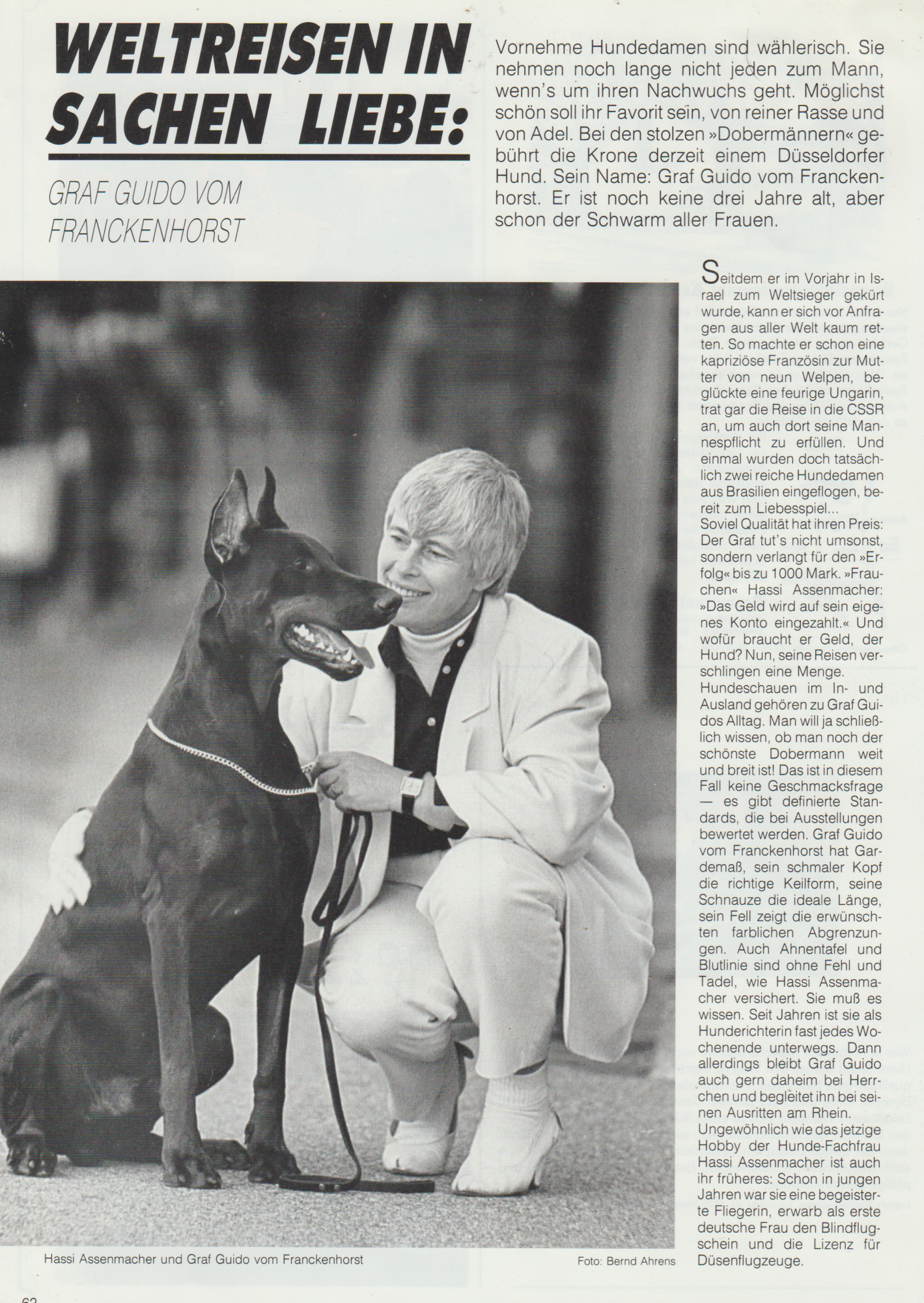
Noble dog ladies are selective. They do not accept just any partner when it comes to their offspring. Their chosen one should be as beautiful as possible, purebred and of noble lineage. Among the proud “Doberman men”, the crown currently belongs to a dog from Düsseldorf: his name is Graf Guido vom Franckenhorst. He is not even three years old yet — and already the darling of all females.
Since he was crowned World Winner in Israel last year, he can hardly keep up with requests from all over the world.
A capricious French lady, for example, travelled with her litter of nine puppies to meet him.
An elegant Hungarian lady took the journey to the USSR to fulfill her breeding plans.
And recently, two wealthy dog ladies were even flown in from Brazil — ready for a love visit.
Such quality has its price. Graf Guido does not work for free — he demands up to 1,000 marks per mating, as Mrs. Hassi Assenmacher explains: “The money is paid into his own account.”
And what does a dog need money for? Well — his travels alone cost a fortune.
Dog shows in Germany and abroad are part of Graf Guido’s everyday life.
After all, people want to know whether he is still the most beautiful Doberman —
and still in top condition. In this case, it is not a matter of taste — there are clearly defined standards by which dogs are judged at shows.
Graf Guido vom Franckenhorst has all the qualities:
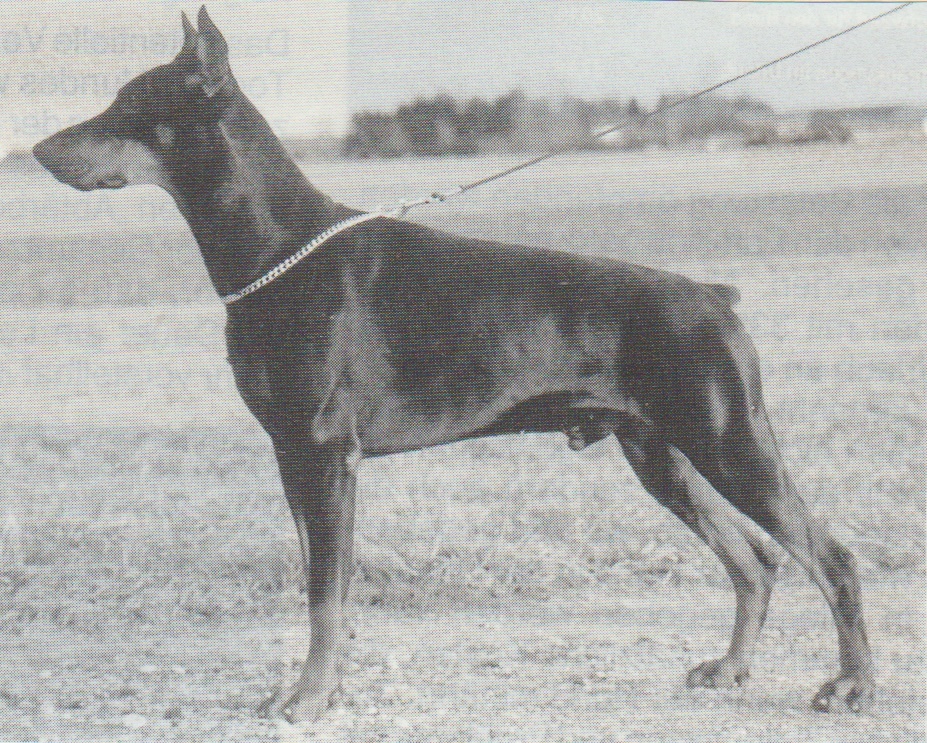
- a straight, narrow head
- the correct wedge-shaped skull
- a muzzle of ideal length
- a coat with perfectly defined color markings
His pedigree and bloodline are also flawless — as Hassi Assenmacher confidently assures.
Since she has been a dog handler, she has been travelling almost every weekend.
Graf Guido often stays at home — unless he accompanies her on trips along the Rhine.
Interestingly, dog expertise is not her only passion. In her younger years, Hassi Assenmacher was an enthusiastic pilot. She was the first German woman to obtain a blind-flying license and also received a license for seaplanes.
Travelling the world in the name of love
Graf Guido vom Franckenhorst
Source: Düsseldorf – Feine Adressen (Germany)
Date: Summer 1988
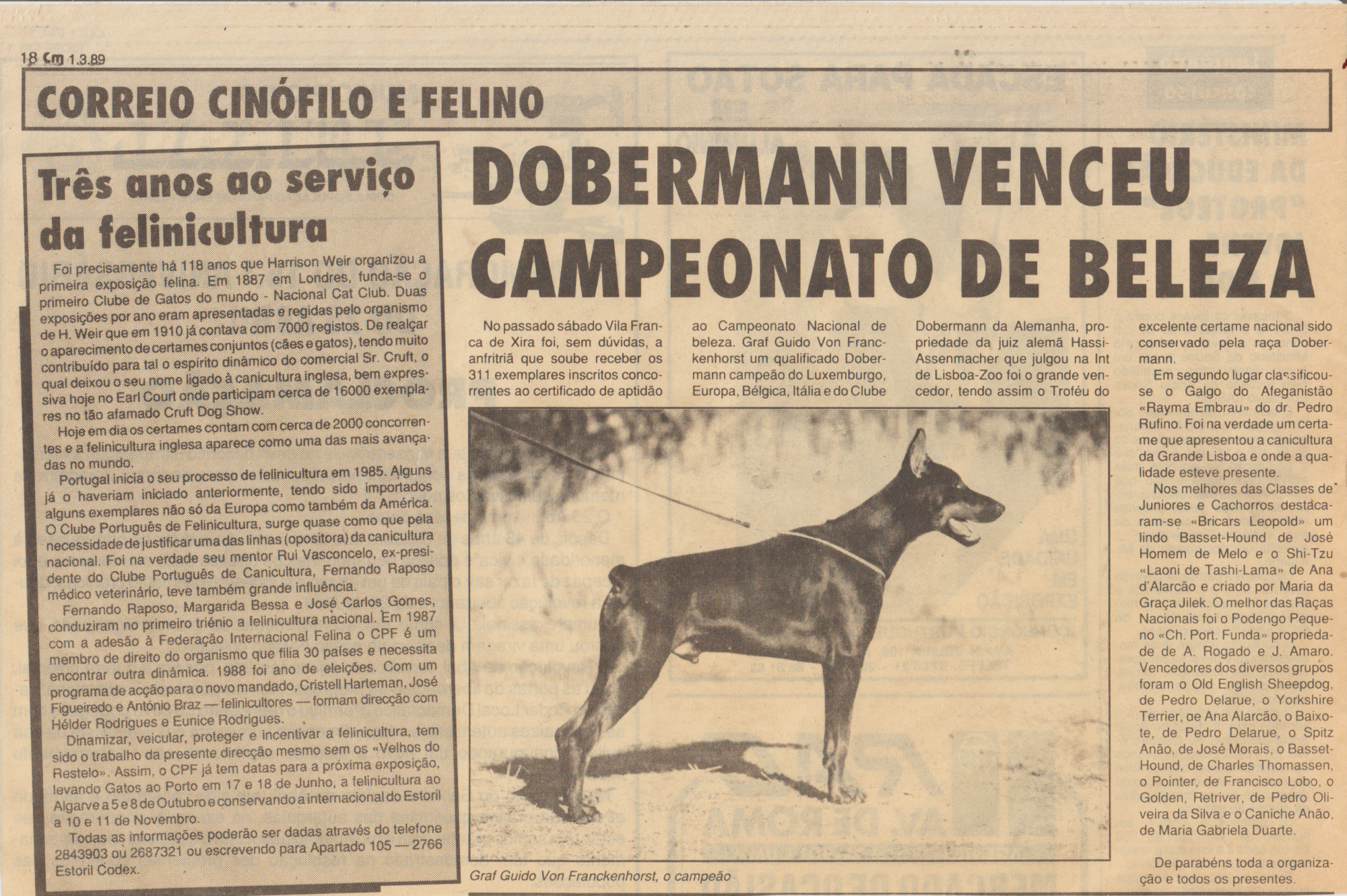
Source: Correio da Manhã (Portugal)
Date: March 1, 1989
Dobermann wins the beauty championship
Last Saturday, in Vila Franca de Xira, without surprises, the event welcomed 311 entries competing for certification of aptitude.
At the National Beauty Championship, Graf Guido vom Franckenhorst, a qualified Dobermann,
champion of Luxembourg, Europe, Belgium, Italy and the Dobermann Club of Germany, owned by judge Hassi Assenmacher, who also officiated at the Lisbon Zoo International Show, was the great winner — thus taking the trophy.
The excellent national event once again demonstrated the high standard maintained within the Dobermann breed.
Second place was awarded to the Afghan Hound “Rayma Embrau”, owned by Dr. Pedro Rufino.
It was truly an event that showcased the excellence of breeding from Great Lisbon, where quality was clearly present.
Graf Guido vom Franckenhorst travels a lot, far and wide, and every time, love is involved. The Dobermann from Düsseldorf has already been to Austria, Hungary, Holland, France and Israel. At every destination, a lady is waiting for him, although strictly speaking she is a four-legged lady, because after all he is a dog.
His owner, Hassi Assenmacher, says that Guido is the most beautiful Doberman, with an excellent pedigree and a flawless body. He is frequently requested for breeding and already has more than one hundred offspring. His fame is largely due to his success in breeding. Among other achievements, he became World Winner in Israel and was named the most beautiful dog of the year in Bern.
In August of the previous year, Graf Guido was officially invited to Moscow. However, the breeding visit only took place three months later, because the female first had to come into season. Hassi Assenmacher recalls that the Russian Marina Svetanina saw their dog at a show in the USSR and was so impressed that she wanted Guido for her Dobermann female. When Assenmacher received the official invitation from the Moscow service dog club, she was surprised, especially because the letter stated that the visit would serve to strengthen friendly and cultural relations between the two countries.
After arriving in Moscow, Hassi Assenmacher and Guido were privately accommodated, as dogs were not allowed in hotels. They stayed for three days and everything went smoothly. Guido and the Dobermann female immediately got along.
Back in Düsseldorf, Hassi Assenmacher is now writing thank-you letters, as Graf Guido has once again become a father. His breeding services, however, are not inexpensive, and for mating, the fee is around 1,000 marks.
Hassi Assenmacher also proudly holds the official invitation from Moscow, where she was asked to bring her dog to the Kremlin city for breeding purposes. Graf Guido, at only three years of age, had already won numerous international awards and was crowned World Winner in Israel.
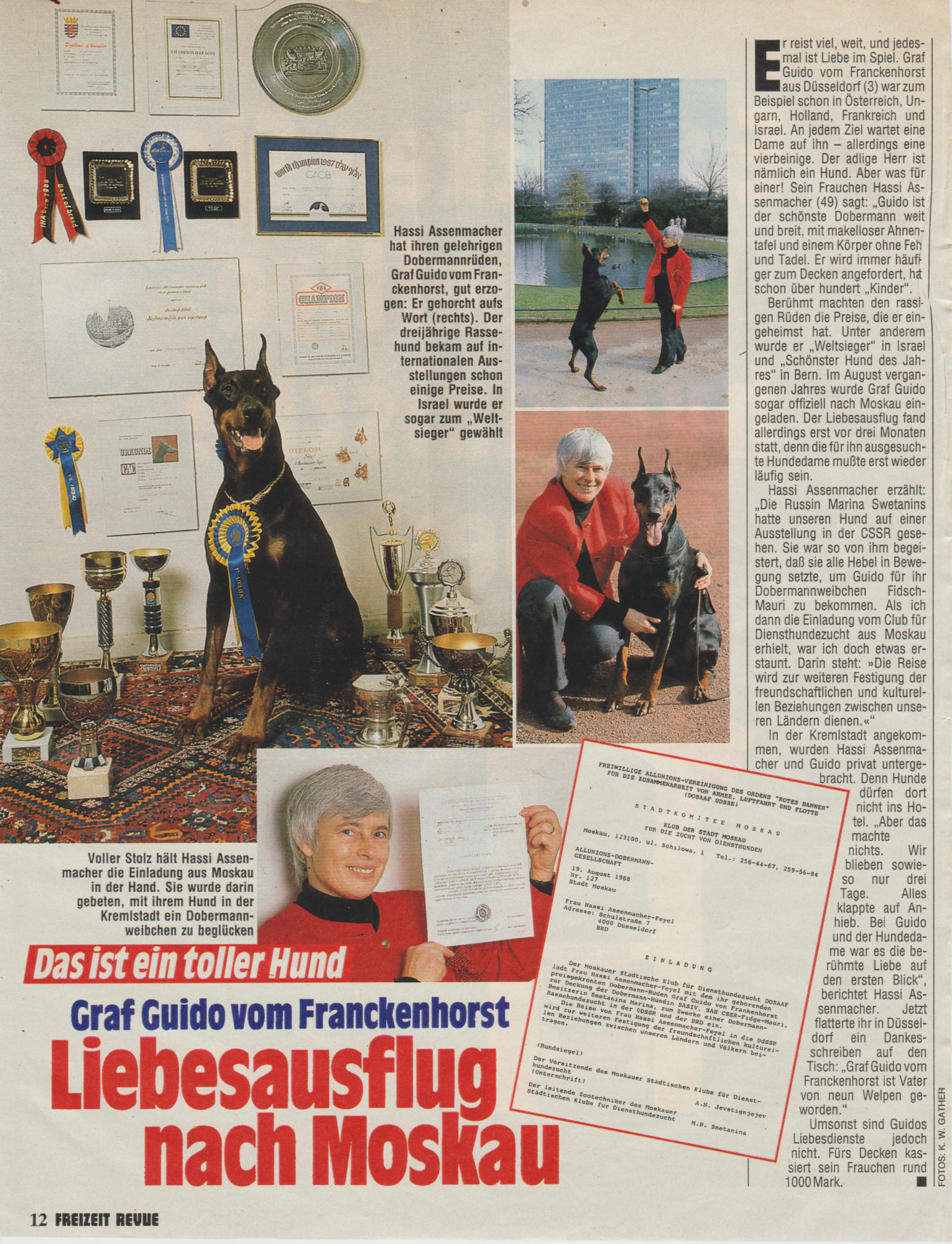
A great dog - Graf Guido vom Franckenhorst – a love trip to Moscow
Source: Freizeit Revue (Germany)
Date: March 30, 1989
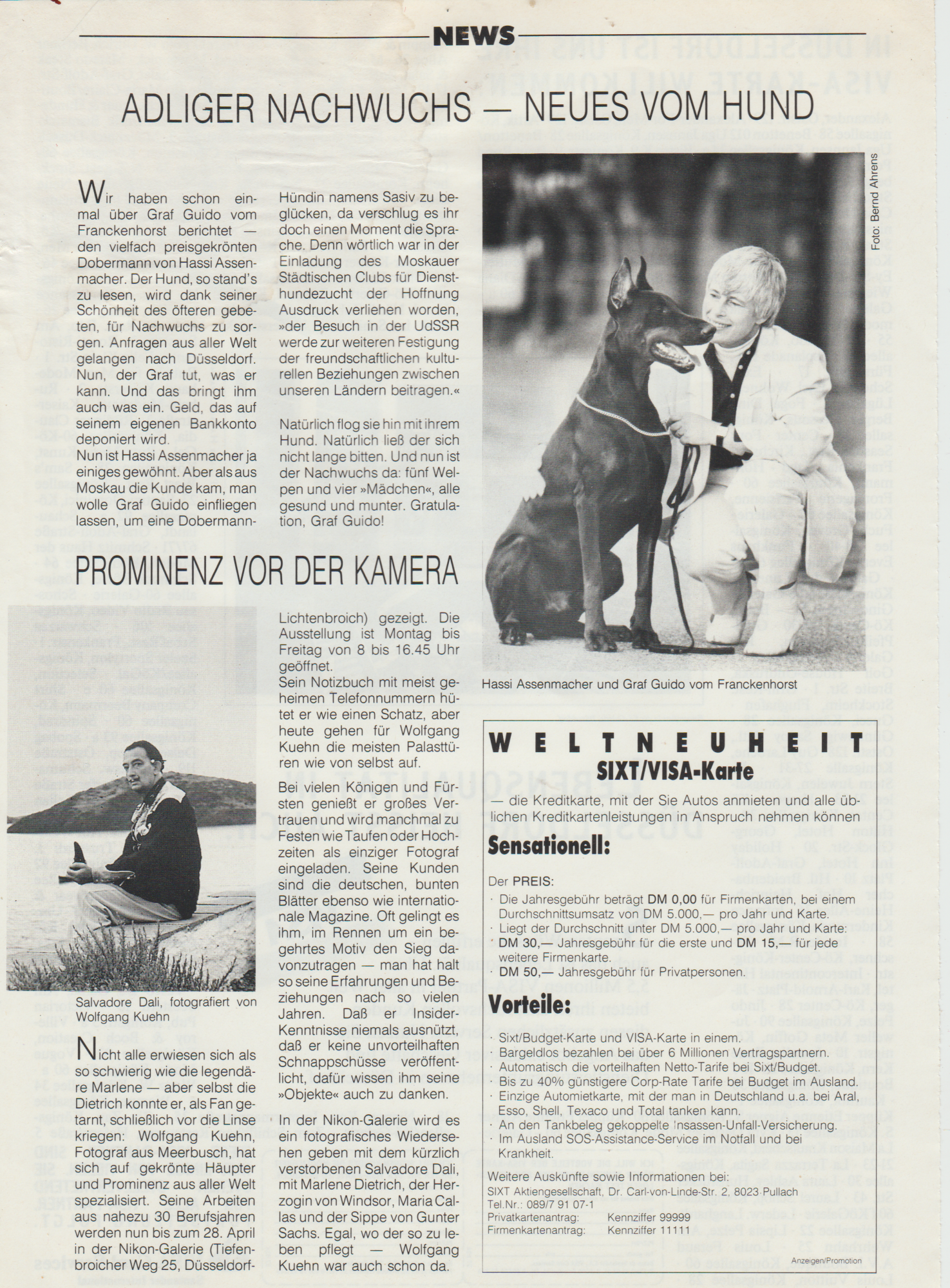
Noble offspring – news about the dog
We have already reported on Graf Guido vom Franckenhorst, the award-winning Dobermann of Hassi Assenmacher. As was written at the time, thanks to his beauty he is often called upon to produce offspring. Requests from all over the world arrive in Düsseldorf. Graf Guido does what he does best, and he also brings in income, which is deposited into his own bank account.
Hassi Assenmacher is already used to such things. But when a letter arrived from Moscow, they wanted to invite Graf Guido to come to breed with a Dobermann female named Sasiv. At first, it took her breath away. The invitation from the Moscow City Club for Service Dog Breeding explicitly stated that the visit to the USSR would contribute to strengthening friendly and cultural relations between the two countries.
Of course, she travelled there with her dog. Naturally, he did not have to wait long. And now there is offspring: five males and four females, all healthy and lively. Congratulations, Graf Guido.
Source: Düsseldorf – Feine Adressen (Germany)
Date: Spring 1989
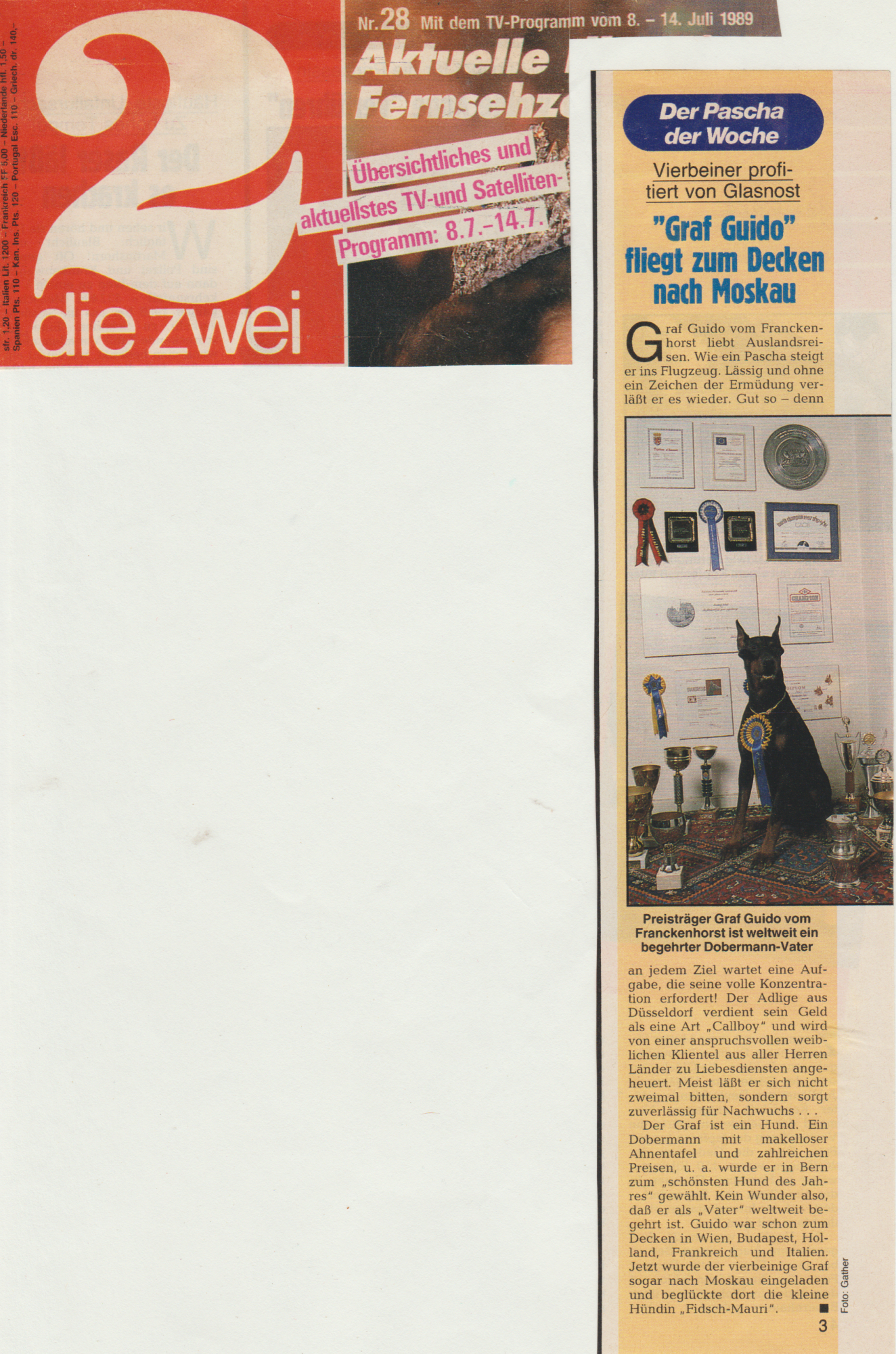
The macho of the week. “Graf Guido” flies to Moscow for mating
Four-legged professional benefits from fame. Graf Guido vom Franckenhorst loves travelling abroad. Like a true macho, he boards airplanes, completes his task without any sign of exhaustion and then returns again.
At every destination, a job awaits him that requires full concentration. The noble dog from Düsseldorf earns his money like a kind of “callboy” and is hired by a demanding female clientele from all over the world for breeding services. He is rarely asked twice, because he reliably produces offspring.
Graf Guido vom Franckenhorst, a prize-winning Dobermann, is a highly sought-after stud dog worldwide. With a flawless pedigree and numerous awards, including being named the most beautiful dog of the year in Bern, it is no surprise that he is in demand as a sire across the globe.
Guido has already travelled for breeding to Vienna, Budapest, Holland, France and Italy. Most recently, he was even invited to Moscow, where he successfully fulfilled his role and bred with the Dobermann female “Fisch-Mauri”.
Source: Die Zwei (Germany)
Date: July 8, 1989
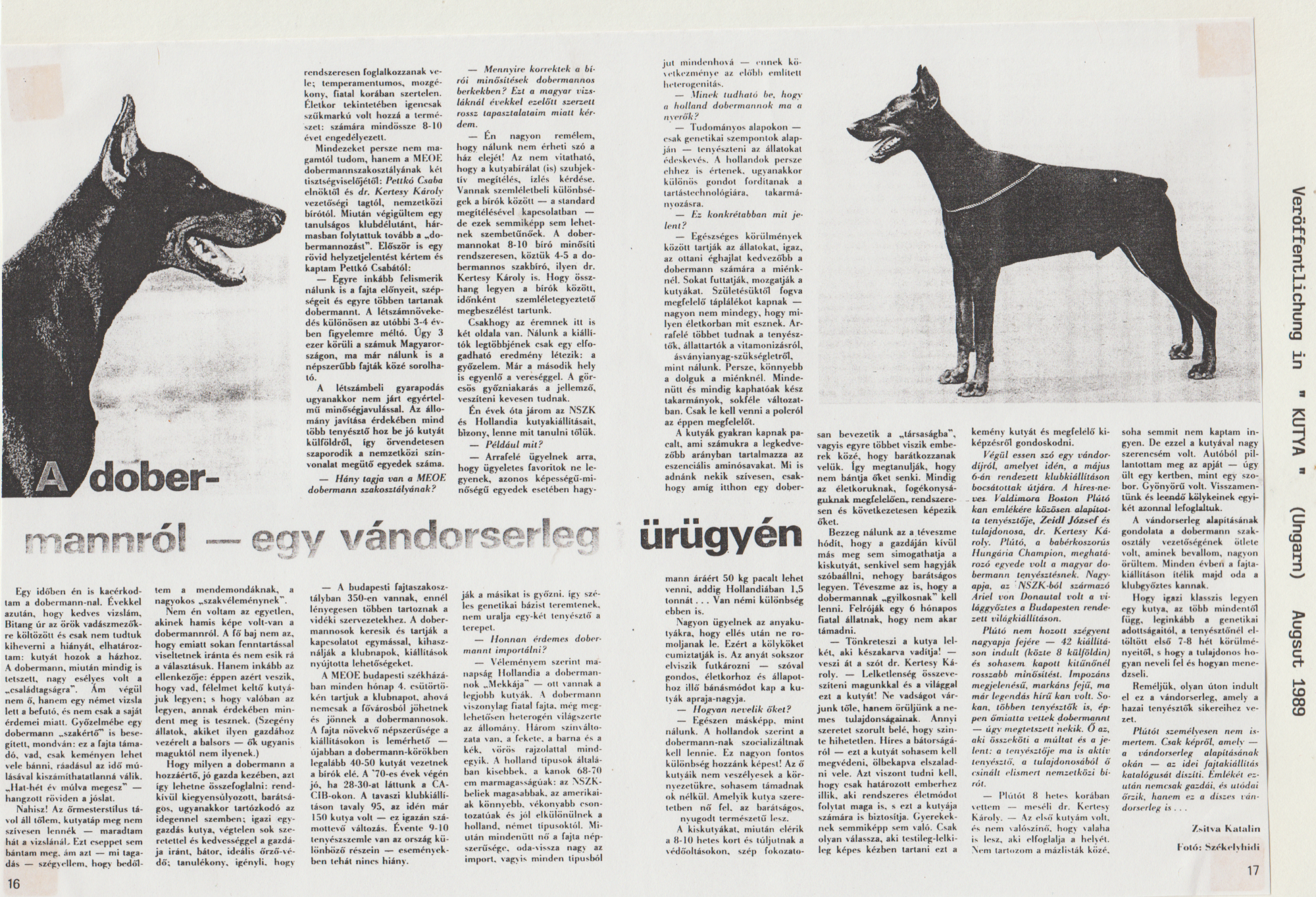
About the Dobermann – on the occasion of a wandering trophy
Source: Kutya (Hungary)
Date: August 1989
The Dobermann is a breed that I have been closely connected with for many years. Over time, my relationship with these dogs has become deeper and more meaningful. The Dobermann is an intelligent, elegant and highly capable working dog, but at the same time sensitive and demanding in terms of handling and upbringing.
The development of the breed has gone through different stages. In recent years, more emphasis has been placed on maintaining both exterior quality and working ability. It is important that the Dobermann remains not only a beautiful dog, but also one that is mentally stable and suitable for work.
In Hungary, the population of Dobermanns has been steadily growing. Breeders are increasingly focused on improving bloodlines and maintaining international standards. There is a strong connection with foreign kennels, and dogs are regularly imported to enrich the genetic pool. As a result, the quality of the breed has improved significantly.
The number of Dobermanns in Hungary is estimated to be in the thousands, and the breed is becoming more and more popular. Breeding programs aim to combine correct conformation with balanced temperament. Special attention is paid to health, structure and character.
There are ongoing discussions among breeders about the direction in which the breed should develop. Some emphasize working ability, while others focus more on exterior. However, the ideal Dobermann should combine both qualities.
In terms of breeding practices, careful selection of breeding pairs is essential. Dogs should be chosen not only for their appearance, but also for their temperament and health. Puppies must be raised in good conditions, with proper nutrition and socialization from an early age.
The role of clubs and organizations is also very important. They provide structure, organize exhibitions and working trials, and help maintain breed standards. International cooperation plays a key role in improving the breed.
The Dobermann requires an experienced owner. It is not a breed for everyone, but in the right hands, it becomes an exceptional companion and working partner. With proper training and care, it can achieve outstanding results both in work and in show.
The future of the breed depends on responsible breeding, respect for standards and a clear vision of what the Dobermann should represent. Only in this way can its unique qualities be preserved for future generations.
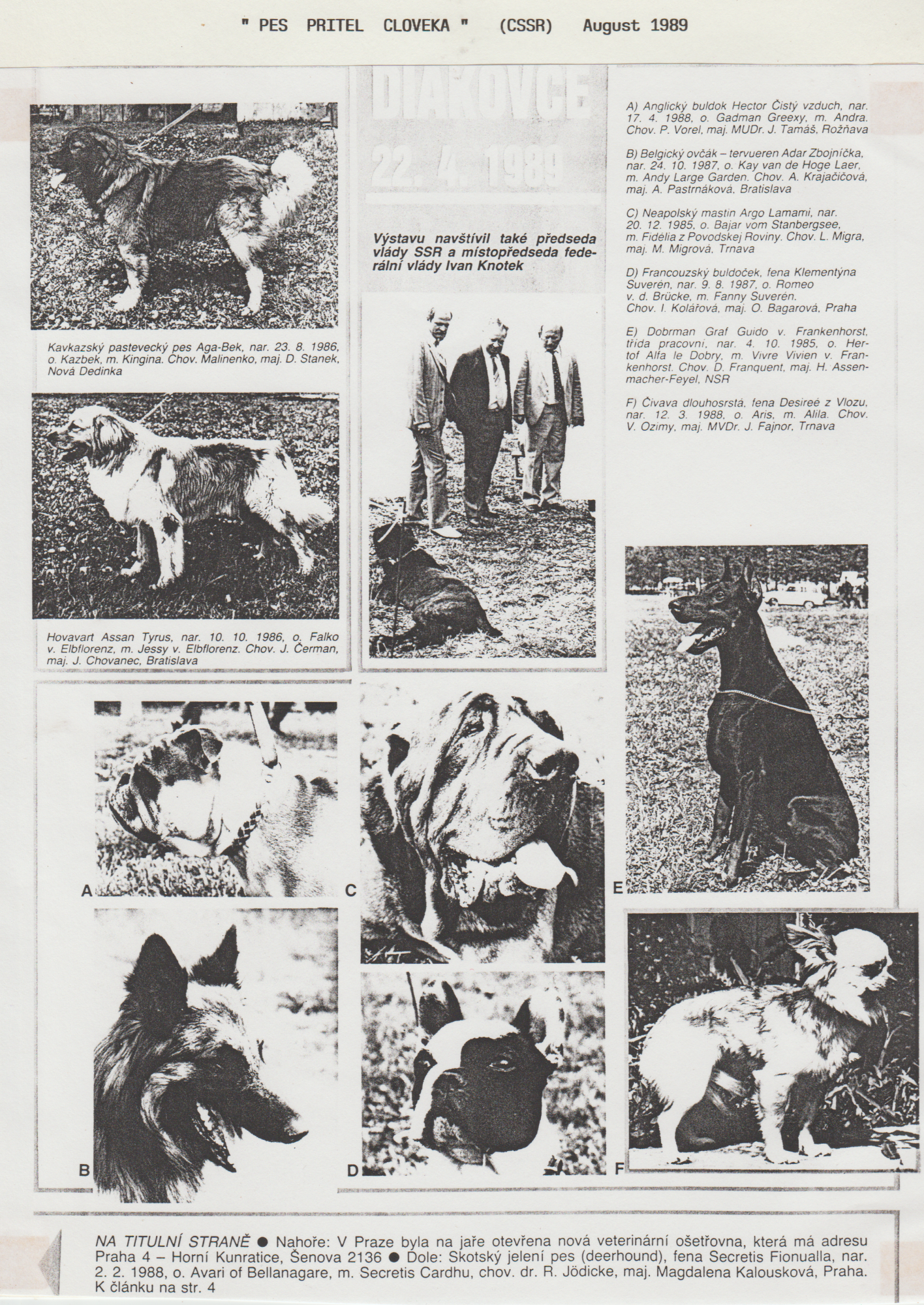
Dog – Friend of Man
The exhibition was also attended by the Chairman of the Government of the SSR and Deputy Chairman of the Federal Government, Ivan Knotek.
Among the dogs presented was the Dobermann Graf Guido vom Franckenhorst, a working-class male, born on October 4, 1985, by Hertog Alpha vom Dobry out of Vivre Vivien vom Franckenhorst. Breeder: Franguent. Owner: H. Assenmacher-Feyel, Federal Republic of Germany.
Source: Pes Přítel Člověka (Czechoslovakia, CSSR)
Date: August 1989
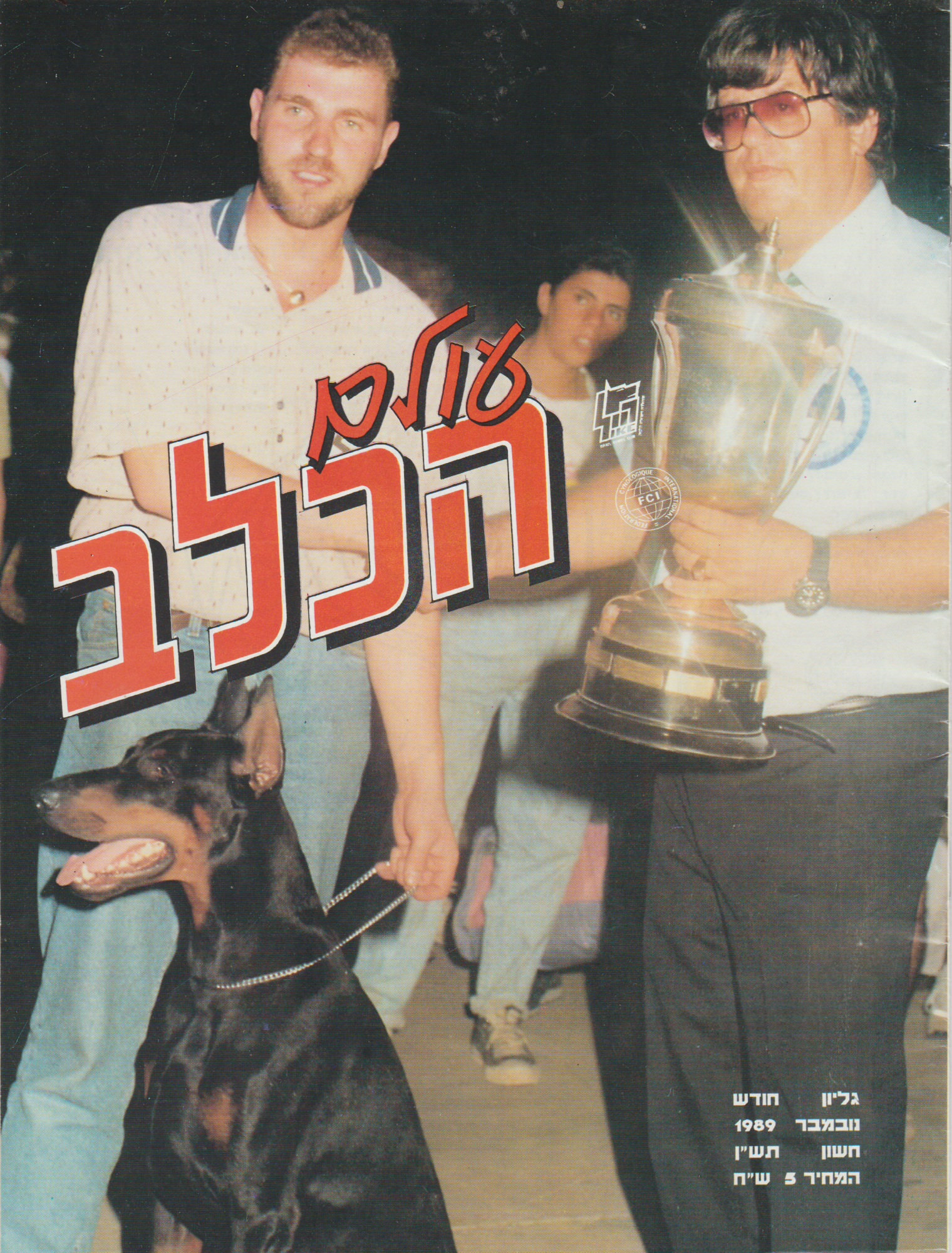
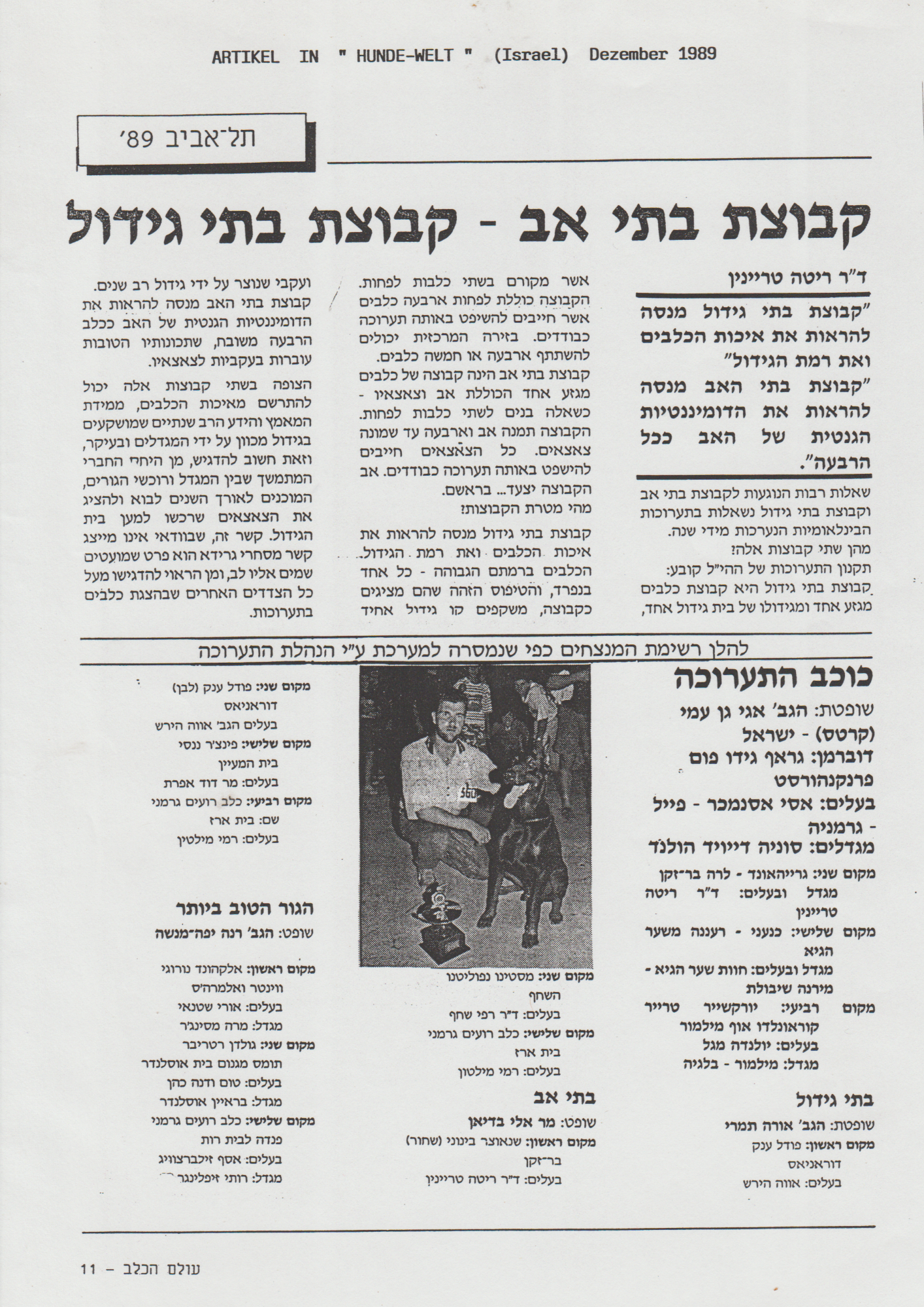
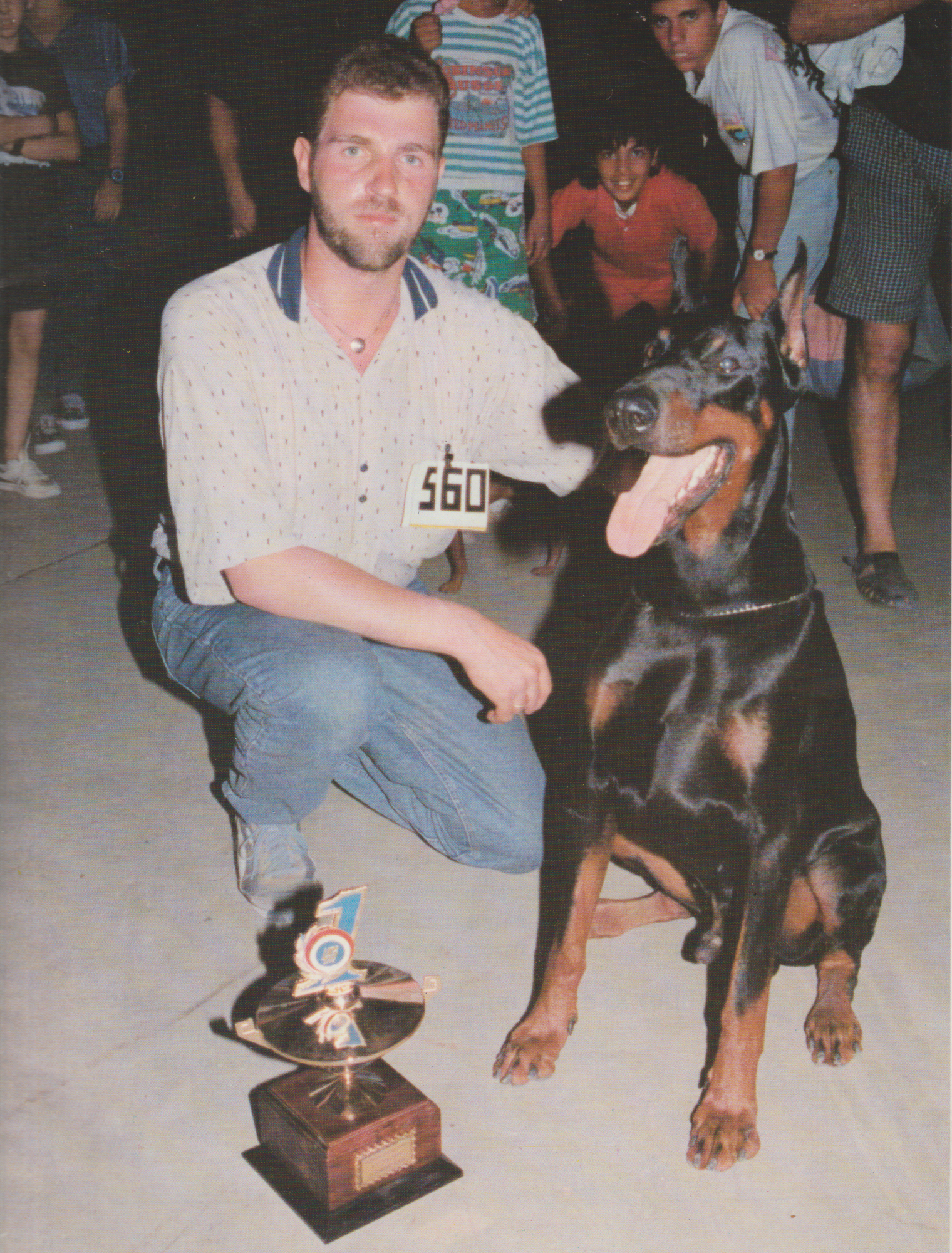
Internationally awarded Dobermann, successfully shown and used for breeding in multiple countries, including Israel (1989)
Source: Hunde-Welt (Israel)
Date: November & December 1989
Article 1 – Israel (November 1989)
Graf Guido vom Franckenhorst was presented at a major dog event in Israel, where he achieved top show results and gained significant attention among breeders and judges.
He was awarded CACIB and CAC titles, confirming his outstanding quality at an international level. His presence at the event highlighted both his excellent conformation and strong working type, making him one of the most admired Dobermanns in the competition.
The event gathered numerous high-quality dogs, yet Graf Guido stood out due to his correct structure, strong character, and overall balance. His success further confirmed his reputation as a top breeding male with international recognition.
Article 2 – Israel (December 1989)
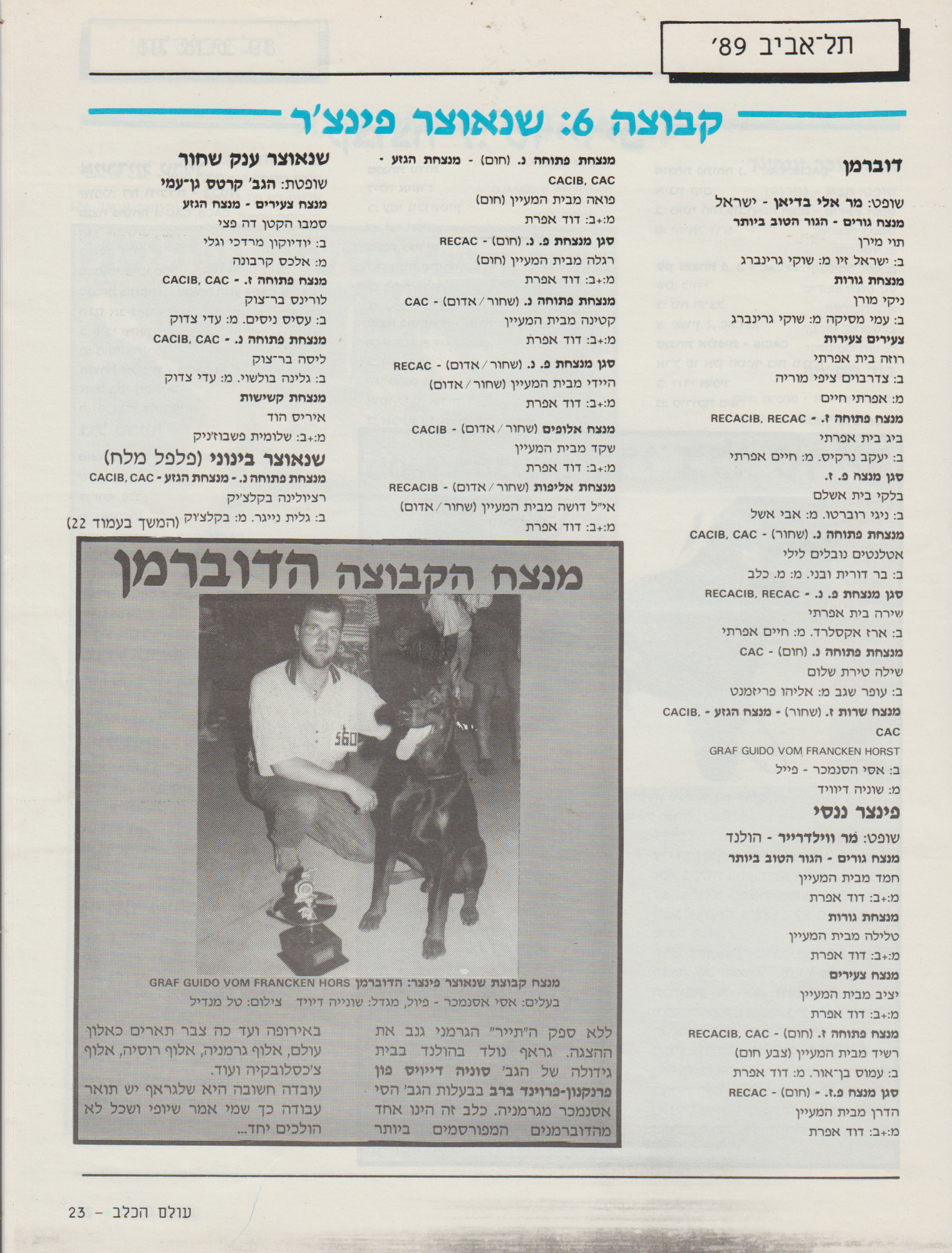
The December report focused on the Dobermann breeding group and show results, where Graf Guido vom Franckenhorst was again highlighted among the top-performing dogs.
He was listed among the leading Dobermanns of the event, achieving:
- CACIB
- CAC
- RECAC / RECACIB placements
These results confirmed his consistent excellence across multiple evaluations and reinforced his status as a highly influential international stud dog.
The articles also emphasize the quality of the breeding groups and the growing importance of international Dobermann bloodlines, with Graf Guido playing a key role in this development.
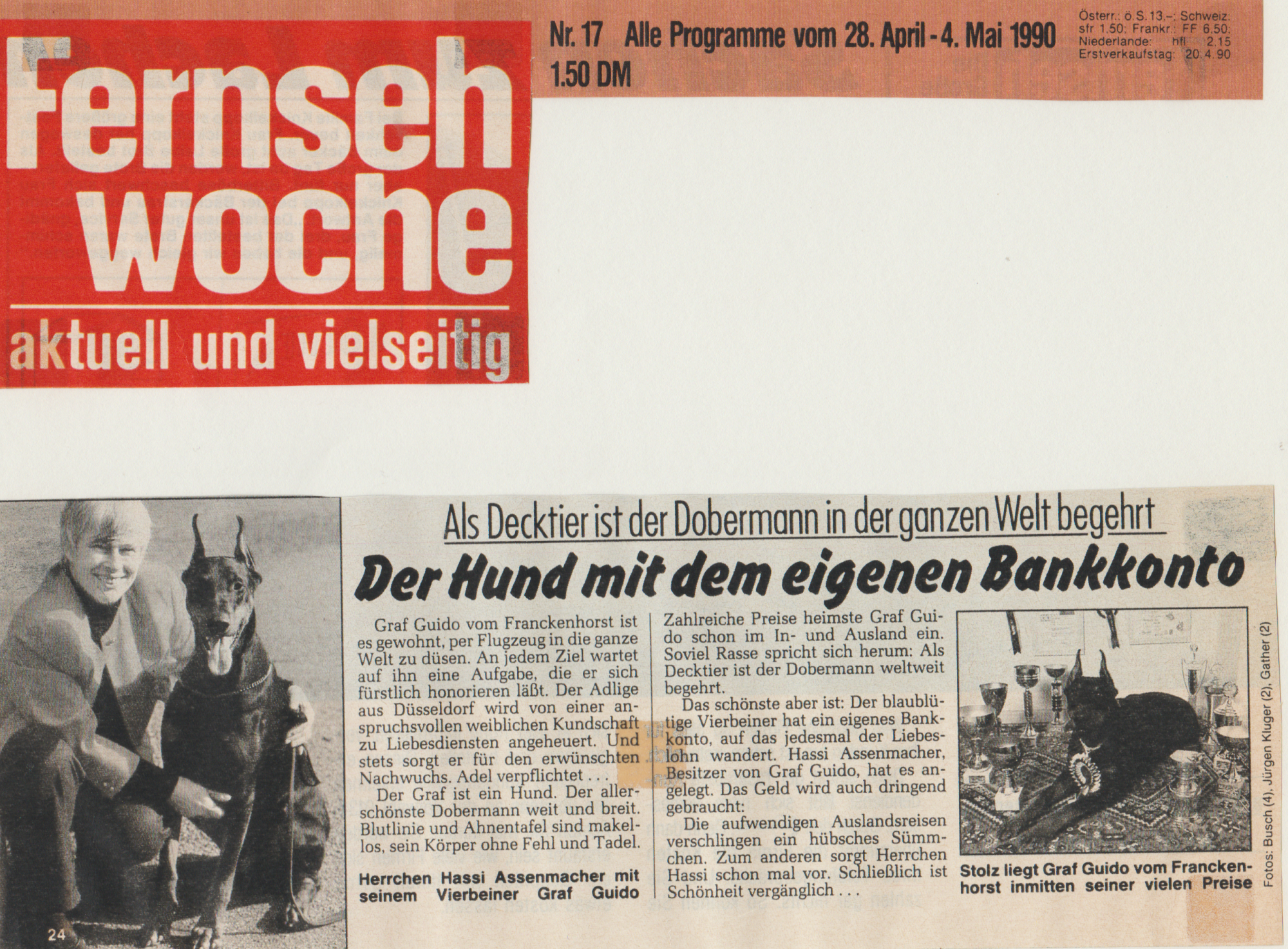
Source: Fernseh Woche (Germany)
Date: April 28 – May 4, 1990
The Dog with His Own Bank Account
Graf Guido vom Franckenhorst is a Dobermann in high demand worldwide as a stud dog. He is accustomed to traveling by airplane across the world, where at every destination a new breeding assignment awaits him. His services are highly valued, and he is sought after by an exclusive clientele.
As a breeding male, he consistently produces the desired offspring, fulfilling expectations with reliability. Graf Guido is described as an outstanding Dobermann, with an excellent pedigree and flawless conformation. His bloodline and ancestry are without fault, and his overall structure represents the ideal of the breed.
He has already won numerous awards both nationally and internationally, confirming his exceptional quality. His reputation as a stud dog has spread worldwide, making him one of the most requested Dobermanns of his time.
One of the most remarkable aspects of his success is that he even has his own bank account, where his stud fees are deposited. His owner, Hassi Assenmacher, manages these earnings, which are necessary to cover the costs of his extensive international travels.
Despite the high expenses associated with these journeys, Graf Guido continues to attract global attention. His beauty, performance, and breeding value ensure his lasting impact, even as time passes.
Graf Guido vom Franckenhorst – Finnish Champion (SF MVA)
Graf Guido vom Franckenhorst, born on October 4, 1985, is sired by CH Hertog Alpha vom Le Dobry (DV Sieger 1982, Holland Winner 1981, VDH Champion, World Winner 1981, SchH III, IPO III) and out of CH Vivre Vivien vom Franckenhorst (DV Siegerin 1982, French Champion, SchH III). The breeders are Sonja and David Franckenhorst-Freudenberg from Dordrecht, Netherlands.
Graf Guido came into my life as a birthday gift. Previously, I had bred Basset Hounds, and both of my last dogs of that breed passed away in 1983 at the age of 16. After that, the Dobermann became my great passion.
Even today, I still cannot fully comprehend how fortunate I have been to own such an outstanding dog. Guido’s show career began at the end of 1986, when he placed second in the junior class at the Bundessieger show in Dortmund, as well as at the Amsterdam Winner Show, following his brother.
In 1987, Guido became World Winner at just one and a half years of age. In 1988, he achieved titles including Luxembourg Champion, International Champion, Italian Champion, and winner of the Dobermann Club specialty show in Czechoslovakia.
In 1989, Guido obtained further titles: Belgian Champion, Czechoslovakian Winner and Champion, Italian Champion, Swiss Champion, Hungarian Champion, Bundessieger, and Finnish Show Champion. Additional titles are still in progress.
In 1987, Guido passed the SchH I and ZTP tests. Official eye examinations conducted in 1987 and 1988 confirmed that he is free from PHTVL, PHPV, and PRA. His hips are also healthy.
To date, Guido has produced more than 340 offspring from black, brown, and blue females, with all offspring being black. He also has progeny in Finland, including litters with Kans & Pohj MVA vom Hasselhof Norran. These offspring are now in their second year and have already begun achieving success in the show ring.
With SF MVA Dufas Donna, a litter of seven puppies was born on September 23, 1989. Donna was shown at the Pori International Show, where Guido was awarded Best of Breed and placed third in Group 2, while also achieving the Finnish Show Champion title.
Finally, a few words about dog shows in Finland. I have participated in shows both as a judge (I am an all-round judge) and as an exhibitor in Finland and around the world. I have gained a strong impression of Finnish shows, their organization, and, of course, the quality of dogs, which is very high across almost all breeds.
Sincerely,
Hassi Assenmacher-Feyel
Düsseldorf, Germany
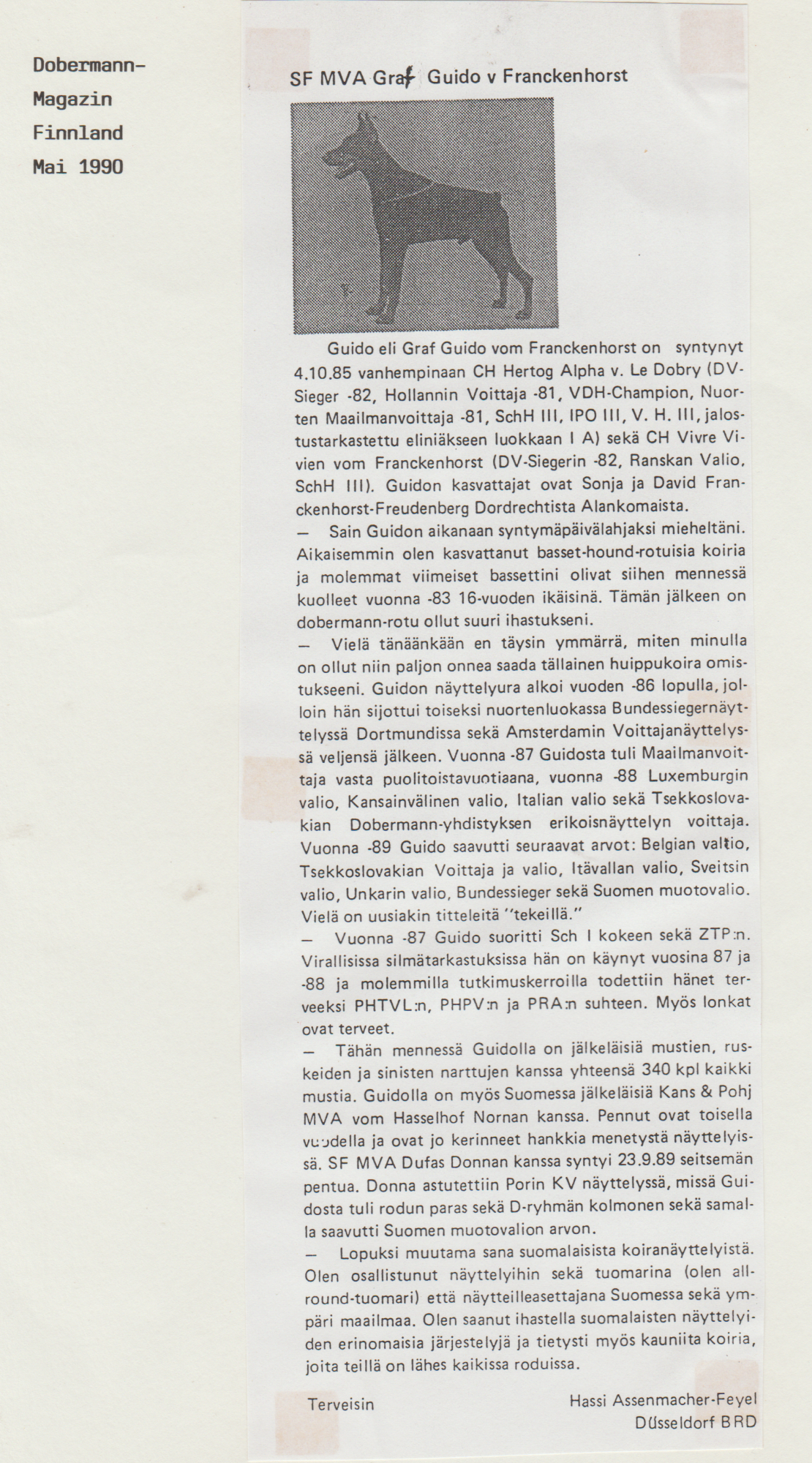
Source: Dobermann Magazine (Finland)
Date: May 1990
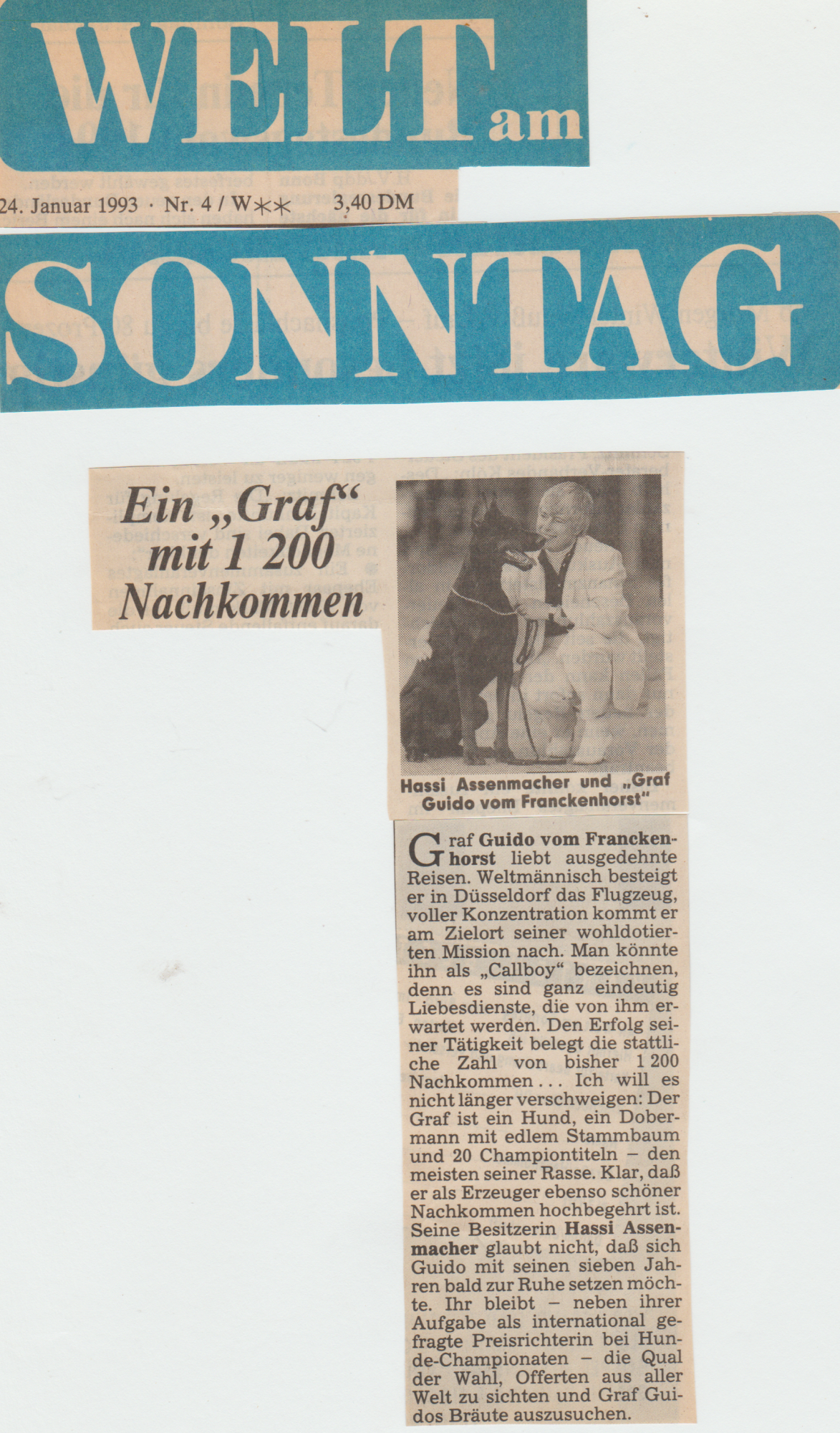
A ‘Count’ with 1,200 Offspring
Graf Guido vom Franckenhorst enjoys extensive travel. With great confidence, he boards airplanes from Düsseldorf and arrives at his destinations fully focused on his breeding assignments. He could almost be described as a “cowboy,” as his services are clearly in high demand.
The success of his work is demonstrated by the impressive number of up to 1,200 offspring. Graf Guido is a Dobermann with an excellent pedigree and around 20 championship titles, making him one of the most successful dogs of his breed. It is no surprise that he is highly sought after as a sire of equally outstanding progeny.
His owner, Hassi Assenmacher, does not believe that Guido, even at seven years of age, will retire anytime soon. Alongside her work as an internationally respected judge at dog shows, she continues to receive offers from all over the world and carefully selects suitable breeding partners for him.
Source: Welt am Sonntag (Germany)
Date: January 24, 1993
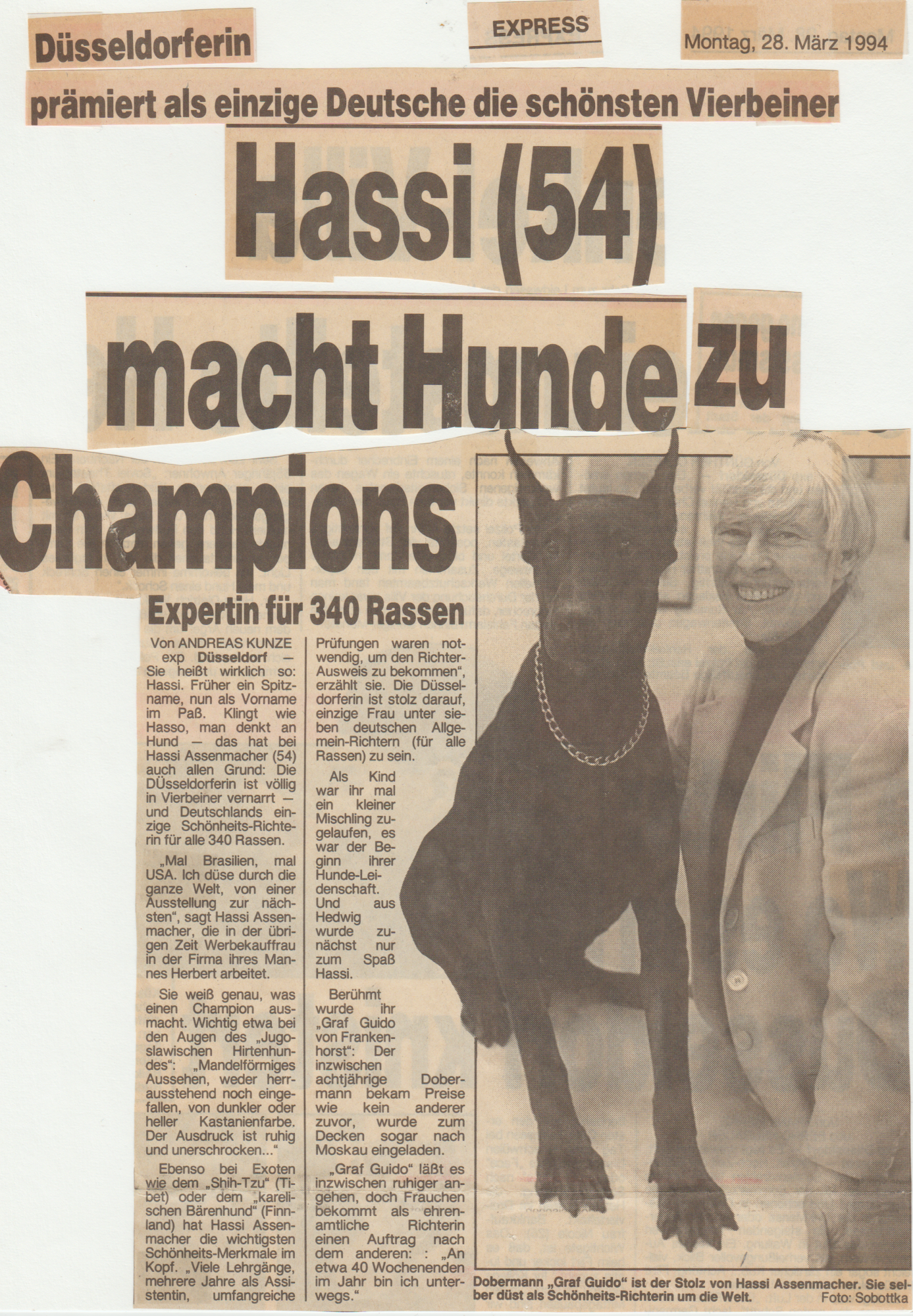
Hassi Turns Dogs into Champions
Hassi Assenmacher (54) from Düsseldorf is an expert recognized across Germany and internationally as a judge for all dog breeds, making her one of the most respected figures in the field. She is the only German woman qualified as an all-round judge for approximately 340 breeds.
Her life revolves around dogs, taking her all over the world from one show to another. Whether in Brazil, the United States, or elsewhere, she is constantly on the move, combining her professional career with her passion for dogs.
Hassi knows exactly what makes a champion. Breed-specific characteristics, expression, and overall presence are key factors in her evaluations. She has spent years gaining experience, working her way up through extensive training and judging assignments.
Her fame is also closely connected to her exceptional Dobermann, Graf Guido vom Franckenhorst. Now eight years old, he has achieved remarkable success and received numerous awards, more than almost any other Dobermann. He was even invited to Moscow for breeding purposes, further proving his international reputation.
Today, Graf Guido lives a slightly calmer life, but continues to be used selectively for breeding. Meanwhile, Hassi Assenmacher remains highly active as a judge, traveling extensively—spending around 40 weekends per year at dog shows worldwide.
Source: Express, Düsseldorf (Germany)
Date: March 28, 1994
Source: Express, Düsseldorf (Germany)
Date: March 15, 1995
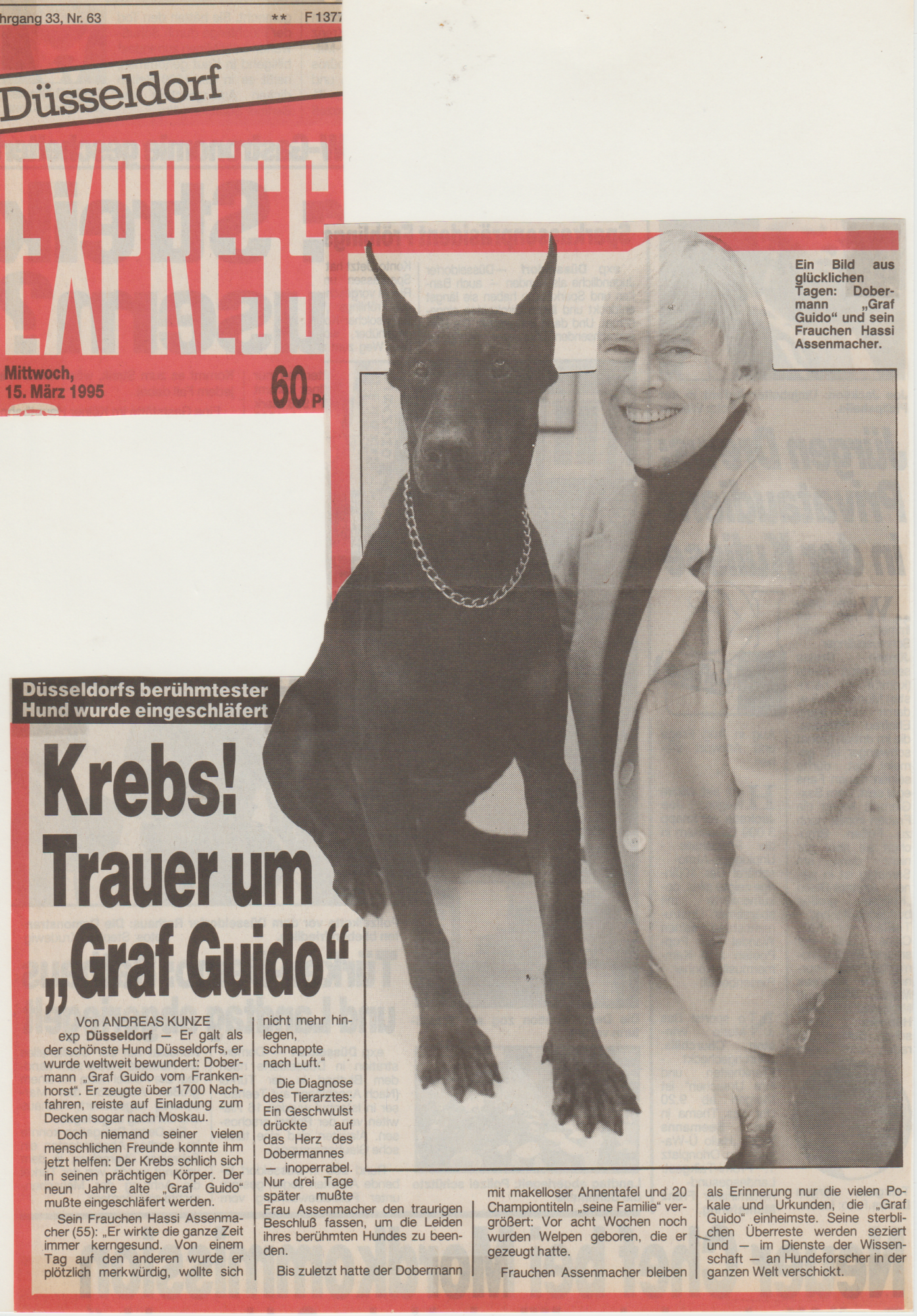
Cancer – Mourning for ‘Graf Guido
Graf Guido vom Franckenhorst, considered the most famous dog of Düsseldorf, has passed away. The Dobermann, admired worldwide, left behind an extraordinary legacy with more than 1,700 offspring. He had traveled internationally for breeding, even as far as Moscow, and was recognized as one of the most influential Dobermanns of his time.
Despite his strength and excellent condition throughout his life, the disease spread within his body. At the age of nine, he had to be euthanized after a sudden deterioration in his health.
Veterinary diagnosis revealed a tumor pressing on his heart, which was inoperable. Only a few days later, his owner, Hassi Assenmacher, had to make the difficult decision to end his suffering.
Until the very end, Graf Guido remained a dog of outstanding quality, with a flawless pedigree and around 20 championship titles. Shortly before his death, more puppies were born, continuing his bloodline.
Today, his legacy lives on through his numerous descendants, awards, and recognition worldwide. His preserved genetic material has also been made available for research purposes, ensuring that his influence will continue into the future.
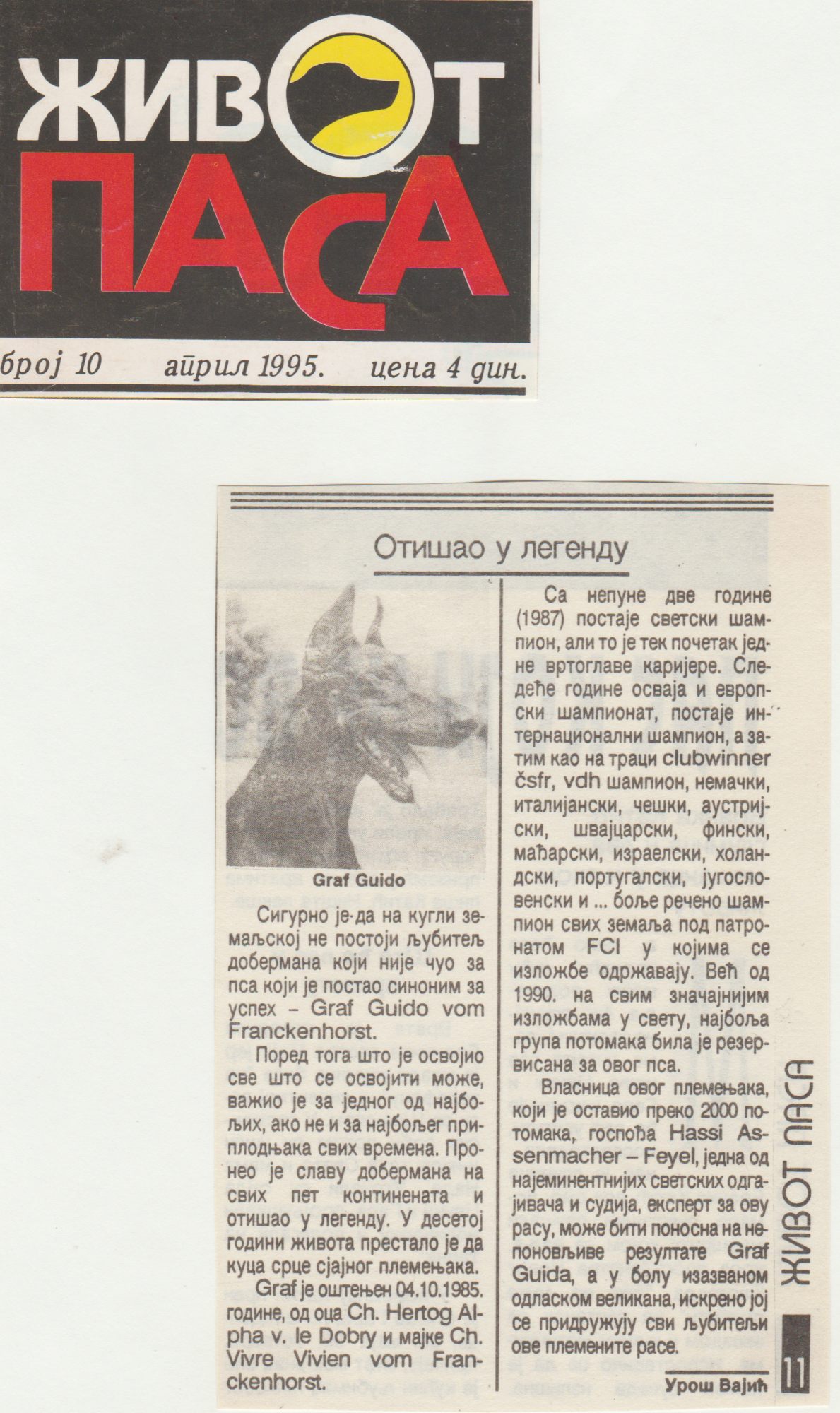
A Legend Has Passed
Graf Guido vom Franckenhorst has passed into legend. It is certain that there is hardly a Dobermann enthusiast in the world who has not heard of the dog that became synonymous with success.
In addition to winning everything that could be won, he was considered one of the greatest sires of all time, if not the greatest. His fame spread across all five continents, and his influence on the breed is undeniable.
At less than two years of age, in 1987, he became World Champion, marking the beginning of a remarkable career. In the following years, he went on to achieve numerous titles, including European Champion and International Champion, as well as championships in multiple countries such as Germany, Italy, Czechoslovakia, Austria, Switzerland, Finland, Hungary, Israel, the Netherlands, Portugal, and Yugoslavia. In fact, he became a champion in nearly every country under the FCI system where shows were held.
By 1990, at major international shows, the best groups of offspring were often descended from him. His progeny consistently demonstrated outstanding quality, further strengthening his reputation.
Owned by Hassi Assenmacher-Feyel, one of the most prominent Dobermann breeders and judges in the world, Graf Guido produced more than 2,000 offspring. His owner can be proud of his extraordinary and unmatched results.
With his passing, the Dobermann world has lost a giant, and admirers of the breed worldwide share in this loss.
Graf Guido was born on October 4, 1985, sired by CH Hertog Alpha vom Le Dobry and out of CH Vivre Vivien vom Franckenhorst.
Source: Život Pasa (Yugoslavia)
Date: April 1995
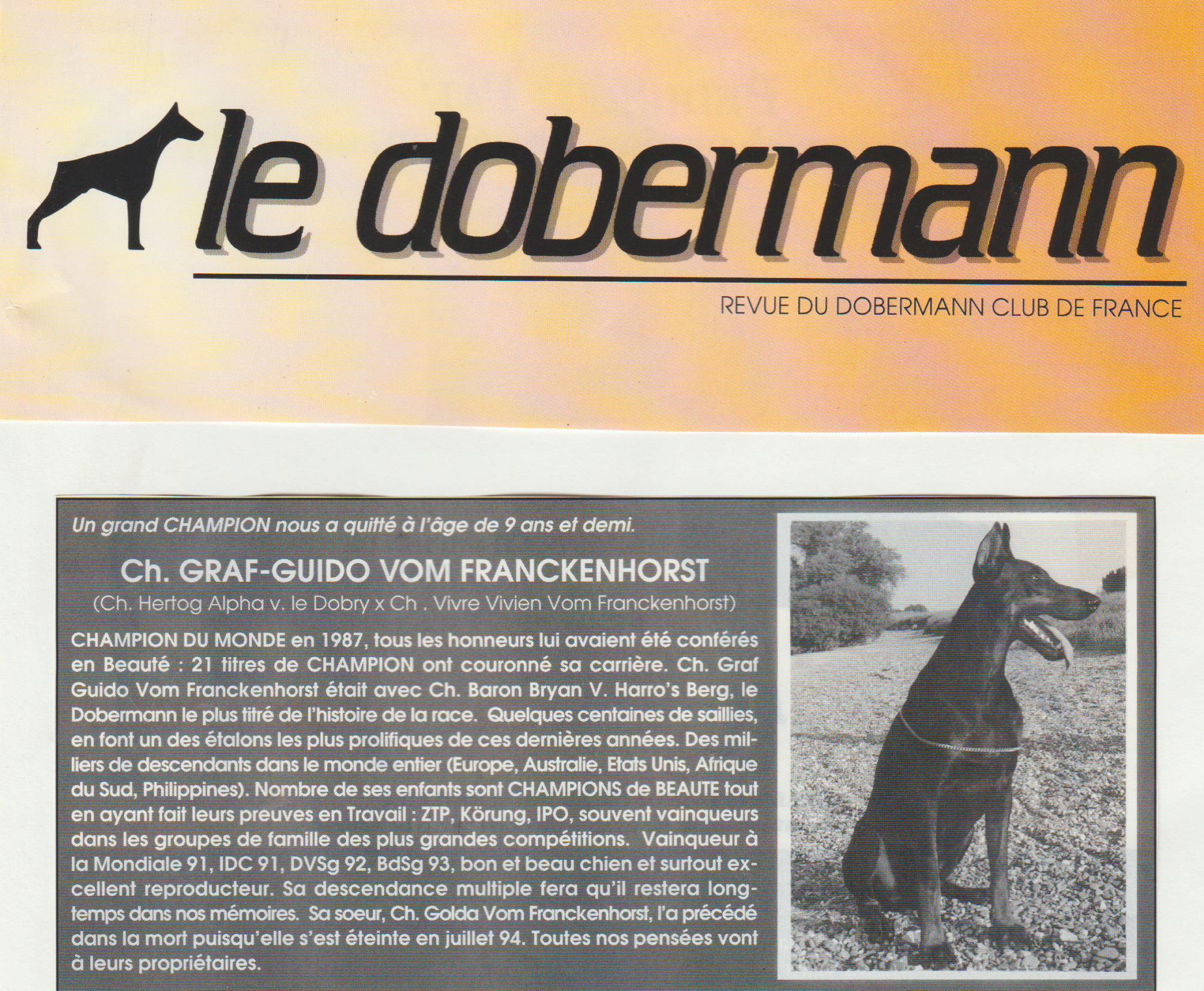
A Great Champion Has Left Us
Source: Le Dobermann – Revue du Dobermann Club de France
Date: 1995
A great champion has left us at the age of nine and a half.
Ch. Graf Guido vom Franckenhorst (by Ch. Hertog Alpha vom Le Dobry x Ch. Vivre Vivien vom Franckenhorst) was World Champion in 1987, and throughout his career he accumulated 21 championship titles in conformation.
Together with Ch. Baron Bryan von Harro’s Berg, he was one of the most widely used Dobermanns in the history of the breed. With several hundred matings, he became one of the most prolific stud dogs of recent years.
He left thousands of descendants worldwide, including in Europe, Australia, the United States, South Africa, and the Philippines. Many of his offspring became beauty champions, while also proving themselves in working disciplines such as ZTP, Körung, and IPO. They were often winners in progeny groups at major international competitions.
Graf Guido himself achieved victories at some of the most important events, including the World Dog Show 1991, IDC 1991, DV Sieger 1992, and Bundessieger 1993. He was not only a beautiful dog, but above all an outstanding producer.
His numerous descendants will ensure that he remains in our memory for a long time. His sister, Ch. Golda vom Franckenhorst, passed away before him in July 1994.
Our thoughts are with his owners.
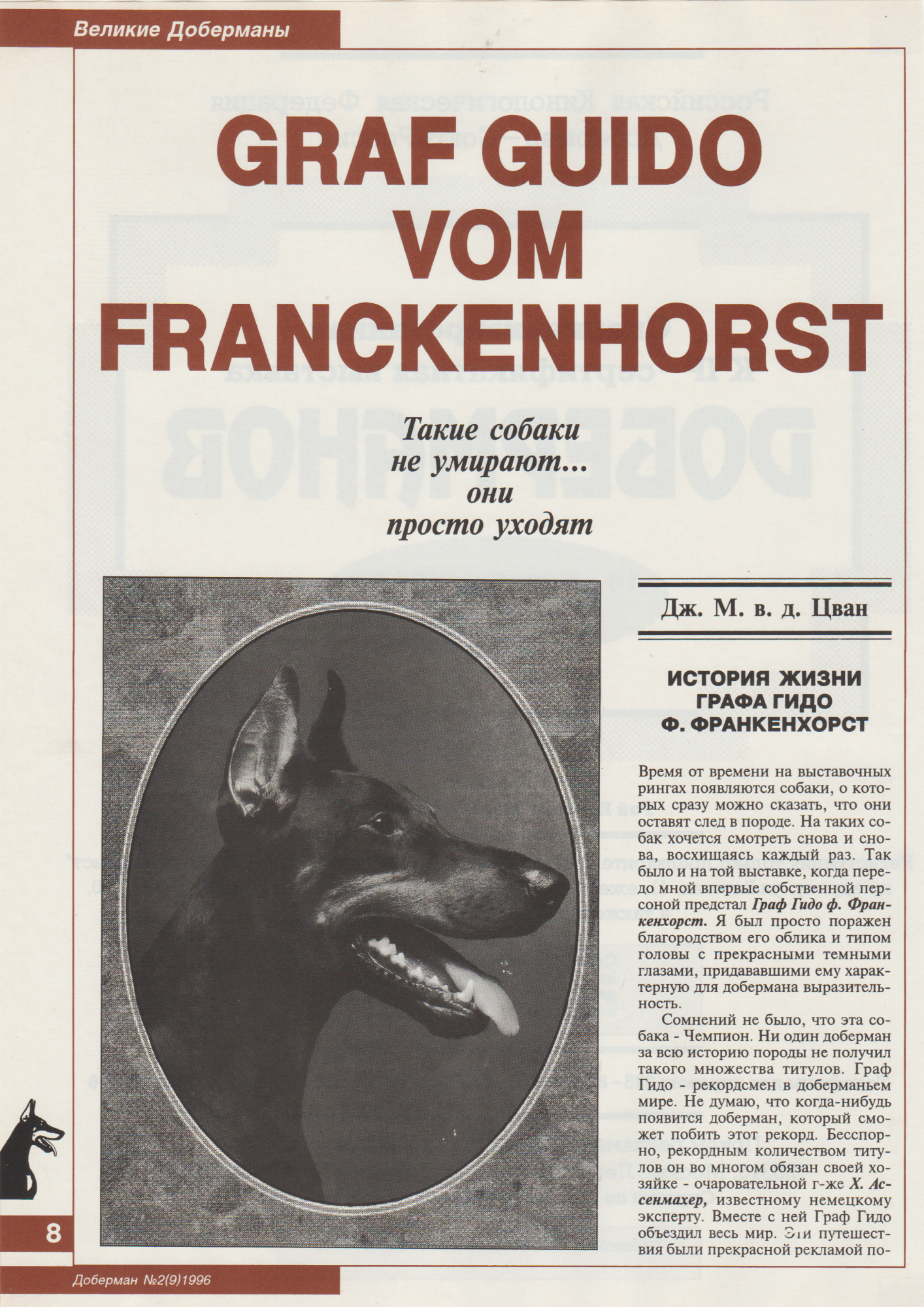
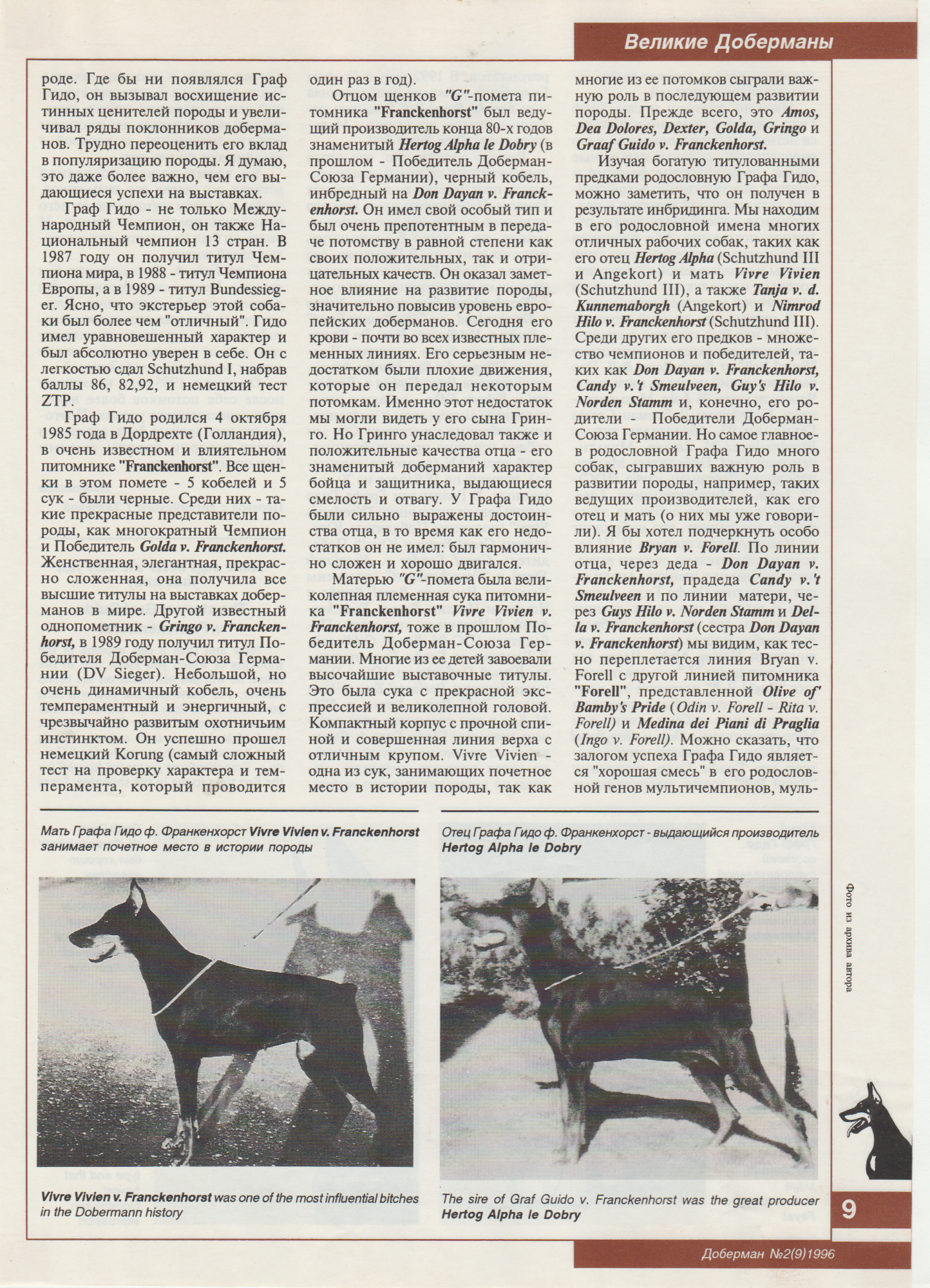
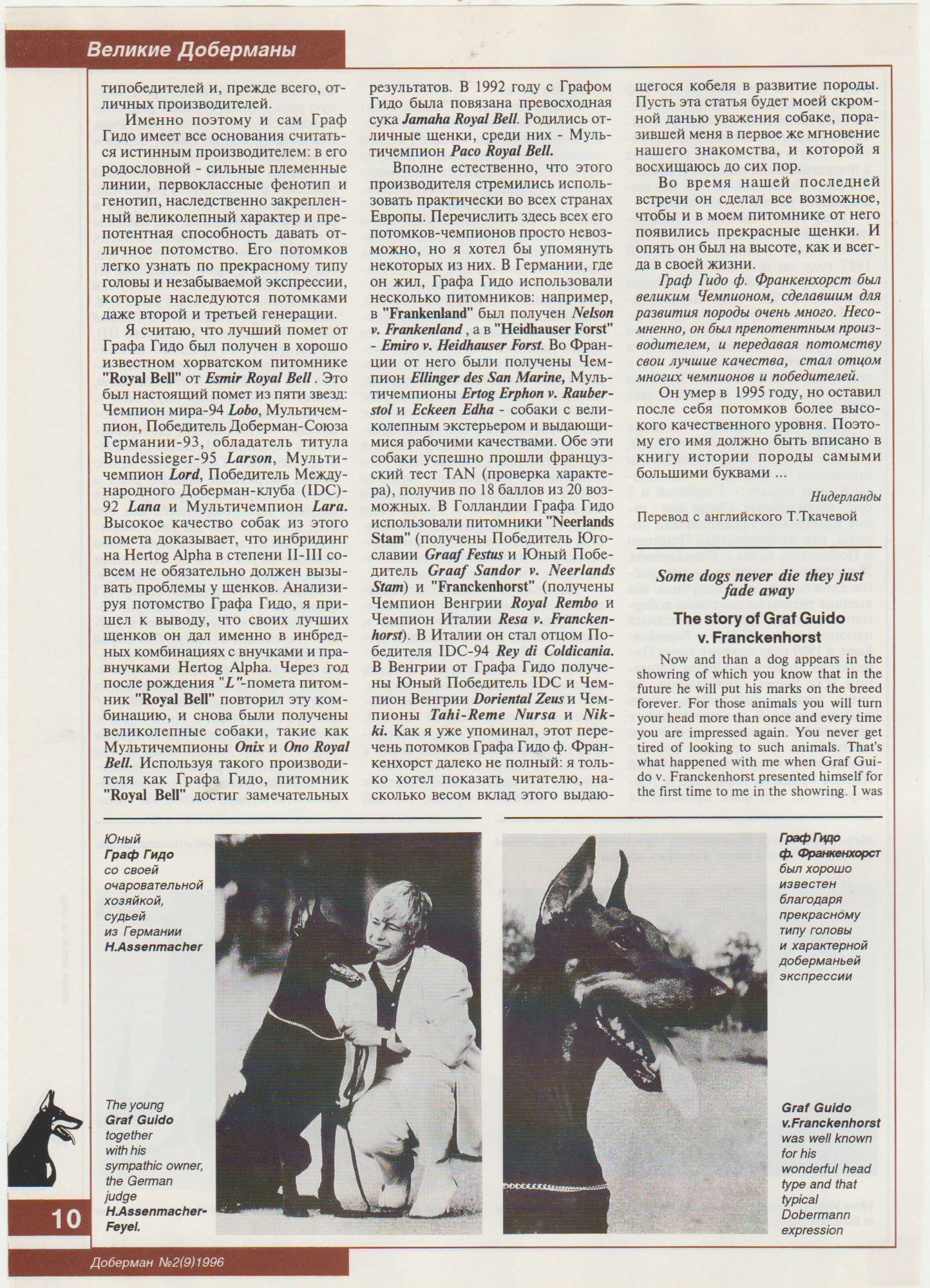
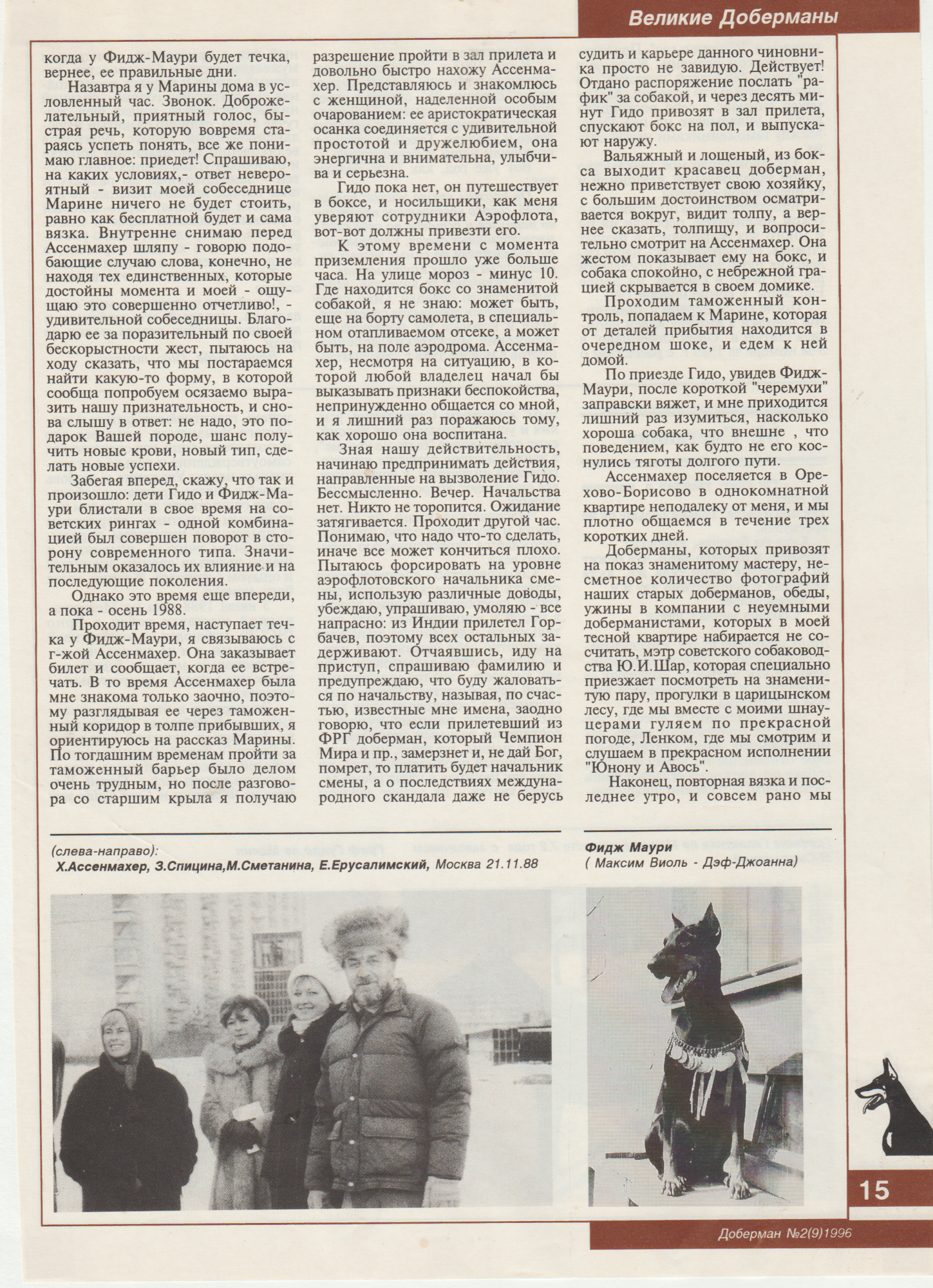
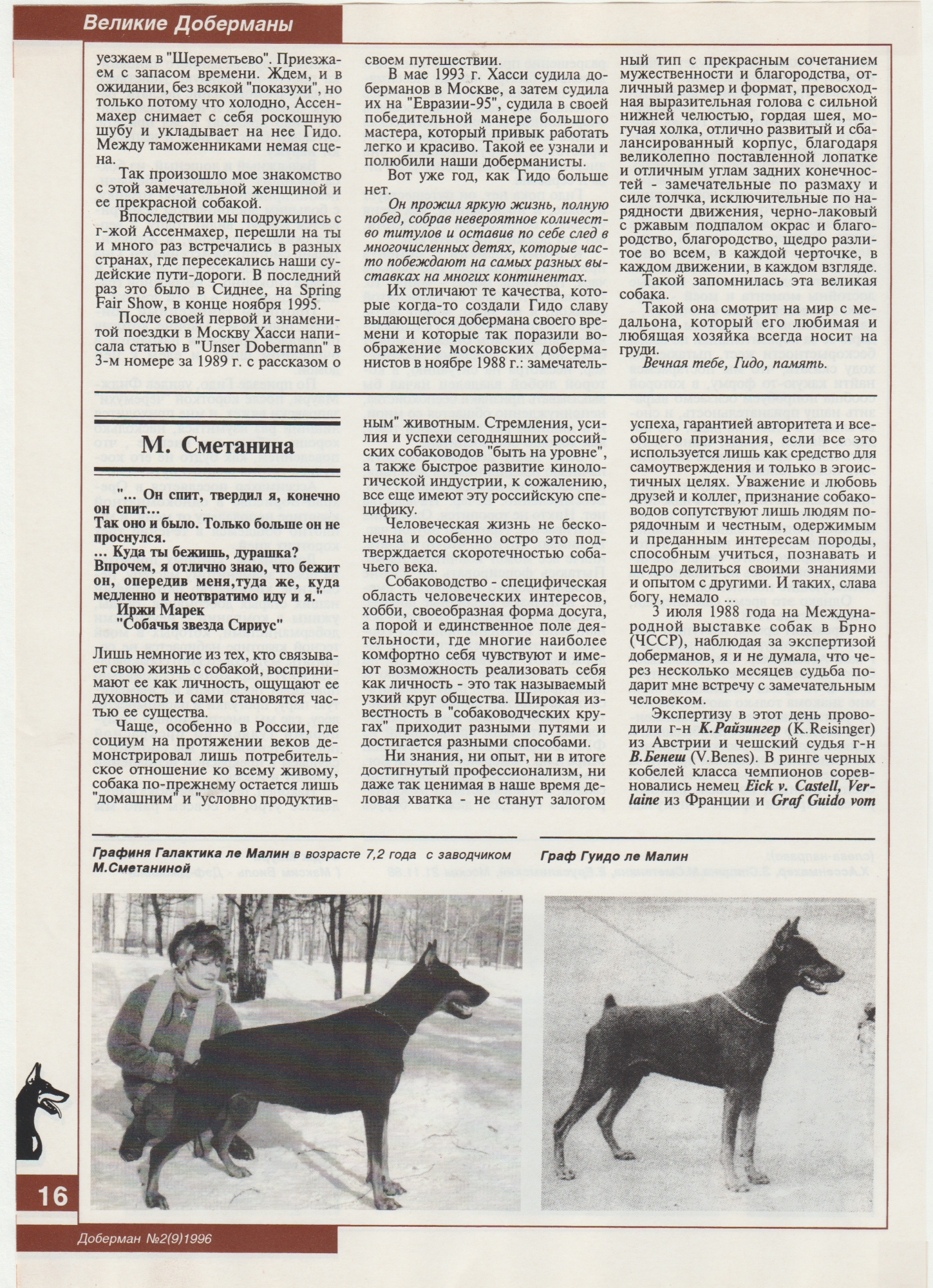
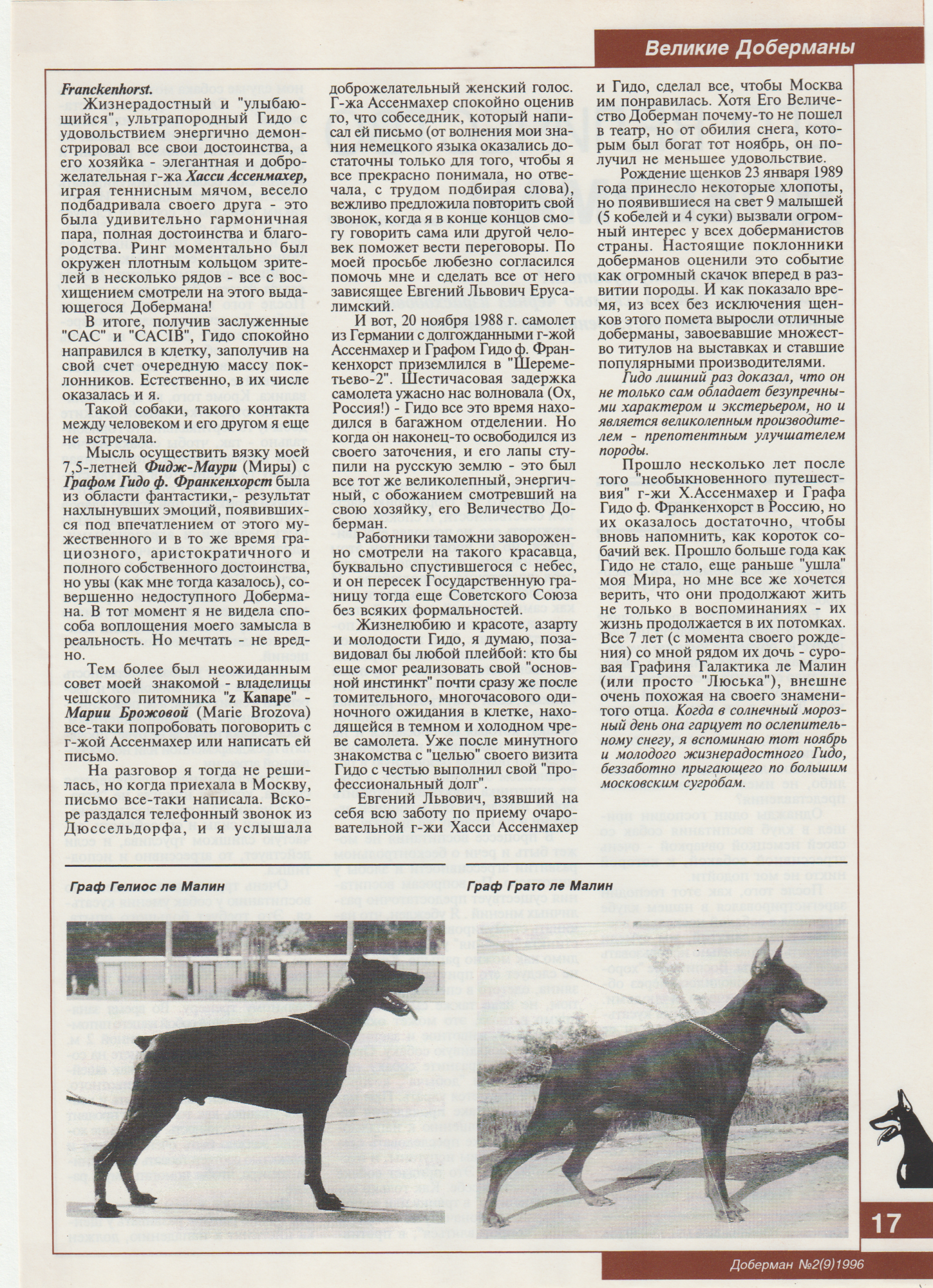
GRAF GUIDO VOM FRANCKENHORST
Such dogs never die… they simply fade away
The Life Story of Graf Guido vom Franckenhorst
From time to time, a dog appears in the show ring of whom one can immediately say: this dog will leave a lasting mark on the breed. Graf Guido vom Franckenhorst was such a dog.
From the very first moment he was presented, he impressed with his nobility, his beautifully shaped head, and his dark, expressive eyes that gave him the unmistakable Dobermann expression. One never tired of watching him — each appearance confirmed his exceptional quality.
There was no doubt: this was a champion. Never in the history of the breed had a Dobermann achieved so many titles. Graf Guido became a record-holder of the Dobermann world, and it is difficult to imagine that this record will ever be surpassed.
His success was not accidental. It was supported by the dedication of his owner, Mrs. Hassi Assenmacher-Feyel, a well-known German judge and breeder, who presented him all over the world. Together they became ambassadors of the breed, contributing enormously to its popularity.
However, Graf Guido was far more than a show dog.
He was an International Champion and a National Champion in 13 countries. In 1987 he became World Winner, in 1988 European Winner, and in 1989 Bundessieger. Yet his greatness was not limited to his exterior — he possessed a stable temperament, strong nerves, and remarkable self-confidence. He passed Schutzhund I (86–82–92) and the German ZTP with ease.
Origin and Pedigree
Graf Guido was born on October 4, 1985, in Dordrecht (Netherlands), in the renowned kennel “vom Franckenhorst.” The litter consisted of black males and females and produced several outstanding dogs.
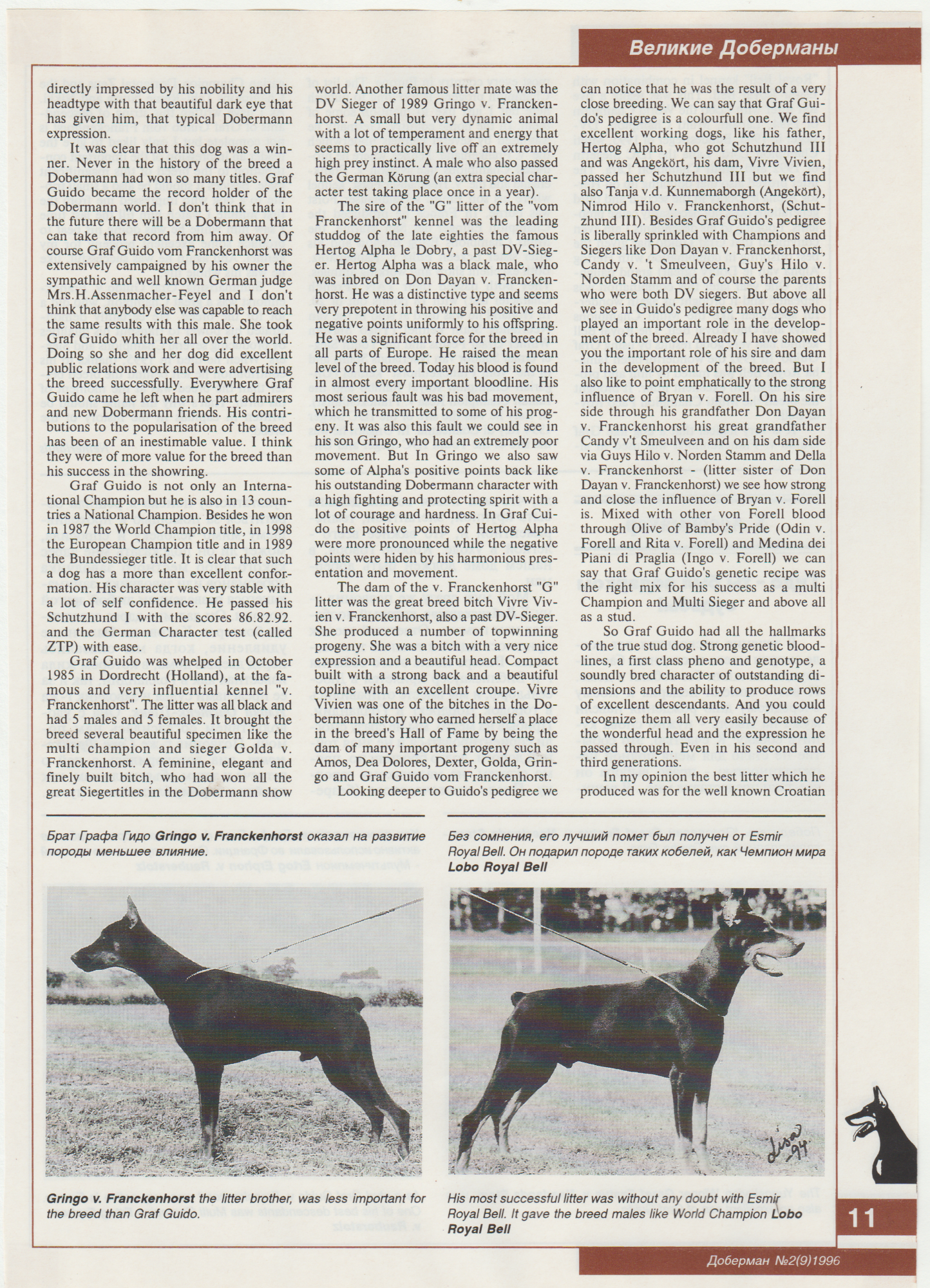
Among them were the multi-champion bitch Golda v. Franckenhorst and Gringo v. Franckenhorst, later DV Sieger 1989. Gringo was a very dynamic and energetic male with pronounced working instincts, successfully passing Körung. However, Graf Guido combined these qualities with greater harmony, elegance, and balance.
His sire, Hertog Alpha v. le Dobry, was one of the leading stud dogs of his time. A black male of distinct type, he strongly influenced the European Dobermann population. He transmitted his qualities with great consistency — both strengths and weaknesses — and significantly raised the overall level of the breed.
His dam, Vivre Vivien v. Franckenhorst, was one of the most important brood bitches in Dobermann history. She possessed an excellent head, strong topline, and overall harmony. She produced numerous top-winning offspring and earned a permanent place in the breed’s “hall of fame.”
Graf Guido’s pedigree included many high-level working dogs, such as Hertog Alpha (SchH III), Vivre Vivien (SchH III), Tanja v. d. Kunnemaborg (SchH III), and Nimrod Hilo v. Franckenhorst (SchH III), as well as famous champions like Don Dayan v. Franckenhorst, Candy v. ’t Smeulveen, and Guy’s Hilo v. Norden Stamm.
This pedigree reflects a carefully planned breeding strategy combining strong working ability with show excellence.
Show Career and Character
At the age of 16 months, Graf Guido began his show career. One of his first major successes came in Israel, where he was awarded the World Winner title in 1987.
From that point onward, his career developed rapidly. He traveled extensively across Europe, competing successfully at major exhibitions. By the age of just 4.5 years, he had already accumulated around 20 champion titles in 13 countries and had won Best in Show eight times.
Despite his success, he remained a balanced and stable dog. He lived both at home and in everyday environments — offices, restaurants, parks — adapting easily to all situations. His natural friendliness and composure quickly won people over.
He never displayed uncontrolled aggression. Even in challenging situations — among crowds, other dogs, or traffic — he remained calm and confident. Occasional conflicts with other males were resolved fairly and without escalation.
Breeding Significance
Graf Guido’s greatest importance lies in his role as a producer.
He possessed all the qualities of a true stud dog:
- strong genetic lines
- excellent phenotype and genotype
- prepotent transmission of type
- ability to produce consistent offspring
His head type and expression were especially dominant and could be recognized even in second and third generations.
He was used extensively throughout Europe. His progeny achieved outstanding success in Germany, France, the Netherlands, Hungary, Italy, and beyond.
Among his notable offspring:
- Nelson v. Frankenland
- Emiro v. Heidhauser Forst
- Ellinger des San Maries
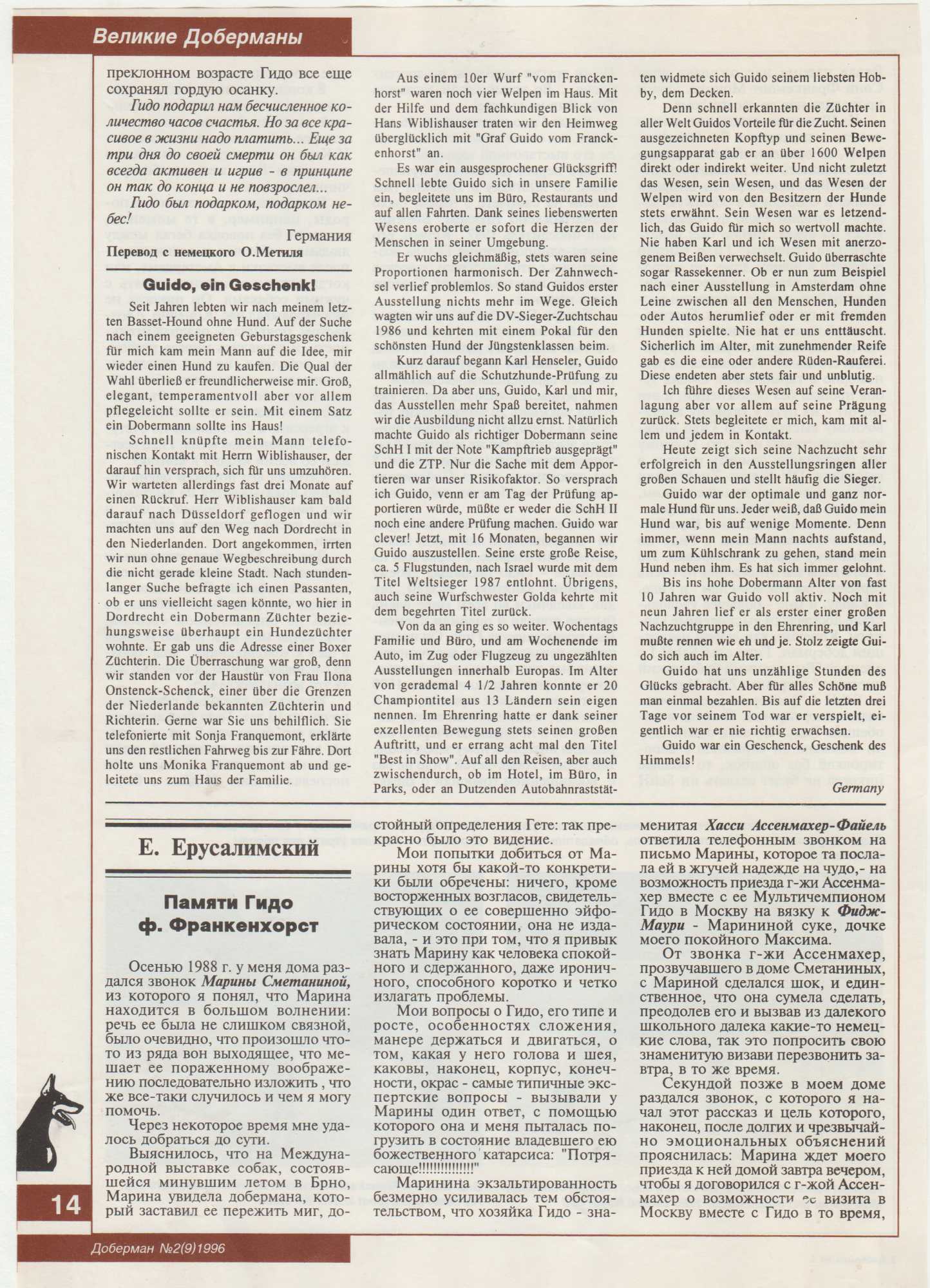
- Ertog Erphon v. Rauberstolz
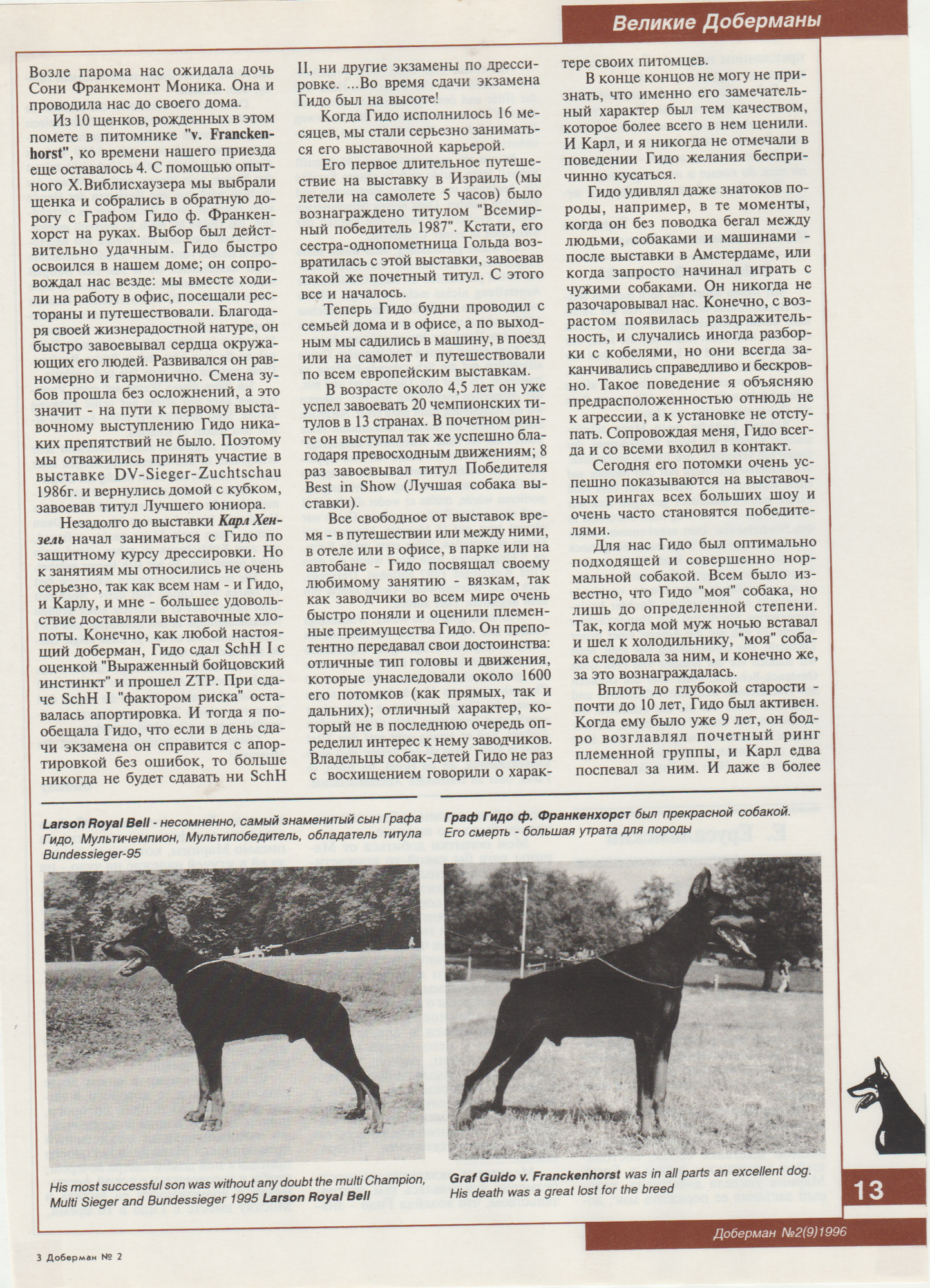
- Graaf Festus v. Neerlands Stam
- Graaf Sandor v. Neerlands Stam
In Hungary and Italy, his descendants also achieved national and international titles.
The Royal Bell Combination
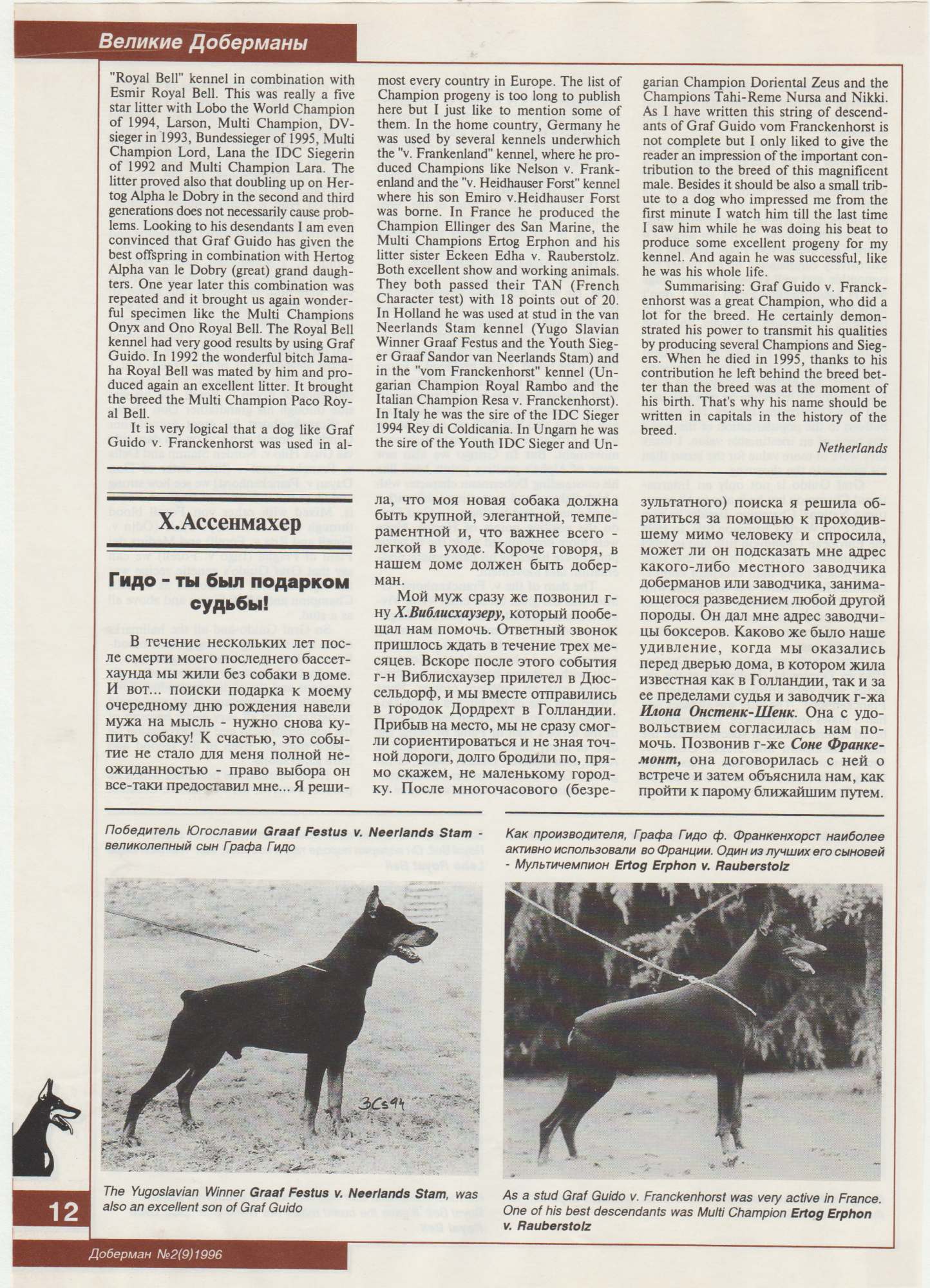
One of his most important breeding successes was with the Croatian kennel “Royal Bell” (Esmir Royal Bell).
This combination produced an exceptional litter including:
- World Champion Lobo Royal Bell
- Multi Champion Larson Royal Bell (Bundessieger 1995)
- Multi Champion Lord Royal Bell
- IDC Sieger Lana Royal Bell
- Multi Champion Lara Royal Bell
This litter proved that linebreeding on Hertog Alpha (in the 2nd–3rd generation) could produce outstanding results without negative effects when properly executed.
Further repetitions of this combination produced additional top dogs such as Onyx Royal Bell and Ono Royal Bell.
Influence Across Europe
Graf Guido’s offspring spread throughout Europe:
- In France, his descendants passed the TAN (character test) with excellent scores
- In the Netherlands, he influenced the Neerlands Stam kennel
- In Germany, he contributed to major breeding programs
- In Italy and Hungary, his progeny became champions and winners
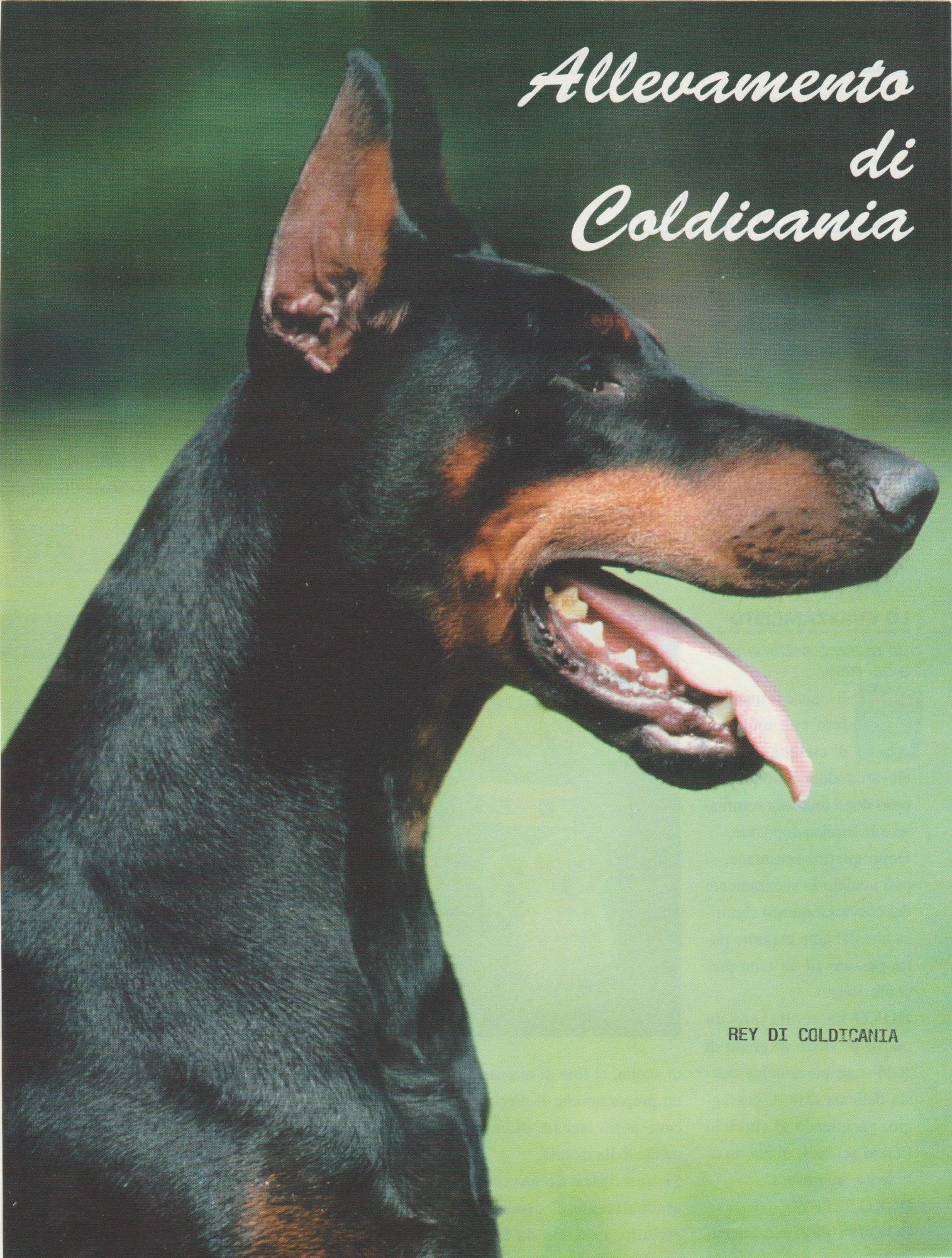
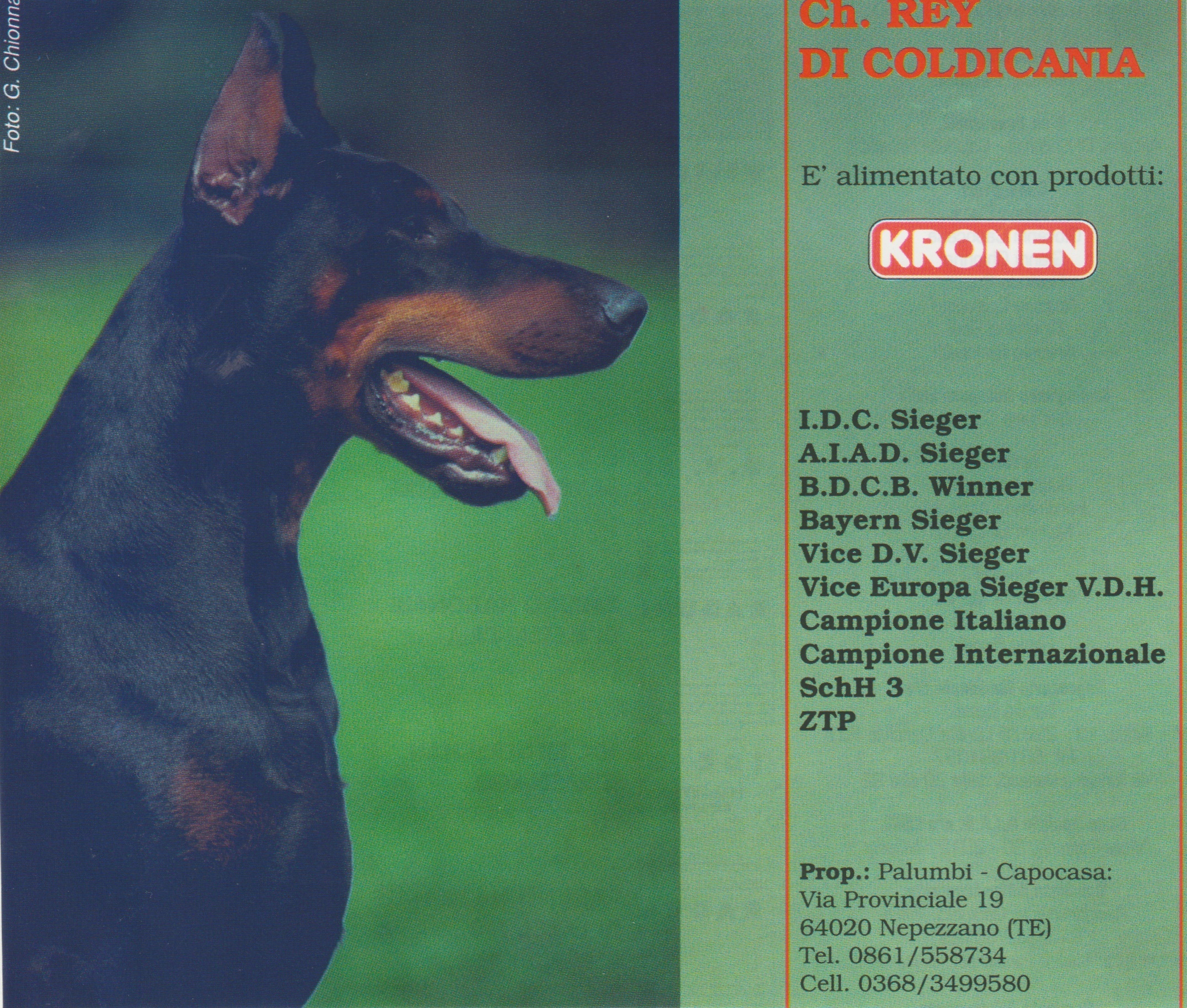
He was also the sire of the IDC Sieger 1994 Rey di Colidaciana and Hungarian Champion Dorialent Zeus, among others.
The full list of his champion offspring would be too long to enumerate.
Character and Everyday Life
Graf Guido was not only an outstanding show dog but also an ideal companion.
He integrated easily into family life, accompanied his owner everywhere, and adapted to all environments. His temperament was stable, friendly, and confident.
He impressed even experienced breed specialists — especially when moving freely without a leash among people, dogs, and cars, always maintaining perfect control.
His character — not only his exterior — was one of his greatest strengths and a key reason for his success as a producer.
Later Years and Legacy
Even at an advanced age, Graf Guido remained active and in excellent condition. At nine years old, he could still lead breeding groups in the ring with pride.
He passed away in 1995.
He left behind more than 2000 descendants worldwide — many of them champions and important breeding dogs.
His contribution to the Dobermann breed is immeasurable. In many ways, his influence was even greater than his show achievements.
Conclusion
Graf Guido vom Franckenhorst was a great champion, but above all, a truly prepotent stud dog.
He combined:
- outstanding type
- excellent movement
- strong character
- genetic reliability
His legacy continues through his descendants, and his influence remains visible in modern Dobermanns.
His name deserves to be written in capital letters in the history of the breed.
Title: Great Dobermanns – Graf Guido vom Franckenhorst
Source: Dobermann Magazine (Russia)
Issue: No. 2 (9)
Year: 1996
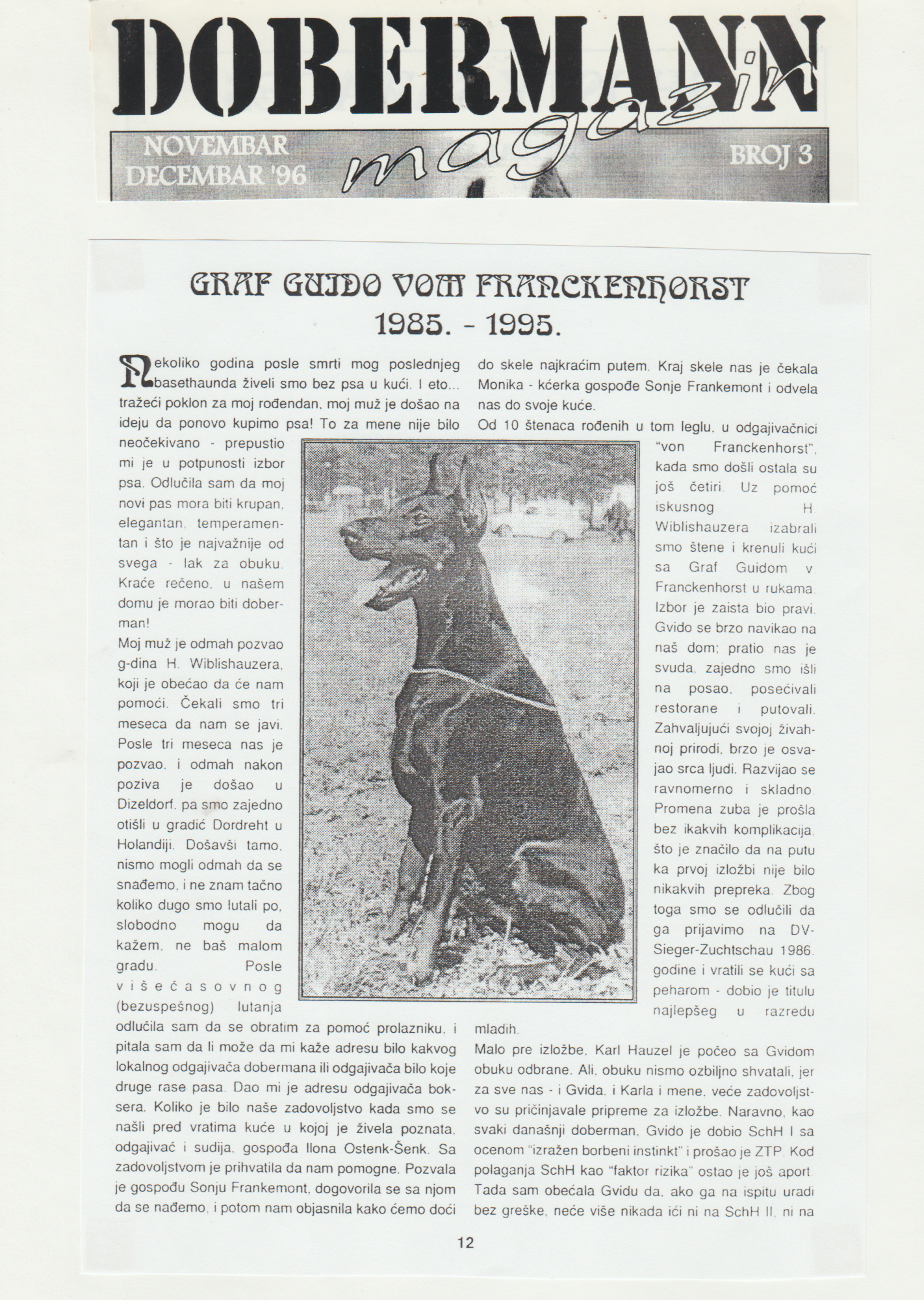
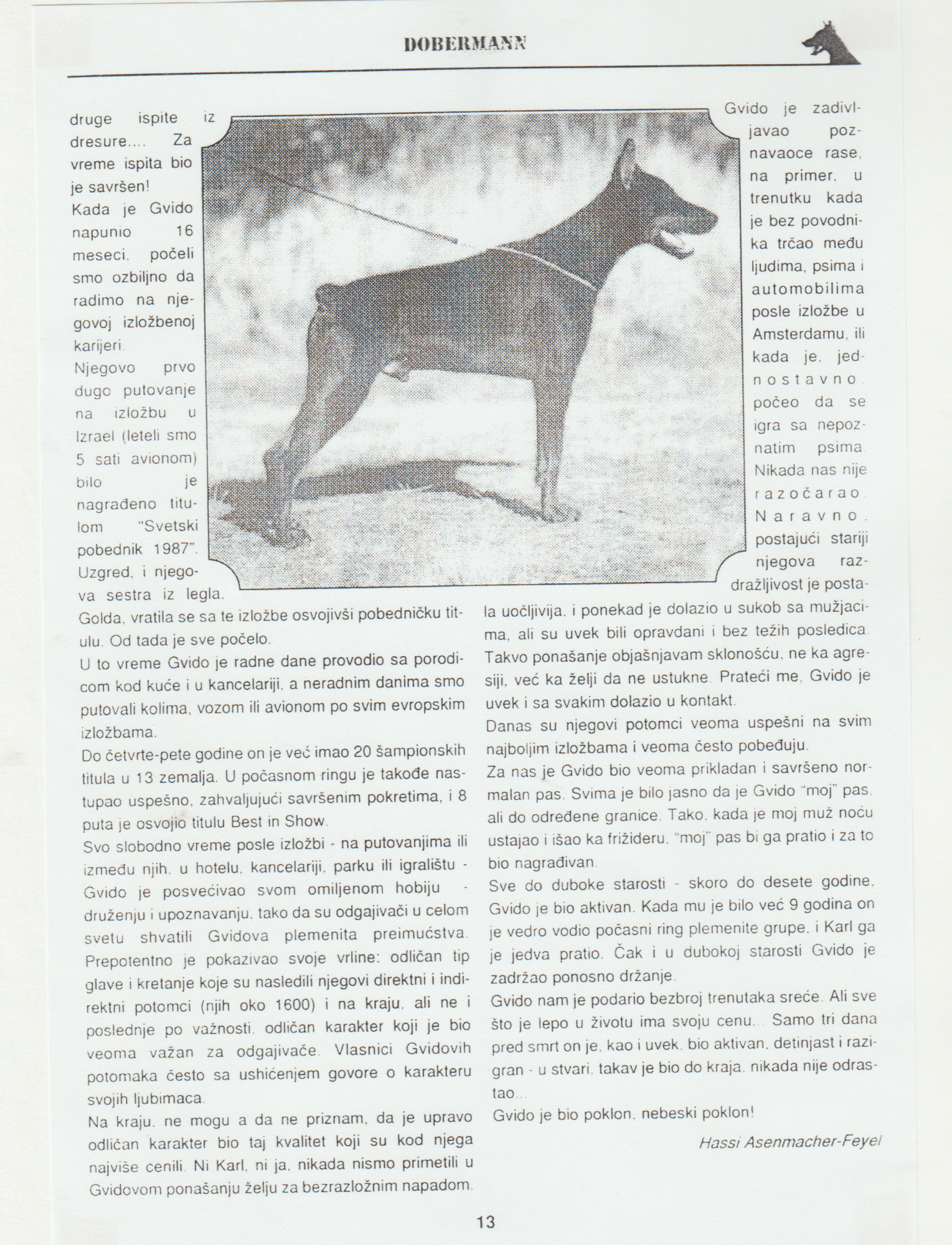
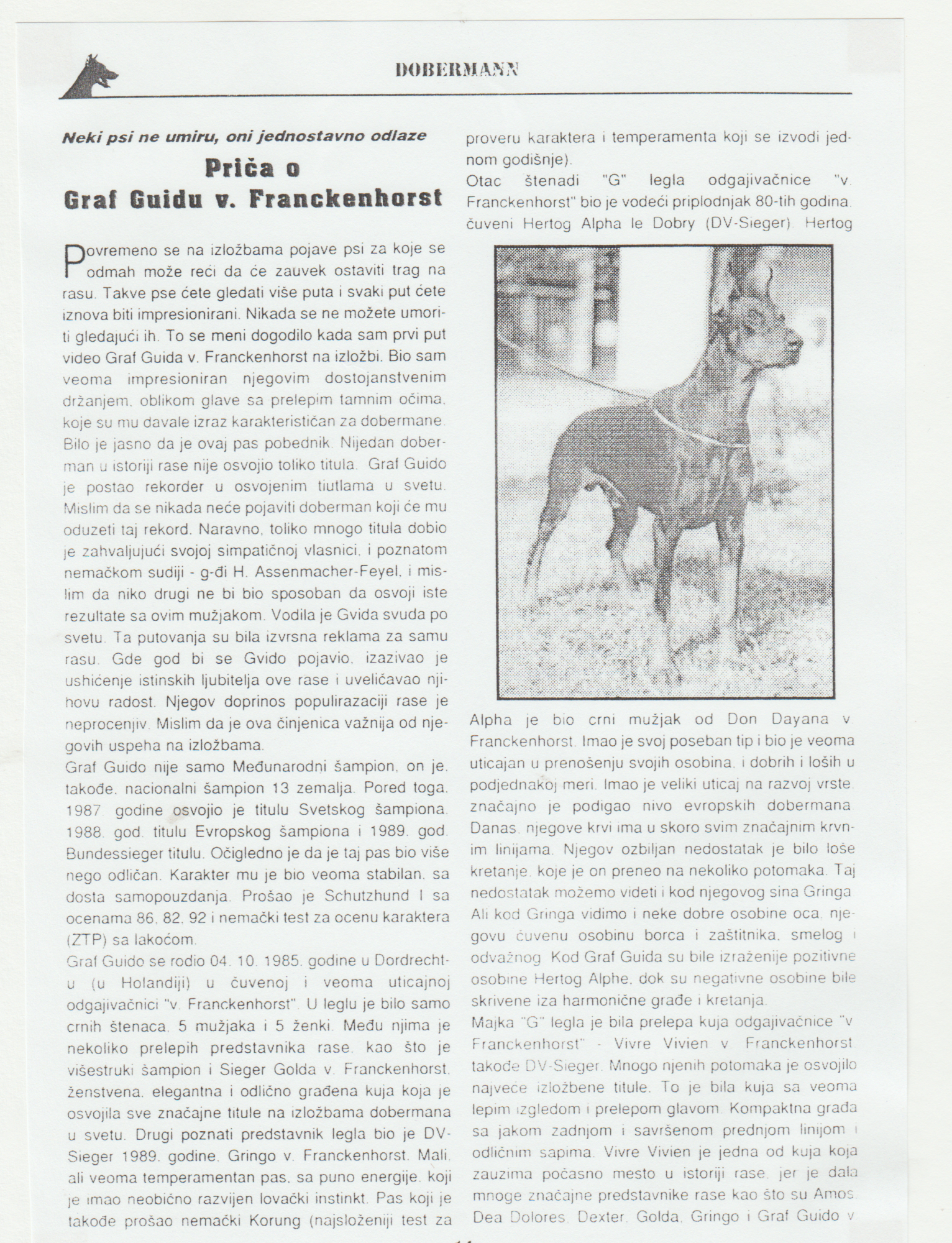
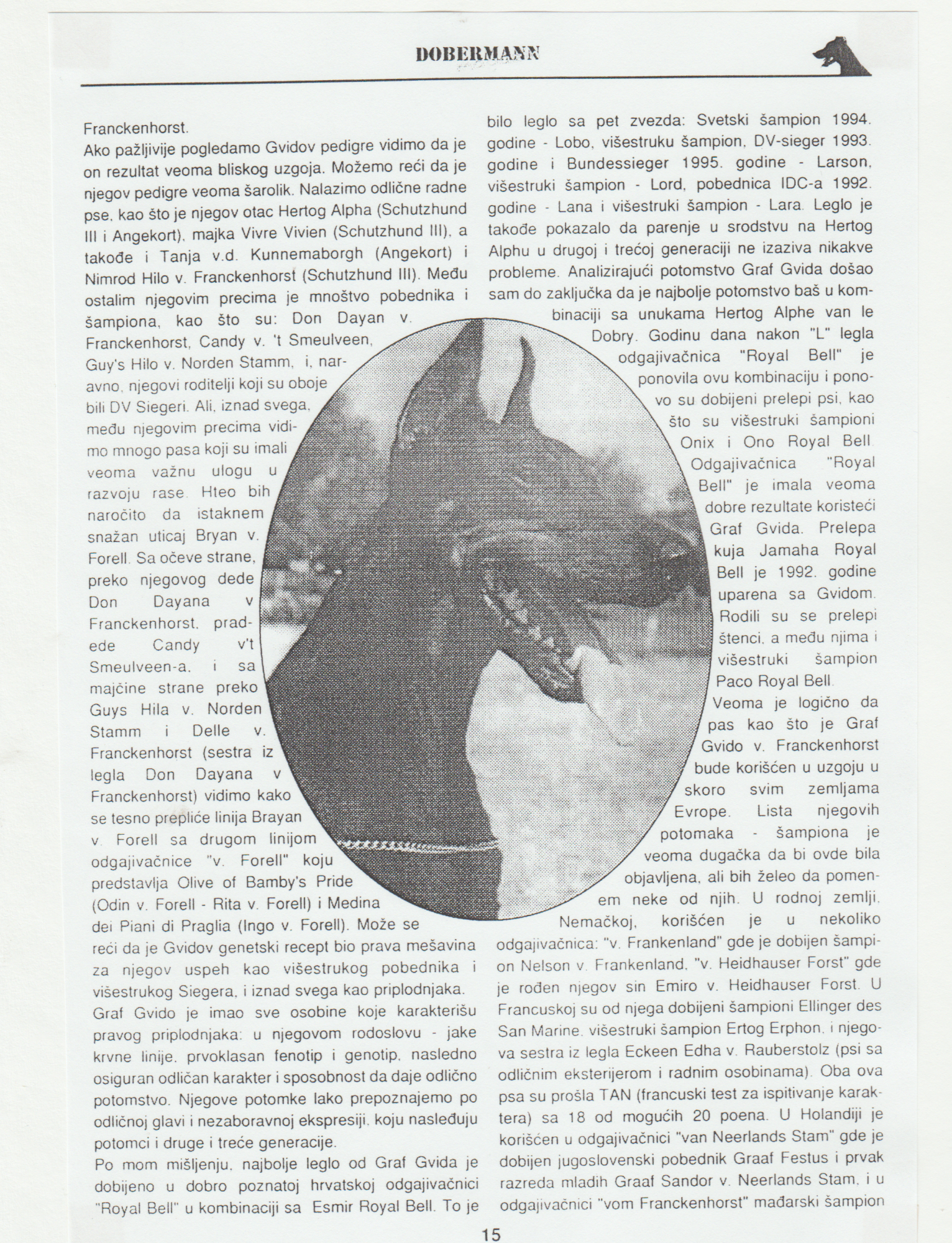
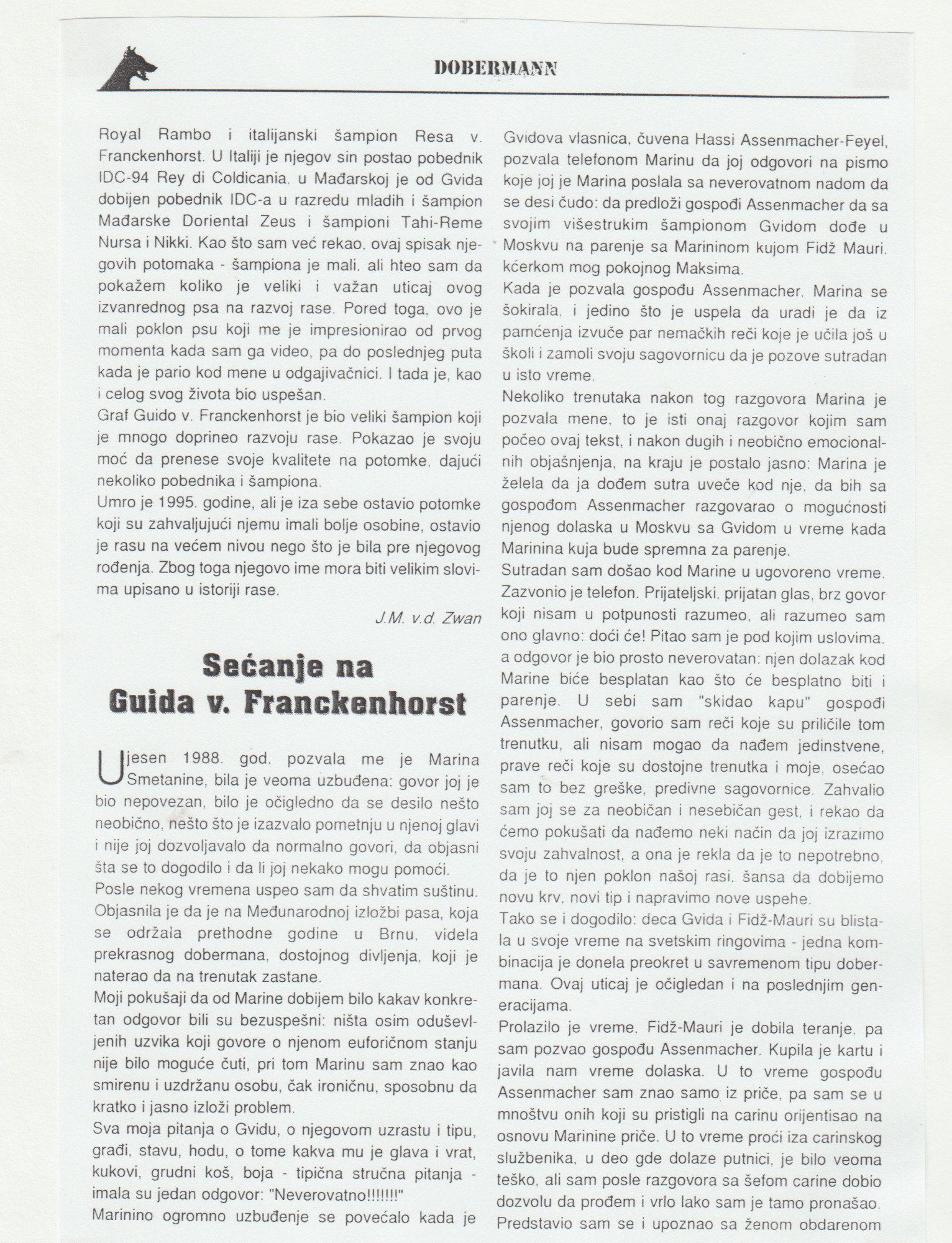
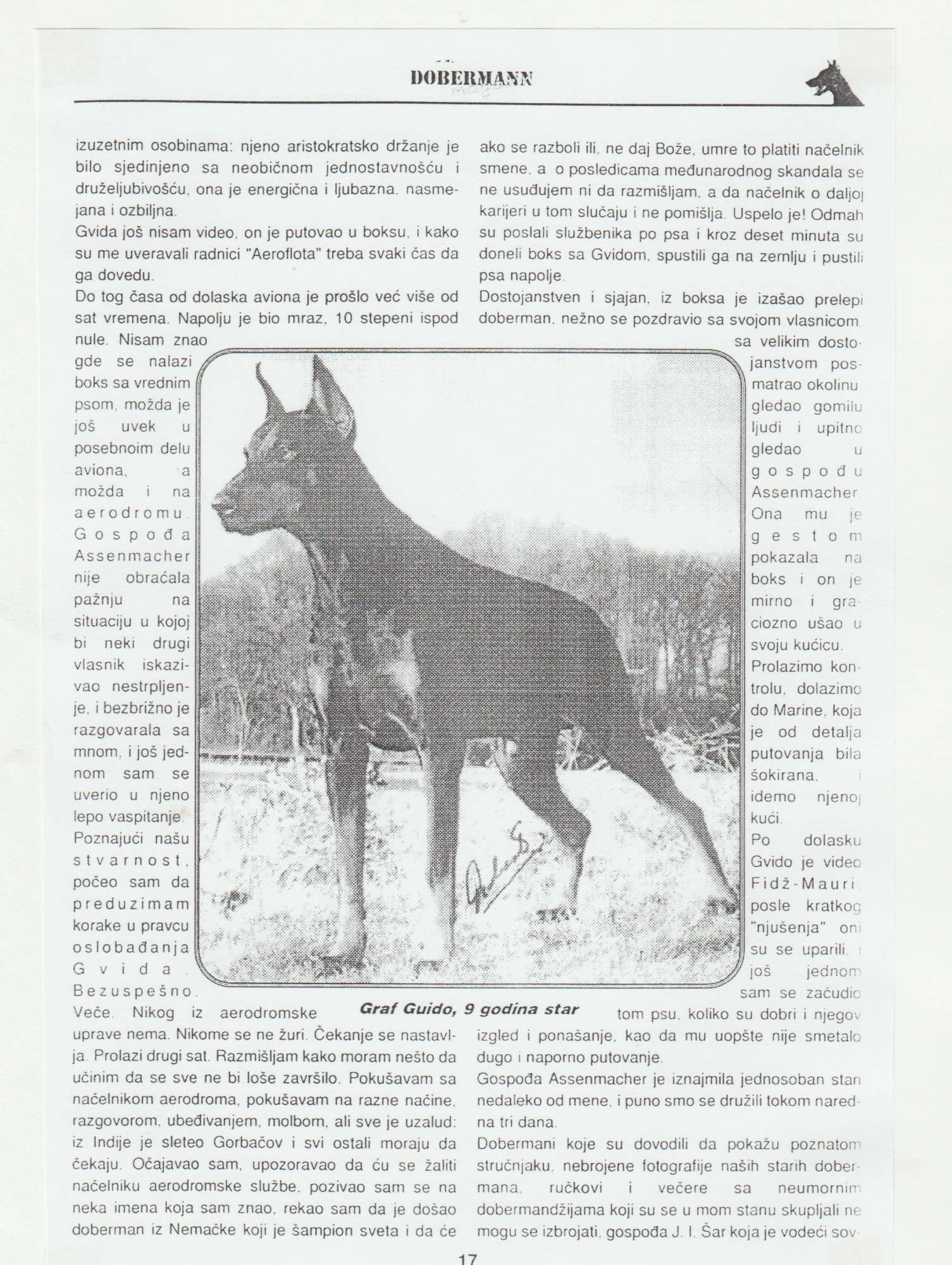
Graf Guido vom Franckenhorst (1985–1995)
A Life with Graf Guido
A few years after the death of my previous Basenji, we lived without a dog in the house. Then one summer, as a birthday gift, my husband came up with the idea of getting another dog. It wasn’t unexpected — I left the choice entirely to him.
I decided that my new dog had to be large, elegant, with strong temperament, and above all easy to train. In short — it had to be a Dobermann.
My husband immediately contacted Mr. H. Wiblishauser, who promised to help us. We waited three months before he contacted us again. After that, we traveled to Düsseldorf and then together to Dordrecht in Holland. We had some difficulty finding our way at first, wandering through the city before finally reaching our destination.
Eventually, after asking for directions, we arrived at the home of the well-known breeder and judge, Mrs. Ilona Ostenk-Schenk. She kindly offered to help and arranged for us to meet Mrs. Sonja Franckenmont. From there, we were guided to the kennel.
Out of ten puppies in the litter, only four remained when we arrived. With the help of experienced breeder Mr. Wiblishauser, we selected our puppy — Graf Guido vom Franckenhorst.
It was the right choice. Guido quickly adapted to our home. He followed us everywhere — to work, restaurants, and on trips. Thanks to his exceptional character, he easily won people’s hearts. He developed harmoniously and without issues, including during teething, which meant no obstacles toward his first shows.
We decided to enter him at the DV-Sieger-Zuchtschau in 1986, where he returned home with a trophy, winning his class.
Training and Early Career
Shortly before his first shows, Karl Hauzel began working with Guido in obedience training. At first, we did not take training seriously — preparation for shows was our priority.
However, like any modern Dobermann, Guido earned SchH I with a rating of “pronounced working instinct” and passed ZTP. Further Schutzhund levels remained optional.
At 16 months, we began his serious show career.
His first long journey was to Israel, where he won the title World Winner 1987. His sister Golda from the same litter also returned with a winning title. From that moment, everything began.
Show Career and Achievements
By the age of four to five, Guido had already obtained 20 championship titles in 13 countries. He also succeeded in honor rings and won Best in Show eight times.
His free time between shows — whether in hotels, offices, parks, or showgrounds — was always devoted to social interaction. Through this, breeders worldwide came to recognize his exceptional qualities.
He strongly passed on his traits:
- excellent head type
- movement
- expression
These qualities were visible not only in his direct offspring but also in later generations (approx. 1,600 descendants).
But above all, his character was his greatest asset. Owners of his offspring often spoke enthusiastically about their dogs’ temperaments.
Guido never showed unjustified aggression. Even when conflicts occurred with other males, they were situational and without serious consequence. His behavior stemmed from confidence, not aggression.
He remained active and proud even into old age, participating in honor rings and maintaining his noble presence.
Character and Life
Guido impressed both experts and the general public. For example, after a show in Amsterdam, he once ran freely among people, dogs, and cars — completely confident and controlled.
He never disappointed us.
Even as he aged, his temperament became more pronounced, occasionally leading to dominance toward other males — but always within reason.
At home, he was perfectly balanced and deeply attached to his owner.
He brought us countless moments of happiness. Even three days before his death, he was active, strong, and vibrant — exactly as he had always been.
Guido was a gift — a gift from heaven.
— Hassi Assenmacher-Feyel
Story of Graf Guido
Some dogs do not die — they simply leave.
Certain dogs appear in shows and immediately leave a permanent mark on the breed. You never tire of watching them. That is exactly what I experienced when I first saw Graf Guido vom Franckenhorst.
His dignified posture, beautiful head, and dark expressive eyes clearly marked him as a winner. No Dobermann of his generation achieved as many titles.
He became a record-holder in international titles, including:
- World Champion (1987)
- European Champion (1988)
- Bundessieger (1989)
- National Champion in 13 countries
His success was also due to his owner, Hassi Assenmacher-Feyel, who presented him worldwide.
More importantly, his influence on the breed exceeded his show achievements.
Pedigree and Genetics
Graf Guido was born on October 4, 1985, in Dordrecht (Netherlands), at kennel “vom Franckenhorst”.
Parents:
- Sire: Hertog Alpha v. Le Dobry (DV-Sieger)
- Dam: Vivre Vivien vom Franckenhorst (also DV-Sieger)
The litter included 10 black puppies (5 males, 5 females), with several outstanding individuals:
- Golda v. Franckenhorst (multiple champion)
- Gringo v. Franckenhorst (DV-Sieger 1989)
His pedigree represents tight and deliberate linebreeding, combining strong working and show lines.
Key traits inherited and transmitted:
- powerful genotype and phenotype
- excellent character
- strong reproductive ability
- consistent type transmission
Breeding Influence
Graf Guido was an exceptionally influential stud dog, producing over 2000 offspring worldwide.
His descendants achieved success across:
- Europe
- USA
- Australia
- South Africa
- Philippines
Many became:
- champions
- working-titled dogs (SchH, IPO, ZTP)
- winners of major international competitions
His progeny clearly inherited:
- head type
- expression
- temperament
- structure
One of the most successful combinations was with descendants of Hertog Alpha, confirming the strength of that genetic line.
Influence in Yugoslavia
Graf Guido played a significant role in the development of Dobermanns in Yugoslavia.
His offspring contributed to:
- raising breed quality
- producing champions
- strengthening bloodlines
Notable progeny and lines appeared in kennels such as:
- Royal Bell
- van Neerlands Stam
- Franckenland
- Heidhauser Forst
Many of these dogs became:
- national champions
- IDC winners
- influential breeding animals
Final Years and Legacy
Graf Guido died in 1995, leaving behind an extraordinary legacy.
He elevated the breed to a higher level than before his time. His name remains permanently written in the history of the Dobermann.
His influence continues through generations.
Eternal glory to you, Guido.
— E. Erusalimsky, President of the Russian Cynological Federation
Source: Dobermann Magazine, Yugoslavia
Date: November–December 1996
Issue: No. 3
Progeny
The gallery presents selected offspring of Graf Guido vom Franckenhorst.
For clarity, a litter numbering system has been applied – each dog is marked with a number corresponding to the chronological order of the litter in the complete breeding documentation (a total of 192 litters).
Each description includes: litter number, dog’s name, and pedigree (dam).